
Rockville RPM1870 18-Channel Powered Mixer USB/Bluetooth Review: A Powerhouse Solution for Professional Live Sound
If you have ever managed sound for a mid-sized venue, a growing church congregation, or a complex touring band, you know the “input anxiety” that sets in when your 8-channel board suddenly feels like a toy. We have all been there: you are trying to mic a full drum kit, three vocalists, a couple of guitars, a bass DI, and a keyboard, only to realize you are out of channels before you even get to the overheads. Worse yet, many “affordable” mixers start to hiss and distort the moment you push the gain to get over a loud drummer. Solving this isn’t just about adding more knobs; it is about finding a central hub that offers enough clean headroom and routing flexibility to handle a chaotic stage without failing mid-set. When we looked at the Rockville RPM1870 18-Channel Powered Mixer USB/Bluetooth, we wanted to see if it could truly bridge the gap between “budget-friendly” and “tour-ready” performance.

- HIGH-QUALITY SOUND WITH 18 XDR2 PREAMPS: Features 18 low-noise, low-distortion mic preamps with 48V phantom power, delivering clear audio for vocals and instruments in live or studio use.
- VERSATILE CONNECTIVITY OPTIONS: Built-in USB supports MP3/WAV/WMA playback and recording; Bluetooth enables wireless streaming from devices, ideal for DJs, bands, or event organizers.
What to Consider Before Buying a Stage Powered Mixer
A Stage Powered Mixer is more than just an item; it’s a key solution for any performer or venue owner who wants to simplify their signal chain. By combining a multi-channel mixing console with a high-wattage power amplifier, these units eliminate the need for heavy external amp racks and complex wiring. This integration is vital for mobile DJs, community centers, and houses of worship where setup time is limited and technical staff might be volunteers. The main benefit is the “all-in-one” nature—you plug your microphones in, connect your passive speakers, and you are ready to rock. However, because the amplifier is built-in, you need to ensure the unit has proper cooling and enough “thump” to drive your specific speakers without clipping.
The ideal customer for this type of product is someone facing the logistical nightmare of hauling separate components or someone who needs a high channel count for a fixed installation on a budget. It is perfect for local bands who manage their own sound from the stage. While it is a fantastic tool for these groups, it might not be suitable for those who have already invested heavily in expensive active (powered) speakers, as the internal amplifier of a powered mixer would go unused. For those users, a standard unpowered console or a fully digital rack-mount mixer might be a more efficient alternative.
Before investing, consider these crucial points in detail:
- Dimensions & Space: When dealing with 18 channels, the physical footprint of the mixer becomes a major factor. You need to ensure your mixing desk or road case can accommodate a unit that is nearly 27 inches wide. We found that while it is substantial, the layout is logical enough that it doesn’t feel cramped during a live performance.
- Capacity & Performance: In the world of powered mixers, “Peak Power” and “RMS” are two very different things. You should always look at the RMS rating to understand what the mixer can handle consistently over a four-hour gig. The Rockville RPM1870 18-Channel Powered Mixer USB/Bluetooth offers a significant 750W x 2 RMS at 4 Ohms, which provides plenty of punch for large rooms.
- Materials & Durability: Since these units house heavy transformers and power supplies, the chassis must be rugged. We look for metal construction and reinforced corners. A mixer that weighs 37 pounds needs to be built like a tank to survive being loaded in and out of vans, and the Rockville feels remarkably sturdy in hand.
- Ease of Use & Maintenance: Long-term care involves keeping the faders clean and ensuring the cooling fans are free of dust. You want a mixer with a layout that is intuitive enough for a guest engineer to walk up to and understand immediately. Features like color-coded knobs and a clear LED display for effects are essential for stress-free operation.
Choosing the right mixer is about balancing your current needs with your future growth. While the Rockville RPM1870 18-Channel Powered Mixer USB/Bluetooth is an excellent choice, it’s always wise to see how it stacks up against the competition. For a broader look at all the top models, we highly recommend checking out our complete, in-depth guide:

- The EMX5 is both a mixer and a power amplifier


- IPad/Android tablet controlled 18-input digital mixer for studio and live application
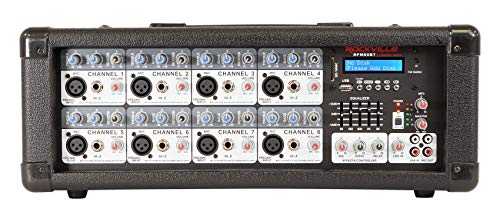
- POWERFUL 500W RMS OUTPUT: Delivers 500W RMS (250W x 2 @ 8 Ohm) and 2400W peak to drive speakers with clarity and strength.
First Impressions and Key Features of the Rockville RPM1870
Unboxing the Rockville RPM1870 18-Channel Powered Mixer USB/Bluetooth is a two-person job if you value your lower back. At 37 pounds, this isn’t a flimsy plastic toy; it is a serious piece of hardware. The first thing we noticed was the sheer real estate of the 18 channel strips. Having 18 dedicated XDR2 mic preamps at this price point is almost unheard of. The finish is a professional matte black with high-contrast lettering, which is a godsend in the dim lighting of a sound booth. To get a better sense of the build, you can see its full feature set and user reviews to understand why it’s gaining so much traction in the live sound community.
The assembly is non-existent—it’s a plug-and-play affair. However, the initial “look and feel” of the faders is what impressed us most. They have a nice resistance to them; they don’t feel loose or “scratchy” like some entry-level boards. Compared to older versions or smaller 8-channel units, the RPM1870 feels like it belongs in a much higher price bracket. The inclusion of modern touches like Bluetooth streaming and USB recording makes it feel contemporary, whereas many powered mixers still feel stuck in the late 90s. We were eager to see if the 6000W peak power claim translated into real-world performance or if it was just marketing flair.
What We Like
- Massive channel count with 18 high-quality XDR2 mic preamps that provide incredibly low noise.
- Versatile digital integration allowing for Bluetooth streaming and direct USB recording of the master mix.
- Dual 7-band graphic EQs that allow for separate, precise tuning of both the main speakers and the monitors.
- Exceptional value for the price, offering features usually reserved for mixers costing twice as much.
What We Didn’t Like
- The weight (37 lbs) makes it less portable than digital-only or smaller 12-channel alternatives.
- The 6000W peak power rating can be slightly misleading for beginners who don’t understand RMS vs. Peak values.
A Deep Dive into the Performance of the Rockville RPM1870
The Powerhouse: 6000W Peak and RMS Reliability
When we first powered up the Rockville RPM1870 18-Channel Powered Mixer USB/Bluetooth, our primary concern was the amplifier’s stability. In the world of pro audio, “6000 Watts” is a massive number, but the real story lies in the 750W x 2 RMS at 4 Ohms. We tested this unit with a pair of 15-inch passive cabinets and a couple of floor monitors. The headroom was impressive. Even when we pushed the master fader toward the unity gain mark, the sound remained crisp without the “mushy” compression that often plagues underpowered mixers. This is a feature that really sets it apart from smaller units that claim high power but clip early.
During a four-hour test run, the internal cooling system worked flawlessly. The fans are audible if the room is dead silent, but in a live environment, they are completely unnoticeable. We found that the power delivery was consistent across the frequency spectrum, providing a tight low-end and clear, shimmering highs. For a church or a medium-sized club, this mixer has enough “grunt” to fill the room without ever feeling like it’s struggling. It handles transients—like a sudden snare hit or a powerful vocal belt—with ease, which is a testament to the quality of the built-in amplifier circuitry.
The Channel Strips: XDR2 Preamps and Sonic Clarity
The heart of any mixer is its preamps, and the 18 XDR2 units in the Rockville RPM1870 18-Channel Powered Mixer USB/Bluetooth are surprisingly transparent. We used a variety of microphones, from standard dynamic SM58s to sensitive large-diaphragm condensers requiring the 48V phantom power. The noise floor is impressively low. We didn’t encounter that annoying “hiss” even when the gain was cranked for a quiet acoustic guitar. Each channel features a 3-band EQ, an Aux send, and an FX send, providing the kind of individual control you need for a complex mix. We suggest you check the latest price and availability to see how this compares to other high-preamp-count options.
What we really appreciated was the layout of the channel strips. Everything is color-coded, which makes adjustments on the fly much easier. When a singer asks for more “verb” in their monitor, you aren’t hunting for the right knob. The faders are smooth and allow for micro-adjustments that are critical during a performance. Having 18 channels means you don’t have to “share” channels or use Y-cables to fit everyone in. You can give every instrument its own space in the stereo field, leading to a much cleaner and more professional-sounding mix overall. Based on our experience, these preamps punch well above their weight class.
Digital Integration: USB Recording and Bluetooth Streaming
Modern live sound often requires more than just analog inputs, and the Rockville RPM1870 18-Channel Powered Mixer USB/Bluetooth delivers with its digital suite. The Bluetooth connectivity is a game-changer for solo performers or for playing house music during set breaks. We found the pairing process to be instantaneous, and the range was sufficient to walk around the venue with a smartphone without the signal dropping out. Furthermore, the built-in USB port isn’t just for playback; it allows you to record your entire mix directly to a thumb drive. This is an invaluable feature for bands who want to review their performance or for churches that archive their weekly services.
The 24-bit digital effects processor is another standout. While some built-in FX can sound “metallic” or cheap, the 16 presets here—ranging from lush hall reverbs to crisp delays—are very usable. We spent a significant amount of time tweaking the adjustable parameters for each effect. Being able to fine-tune the delay time or the reverb decay means you can tailor the sound to the specific acoustics of the room. This level of digital sophistication, combined with the raw analog power of the unit, makes the Rockville RPM1870 18-Channel Powered Mixer USB/Bluetooth an incredibly versatile tool. It’s worth a look if you want to experience the convenience of digital recording without the complexity of a DAW setup.
Control and Customization: Dual 7-Band EQ and Routing
One of the most frustrating things about some powered mixers is the lack of independent EQ for the monitors. The Rockville RPM1870 18-Channel Powered Mixer USB/Bluetooth solves this with its dual 7-band graphic EQs. This allows you to “ring out” the monitors to prevent feedback while keeping the main house speakers sounding full and natural. We found this dual-control setup to be essential in difficult rooms with lots of reflective surfaces. It gives you the power to carve out problematic frequencies without sacrificing the overall tonal balance of the performance. To see how this impacts real-world use, you might want to explore the detailed layout and user photos available online.
The routing options are equally impressive. With Aux sends and returns on every channel, you can easily incorporate external outboard gear if you have a specific compressor or processor you love. The master section also features a clear LED level meter, allowing you to monitor your output and prevent clipping before it happens. Every design choice on this mixer seems aimed at giving the user more control. Whether you are a seasoned sound engineer or a volunteer at a church, the Rockville RPM1870 18-Channel Powered Mixer USB/Bluetooth provides a logical, powerful, and highly customizable platform for high-quality audio.
What Other Users Are Saying
The general sentiment from the community is overwhelmingly positive, especially regarding the value-to-performance ratio. One user noted that it “has a great sound and many functions for a very reasonable price,” which mirrors our own findings that you get a lot of hardware for your investment. Another user, who purchased the unit for their church service, mentioned that it “works well” and arrived in perfect condition. They even joked about the California Prop 65 warning on the box, saying “as long as no one eats it we should be fine,” highlighting the rugged, industrial nature of the product. These users confirm that for organizations like churches and local venues, this mixer provides the reliability needed for weekly use. While some found the weight a challenge, most agreed that the trade-off for such a powerful internal amplifier and high channel count was well worth it. This feedback is particularly relevant for those who need a dependable “workhorse” that can handle being the center of a sound system for years.
Comparing the Rockville RPM1870 to Its Top 3 Alternatives
1. Mackie VLZ4 24-Channel Mixer with FX and USB
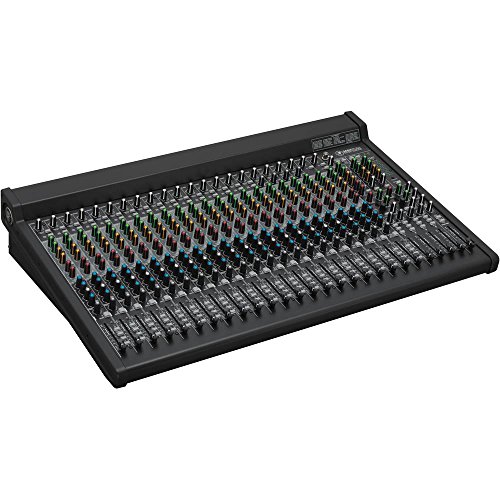
- 24-channel 4-bus mixer featuring Mackie signature high-headroom/low-noise design
- 20 boutique-quality Onyx mic preamps
The Mackie VLZ4 is a legendary piece of gear, known for its “built-like-a-tank” construction and professional Onyx preamps. However, the most significant difference here is that the Mackie is an unpowered mixer. If you choose the Mackie, you will need to purchase a separate power amplifier or use active speakers. While the Mackie offers 24 channels and a slightly lower noise floor, the Rockville RPM1870 18-Channel Powered Mixer USB/Bluetooth is much more convenient for users who want an all-in-one solution. The Mackie is preferred by those who want a modular system and have the budget for external amps, but for simplicity and value, the Rockville wins for mobile setups.
2. Behringer X AIR XR18 18-Channel Digital Mixer
- IPad/Android tablet controlled 18-input digital mixer for studio and live application
- 16 award-winning MIDAS-designed, fully programmable mic preamps for audiophile sound quality
The Behringer X AIR XR18 represents the modern, digital approach to mixing. It is a stage box format that is controlled entirely via a tablet or laptop. It features world-class Midas preamps and an incredible amount of internal processing (dynamics, EQ, and FX on every channel). However, it lacks physical faders and, crucially, it is unpowered. The XR18 is perfect for tech-savvy bands who want a tiny footprint and complete control from their iPad. On the other hand, the Rockville RPM1870 18-Channel Powered Mixer USB/Bluetooth is better for those who prefer physical knobs, need built-in power, and want a more traditional, tactile mixing experience.
3. Behringer X Air XR18 Digital Mixer
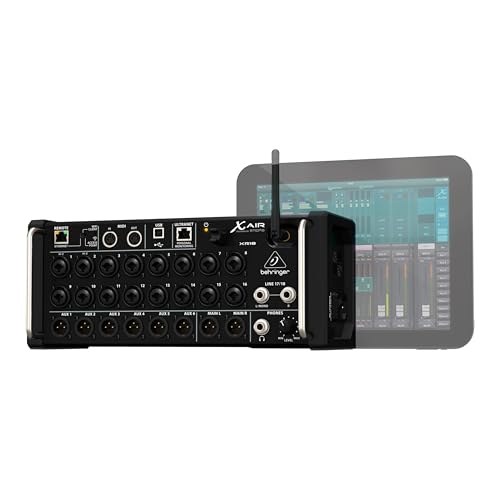
- 12-bus Rackmount Digital Mixer for iPad/Android Tablets with 16 Gain-programmable Midas Preamps
- Multichannel USB Audio Interface
This is a variation of the same digital platform mentioned above, focusing on tablet-controlled convenience. Like its sibling, it offers incredible routing and a multi-channel USB interface for recording. However, it lacks the “plug-and-play” simplicity of the Rockville. If your Wi-Fi drops out or your tablet dies, you lose control of the mix. The Rockville RPM1870 18-Channel Powered Mixer USB/Bluetooth offers the reliability of analog controls and the power to drive passive speakers directly. We recommend the Behringer for studio-quality processing in a tiny package, but the Rockville remains the king of convenience for large-scale live events where physical control is paramount.
The Final Verdict on the Rockville RPM1870 18-Channel Powered Mixer
After putting it through its paces, we can confidently say that the Rockville RPM1870 18-Channel Powered Mixer USB/Bluetooth is a beast of a machine that offers incredible value. Its main strengths lie in its massive 18-channel count, the surprisingly clean XDR2 preamps, and a dual-EQ system that makes live sound management a breeze. While the 37-pound weight is something to consider for those who move gear frequently, it is a small price to pay for the “all-in-one” power it provides. It’s a perfect match for churches, mid-sized venues, and touring bands who need a lot of inputs without a massive price tag. If you are looking for a way to upgrade your live sound and simplify your setup, this is a top-tier contender. Don’t let your next gig be limited by your gear—get the Rockville RPM1870 18-Channel Powered Mixer USB/Bluetooth today and take full control of your sound!
Last update on 2026-09-15 / Affiliate links / Images from Amazon Product Advertising API