
Behringer X Air XR16 Digital Mixer Review: Professional Mixing Freedom in a Compact Stage Box
For years, our live setups were dictated by the length of a heavy, copper-filled analog snake and the physical footprint of a massive mixing console. If you wanted to adjust the monitor mix, you either ran back and forth to the stage or shouted instructions to a weary sound engineer. This “old way” of doing things isn’t just physically taxing; it’s a barrier to achieving the perfect sound. We’ve all been there: the kick drum sounds like a cardboard box, but you can’t hear it properly from the side of the stage where the mixer is tucked away. This is exactly the problem the Behringer X Air XR16 Digital Mixer was designed to solve. By removing the physical faders and replacing them with a robust digital engine controlled via tablet, this mixer promises professional-grade audio and total mobility. If you are tired of being tethered to a stationary desk and want to see its full feature set and user reviews, you’ll find that the transition to digital has never been more accessible.
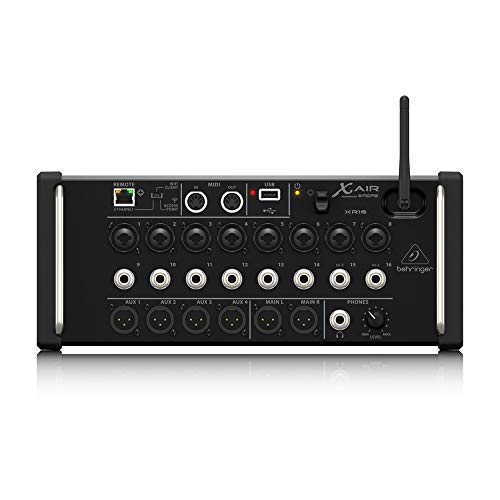
- Ipad*/Android* tablet controlled 16-Input digital mixer for studio and live application
- 8 award-winning Midas-designed, fully programmable mic preamps for audiophile sound quality
What to Consider Before Investing in Stage Powered Mixers and Digital Consoles
A Stage Powered Mixer or a digital equivalent like the Behringer X Air XR16 Digital Mixer is more than just an item; it’s a key solution for bands, solo performers, and venue owners who need high-fidelity sound without the bulk of traditional gear. In the modern era, “powered” doesn’t always mean it has a built-in power amp for speakers; often, it refers to the processing power contained within the unit. The shift toward digital stage boxes has revolutionized the industry by allowing the “mixer” to sit on the stage while the “control surface” (your iPad or Android tablet) moves with you throughout the room. This ensures that the person mixing hears exactly what the audience hears.
The ideal customer for this type of product is a small to medium-sized band, a mobile DJ, or a house of worship that requires high-quality preamps and sophisticated effects processing but lacks the space for a full-sized desk. It’s perfect for those who want to “ring out” their own monitors from the stage or mix from the best seat in the house. However, it might not be suitable for those who are uncomfortable with technology or who require physical faders for tactile feedback. If you prefer the “one knob per function” layout of an old-school analog board, the learning curve of a tablet-based interface might feel daunting at first.
Before investing, consider these crucial points in detail:
- Dimensions & Space: In a world where van space is at a premium, the compact “stage box” design is a lifesaver. Look for a unit that is rack-mountable, as this protects the inputs and allows you to build a self-contained “fly rig.” The Behringer X Air XR16 Digital Mixer fits easily into a standard 3U rack space, making it incredibly portable compared to a 16-channel analog desk.
- Capacity & Performance: You need to count your inputs carefully. Don’t just think about what you have now; think about future expansion. Look for high-quality preamps, like the MIDAS-designed units, which offer lower noise floors and higher headroom. The number of auxiliary outputs is also vital, as this determines how many independent monitor mixes you can run.
- Materials & Durability: Since this unit will likely live on the floor of a stage or in a rack, the chassis needs to be rugged. All-metal construction is a must. High-quality XLR connectors that won’t loosen over time are a hallmark of a professional-grade mixer. We found that the steel chassis of the X Air series holds up well to the rigors of the road.
- Ease of Use & Maintenance: The software is the most important part of a digital mixer. Before buying, download the app (X-AIR Edit) to see if the workflow makes sense to you. Check for features like “Auto-Mix,” which can manage gain for multiple microphones automatically—a godsend for panel discussions or theater productions.
While the Behringer X Air XR16 Digital Mixer is an excellent choice, it’s always wise to see how it stacks up against the competition. For a broader look at all the top models, we highly recommend checking out our complete, in-depth guide:

- The EMX5 is both a mixer and a power amplifier


- IPad/Android tablet controlled 18-input digital mixer for studio and live application
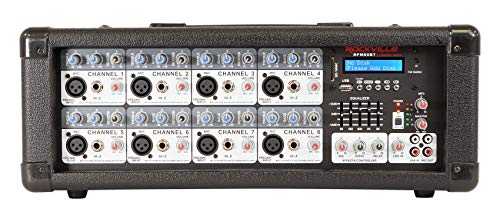
- POWERFUL 500W RMS OUTPUT: Delivers 500W RMS (250W x 2 @ 8 Ohm) and 2400W peak to drive speakers with clarity and strength.
First Impressions: Unboxing the Behringer X Air XR16 Digital Mixer
When we first pulled the Behringer X Air XR16 Digital Mixer out of the box, the first thing that struck us was the weight. At just 3 kilograms, it feels substantial but surprisingly portable. Unlike traditional mixers that are wide and flat, the XR16 is a compact brick of a device. It comes with rack ears included, which is a nice touch, allowing you to mount it immediately into a case. The aesthetic is purely functional—black metal with bright green and orange accents around the inputs. There are no faders to break or knobs to snag during transport, which immediately gave us confidence in its longevity. After getting it set up, we found that you can check the latest price and availability to see why it has become a staple for gigging musicians.
Key Benefits
- 8 Award-winning MIDAS-designed programmable mic preamps for stellar audio quality.
- Integrated Tri-Mode Wi-Fi router for direct operation—no need for external equipment in most small venues.
- USB connectivity for uncompressed stereo WAV recording and playback.
- Revolutionary Dugan-style Auto-Mixing that automatically manages microphone gain sharing.
Limitations
- The built-in 2.4GHz Wi-Fi can struggle in high-traffic areas with lots of cell phone interference.
- USB recording is limited to a stereo track, rather than full multi-track recording.
Deep Dive: Performance and Field Testing of the Behringer X Air XR16 Digital Mixer
The Midas Touch: Preamps and Sonic Clarity
The heart of any mixer is its preamplifiers, and this is where the Behringer X Air XR16 Digital Mixer truly shines. Behringer leveraged their partnership with MIDAS to include eight high-end programmable preamps. In our testing, we found these preamps to be incredibly quiet, even when we had to push the gain for dynamic microphones like the Shure SM7B. The sound is transparent and warm, lacking the “brittle” high-end that often plagued budget digital mixers in the past. Having 8 XLR/TRS combo inputs plus an additional 8 line inputs gives you plenty of flexibility for a standard four-piece band setup.
What makes these preamps special is that they are fully programmable. This means that when you save a “scene” for a specific venue or song, the gain settings are saved along with everything else. During a soundcheck, we were able to quickly recall settings from a previous gig, which got us 90% of the way to a perfect mix in seconds. We found that the headroom on these inputs is quite generous, allowing us to handle loud vocalists and aggressive drummers without clipping. This level of sonic fidelity is a feature that really sets it apart from older analog counterparts in this price bracket.
The Ecosystem: Wireless Control and the X Air App
Operating the Behringer X Air XR16 Digital Mixer is a purely digital experience. There are no physical controls on the unit other than a headphone volume knob. Instead, you use the X Air app on your iPad, Android tablet, or laptop. We tested the app across several platforms and found the interface to be remarkably intuitive. The “RTA” (Real Time Analyzer) overlay on every EQ channel is a game-changer. It allows you to see exactly where a frequency is feeding back and notch it out with surgical precision. This is a level of control you simply don’t get with the three-band EQ of a standard analog board.
The integrated tri-mode Wi-Fi router allows you to connect directly to the mixer without needing a separate router. However, as experts, we have to provide a word of caution: while the built-in Wi-Fi is great for rehearsals, in a crowded bar with 200 people all carrying smartphones, the 2.4GHz band can get congested. For high-stakes professional gigs, we found it best to use the Ethernet port to connect a dedicated 5GHz external router. This ensures a rock-solid connection that won’t drop when the headliner starts their set. Despite this small caveat, the freedom to walk around the venue and adjust the mix from the balcony or the back of the room is liberating.
The Virtual FX Rack: Studio Quality on Stage
One of the most impressive features of the Behringer X Air XR16 Digital Mixer is the onboard FX rack. It features four true-stereo multi-effects processors, including high-end simulations of legendary gear like the Lexicon 480L and PCM70, as well as EMT250 and Quantec QRS reverbs. We were genuinely surprised by the quality of these effects. The reverbs are lush and dimensional, and the delays are easily synced to the tempo of the song via a tap-tempo button on the app screen. This eliminates the need for bulky external rack gear, further simplifying your setup.
Beyond just reverb and delay, the XR16 includes a variety of “boutique” compressors and EQs. We found the “Leisure Compressor” (a simulation of the LA-2A) to be particularly effective on vocals, adding a smooth, professional sheen that you usually only find in a studio environment. The fact that you can run these effects on every channel without taxing the system is a testament to the 40-bit floating-point DSP engine inside. For performers who want their live sound to mimic their studio recordings, this internal processing power is invaluable.
USB Connectivity and the Auto-Mix Revolution
The Behringer X Air XR16 Digital Mixer includes a USB Type-A connector on the front panel. While the larger XR18 model functions as a multi-channel interface, the XR16 is designed for stereo recording and playback. We used this to record our live sets directly to a flash drive as uncompressed WAV files. The quality was excellent, providing a perfect “board tape” for later review. Additionally, you can use the USB port to play backing tracks or interval music directly from a thumb drive, which is handled via a dedicated stereo channel in the mixer software.
We also have to mention the X AIR Gain Sharing technology (Dugan-style Auto-Mixing). If you are using the XR16 for a podcast or a corporate meeting with multiple open microphones, this feature is a lifesaver. It automatically manages the levels of all active microphones in real-time, reducing background noise and preventing feedback without the “pumping” sound associated with traditional gates. It’s an incredibly sophisticated tool hidden inside a very affordable piece of hardware. If you are looking for a device that simplifies complex tasks, you should see how it handles your specific audio needs.
What Other Users Are Saying
The general sentiment among users is overwhelmingly positive, especially regarding the value-to-performance ratio. Many touring musicians have noted that they replaced hundreds of pounds of analog gear with this single 3kg box. One user mentioned, “The MIDAS preamps are a night and day difference from my old budget mixer; the clarity is stunning.” Another performer praised the portability, stating, “I can carry my entire front-of-house setup in a backpack.”
However, there are consistent warnings about the internal Wi-Fi. As one veteran sound tech noted, “Don’t rely on the built-in Wi-Fi for a sold-out show; buy a cheap external router and use the LAN port.” Some users also expressed a wish for multi-track recording, though they acknowledged that for the price point, the stereo WAV recording is a fair trade-off. Overall, the feedback confirms our expert findings: the Behringer X Air XR16 Digital Mixer is a reliable workhorse, provided you understand its wireless limitations.
Comparing the Behringer X Air XR16 Digital Mixer to the Competition
1. Behringer X AIR XR18 Digital Mixer
- IPad/Android tablet controlled 18-input digital mixer for studio and live application
- 16 award-winning MIDAS-designed, fully programmable mic preamps for audiophile sound quality
The XR18 is the “big brother” to the XR16. The primary difference is that the XR18 features 16 MIDAS preamps (compared to the XR16’s 8) and, most importantly, a 18×18 channel bidirectional USB interface. This allows for full multi-track recording directly into a DAW like Pro Tools or Logic. If you are a band that wants to record every individual instrument to a separate track for professional mixing later, the XR18 is the better choice. However, if you primarily need a live mixer and only need stereo recordings of your gigs, the XR16 offers the same internal processing for a lower price.
2. Mackie VLZ4 24-Channel Mixer with FX and USB
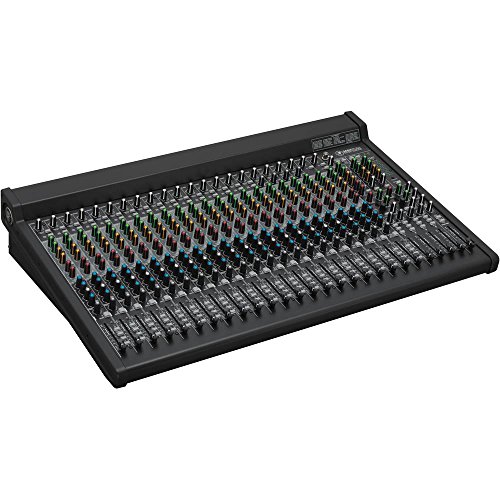
- 24-channel 4-bus mixer featuring Mackie signature high-headroom/low-noise design
- 20 boutique-quality Onyx mic preamps
The Mackie VLZ4 represents the traditional approach to mixing. It is a large, unpowered analog desk with physical faders and knobs. The Onyx preamps are legendary for their quality, and for those who demand tactile feedback and “one knob per function,” this is a fantastic choice. However, it lacks the wireless control, the sophisticated internal FX rack, and the portability of the Behringer X Air XR16 Digital Mixer. You also have to deal with the weight and the need for a physical snake. It’s a great choice for a fixed installation in a club, but less ideal for a mobile band.
3. Behringer X Air XR18 Digital Mixer (Tablet Controlled)
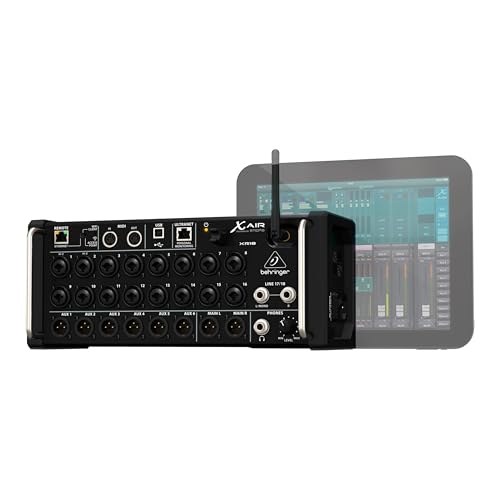
- 12-bus Rackmount Digital Mixer for iPad/Android Tablets with 16 Gain-programmable Midas Preamps
- Multichannel USB Audio Interface
This is another variation of the XR18 platform. Like the first alternative, it provides more inputs and full multi-track capability. Choosing between the XR16 and the XR18 really comes down to your input count and recording needs. If you find yourself frequently miking up an entire drum kit along with guitars, bass, and multiple vocals, the 18 inputs of the XR18 are necessary. But for many lounge acts, wedding bands, and acoustic groups, the XR16 hits the “sweet spot” of price and functionality without paying for extra channels you won’t use.
Final Verdict: Is the Behringer X Air XR16 Digital Mixer Right for You?
After extensive testing and comparison, we can confidently say that the Behringer X Air XR16 Digital Mixer is one of the most transformative pieces of audio gear for the modern gigging musician. It successfully distills the power of a high-end digital console into a format that is portable, rugged, and incredibly affordable. The inclusion of MIDAS-designed preamps ensures that your sound quality is never compromised, while the virtual FX rack provides studio-grade processing that was once the exclusive domain of expensive rack units.
While the internal Wi-Fi has its quirks and the recording is limited to stereo, these are small compromises when you consider the sheer amount of technology packed into this unit. We recommend it to any band or solo performer looking to declutter their stage, take control of their own monitor mixes, and deliver a professional-sounding show every night. If you’re ready to leave the heavy analog snakes behind and embrace the future of wireless mixing, we highly recommend that you check out the Behringer X Air XR16 Digital Mixer today and experience the freedom for yourself.
Last update on 2026-09-14 / Affiliate links / Images from Amazon Product Advertising API