
Yamaha REFACE DX Portable FM Synthesizer Review: Modern FM Mastery in Your Backpack
For decades, synthesists have been caught in a tug-of-war between two competing desires: the craving for deep, complex sonic textures and the need for a setup that doesn’t require a van and a road crew to move. Frequency Modulation (FM) synthesis has always provided that depth, famously pioneered by the legendary DX7 in the 1980s. However, those vintage units were notoriously difficult to program and heavy enough to double as boat anchors. In our modern, fast-paced production world, we need tools that bridge the gap between “power” and “portability.” Whether you are a bedroom producer trying to save desk space or a touring musician looking for a reliable “couch synth,” finding a device that offers professional-grade sound without the bulk is a persistent challenge. This is where our journey with the Yamaha REFACE DX Portable FM Synthesizer began—a search for a compact powerhouse that doesn’t sacrifice the “soul” of FM synthesis for its small footprint.

- 4-operator FM Sound Engine offers dynamic and expressive additive synthesis
- 32 Voice memory locations allow storing and recalling favorite Voices
Choosing the Right Synthesizer & Workstation Keyboards: A Buyer’s Guide
A Synthesizer & Workstation Keyboards is more than just an item; it’s a key solution for sonic exploration and musical foundation. Whether you are looking to create lush pads, aggressive leads, or metallic percussion, the right synthesizer acts as your primary interface between your imagination and the air. In a market flooded with digital emulations and analog recreations, selecting a hardware unit requires a balance of workflow, sound engine capability, and physical build. The Yamaha REFACE DX Portable FM Synthesizer fits into a specific niche: the modern FM revival, offering a tactile experience that vintage software plugins often lack.
The ideal customer for this type of product is someone facing space constraints or someone who values spontaneous creativity. We found it’s perfect for the gigging professional who needs a “Swiss Army knife” of FM sounds in a carry-on bag, or the hobbyist who wants to learn synthesis away from a computer screen. Conversely, it might not be suitable for those who demand full-sized, weighted piano keys or those who strictly require analog circuitry for subtractive synthesis. If you need 88 keys and a mahogany finish, you should look elsewhere, but if you need a professional-grade FM engine in a 6-pound package, this is the gold standard.
Before investing, consider these crucial points in detail:
- Dimensions & Space: Consider where the unit will live. In our testing, the 29-inch width of the Yamaha REFACE DX Portable FM Synthesizer allowed it to fit on even the most cluttered studio desks. If you are a mobile producer, ensure your backpack can accommodate the nearly 30-inch length, as it is wider than many 25-key controllers.
- Capacity/Performance: Look at the polyphony and operator count. While the original DX7 had 6 operators, the Reface DX uses 4. However, don’t let that fool you—the addition of feedback on every operator actually provides more harmonic flexibility than many older 6-operator systems we have evaluated.
- Materials & Durability: Plastic is standard in this category, but not all plastic is created equal. You want a high-impact chassis that doesn’t creak when you perform. We found the build quality here to be exceptionally rigid, far surpassing the “toy-like” feel of many competitors in the sub-$500 price bracket.
- Ease of Use & Maintenance: FM synthesis is famously difficult to program. Look for an interface that simplifies the process. The Yamaha REFACE DX Portable FM Synthesizer utilizes multi-touch sliders, which drastically reduces the “menu diving” frustration associated with 1980s hardware.
While the Yamaha REFACE DX Portable FM Synthesizer is an excellent choice, it’s always wise to see how it stacks up against the competition. For a broader look at all the top models, we highly recommend checking out our complete, in-depth guide:
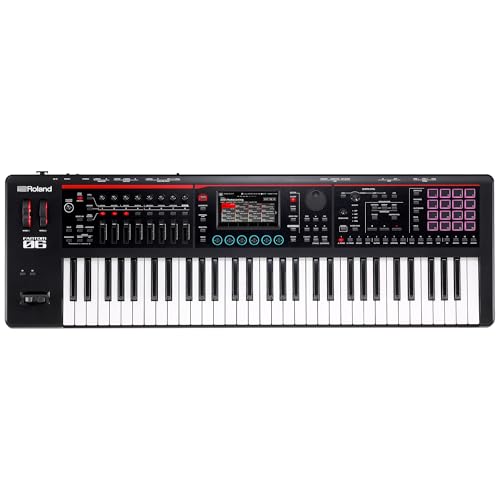
- Flagship 61-note synthesizer keyboard with thousands of electronic and acoustic sounds powered by Roland’s advanced ZEN-Core, V-Piano and SuperNATURAL technologies, with authentic acoustic grand...


- 61-key Synth Workstation with Synth-action Keybed

- Gig-Ready Keyboard Design: Professional sounds with an intuitive workflow, enhanced performance features, and support for USB-C mobile battery power
First Impressions: The Yamaha REFACE DX Portable FM Synthesizer Unboxed
Taking the Yamaha REFACE DX Portable FM Synthesizer out of the box is a surprising experience. Given its “Reface” branding, we were expecting something that felt a bit like a gadget. Instead, we were met with a sleek, jet-black instrument that feels undeniably “pro.” At 6 pounds, it has enough heft to stay put on a stand, yet it’s light enough to hold with one hand while you’re tweaking sounds. The 37-key “HQ” mini keyboard is the first thing your fingers touch, and the difference is immediate. Unlike the mushy, clicky keys found on cheap MIDI controllers, these have a refined travel and “initial touch” sensitivity that invites actual playing, not just step-sequencing.
The layout is minimalist but effective. The backlit LCD is crisp, and the four capacitive touch sliders are a bold departure from traditional knobs. When we first powered it on, the built-in speakers delivered a surprisingly clear stereo image—perfect for those “aha!” moments of inspiration on the couch. Compared to previous DX iterations, the Yamaha REFACE DX Portable FM Synthesizer feels like it has finally brought FM synthesis into the 21st century. It doesn’t feel like a relic; it feels like the future of portable production. You can see its full feature set and user reviews to understand why this specific build is winning over so many skeptics.
What We Like
- Highly expressive 4-operator FM engine with feedback on all operators.
- HQ mini-keys provide the best playing experience in the small-format market.
- Multi-touch interface makes FM programming intuitive for the first time.
- Exceptional build quality that feels sturdy and professional, not “toylike.”
What We Didn’t Like
- Limited to 32 onboard presets (though more are available via the Soundmondo app).
- Mini-keys may still feel cramped for those with very large hands or classical training.
Deep Dive: The Performance and Versatility of the Yamaha REFACE DX Portable FM Synthesizer
The Sound Engine: A New Evolution of 4-Operator FM
The heart of the Yamaha REFACE DX Portable FM Synthesizer is its 4-operator FM engine. For those unfamiliar with FM, it involves using one waveform (the modulator) to change the frequency of another (the carrier). In our deep-dive testing, we found that Yamaha’s decision to include continuously variable feedback on *every* operator is a total game-changer. In the old days of the DX7, feedback was limited to a single operator. Here, you can turn any operator into a noise generator or a saw-tooth-like wave simply by sliding your finger. This allows for a massive range of tones, from the classic “glassy” electric pianos of the 80s to modern, aggressive dubstep-style growls.
We spent hours crafting pads that evolve over time, and the clarity of the 32-voice memory locations made it easy to save our favorite iterations. The sound is clean, punchy, and surprisingly loud through the internal speakers. When plugged into a professional studio monitor setup, the Yamaha REFACE DX Portable FM Synthesizer reveals its true colors—the bass is tight, and the high-end shimmer is free of the digital aliasing that plagues cheaper FM recreations. It captures the “signature sounds” of the DX7 lineage while adding a modern grit that we find essential for current electronic music genres. If you’re looking for that specific sparkle, you can check the latest price and availability for this sonic powerhouse.
The Interface: Multi-Touch Sliders and Intuitive Editing
If you’ve ever tried to program an original FM synth, you know the pain of “one-data-slider” editing. The Yamaha REFACE DX Portable FM Synthesizer completely solves this with its four multi-touch sliders. These capacitive strips allow you to adjust four parameters simultaneously. In our workflow, this meant we could tweak the frequency ratios of all four operators at once, leading to “happy accidents” that would be impossible on a menu-driven system. It makes the synthesizer feel more like a live performance instrument and less like a calculator.
The visual feedback on the LCD is also excellent. As you move the sliders, you see the operator algorithms change in real-time. This tactile connection is something we found missing in VST instruments. We also appreciated the inclusion of a phrase looper, which is incredibly useful for capturing a riff and then using both hands to manipulate the FM parameters. This is a feature that really sets it apart from other portable units that often require an external sequencer to get the most out of the sound engine. Whether you are a beginner or an FM expert, the learning curve here is refreshingly shallow.
The Keys and Playability: HQ Mini-Key Standard
One of the most contentious topics in the synth community is the “mini-key.” We have tested dozens of portable keyboards, and we can confidently state that the keys on the Yamaha REFACE DX Portable FM Synthesizer are in a league of their own. Yamaha calls them “HQ” (High Quality) keys, and the marketing actually rings true. They are based on the action found in their flagship workstation keyboards, just scaled down. They have a certain “springiness” and resistance that allows for fast, natural performance. We found that we could play complex chords and fast lead lines with significantly more accuracy than on other mini-key instruments.
As one user noted in their feedback, the keys initially seem small, but they “actually play and feel great.” We agree. The addition of a pitch lever and an octave lever further expands the playability. While someone looking for a full-size DX7 replacement might find the size an adjustment, the portability trade-off is well worth it. Being able to run this unit on 6 AA batteries for hours means you can practice or compose literally anywhere—from a park bench to a tour bus. This level of freedom is hard to overstate for the creative mind.
Onboard Effects and Connectivity: The Final Polish
A dry FM sound can often feel a bit “sterile.” Yamaha clearly understood this, equipping the Yamaha REFACE DX Portable FM Synthesizer with two onboard multi-effects processors. You get seven effect types, including delay, reverb, chorus, and distortion. In our evaluation, the “Touch Wah” and “Chorus” were standouts, adding a vintage warmth that perfectly complements the digital nature of FM. These effects are “per voice,” meaning they don’t just sit on top of the sound but feel integrated into the patch itself.
Connectivity-wise, the back panel is impressively crowded for such a small device. You have dual 1/4″ unbalanced line outputs (essential for pro recording), a 3.5mm aux input for jamming along to tracks, and a dedicated headphone jack. Most importantly, the MIDI connectivity is handled via a breakout cable, allowing you to use the Yamaha REFACE DX Portable FM Synthesizer as a high-quality controller for your other gear. We used it to trigger several rack-mount synths, and the HQ keys made it a preferred controller over many larger, cheaper-feeling keyboards. To see the full array of ports and layout, you can view the high-resolution images and specifications here.
What Other Users Are Saying
The general sentiment surrounding the Yamaha REFACE DX Portable FM Synthesizer is overwhelmingly positive, especially regarding its build quality and sound fidelity. Many users who grew up with the original DX7 have expressed a sense of nostalgia combined with relief at the improved interface. One enthusiast who has owned the unit for over six months highlighted its versatility as a MIDI controller and its portability, noting that the small keys represent no problem for practicing or composing in any environment. This confirms our finding that the “mini” aspect is a benefit rather than a drawback for most modern use cases.
On the flip side, some users have expressed frustration with the size. One reviewer mentioned that while it has the “signature sounds” of the classic DX7, it felt “too small” for their preference, suggesting they would rather have a full-size vintage unit. We believe this highlights the importance of knowing your own needs; if you prioritize a 1:1 vintage experience, the Reface might feel diminutive. However, another user was “pleasantly surprised at how sturdy the construction is,” dispelling fears that this is a “flimsy plastic thing.” Most users agree that for the price and portability, the trade-offs are well-managed by Yamaha’s engineering team.
Comparing the Yamaha REFACE DX Portable FM Synthesizer to Top Alternatives
1. MOOG Theremini Theremin with Pitch Correction
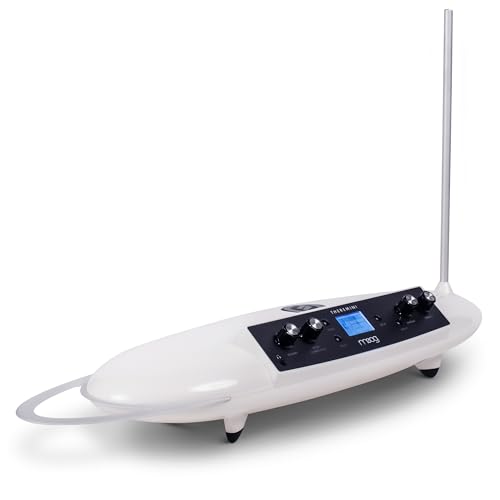
- Get Started with Ease - Great for beginners or experienced musicians, Theremini's assistive pitch correction allows each player to adjust the instrument's level of playing difficulty
- Develop Your Musicianship - Improve your pitch accuracy; A built-in tuner uses the LCD to supply real-time visual feedback of each note as it is played, as well as its proximity to perfection
The Moog Theremini is a completely different beast, focusing on gesture-based performance rather than traditional keys. While the Yamaha REFACE DX Portable FM Synthesizer is a structured melodic tool, the Theremini uses the Animoog sound engine to create ethereal, haunting textures. It’s an excellent choice for experimental musicians or film composers who want to move away from the keyboard paradigm. However, if you need to play chords or integrate into a standard pop/electronic workflow, the Reface DX is far more practical. The Theremini is for those who want to “play the air,” while the Yamaha is for those who want to “program the future.”
2. Arturia MicroFreak 25-Key Hybrid Synthesizer
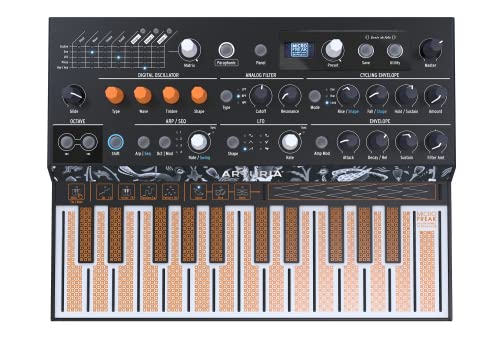
- EXPERIMENTAL HYBRID SYNTH: MicroFreak packs so much into such a compact instrument, you'll wonder how we did it. From physical modeling to wavetable synthesis, it features 17 awesome paraphonic...
- UNIQUE KEYBOARD: It isn’t really even a keyboard, it’s a super-flat PCB with no moving parts. The 25-key printed circuit board not only tracks the notes you play with lightning-speed, but can also...
The Arturia MicroFreak is perhaps the closest competitor in terms of “weirdness” and portability. It features a touch-plate PCB keyboard which is even more radical than Yamaha’s mini-keys. While the MicroFreak offers a hybrid of digital oscillators and analog filters, the Yamaha REFACE DX Portable FM Synthesizer provides a pure, deep FM experience with 37 keys versus the Freak’s 25. The MicroFreak is better for those who want a “jack-of-all-trades” experimental synth, but the Yamaha offers a more traditional playing feel and the specific, crystalline clarity of FM that the MicroFreak can’t quite replicate.
3. KORG MicroKorg2 Synthesizer/Vocoder

- Features 37 full-size keys for expressive performance and dynamic play
- Boasts a 2.8-inch full-color IPS LCD display for easy and intuitive sound editing
The MicroKorg2 is the latest iteration of the most popular “mini synth” of all time. It focuses primarily on Virtual Analog synthesis and vocoding. Compared to the Yamaha REFACE DX Portable FM Synthesizer, the MicroKorg2 is better suited for those who want classic “sawtooth” and “square” wave sounds and a microphone for vocal processing. However, the Reface DX wins on build quality—the MicroKorg series has always felt a bit more plasticky. If you want the grit and complexity of FM synthesis, the Korg will leave you wanting. If you want to sing like a robot, the Korg is your winner.
Final Verdict: Is the Yamaha REFACE DX Portable FM Synthesizer Worth It?
After weeks of testing, it’s clear that the Yamaha REFACE DX Portable FM Synthesizer is a triumph of modern design. It successfully takes one of the most complex forms of synthesis and makes it accessible, portable, and—most importantly—fun. Its main strengths lie in its “HQ” keybed, which is arguably the best in its class, and its innovative multi-touch interface that finally makes FM programming intuitive. While the 32-slot memory is a bit lean and the mini-keys won’t suit everyone, the overall package is incredibly compelling for the price point. We recommend it to any producer looking to add “pro-grade” FM textures to their arsenal without losing desk space, and to any live performer who needs a reliable, battery-powered synth for mobile setups.
In a world of disposable gadgets, this feels like a real instrument that will last for years. It’s a bridge between the digital history of the 80s and the mobile production needs of today. If you are ready to take your sound design to the next level with a tool that is as inspiring as it is compact, we highly recommend you pick up the Yamaha REFACE DX Portable FM Synthesizer today and start exploring its endless sonic possibilities.
Last update on 2026-09-14 / Affiliate links / Images from Amazon Product Advertising API