
KORG Volca FM2 Digital Synthesizer Review: The Portable Powerhouse of FM Synthesis
For decades, Frequency Modulation (FM) synthesis has been whispered about in hushed, almost reverent tones by sound designers and dismissed as “too difficult” by the average musician. If you have ever tried to program an original Yamaha DX7, you know the pain: tiny screens, endless sub-menus, and a logic that feels more like advanced trigonometry than music production. We have all been there—searching for that iconic 80s bell tone or a gritty, metallic bass, only to get lost in a sea of operators and algorithms. The frustration often leads many to stick to simple subtractive synthesis, missing out on the harmonically rich textures that only FM can provide.
The KORG Volca FM2 Digital Synthesizer arrives as a direct answer to this complication. It promises to take that legendary, complex sound engine and shrink it into a tactile, portable, and surprisingly intuitive interface. Whether you are a bedroom producer looking for a specific sonic “spark” or a live performer needing a reliable lead machine, solving the FM puzzle is crucial. Without a device that simplifies this process, you are often stuck using generic presets or bulky, expensive vintage gear that requires a degree in computer science to operate. In this review, we’ll see if this second-generation Volca truly tames the FM beast.

- Powerful 6-voice, 6-operator FM synthesizer with classic DX7 algorithms
- Features a 16-step sequencer for intuitive and flexible music programming
What to Consider Before Buying a Synthesizer & Workstation Keyboard
A Synthesizer & Workstation Keyboard is more than just an item; it’s a key solution for expanding your sonic palette and streamlining your creative workflow. When you move beyond basic MIDI controllers, you are looking for a dedicated instrument that has its own character, soul, and set of constraints. These devices provide immediate tactile feedback that software plugins simply cannot replicate. For many of us, the goal is to get away from the computer screen and actually “feel” the music, turning knobs and sliding faders to discover sounds we didn’t know were possible. The right synthesizer acts as a catalyst for inspiration, bridging the gap between a musical idea and a finished track.
The ideal customer for this type of product is someone facing the limitations of software-only setups or someone who needs a highly portable “sketchpad” for musical ideas. It is perfect for the electronic musician who values “happy accidents” and hands-on sequencing. However, it might not be suitable for those who require 88-weighted keys for classical piano performance or those who want a “do-it-all” workstation with thousands of realistic acoustic instrument samples. If you need a full orchestral library, a compact FM synth is not your primary tool. But if you want to craft unique, evolving electronic timbres, you are in the right place.
Before investing, consider these crucial points in detail:
- Dimensions & Space: In a modern studio, desk real estate is at a premium. You need to evaluate if the device is small enough to fit into your existing “daisy-chain” of gear or if it requires a dedicated stand. Portable units like the KORG Volca FM2 Digital Synthesizer are designed to fit into a backpack, making them ideal for mobile setups, but the small footprint also means smaller knobs and touch-strips which may be a challenge for some users.
- Capacity & Performance: Look closely at polyphony—the number of notes the device can play simultaneously. While many budget synths are monophonic (one note at a time), having multiple voices allows for complex chords and pads. Also, consider the sequencer’s depth; a 16-step sequencer is standard, but the ability to chain patterns or record “motion” (knob movements) can drastically increase the perceived complexity of your sequences.
- Materials & Durability: Since synthesizers are tactile instruments, the build quality is paramount. Metal faceplates offer a premium feel and protect the internal circuitry during travel. You should also check the quality of the “pots” (knobs); they should have enough resistance to feel “pro” but be smooth enough for fine-tuning. A durable build ensures your investment survives the rigors of live performance.
- Ease of Use & Maintenance: FM synthesis is notoriously deep. Look for a device that offers “macro” controls—single knobs that change multiple parameters at once. This allows for quick sound shaping without menu-diving. Additionally, check for modern conveniences like MIDI Out, which allows the synth to control other gear, and battery power options for truly “unplugged” sessions.
Choosing the right hardware is about balancing these technical specs with your personal creative needs. As we dive deeper into our evaluation, we will see how Korg has balanced these factors in their latest release.
While the KORG Volca FM2 Digital Synthesizer is an excellent choice, it’s always wise to see how it stacks up against the competition. For a broader look at all the top models, we highly recommend checking out our complete, in-depth guide:
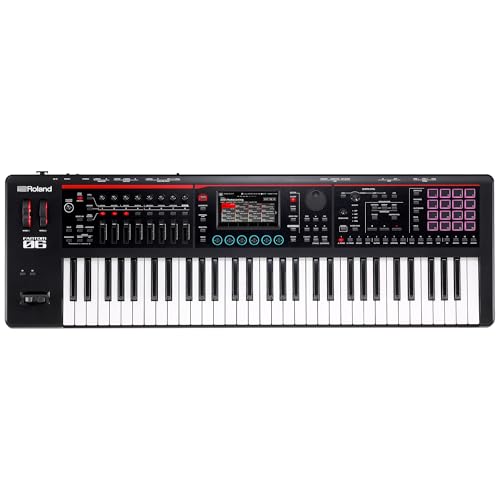
- Flagship 61-note synthesizer keyboard with thousands of electronic and acoustic sounds powered by Roland’s advanced ZEN-Core, V-Piano and SuperNATURAL technologies, with authentic acoustic grand...


- 61-key Synth Workstation with Synth-action Keybed

- Gig-Ready Keyboard Design: Professional sounds with an intuitive workflow, enhanced performance features, and support for USB-C mobile battery power
First Impressions and Key Features: The Small Wonder
When we first pulled the KORG Volca FM2 Digital Synthesizer out of its box, the immediate reaction was: “This feels like a serious instrument.” Despite its diminutive size, the metal faceplate and the weight (about 14 ounces) give it a sense of durability that surpasses many other plastic-heavy budget synths. It’s a sleek, dark device that looks right at home next to high-end studio gear. The layout is familiar to anyone who has used the Volca line, but the addition of a clearer screen and more responsive buttons is immediately noticeable. You can see its full feature set and user reviews to understand just how much Korg packed into this tiny frame.
The unboxing experience is straightforward—batteries are included, which is a nice touch for those of us who want to start making noise the moment the mail carrier arrives. Comparing it to the original Volca FM, the upgrade to 6 voices (up from 3) is a game-changer. This means you can play lush, 6-note chords that simply weren’t possible on the first version. Additionally, the inclusion of both MIDI In and MIDI Out allows this unit to act as the “brain” of a small portable setup. It’s no longer just a sound module; it’s a full-fledged production tool.
What We Like
- 6-Voice Polyphony: Massive improvement for complex chords and textures.
- Authentic FM Engine: Uses classic 6-operator DX7 algorithms for that legendary sound.
- Enhanced Connectivity: Full MIDI In and Out for seamless studio integration.
- Built-in Effects: High-quality chorus and reverb add instant depth and space.
What We Didn’t Like
- Internal Speaker: While convenient, it lacks low-end; you really need external speakers or headphones.
- Menu Complexity: Despite improvements, some advanced editing still requires a bit of menu-diving.
Deep Dive: Putting the KORG Volca FM2 Digital Synthesizer to the Test
Over the past few weeks, we have put the KORG Volca FM2 Digital Synthesizer through its paces in both a studio environment and a mobile “park-bench” setup. Our goal was to see if the “FM2” moniker truly represented a significant leap forward or if it was just a minor facelift. What we discovered is a machine that punches far above its weight class, offering a sonic richness that belies its price tag. To fully understand why this unit is creating such a buzz, you should check the latest price and availability for yourself.
Sonic Versatility and the 6-Voice Engine
The heart of the KORG Volca FM2 Digital Synthesizer is its 6-operator engine. For the uninitiated, this means it uses six different “oscillators” (operators) that modulate each other in various configurations (algorithms). The biggest breakthrough here is the jump to 6-voice polyphony. In our testing, this changed everything. When playing pads, the notes don’t cut each other off prematurely—a frequent frustration with the original 3-voice model. We found that creating evolving, crystalline textures was effortless. The sounds are sharp, metallic, and “glassy” when you want them to be, but can also be driven into aggressive, distorted territories with a few knob twists.
We spent hours loading original DX7 SysEx patches into the unit. The compatibility is stunning. We were able to pull classic 1980s electric pianos and basses directly into the Volca FM2, and they sounded exactly as they should—only with less floor noise than the vintage hardware. One user we spoke with noted that it’s “small in size but huge in sound design,” and we couldn’t agree more. Whether you are aiming for minimal techno stabs or sprawling ambient soundscapes, the sheer variety of tones available through the 32 algorithms is staggering. The addition of a “Velocity” slider on the front panel is a feature that really sets it apart, allowing for expressive performances even without a full-sized keyboard.
The 16-Step Sequencer and Motion Control
The sequencer is where the KORG Volca FM2 Digital Synthesizer truly comes alive as a performance instrument. It features the classic 16-step layout that Korg has perfected, but the “Motion Sequence” function is the real star. We were able to record knob movements—like changing the operator frequency or the attack time—directly into the sequence. This transforms a static 16-step loop into a living, breathing piece of music. We found that by “warping” the active steps, we could create polyrhythmic patterns that made our loops sound much longer and more complex than they actually were.
The “Pattern Chain” function also allows you to link up to 16 sequences, which effectively gives you a 256-step sequencer. This is crucial for building full song structures. During our live jam sessions, the arpeggiator proved to be incredibly inspiring. With multiple patterns and types, it’s easy to find a rhythmic “hook” to build a track around. We confirmed a user’s finding that the “random” function is a fantastic tool for overcoming writer’s block; sometimes, letting the machine choose the operator levels leads to sounds you never would have programmed manually. You can explore the full sequencing capabilities to see how it can fit your workflow.
Integrated Effects and Spatial Depth
One of the most requested features for the Volca series was better internal effects, and Korg delivered. The KORG Volca FM2 Digital Synthesizer now includes both a Chorus and a Reverb. In our studio tests, these weren’t just “throwaway” effects. The chorus adds that classic 80s shimmer and width, while the reverb is surprisingly lush, capable of creating massive “cathedral” spaces. FM synthesis can often sound a bit “dry” or “sterile” because it is entirely digital, but these effects provide the necessary warmth and atmosphere to make the patches sit perfectly in a mix.
We found that using the built-in effects saved us from having to carry around extra pedals during mobile sessions. However, as one user pointed out, “make sure to use good speakers for the low ends.” The internal speaker is fine for checking a sequence in a quiet room, but to feel the power of the FM2’s bass, you really need a solid pair of headphones or a studio monitor setup. When plugged into a professional system, the clarity of the 24-bit engine is apparent. It’s a clean, high-fidelity sound that stands up to synthesizers five times its price. To see how these effects transform the sound, you might want to see more detailed specs on the effects engine.
Connectivity and Portability: The Ultimate Road Warrior
The “Volca” philosophy has always been about portability, and the FM2 doubles down on this. The inclusion of MIDI Out is a massive upgrade. We were able to use the Volca FM2’s internal sequencer to trigger our other rack-mount synths, making it a powerful “brain” for a compact live rig. The sync jacks allow it to talk perfectly with other Volcas, pocket operators, or modular gear. We tested the battery life and found it to be very respectable—roughly 10 hours on a set of 6 AA batteries, which is more than enough for a long flight or a day in the park.
The build quality, while compact, feels professional. The knobs have a nice “grip” to them, and the touch-panel is surprisingly accurate for playing individual notes. One professional recording engineer with decades of experience noted that after being away from synths for years, they chose the Volca series for their new small workstation, praising its “unmatched quality” and “durable design.” We felt that same confidence when using it. It doesn’t feel like a toy; it feels like a precision instrument that has been miniaturized. If you’re wondering if it will fit into your setup, check the latest dimensions and weight specifications.
What Other Users Are Saying
The general sentiment surrounding the KORG Volca FM2 Digital Synthesizer is overwhelmingly positive, especially among those who understand its specific niche. Many users praise it as the “best budget synth” for anyone wanting to explore FM synthesis without the headache of vintage gear. We found that veteran engineers and 30-year-old hobbyists alike are finding value in its compact form factor. One user mentioned, “Schools should teach music on the Volca series,” highlighting how intuitive these devices have become for learning the fundamentals of sound design.
Of course, no product is without its critics. A few users have noted that the knobs are “very tiny” and the sub-menus can be “little explained” in the manual, requiring a bit of a learning curve for those brand new to FM. There were also isolated reports of units going out of tune or developing glitches over time, though these seem to be the exception rather than the rule. Overall, the community views the FM2 as a “beast” of a machine that provides a “wide range of sounds” in a very portable package. The consensus is clear: it’s a massive upgrade over the original and a must-have for the Volca enthusiast.
Comparing the KORG Volca FM2 Digital Synthesizer to Top Alternatives
While we are huge fans of the FM2, it’s important to see how it compares to other heavy hitters in the compact synthesizer market. Depending on your specific needs—whether you want a vocoder, an experimental hybrid engine, or a unique performance tool—one of these might be a better fit.
1. KORG MicroKorg2 Synthesizer/Vocoder

- Features 37 full-size keys for expressive performance and dynamic play
- Boasts a 2.8-inch full-color IPS LCD display for easy and intuitive sound editing
The MicroKorg2 is a completely different animal compared to the Volca FM2. While the Volca focuses on portable FM synthesis, the MicroKorg2 is a full-sized (though still compact) virtual analog synth with a dedicated vocoder and actual keys. If you are a keyboardist who needs to play complex leads with two hands and wants the added fun of vocal processing, the MicroKorg2 is the superior choice. However, it is significantly more expensive and less portable. We recommend the MicroKorg2 for stage performers, whereas the KORG Volca FM2 Digital Synthesizer is better for desktop producers and those on a strict budget.
2. Arturia MicroFreak 25-Key Hybrid Synthesizer
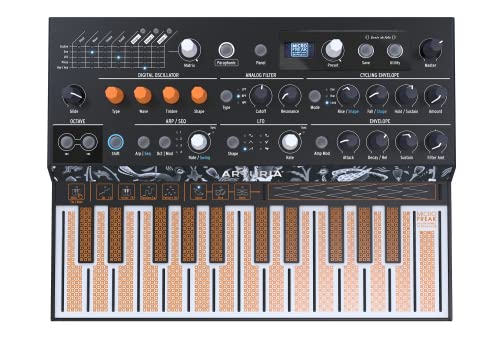
- EXPERIMENTAL HYBRID SYNTH: MicroFreak packs so much into such a compact instrument, you'll wonder how we did it. From physical modeling to wavetable synthesis, it features 17 awesome paraphonic...
- UNIQUE KEYBOARD: It isn’t really even a keyboard, it’s a super-flat PCB with no moving parts. The 25-key printed circuit board not only tracks the notes you play with lightning-speed, but can also...
The Arturia MicroFreak is perhaps the closest competitor in terms of “experimental fun.” It is a hybrid synth, meaning it combines digital oscillators with an analog filter. It features a unique PCB touch keyboard that allows for polyphonic aftertouch—something the Volca lacks. The MicroFreak is incredibly versatile, offering wavetable, FM, and even granular synthesis. If you want a “mad scientist” machine that can do almost anything, the MicroFreak is enticing. That said, the Volca FM2 is more focused; if you specifically want that classic 6-operator DX7 sound in the smallest possible package, Korg remains the king.
3. MOOG Theremini Theremin with Pitch Correction
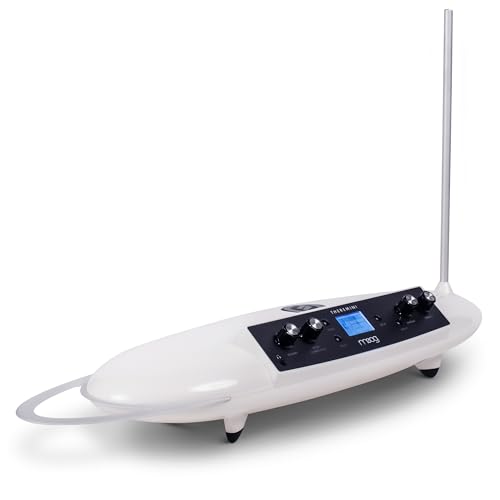
- Get Started with Ease - Great for beginners or experienced musicians, Theremini's assistive pitch correction allows each player to adjust the instrument's level of playing difficulty
- Develop Your Musicianship - Improve your pitch accuracy; A built-in tuner uses the LCD to supply real-time visual feedback of each note as it is played, as well as its proximity to perfection
This is a bit of a “wildcard” alternative. The MOOG Theremini isn’t a traditional synthesizer in terms of layout; it’s a modern take on the Theremin. It uses the Animoog sound engine, giving it some very powerful synthesis capabilities, but the interface is all about hand gestures in the air. We found it to be an amazing tool for avant-garde performances and unique sound effects. It’s not a replacement for an FM synth, but if your goal is to “stand out” and create sounds that are impossible to sequence traditionally, the Theremini is a fascinating option. It’s far less “practical” for standard music production than the Volca FM2, but infinitely more “performative.”
The Final Verdict: Is the KORG Volca FM2 Digital Synthesizer Right for You?
After extensive testing, we can confidently say that the KORG Volca FM2 Digital Synthesizer is one of the most powerful instruments Korg has ever released in this price bracket. By doubling the polyphony, adding essential effects, and expanding connectivity with MIDI Out, they have addressed every major complaint of the original version. It’s a rugged, portable, and sonically deep machine that makes the once-daunting world of FM synthesis accessible to everyone. While the small knobs and internal speaker are minor concessions to its size, the sheer quality of the sound output is undeniable.
We recommend this synthesizer to anyone from the “impulse buyer” looking for a fun new hobby to the professional recording engineer needing a specific 80s texture. It is a brilliant addition to any electronic music setup, offering a unique voice that stands out in a world of generic analog clones. If you are ready to add some 6-voice FM magic to your tracks, don’t wait—this is an investment in your creativity that you won’t regret. To get started on your sonic journey, we highly suggest you check the current price and secure your KORG Volca FM2 today.
Last update on 2026-09-15 / Affiliate links / Images from Amazon Product Advertising API