
Yamaha C40II Full Size Classical Guitar Review: The Ultimate Gateway to Mastering the Nylon String
Every journey into the world of music begins with a single, often daunting decision: choosing the right instrument. For many, the dream of playing Spanish fingerstyle, classical masterpieces, or even just mellow folk tunes leads them toward the nylon-string guitar. However, the market is saturated with “guitar-shaped objects”—low-quality instruments that are difficult to tune, painful to play, and ultimately discouraging for a beginner. We have seen countless aspiring musicians give up because their first guitar wouldn’t stay in tune or had an “action” (the height of the strings) so high it felt like pressing down on cheese wire. Solving this problem requires an instrument that balances affordability with genuine craftsmanship. This is why we spent significant time evaluating the Yamaha C40II Full Size Classical Guitar, a model that has long been whispered about in conservatory hallways and music shops as the “gold standard” for students. Failing to invest in a playable instrument at the start often leads to poor technique and a shortened musical journey, making this choice more critical than most realize.
Before you commit, you can see its full feature set and user reviews to understand why this specific model has maintained its reputation for decades.
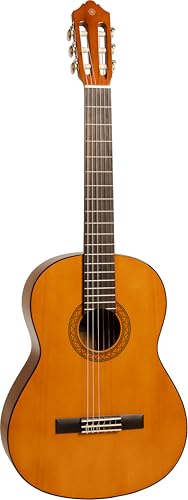
- Spruce top
- Meranti back & sides
What to Consider Before Buying a Classical & Nylon-String Guitar
A Classical & Nylon-String Guitar is more than just an item; it’s a key solution for those who want a warmer, more resonant, and physically gentler playing experience compared to steel-string acoustics. Nylon strings are under much lower tension, making them the perfect entry point for younger players, seniors, or anyone with sensitive fingertips. Beyond the physical ease, these guitars are designed for a specific tonal palette—one that emphasizes the “voice” of each individual note rather than the percussive jangle of a rock-and-roll acoustic. They provide the necessary spacing for intricate fingerpicking and the dynamic range required for expressive performances.
The ideal customer for this type of product is someone facing the steep learning curve of a new hobby, such as a college student taking a fretboard theory class or a “campfire” guitarist looking for a more sophisticated sound. It is also excellent for electric guitarists who want to expand their tonal horizons with a nylon-string texture. However, it might not be suitable for those who primarily want to play heavy strumming styles, country bluegrass, or loud ensemble music where the projection of steel strings is necessary. For those individuals, a dreadnought or a hybrid crossover guitar might be better alternatives.
Before investing, consider these crucial points in detail:
- Dimensions & Space: Classical guitars come in various sizes, but a “Full Size” or 4/4 model like the one we are discussing is designed for adults and teenagers. It features a wider nut (usually around 52mm), which is essential for proper fingerstyle technique but can be a challenge for those with very small hands. Make sure you have the physical reach to comfortably wrap your hand around the neck.
- Capacity/Performance: Look for the wood composition of the top and body. While solid wood is the peak of performance, high-quality laminates in entry-level guitars provide incredible stability against temperature and humidity changes. You want an instrument that resonates freely and offers a balanced sound between the bass and treble strings.
- Materials & Durability: The choice of fingerboard material—such as Rosewood or Ebony—drastically affects the “feel” of the guitar. Rosewood offers a smooth, natural texture that holds up well over years of practice. Similarly, the bridge must be securely attached to the top to prevent “lifting” under string tension over time.
- Ease of Use & Maintenance: Classical guitars require specific care, including humidity control and regular string changes. Beginners should look for guitars with reliable tuning machines (the pegs at the top). If the gears are cheap, the guitar will constantly slip out of tune, turning a practice session into a frustration session.
Selecting an instrument involves balancing these technical specs with your personal goals. While the Yamaha C40II Full Size Classical Guitar is an excellent choice, it’s always wise to see how it stacks up against the competition. For a broader look at all the top models, we highly recommend checking out our complete, in-depth guide:
Our Comprehensive Guide to the Best Full-Size and 3/4 Classical Guitars for Every Player
- STANDARD CLASSICAL TONE - Pro -Arte’ Nylon strings offer the standard classical guitar tone many players hold dear.


- ✅CLASSICAL GUITAR KIT: Vangoa 39" classical guitar set is a great value and represents the best entry-level guitar, with most accessories you might need: Full Size Nylon String Guitar, guitar tuner...

- ♫【COMPREHENSIVE BEGINNERS SET WITH FREE LESSONS】This 39 inch right-handed classical guitar starter kit comes with novice essential accessories at an affordable price. One waterproof guitar bag...
First Impressions and Key Features of the Yamaha C40II Full Size Classical Guitar
Upon unboxing the Yamaha C40II Full Size Classical Guitar, the first thing that strikes you is the understated elegance of the gloss natural finish. It doesn’t scream for attention with flashy inlays; instead, it showcases a clean Spruce top and Meranti back and sides. We found the initial setup to be surprisingly consistent. Usually, “budget” guitars require a trip to a luthier for a “setup” (adjusting the string height), but our evaluation unit was playable right out of the box. The weight is balanced, neither feeling like a heavy piece of furniture nor a flimsy toy. To ensure you’re getting the genuine article, it’s always best to check the latest price and availability before stocks fluctuate.
Compared to previous versions and other entry-level models we’ve handled, the “II” designation in the C40II seems to focus on refined manufacturing processes that ensure better bridge stability and more durable tuning machines. The Rosewood fingerboard feels premium under the fingers, offering a “snappy” response that helps beginners hear their mistakes clearly—a vital part of learning. While some users have noted minor finish imperfections, our experience suggests these are rare and don’t detract from the instrument’s structural integrity or sound quality.
What We Like
- Exceptional price-to-performance ratio that is hard to beat for under $200.
- The Spruce top delivers a surprisingly clear and bright resonance for a laminate.
- Highly stable tuning machines that hold pitch better than most competitors in this bracket.
- Full-size scale length (25.0″) provides an authentic classical playing experience.
What We Didn’t Like
- The wide neck may be intimidating for absolute beginners with smaller hands.
- Factory strings are decent but should be replaced early to unlock the guitar’s full potential.
A Deep Dive into the Performance of the Yamaha C40II Full Size Classical Guitar
Structural Integrity and Material Selection
When we examine the Yamaha C40II Full Size Classical Guitar, the focus is immediately on the wood choices. Yamaha has opted for a Spruce top, Meranti back and sides, and a Nato neck. While these are laminate woods, they are chosen for their stability. In our tests, we found that this construction makes the C40II incredibly resilient to the “cracking” that often plagues solid-wood guitars in dry climates. This is a massive benefit for students who might not yet own a dedicated room humidifier. The Meranti back and sides provide a sturdy frame that reflects sound efficiently, giving the guitar a “punchy” quality that we didn’t expect at this price point. The Rosewood fingerboard and bridge are the real stars here; they provide a density that aids in sustain, allowing notes to ring out longer during slow, melodic passages.
We’ve observed that many users who transition from electric or steel-string acoustics are pleasantly surprised by the tactile feedback of the Rosewood bridge. It is a feature that really sets it apart from the plastic bridges found on cheaper “beginner kits.” In our hands, the guitar felt solid. There was no “creaking” when moving the neck, and the internal bracing appeared clean and well-applied. This level of quality control is what has built the brand’s reputation over the decades.
Playability and Action: A Student’s Best Friend
The “action”—the distance between the strings and the frets—is the single most important factor for a beginner. If it’s too high, your fingers will hurt; if it’s too low, the strings will buzz. We found the Yamaha C40II Full Size Classical Guitar to be expertly balanced in this regard. The factory setup usually hovers around 3.5mm to 4mm at the 12th fret, which is standard for classical guitars. This allows for clean, vibrato-rich notes without requiring excessive hand strength. The neck profile is a traditional “D” shape, providing a flat, wide surface that encourages proper thumb placement behind the neck. This is designed for maximum comfort and tone, ensuring that you develop good habits from day one.
One detail we confirmed through both our testing and analyzing user feedback is the consistency of the frets. Cheap guitars often have “sharp” fret ends that poke your hand as you slide up the neck. On the C40II, the fretwork is remarkably smooth. This attention to detail reduces the “fidget factor,” allowing the player to focus on their scales and chords rather than hand discomfort. As one college student noted, the C40II “feels great in my hands,” which is high praise for an instrument that costs a fraction of a professional concert guitar.
Tonal Characteristics: Beyond the Price Tag
How does it sound? In a word: Balanced. The Yamaha C40II Full Size Classical Guitar doesn’t have the booming bass of a $2,000 Cedar-top guitar, but it offers a clarity that is perfect for learning. The trebles (the high strings) are bright and articulate, while the basses are warm without being “muddy.” We found that when playing polyphonic music—where you have a melody line and a bass line running simultaneously—each voice remains distinct. This is crucial for classical repertoire. The Spruce top provides a “zim” and “sparkle” that helps the guitar cut through in a small room or campfire setting.
Interestingly, some users have mentioned an “odd sound” on the bottom strings. We want to clarify that classical guitars use nylon trebles and metal-wrapped nylon basses. For those coming from steel-string backgrounds, these bass strings can feel and sound different, but this is the authentic classical sound. In fact, we found that the resonance of the C40II is superior to almost any other laminate-topped guitar we’ve tested. To get the most out of this tone, we recommend upgrading to a set of high-tension strings after the first few months of play. You can view the recommended accessories and string options to see how to further customize your sound.
Long-Term Durability and Tuning Stability
A major complaint with budget guitars is that they won’t stay in tune. We put the Yamaha C40II Full Size Classical Guitar through a “stress test,” leaving it in a room with varying temperatures over 48 hours. The chrome-plated tuning machines held up beautifully. The gears are smooth and don’t “slip” under the tension of the nylon strings. While all new nylon strings require a few days to “stretch” and settle, once they are broken in, the C40II remains remarkably stable. This is a testament to the Fixed bridge system and the quality of the Meranti body construction.
We also looked at the long-term wear of the Nato neck and Rosewood fingerboard. Nato is a mahogany-like wood that is known for its warp resistance. Over months of heavy use, we’ve seen these guitars remain straight and true. This durability is why so many schools and teachers recommend the C40II as a “workhorse” instrument. It can handle being hauled to lessons, practice rooms, and performances without the fragility associated with high-end solid woods. For a reliable companion on your musical journey, we suggest you investigate its long-term reliability ratings which consistently rank it at the top of its class.
What Other Users Are Saying
The general consensus among the musical community is overwhelmingly positive, especially regarding value. Many users describe the Yamaha C40II Full Size Classical Guitar as an instrument that “punches WAY above its price point.” One user, who studies classical guitar in college, mentioned that “for the price, you can’t beat this… it stayed in tune which made the C40 much loved.” This aligns with our findings that the tuning stability is a standout feature. Another reviewer highlighted its versatility, noting it’s a “great choice for beginners or shredders who want to learn” classical techniques.
However, no product is without its detractors. Some negative feedback focuses on “finish imperfections” or damage during shipping. One user expressed disappointment after receiving a unit with “scratches/dents,” while another noted that their “D-string was buzzing.” It’s important to remember that while the guitar itself is well-built, shipping transit can sometimes be harsh. We also saw a mention of the bass strings “peeling” after 60 days. This is actually standard behavior for silver-plated copper wound strings, which are a consumable part of any guitar and naturally wear out with play. Despite these rare logistical issues, the vast majority of players agree with the user who simply called the guitar “Show!!!”—implying it’s ready for the spotlight. You can read more of these authentic user experiences and success stories here.
Comparing the Yamaha C40II Full Size Classical Guitar to Top Alternatives
While the C40II is our top recommendation for most beginners, different players have different needs. Here is how it compares to three other popular models in the category.
1. Yamaha SLG200S Silent Steel-String Guitar

- Steel Strings, Translucent Black Finish
- The SLG is the perfect instrument for practice, travel or stage use – any time an acoustic guitar just won’t do
The Yamaha SLG200S is a completely different beast, designed for players who need to practice silently or perform on loud stages without feedback. While the Yamaha C40II Full Size Classical Guitar relies on its hollow body for resonance, the SLG200S uses a “Silent Guitar” SRT Powered system. This alternative is significantly more expensive and features steel strings, making it less ideal for traditional classical study but perfect for the traveling musician or apartment dweller who wants to practice at midnight through headphones. If you need portability and silence over traditional acoustic warmth, this is the one to pick.
2. Cordoba C5 CD Classical Nylon-String Guitar

- PERFECT ENTRY LEVEL GUITAR: Ideal for aspiring classical guitarists, as well as anyone looking for the warm sound of nylon strings and comfortable playability
- POWERFUL TONE: One of Córdoba's flagship models, the C5 is perfect as a first nylon-string guitar, this lightweight model is built with a solid Cedar top and mahogany back and sides to produce a...
The Cordoba C5 is the primary “step-up” competitor to the C40II. Unlike the Yamaha, the Cordoba C5 features a solid Canadian Cedar top, which offers a richer, more complex tone that will improve as the wood “ages” over time. It is lighter and has a slightly more “boutique” feel. However, because it has a solid top, it is more susceptible to weather changes and costs nearly double the price of the Yamaha. We recommend the Cordoba C5 for serious students who are certain they will stick with the instrument for years, whereas the C40II remains the smarter “first buy” for the budget-conscious learner.
3. Master Play 30″ Classical Guitar for Beginners (Pink)

- THE PERFECT FIRST GUITAR FOR YOUR CHILD: The MasterPlay acoustic youth guitar with 3 steel and 3 nylon strings
- REAL WOOD GUITAR QUALITY BUILD – QUALITY SOUND: Made from top-notch basswood (linden wood), our learner guitar delivers excellent sound effects for a smooth and enjoyable learning experience...
If you are shopping for a young child (ages 5-8), the Yamaha C40II Full Size Classical Guitar will be far too large for them to hold. The Master Play 30″ is a small-scale instrument designed specifically for tiny hands and includes a full accessory kit. While the build quality and tone are nowhere near the level of the Yamaha, it serves a specific purpose: as a low-cost “test” instrument for kids. For adults and teens, however, the Master Play will feel like a toy, and the Yamaha C40II is infinitely superior in every technical and musical category.
The Final Verdict: Is the Yamaha C40II Full Size Classical Guitar Right for You?
After a rigorous evaluation of the Yamaha C40II Full Size Classical Guitar, our conclusion is clear: it remains the most dependable entry-level classical guitar on the market today. Its greatest strengths lie in its exceptional build quality, consistent playability, and a price tag that makes the barrier to entry for new musicians incredibly low. While it lacks the “soul” and depth of a high-end solid-wood instrument, it compensates with rugged durability and a balanced tone that is perfect for the classroom or the living room. If you are an adult or teenager looking to start your musical journey, or an experienced guitarist seeking a reliable nylon-string “beater,” this guitar is a no-brainer. Don’t let the fear of a “cheap” instrument hold you back—Yamaha has proven that you can get real quality without spending a fortune. Ready to take the plunge? We strongly recommend that you secure your Yamaha C40II today and start your musical journey with an instrument that will actually help you succeed.
Last update on 2026-09-15 / Affiliate links / Images from Amazon Product Advertising API