
Behringer B-TRON III Auto-Wah Filter Pedal Review: The Ultimate Ticket to Vintage Funk and Psychedelic Soul
If you have ever spent hours trying to replicate the iconic, bubbly “ow-wah” sound found on classic Stevie Wonder tracks or Jerry Garcia’s legendary live solos, you know that a standard rocking wah pedal doesn’t quite cut it. The problem isn’t the tone itself; it’s the rhythm. Trying to sync your foot to a sixteenth-note funk groove while maintaining consistent filter sweeps is an exhausting physical feat. This is where the quest for the perfect envelope filter begins. Many of us search for that specific, touch-sensitive “quack” that responds to the pick’s attack, only to find that vintage units are either prohibitively expensive or incredibly temperamental. Failing to find a reliable filter means your funk lines lack that “vocal” quality, sounding flat and uninspired. I recently integrated the Behringer B-TRON III Auto-Wah Filter Pedal into my signal chain to see if it could finally solve this rhythmic dilemma without breaking the bank.
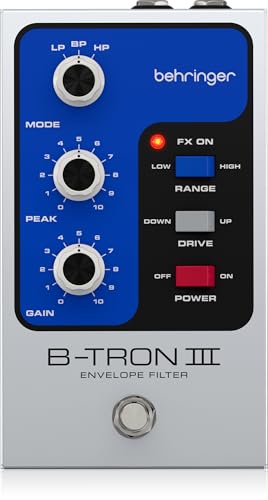
- Vintage Envelope Filter for Funky Tones: Bring back the iconic sound of the ‘70s with the Behringer B-TRON III ENVELOPE FILTER. Perfect for creating classic “Wah” or “vowel” effects that add...
- 3 Filter Types for Versatile Sound Shaping: Choose from low-pass, band-pass, or high-pass filter modes to dial in the perfect tone—whether you want a deep quack or a bright, high-frequency sizzle.
What to Consider Before Buying Electric Guitar Wah & Filter Effects
An Electric Guitar Wah & Filter Effect is more than just an item; it’s a key solution for guitarists, bassists, and synth players looking to add dynamic, vocal-like movement to their sound. Unlike a standard wah pedal, which is controlled by your foot, an envelope filter—often called an “auto-wah”—is controlled by the intensity of your playing. The harder you pluck the string, the “wider” the filter opens. This creates a symbiotic relationship between your hands and your tone, allowing for expressive phrasing that feels organic and alive. It solves the issue of static tone by introducing movement that follows the natural envelope of your notes.
The ideal customer for this type of product is someone facing the challenge of stagnant lead lines or thin-sounding rhythm parts, particularly in funk, R&B, or jam-band settings. It is perfect for those who want hands-free operation and a “set-and-forget” approach to rhythmic filtering. However, it might not be suitable for those who require total manual control over every sweep, or for players who prefer a very subtle, transparent boost. If you are looking for a traditional “vocal” sweep that you can park in one position, a standard treadle-style wah might be a better alternative.
Before investing, consider these crucial points in detail:
- Dimensions & Space: Consider the footprint on your pedalboard. Many vintage-style filters are notoriously large, taking up the space of two or three standard pedals. You need to ensure your board can accommodate the unit while still allowing access to the toggle switches and knobs.
- Capacity/Performance: Look at the filter types available. A truly versatile pedal should offer Low-Pass (LP), Band-Pass (BP), and High-Pass (HP) modes. This allows you to tailor the frequency response to your instrument, whether it’s a deep 5-string bass or a piercing lead guitar.
- Materials & Durability: Since these pedals are often used in high-energy live settings, the casing must be robust. Metal enclosures are the gold standard. Additionally, check if the pedal offers “True Bypass” to ensure your signal remains pure when the effect is disengaged.
- Ease of Use & Maintenance: These circuits can be sensitive to power supply variations. Always check the voltage and amperage requirements. Some vintage-style circuits are “picky” about where they sit in the signal chain, so ease of integration is a major factor for long-term satisfaction.
Choosing the right filter can be the difference between a muddy mess and a crisp, funky groove. While the Behringer B-TRON III Auto-Wah Filter Pedal is an excellent choice, it’s always wise to see how it stacks up against the competition. For a broader look at all the top models, we highly recommend checking out our complete, in-depth guide:

- THE BENCHMARK: The Cry Baby Standard Wah has been the modern touchstone for bold, expressive wah tones since the line came under Dunlop’s stewardship in 1982.

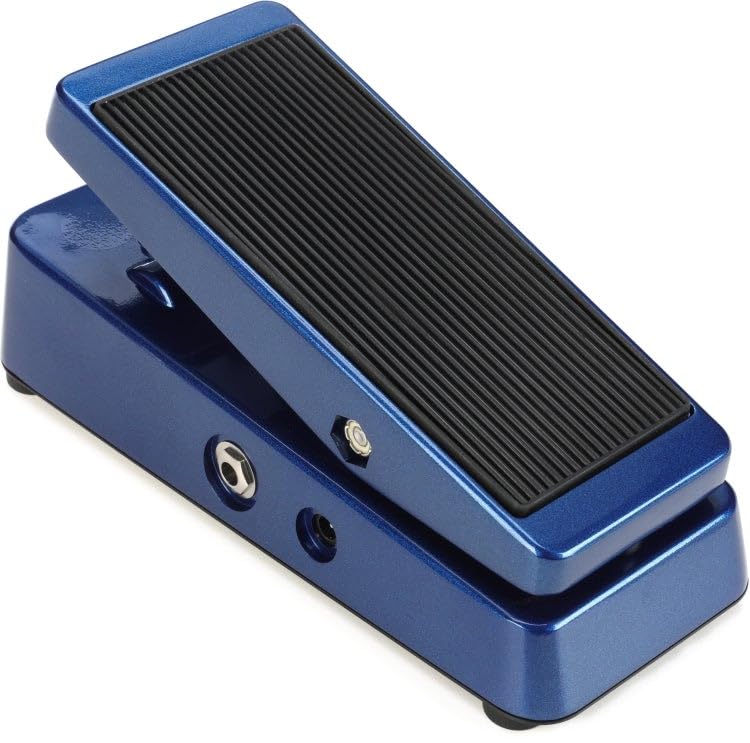
- Wah Pedal with Adjustable Torsion True Bypass Switching - Limited-edition Blue

- HALF THE SIZE, ALL THE EXPRESSION: The Cry Baby Mini Wah features a full sweep range so that you can save space without losing any of the expressive power of this iconic effect.
First Impressions and Key Features of the Behringer B-TRON III Auto-Wah Filter Pedal
Unboxing the Behringer B-TRON III Auto-Wah Filter Pedal felt like stepping back into 1978. The bold blue finish and the vintage-style knobs immediately signal its inspiration: the legendary Mu-Tron III. While some modern pedals opt for a “mini” form factor, the B-TRON III embraces a larger, sturdier footprint that feels substantial under your foot. I was particularly impressed by the tactile feel of the toggle switches; they have a satisfying “click” that suggests quality internal components. For anyone looking to see its full feature set and user reviews, you’ll notice it boasts three filter types and two direction modes, providing a level of depth usually reserved for pedals triple its price.
Upon initial setup, I noticed the Behringer B-TRON III Auto-Wah Filter Pedal feels surprisingly professional despite its entry-level price point. The layout is intuitive, though the interaction between the “Gain” and “Peak” knobs requires a bit of experimentation to master. Unlike market leaders that cost hundreds, Behringer has managed to include True Bypass and an analog signal path, ensuring that your core tone isn’t “sucked” away when the pedal is off. It’s a bold recreation of a rare and virtually extinct circuit, making it an exciting prospect for budget-conscious tone seekers.
Key Benefits
- Incredible value for an authentic Mu-Tron style analog circuit
- Versatile 3-mode filter (LP, BP, HP) works for guitar, bass, and keys
- True Bypass switching preserves your natural instrument tone
- “Drive” toggle allows for unique downward filter sweeps
Drawbacks
- Larger footprint may be difficult for small pedalboards
- Sensitive to input gain; requires time to dial in the “sweet spot”
Deep Dive: A Comprehensive Performance Analysis of the Behringer B-TRON III Auto-Wah Filter Pedal
The Magic of Three: Low-Pass, Band-Pass, and High-Pass Versatility
When I first plugged my Fender Stratocaster into the Behringer B-TRON III Auto-Wah Filter Pedal, I headed straight for the “Mode” switch. This is the heart of the pedal’s versatility. In the Low-Pass (LP) mode, the pedal retains the bottom end beautifully. This is a godsend for bassists. I tested this with a Precision Bass and found that even with the filter wide open, the foundational “thump” didn’t disappear—a common flaw in cheaper filters. It adds a thick, chewy layer to the notes that sounds incredibly “fat.”
Switching to Band-Pass (BP), you enter the classic “Wah” territory. This is where the Behringer B-TRON III Auto-Wah Filter Pedal really shines for funky rhythm guitar. The filter focuses on the mid-range frequencies, creating that iconic “vowel” sound. We found that the “Peak” control in this mode is exceptionally powerful; if you crank it, the resonance becomes almost synth-like. Finally, the High-Pass (HP) mode is perfect for those thin, chirpy “skank” rhythms. It cuts the lows and lets the high-frequency “quack” dominate. It’s an aggressive sound that cuts through a dense mix like a knife. This level of sonic shaping is exactly why many professionals check the latest price and availability for this specific model; it offers three distinct pedals in one housing.
Mastering the Envelope: Gain, Peak, and Direction
The real secret to the Behringer B-TRON III Auto-Wah Filter Pedal lies in how you balance the “Gain” and “Peak” knobs. The “Gain” isn’t an overdrive control; it’s the sensitivity threshold. It determines how hard you have to hit the string to trigger the filter sweep. I spent several hours finding the “sweet spot” where a soft touch yields a dark, mellow tone, while a hard snap of the strings produces a bright, percussive “POP.” This touch sensitivity is what makes the B-TRON III feel like a high-end boutique unit. It responds to the nuance of your playing, which is a feature that really sets it apart from digital “auto-wahs.”
Then there is the “Drive” switch (Up/Down). Most people are used to the “Up” sweep—the sound goes from “woof” to “ow.” But flipping it to the “Down” position reverses the logic. Now, your note starts bright and quickly closes down into a dark, honky thump. This is perfect for those “swimming” underwater sounds or psychedelic textures. We found that users often overlook the “Down” mode, but once you master the pick attack required for it, the Behringer B-TRON III Auto-Wah Filter Pedal becomes a creative tool for experimental music, not just funk. You can even a feature that really sets it apart to see how others have utilized these dual modes for unique synth-bass tones.
Integration and Power Requirements: Real-World Reliability
One aspect we must discuss is the technical requirement of the Behringer B-TRON III Auto-Wah Filter Pedal. It requires a 9V DC power supply, and while the specs mention 500mA, it actually draws significantly less in steady-state operation. However, analog filter circuits are notoriously sensitive to “dirty” power. During my testing, I used a high-quality isolated power supply, and the pedal was dead silent. Some users have reported issues with power supplies, and it is critical to ensure you aren’t daisy-chaining this with noisy digital pedals. When fed clean power, the analog signal path provides a warmth and “squish” that digital emulations simply cannot match.
The True Bypass feature is also a massive win. In a chain of 10 pedals, the last thing you want is a cheap buffer altering your high-end clarity. When the Behringer B-TRON III Auto-Wah Filter Pedal is off, it’s truly off. This makes it a “good neighbor” on your board. Given its robust construction and high-quality switching, it’s easy to see why someone would want to explore the technical specifications deeper before adding it to a professional touring rig. It handles the rigors of the road much better than the plastic enclosures Behringer was known for in the past.
Expression and Multi-Instrument Compatibility
While primarily marketed to guitarists, I took the liberty of testing the Behringer B-TRON III Auto-Wah Filter Pedal with a polyphonic synthesizer and even an electric ukulele. Because it reacts to the volume “envelope,” it works wonders on keyboards. It turned a standard saw-tooth lead into a bubbling, liquid-sounding techno riff. The dynamic range of the pedal is wide enough to handle the hot output of a keyboard without clipping harshly, provided you dial the “Gain” back slightly.
For the ukulele and mandolin players out there, this pedal adds a layer of fun that is hard to describe. It transforms these “traditional” instruments into funk machines. The Behringer B-TRON III Auto-Wah Filter Pedal is essentially a “fun factor” multiplier. If you’re bored with your current sound, adding this to your signal chain is a guaranteed way to spark new ideas. It’s rare to find a piece of gear that is this inspiring while remaining this affordable. I highly recommend you see how it can transform your rig by checking out some of the user-submitted sound clips online.
What Other Users Are Saying
The general sentiment surrounding the Behringer B-TRON III Auto-Wah Filter Pedal is overwhelmingly positive, especially regarding its price-to-performance ratio. Many users are shocked that they can get a faithful Mu-Tron recreation for such a low entry price. One enthusiastic user noted, “The funk just flows… I have run a 6 string, 5 string bass, a mandolin and even my Ukelele. All are more fun to play using the B-tron.” This highlights the pedal’s incredible versatility across different instruments.
Another reviewer praised its authenticity, stating, “It’s incredible that you can get this pedal at this price… there is no other circuit that provides this sound, warmth, touch.” However, it isn’t all sunshine and rainbows. A small subset of users has reported technical frustrations. One user mentioned a significant issue where the unit shorted their power supply, noting that “the drive up switch engaged the filter did not sweep down ever.” This suggests that while the design is brilliant, quality control can occasionally vary. Most expert users agree that using a high-quality, isolated power supply is non-negotiable for this pedal. Despite these rare technical hiccups, the consensus is that the B-TRON III is a “one-trick pony” that does its one trick—authentic vintage filtering—better than almost anything else in its class.
Comparing the Behringer B-TRON III Auto-Wah Filter Pedal to the Competition
While we love the B-TRON III, it is important to see how it compares to other industry standards. Depending on your specific needs—whether it’s manual control or a smaller footprint—one of these alternatives might suit you better.
1. VOX V847-A Classic Wah Guitar Effects Pedal

- Channels the classic VOX wah sound from the 1960s, known for its iconic tone
- Features a durable all-black coated finish for a sleek and rugged look
The VOX V847-A is the quintessential manual wah pedal. Unlike the Behringer B-TRON III Auto-Wah Filter Pedal, which is envelope-controlled (automatic), the Vox requires your foot to do the work. The Vox offers a more classic, 60s-era “vocal” sweep that many rock purists prefer. However, it lacks the “hands-free” rhythmic complexity of the B-TRON III. If you want to control the sweep speed manually for slow, expressive solos, the Vox is the way to go. If you want the filter to “dance” with your picking rhythm, stick with the Behringer.
2. Dunlop 535Q Multi-Wah Guitar Pedal
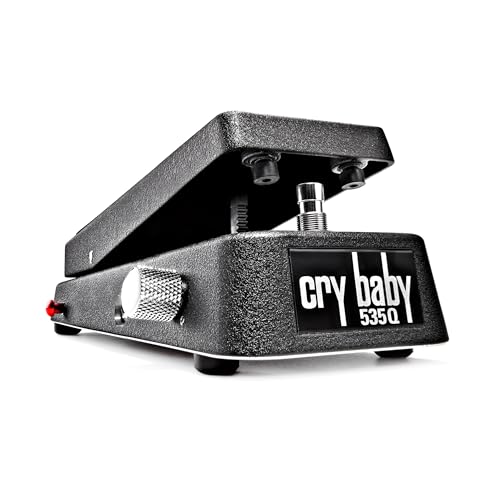
- MAKE IT YOURS: Versatile, customizable, and built to adapt to your style with control over the most impactful wah parameters.
- BRIGHT & AGGRESSIVE TO DARK & SUBTLE: Six-position Range selector, each setting based on our six best-sounding vintage wah pedals.
The Dunlop 535Q is the “Swiss Army Knife” of manual wahs. It allows you to select from six different wah ranges and features a variable boost. It is a professional-grade tool that offers more manual customization than the B-TRON III. However, like the Vox, it is a treadle-based pedal. While the 535Q is incredibly versatile, it cannot replicate the touch-sensitive “envelope” response that makes the Behringer B-TRON III Auto-Wah Filter Pedal so unique. For players who want a “wah” for everything, the Dunlop is great; for those chasing a specific 70s funk “quack,” the Behringer is superior.
3. Donner Mini Auto Wah Guitar Pedal

- 【Auto Wah】: Fully controllable envelope filter with unique decay control, highly accurate and fast tracking
- 【Four Function Knobs】: SENS controls sensitivity; RES controls filter sharpness; Use DECAY to make filter frequency fall back to the resting point; RANGE sets the filter frequency range
If pedalboard real estate is your primary concern, the Donner Mini Auto Wah is a strong contender. It is significantly smaller than the Behringer B-TRON III Auto-Wah Filter Pedal and offers a similar envelope-controlled experience. It is simple, affordable, and effective. However, the Donner lacks the three distinct filter modes (LP, BP, HP) and the “Drive” direction switch found on the Behringer. The B-TRON III offers a much deeper, more “vintage-accurate” tone, whereas the Donner is a basic, utilitarian filter for those on a strict space budget.
Final Verdict: Is the Behringer B-TRON III the King of Budget Funk?
After extensive testing, the Behringer B-TRON III Auto-Wah Filter Pedal has proven to be an exceptional piece of gear that punches far above its weight class. Its ability to replicate the complex, liquid tones of a rare vintage Mu-Tron III is nothing short of remarkable. While it does have a larger footprint and requires a moment to master the sensitivity settings, the rewards are immense. It transforms your instrument into an expressive, vocal-like extension of your hands. Whether you are a bassist looking for that Bootsy Collins “thump” or a guitarist chasing Jerry Garcia’s “Estimated Prophet” tone, this pedal delivers the goods.
We recommend this pedal to anyone who wants authentic analog filtering without the boutique price tag. It is a sturdy, well-designed, and incredibly fun tool that belongs on any board dedicated to soul, funk, or experimental music. Don’t let your tone stay flat and lifeless—it’s time to add some movement to your music. We highly suggest you check the latest price and secure yours today to start your own journey into the heart of the funk.
Last update on 2026-09-14 / Affiliate links / Images from Amazon Product Advertising API