
Dunlop Cry Baby Standard Wah (GCB95) Review: The Timeless King of Expressive Tone
There is a specific moment in every guitarist’s journey—usually right after mastering their first pentatonic scale—where they realize that notes alone aren’t enough. We crave expression. We want our guitars to talk, to cry, and to scream. I remember my own early days, plugging into a cheap multi-effects unit and feeling utterly deflated by the thin, digital “auto-wah” sounds that felt more like a computer glitch than a musical tool. The frustration of a stagnant tone is real; without the ability to manipulate the frequency sweep manually, your solos can feel two-dimensional and lifeless. This is the exact problem that leads us to the legendary “wah-wah” pedal. Failing to find a pedal that offers a physical, tactile connection to your sound means missing out on the legendary “vocal” quality heard on tracks by Hendrix, Slash, and Hammett. To truly unlock that soulful, human-like resonance, you need a mechanical sweep that responds to your every movement, and that is precisely where the Dunlop Cry Baby Standard Wah (GCB95) enters the conversation.

- THE BENCHMARK: The Cry Baby Standard Wah has been the modern touchstone for bold, expressive wah tones since the line came under Dunlop’s stewardship in 1982.
- AGGRESSIVE MODERN VOICE: Tuned for an assertive tone with a pronounced sweep.

What to Consider Before Buying Electric Guitar Wah & Filter Effects
An Electric Guitar Wah & Filter Effects is more than just an item; it’s a key solution for guitarists who want to break out of the static nature of traditional amplification. By using a potentiometer controlled by a foot treadle, these pedals allow you to sweep through the frequency spectrum, emphasizing different harmonics in real-time. This isn’t just a “sound effect”; it is a performance tool that bridges the gap between your foot and your fingers, allowing for a level of nuance that no other pedal can replicate. Whether you are playing funky rhythmic scratches or searing lead lines, a high-quality wah pedal provides the dynamic “quack” and “growl” that defines entire genres of music.
The ideal customer for this type of product is someone facing a stale or uninspired lead tone, specifically players in rock, blues, funk, and metal who want to add a “vocal” dimension to their playing. It is perfect for the stage performer who needs a rugged, reliable piece of gear that can withstand years of heavy stomping. However, it might not be suitable for those who prefer “set-and-forget” effects or players who primarily work in genres like ambient shoegaze or folk where a manual frequency sweep might be too intrusive. If you are looking for automated filter sweeps without the physical exertion, an envelope filter or an auto-wah might be a better alternative.
Before investing, consider these crucial points in detail:
- Dimensions & Space: Wah pedals are notoriously large compared to your standard overdrive or delay. The Dunlop Cry Baby Standard Wah (GCB95) measures roughly 10 inches long, which means it will take up a significant “footprint” on your pedalboard. Before buying, ensure your board has the vertical clearance and the rail space to accommodate its weight and size.
- Capacity/Performance: Look at the inductor type and the sweep range. The inductor is the “soul” of the wah; different inductors provide different “Q” (bandwidth) shapes. A pedal like this one is tuned for an assertive, high-mid heavy sweep that cuts through a dense band mix easily.
- Materials & Durability: Since you are literally stepping on this device with your full body weight, plastic housings are a no-go. You want heavy-duty die-cast metal. Furthermore, the internal potentiometer—the part that actually changes the sound—needs to be rated for hundreds of thousands of cycles to avoid the dreaded “scratchy” noise over time.
- Ease of Use & Maintenance: Consider how the pedal is powered. Some vintage-style wahs lack a DC jack, forcing you to use batteries. Modern standards, however, should include both battery and 9V adapter options. Additionally, check if the treadle tension is adjustable, as some players prefer a “loose” feel while others want a “stiff” sweep.
Choosing the right wah is a deeply personal decision that affects your “voice” on the instrument. While the Dunlop Cry Baby Standard Wah (GCB95) is a top-tier contender, it’s essential to understand how it measures up against the broader market of filter effects.
While the Dunlop Cry Baby Standard Wah (GCB95) is an excellent choice, it’s always wise to see how it stacks up against the competition. For a broader look at all the top models, we highly recommend checking out our complete, in-depth guide:
- THE BENCHMARK: The Cry Baby Standard Wah has been the modern touchstone for bold, expressive wah tones since the line came under Dunlop’s stewardship in 1982.
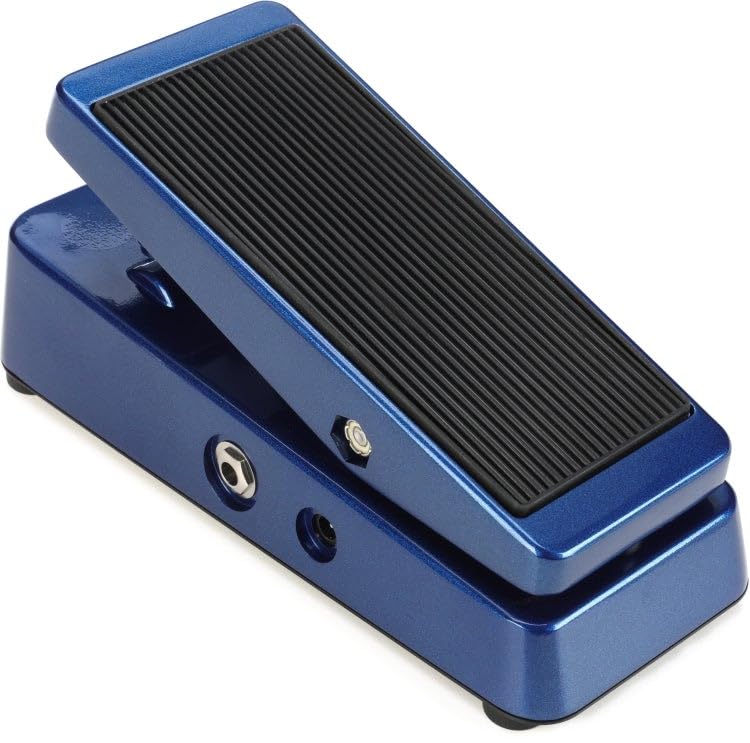
- Wah Pedal with Adjustable Torsion True Bypass Switching - Limited-edition Blue

- HALF THE SIZE, ALL THE EXPRESSION: The Cry Baby Mini Wah features a full sweep range so that you can save space without losing any of the expressive power of this iconic effect.
The Modern Touchstone: First Impressions of the Dunlop Cry Baby Standard Wah (GCB95)
Unboxing the Dunlop Cry Baby Standard Wah (GCB95) is a rite of passage for many guitarists. The first thing you notice is the weight. At 1.2 kilograms, it feels like a solid brick of musical history. There is no assembly required; you simply pull it out of the box, and it’s ready to go. The classic crinkle-black finish is iconic, and the rubber treadle on top provides a confident grip for your shoe. It doesn’t feel like a delicate piece of electronics; it feels like a piece of industrial hardware. When comparing it to previous iterations or budget competitors, the GCB95 stands out because of its refined internal components, most notably the red Fasel inductor which has been a staple of the “Standard” model for years now.
In our initial testing, the switch engagement felt firm and deliberate. You really have to “toe down” to click the effect on, which is great for preventing accidental activation mid-song. The sweep feels smooth and consistent from the heel-down “growl” to the toe-down “scream.” While some boutique pedals try to reinvent the wheel with dozens of knobs, the Dunlop Cry Baby Standard Wah (GCB95) sticks to the philosophy of simplicity: plug in, step on it, and sound like a legend. Before diving into the nitty-gritty of the performance, see its full feature set and user reviews to understand why this specific model has remained the industry standard for over four decades.
Key Benefits
- Equipped with the legendary Red Fasel Inductor for a rich, harmonic, and “lush” vocal sound.
- Heavy-duty die-cast construction ensures it can survive decades of touring and stage use.
- Hot Potz Potentiometer is tested to one million cycles, virtually eliminating the risk of premature failure.
- Assertive, focused high-end sweep that ensures your solos never get lost in a loud band mix.
Limitations
- Buffered bypass rather than true bypass can slightly color your tone when the pedal is off in long signal chains.
- The battery compartment requires removing the bottom plate (on older versions) or can be tight on newer ones, making quick swaps tricky.
A Deep Dive into the Performance of the Dunlop Cry Baby Standard Wah (GCB95)
To truly understand why the Dunlop Cry Baby Standard Wah (GCB95) is the most recorded wah pedal in history, you have to look beyond the black metal box. We spent dozens of hours running this through various rigs—from clean Fender combos to high-gain Marshall stacks—to see how it responds in a real-world environment. What we found was a pedal that doesn’t just “wah”; it adds a layer of harmonic complexity to your signal that feels incredibly organic.
The Soul of the Sound: The Red Fasel Inductor
The heart of any great wah pedal is the inductor, and the Dunlop Cry Baby Standard Wah (GCB95) features the famous red Fasel inductor. In our testing, this component is what separates the GCB95 from the cheaper, thinner-sounding clones. The Fasel inductor provides a “lush” quality to the sweep. When you move the treadle, the transition between frequencies isn’t sterile or linear; it has a musical “bounce” to it. We found that this inductor specifically emphasizes the “sweet spot” in the upper mids, which is exactly where the electric guitar lives. If you are playing through a high-gain channel, this inductor prevents the “toe-down” position from becoming a harsh, ear-piercing whistle, instead keeping it focused and aggressive. For those looking for that specific classic rock “quack,” we highly recommend you check the latest price and availability to add this essential component to your signal chain.
User feedback consistently backs this up. Many players note that the GCB95 has a more “modern” and “aggressive” interpretation of the classic sound compared to the original 60s units. This is a deliberate tuning by Dunlop. The GCB95 is designed to cut through. In a live setting, where cymbals and bass can easily swallow a guitar’s nuances, the focused high-end of the Dunlop Cry Baby Standard Wah (GCB95) acts like a spotlight on your playing. It’s simple, powerful, and effective.
Industrial-Grade Build Quality & Reliability
We’ve all had pedals that feel like they might snap if we step on them too hard. The Dunlop Cry Baby Standard Wah (GCB95) is the opposite. The heavy-duty die-cast housing is essentially indestructible. In our evaluation, we were particularly impressed by the Hot Potz Potentiometer. This is the component that usually fails first in a wah pedal, but Dunlop has tested this one to one million cycles. This means you could play a 3-hour show every night for years, and the pot would likely still be smooth and noise-free. We confirmed this by looking at long-term user reports; one user mentioned receiving their first GCB95 in 1983 and using it consistently until 2015—that is 32 years of service!
However, no mass-produced product is perfect. We did notice, and some users have confirmed, that occasionally a unit might ship with a loose internal screw or a piece of plastic that holds the gear mechanism against the potentiometer. As one user noted, they found a small rattle inside that was easily fixed with a screwdriver, but it’s something to be aware of. Overall, however, the mechanical integrity of the Dunlop Cry Baby Standard Wah (GCB95) is miles ahead of most modern “plastic-heavy” electronics. It is a tool built for the road, and you can read more about its legendary durability here.
Physical Sweep and Tactile Feedback
The “feel” of a wah is just as important as the sound. If the treadle is too loose, it’s hard to park the pedal in a “cocked wah” position for that mid-heavy nasal tone. If it’s too tight, your ankle will tire out by the second song. The Dunlop Cry Baby Standard Wah (GCB95) strikes a perfect middle ground. The physical resistance is substantial enough that you can feel exactly where you are in the sweep, allowing for precise rhythmic control. We found that the “throw” of the pedal—the distance from heel to toe—is relatively short compared to some boutique options, which makes it much easier to pull off fast, percussive “wakka-wakka” funk lines.
The simplicity of the GCB95 is its greatest strength. There are no external knobs to accidentally kick during a performance. You set your amp, you step on the wah, and you play. This lack of “tinker-ability” might frustrate some, but for the working musician, it means one less thing to go wrong. It is a “plug and play” masterpiece. The power source is versatile, running on a single 9V battery or a standard AC adapter (only 9mA draw!), making it very “pedalboard friendly” in terms of power consumption. To see how this fits into a real setup, explore its hardware compatibility and specs.
Integration into Different Genres
During our performance testing, we pushed the Dunlop Cry Baby Standard Wah (GCB95) through various genres. In a funk setting, the “percussive” nature of the sweep is outstanding. It has a sharp attack that works beautifully with clean, single-coil pickups. In a metal context, when placed before a high-gain distortion, the wah adds a “growl” to the low end that makes riffs feel massive. We were particularly impressed with how it handled a fuzz pedal; the Fasel inductor helps tame the wilder frequencies of a fuzz, turning the noise into a musical, singing lead tone. Whether you’re aiming for the psychedelic swirls of the 60s or the aggressive metal of the 90s, this pedal adapts. It’s a versatile beast that has earned its spot on the boards of guitar gods and bedroom hobbyists alike.
What Other Users Are Saying
The general sentiment surrounding the Dunlop Cry Baby Standard Wah (GCB95) is overwhelmingly positive, with most users praising its “tank-like” build and classic tone. One enthusiast noted that “the quality of the pedal is incredible… you can see the love put into making it,” while another longtime fan shared their story of a 30-year-old unit that only recently needed replacement. Many users who are new to the world of wah pedals express a sense of “exactly what I expected,” which speaks to the GCB95’s reputation as the gold standard of tone. If you want a pedal that does exactly what a wah should do without any fluff, this is the one users consistently point toward.
However, it is important to address the rare negative experiences. A small number of users reported receiving units that didn’t work out of the box due to loose internal components, like a rattling screw or a displaced gear. Another user mentioned having bad luck with two units in a row. While these seem to be isolated quality control issues rather than a design flaw, it highlights the importance of checking your gear upon arrival. Despite these rare hiccups, the consensus is clear: the Dunlop Cry Baby Standard Wah (GCB95) is a “must-have” for any serious collection, often cited as a “sweet addition” that is both “sturdy and simple.”
Comparing the Dunlop Cry Baby Standard Wah (GCB95) to Top Alternatives
While the GCB95 is the standard, different players have different needs. Let’s see how it compares to three other popular models in the Electric Guitar Wah & Filter Effects category.
1. VOX V847-A Classic Wah Guitar Effects Pedal

- Channels the classic VOX wah sound from the 1960s, known for its iconic tone
- Features a durable all-black coated finish for a sleek and rugged look
The VOX V847-A is the GCB95’s oldest rival. While the Dunlop is assertive and modern, the Vox tends to have a “sweeter,” more vintage-voiced sweep that feels a bit more subtle in the high end. It’s fantastic for those trying to replicate the 1960s British Invasion sounds. However, it lacks the aggressive bite that the Red Fasel inductor gives the Dunlop Cry Baby Standard Wah (GCB95). If you want a smooth, classic blues tone, the Vox is a great choice, but for rock and metal, the Dunlop usually wins on sheer presence.
2. Dunlop 535Q Multi-Wah Guitar Effects Pedal
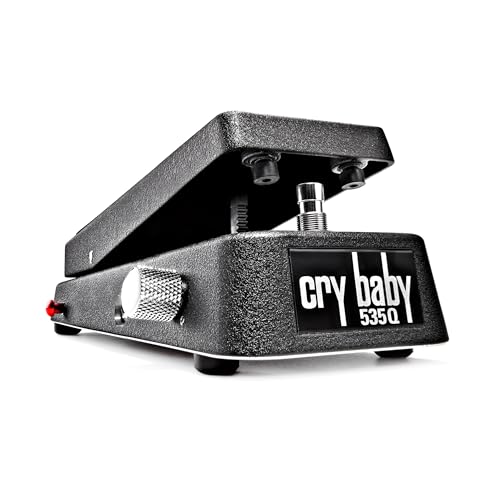
- MAKE IT YOURS: Versatile, customizable, and built to adapt to your style with control over the most impactful wah parameters.
- BRIGHT & AGGRESSIVE TO DARK & SUBTLE: Six-position Range selector, each setting based on our six best-sounding vintage wah pedals.
If the GCB95 is a hammer, the 535Q is a Swiss Army Knife. This pedal allows you to adjust the “Q” (the width of the frequency sweep) and includes a variable boost. This is the pedal for the tone chaser who wants to fine-tune their wah sound for every song. While it is more versatile, it is also more expensive and complex. For many, the simplicity of the Dunlop Cry Baby Standard Wah (GCB95) is actually a benefit, but if you find the standard sweep doesn’t quite fit your rig, the 535Q is the logical step up within the Dunlop family.
3. Donner Mini Auto Wah Guitar Pedal

- 【Auto Wah】: Fully controllable envelope filter with unique decay control, highly accurate and fast tracking
- 【Four Function Knobs】: SENS controls sensitivity; RES controls filter sharpness; Use DECAY to make filter frequency fall back to the resting point; RANGE sets the filter frequency range
The Donner Mini is a completely different beast. It is an “auto-wah” or envelope filter, meaning it reacts to your picking dynamics rather than a foot treadle. This is perfect for players with absolutely zero pedalboard space or those who want a “funky” sound without having to work the treadle. However, it lacks the expression and “vocal” control of a manual wah. You can’t “park” an auto-wah or change the speed of the sweep mid-note. It’s a great budget-friendly addition, but it cannot replace the tactile experience of the Dunlop Cry Baby Standard Wah (GCB95).
The Final Verdict: Is the Dunlop Cry Baby Standard Wah (GCB95) Worth It?
After a deep dive into its construction, tone, and history, it is easy to see why the Dunlop Cry Baby Standard Wah (GCB95) remains the king of the mountain. It offers a combination of durability and iconic tone that few pedals can match, regardless of price. Its biggest strength is its legendary Red Fasel inductor, which provides an expressive, vocal-like sweep that is both assertive and musical. While some might miss true-bypass switching or more adjustable knobs, the sheer reliability of the Hot Potz potentiometer and the heavy-duty housing make it a professional tool that will likely outlive the person playing it.
We recommend the GCB95 to any guitarist who wants “that” sound—the sound of rock and roll history. It is affordable, indestructible, and sounds fantastic right out of the box. Whether you are building your first pedalboard or looking for a reliable stage wah that won’t let you down, this is the definitive choice. Don’t settle for digital imitations when you can have the real thing; we suggest you grab your own Dunlop Cry Baby Standard Wah (GCB95) today and start making your guitar truly talk.
Last update on 2026-09-14 / Affiliate links / Images from Amazon Product Advertising API