
Yamaha THR30II Wireless Guitar Amplifier Review: Is This the Ultimate Desktop Tone Machine?
We have all been there. You have twenty minutes of free time between work calls or before dinner, and you want to practice. But then you look at your main rig—the heavy tube head, the 4×12 cabinet, the tangled mess of pedalboard cables, and the five minutes it takes just to get everything powered up and dialed in. Often, that friction is enough to make you put the guitar back on the stand. This is the “practice hurdle,” and for years, it has been the silent killer of musical progress. We searched for a solution that didn’t involve sacrificing tone for convenience, leading us directly to the Yamaha THR30II Wireless Guitar Amplifier. Solving this problem isn’t just about convenience; it’s about removing every barrier between your inspiration and your instrument. Without a dedicated “third amp”—one that lives where you live, on your desk or coffee table—you simply play less. The Yamaha THR30II Wireless Guitar Amplifier was designed specifically to occupy that space, promising high-fidelity tube-like response at volumes that won’t get you evicted.

- Realistic tube-amp tones and feel plus essential effects
- 15 Guitar amps, 3 bass amps, 3 mic models for acoustic-electrics, and flat modes for everything else

What to Consider Before Buying Acoustic Guitar Amplifiers and Desktop Rigs
An Acoustic Guitar Amplifier or a high-end desktop unit is more than just a piece of gear; it’s a key solution for the modern player who demands versatility without the footprint of a traditional stage amp. These devices solve the problem of “sweet spot” volume; while a 50-watt tube amp sounds glorious when pushed, it often sounds thin and fizzy at bedroom levels. A dedicated desktop solution uses digital processing to provide that “pushed” feel at a whisper, making it an essential tool for home practice, songwriting, and even light recording duties. It bridges the gap between a toy-like practice amp and a professional studio tool.
The ideal customer for this type of product is someone facing space constraints or living in noise-sensitive environments, such as apartments or shared houses. It is also perfect for the professional musician who needs a reliable, portable reference amp for hotel rooms or backstage warm-ups. However, it might not be suitable for those who strictly need to move air in a loud rehearsal room with a heavy-hitting drummer. If your primary goal is to play live gigs at medium-to-large venues without a PA system, you might consider a traditional high-wattage combo instead. But for the 90% of the time we spend playing at home, a desktop unit is often the superior choice.
Before investing, consider these crucial points in detail:
- Dimensions & Space: Desktop amps are meant to sit on furniture, not just the floor. You should look for a footprint that fits your workspace without cluttering it. A well-designed unit like this one offers a compact 16.4-inch width, making it ideal for standard computer desks or bookshelves where space is at a premium.
- Capacity/Performance: In the world of desktop amps, wattage isn’t just about loudness; it’s about headroom and the quality of the stereo image. Look for units that offer at least 20 to 30 watts to ensure the full-range speakers can handle backing tracks and guitar tones simultaneously without muddying the sound.
- Materials & Durability: While these aren’t usually tossed into the back of a tour van, they still need to be robust. Look for high-quality enclosures—often a mix of durable plastics and metal grilles—that can withstand being moved from room to room. The weight also matters; a unit that is too light might vibrate at high volumes, while one that is too heavy loses its portability.
- Ease of Use & Maintenance: The best desktop amp is one you don’t have to think about. Check for intuitive physical knobs for immediate adjustments, but ensure there is a robust app for deep-diving into effects. Maintenance is usually minimal for digital units, but battery life and charging cycles are important factors for wireless models.
While the Yamaha THR30II Wireless Guitar Amplifier is an excellent choice, it’s always wise to see how it stacks up against the competition. For a broader look at all the top models, we highly recommend checking out our complete, in-depth guide:

- Professional Dual-Channel Sound: Designed for singer-songwriters, this amp features independent guitar and vocal channels for seamless play-and-sing performance. Precision impedance matching captures...
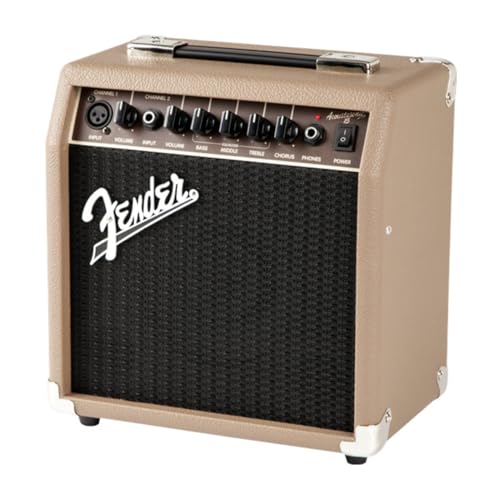
- The Fender Acoustasonic Guitar Amplifier features 15 watts, 11.5Hx11.19Wx7.13D inches

- The Fender Acoustasonic Guitar Amplifier features 40 watts, 9.8Dx17.6Wx15.5H inches
First Impressions: Unboxing the Yamaha THR30II Wireless Guitar Amplifier
When we first pulled the Yamaha THR30II Wireless Guitar Amplifier out of its packaging, the “cool factor” was immediately apparent. It doesn’t look like a piece of clinical computer equipment; it looks like a piece of boutique mid-century audio gear. The cream-colored finish and the signature “orange glow” behind the metal grille—a clever LED simulation of vacuum tubes—give it an inviting warmth. It feels incredibly solid at 5.4 kilograms; it’s heavy enough to feel premium but light enough to carry with one finger using the integrated handle. Before you even plug it in, you can see its full feature set and user reviews to understand just how much Yamaha packed into this chassis.
The layout is refreshingly tactile. Unlike many modern modelers that force you through endless menus, the Yamaha THR30II Wireless Guitar Amplifier gives you physical knobs for Gain, Master, Bass, Middle, Treble, and two dedicated knobs for effects and reverb/delay. This “what you see is what you get” philosophy is exactly what makes it so appealing for quick sessions. We were also impressed by the inclusion of a built-in wireless receiver, which, when paired with a Line 6 Relay G10T (sold separately), removes the last remaining cable from your setup. It feels like a finished, professional product rather than a budget practice tool.
What We Like
- Exceptional VCM (Virtual Circuitry Modeling) that captures the “sag” and feel of real tube amps.
- Complete wireless freedom with a built-in rechargeable battery and integrated wireless receiver.
- High-fidelity Bluetooth audio playback that sounds as good as dedicated bookshelf speakers.
- Versatile I/O including USB recording and 1/4″ line outputs for connecting to larger systems.
What We Didn’t Like
- Bluetooth audio streaming does not route through the USB interface for recording purposes.
- The compatible Line 6 G10T transmitter is an additional investment not included in the box.
A Deep Dive into the Performance of the Yamaha THR30II Wireless Guitar Amplifier
Virtual Circuitry Modeling (VCM): The Secret to the Sound
The core of why we believe the Yamaha THR30II Wireless Guitar Amplifier stands above its peers is the VCM technology. Unlike standard digital modeling, which often tries to “match” the frequency response of an amp, VCM models the actual components—the resistors, capacitors, and tubes—at a circuit level. This results in a feel that is remarkably organic. When we rolled back the volume knob on our Stratocaster, the amp cleaned up just like a real plexi would. It doesn’t just sound like a recorded guitar; it feels like a live amp in the room. This is a crucial distinction for players who find digital gear “stiff” or “unresponsive.”
We spent hours testing the 15 different guitar amp models, which cover everything from pristine “Clean” modes to the “Special Hi-Gain” settings that provide thick, saturated sustain. We found that the “Acoustic” and “Flat” modes are equally impressive, making this a legitimate multi-instrument tool. Whether you are plugging in a bass or an acoustic-electric, the 3.5-inch speakers provide a surprisingly deep low-end response for their size. If you’re looking for a versatile tool that handles every genre, you should definitely check the latest price and availability for this powerhouse.
The Freedom of a Truly Wireless Workflow
The “Wireless” in the name isn’t just marketing fluff; it changes how you interact with your instrument. The internal rechargeable battery lasts for about five hours of continuous play, which we found more than sufficient for a week’s worth of casual practice. But the real magic happens when you use the built-in receiver. We tested it with the Line 6 Relay G10T, and the experience of grabbing a guitar from the wall and playing instantly—without ever touching a cable—is liberating. One of the best “hidden” features is that the transmitter actually charges when you plug it into the amp’s input jack, ensuring you’re never caught with a dead battery.
Furthermore, the Bluetooth connectivity for audio is rock-solid. We used it to stream backing tracks from a phone while playing along, and the “Extended Stereo Technology” creates a soundstage that feels much wider than the amp’s physical width. It creates a “hi-fi” experience where the guitar tone sits perfectly within the mix of the backing track. It is a feature that really sets it apart from older desktop models that required messy aux cables.
Digital Integration and the THR Remote App
While the physical knobs cover the essentials, the THR Remote app (available for iOS, Android, Mac, and PC) unlocks the true potential of the Yamaha THR30II Wireless Guitar Amplifier. Through the app, we were able to access a compressor and a noise gate that aren’t available on the top panel. You can also swap between “Modern,” “Boutique,” and “Classic” versions of each amp type, effectively tripling your tonal options. The interface is clean and connects via Bluetooth MIDI almost instantly, allowing you to tweak your tone from across the room.
Recording is another area where this unit shines. It functions as a plug-and-play USB audio interface. We connected it to a laptop and were able to capture high-quality, dry and wet signals directly into a DAW. This makes it an incredible tool for songwriters who want to capture an idea the moment it strikes without setting up mics. However, we did notice—as some users have pointed out—that you cannot route Bluetooth audio through the USB out, which is a slight limitation if you were hoping to record your backing track and guitar simultaneously through a single USB stream. Despite this, for pure guitar recording, it is exceptionally clean and professional.
The “Third Amp” Concept in Practice
After weeks of testing, we’ve concluded that the Yamaha THR30II Wireless Guitar Amplifier excels because it understands its purpose. It isn’t trying to be a stage amp, and it isn’t trying to be a cheap toy. It is an “everything else” amp. Whether we were using it as a high-end Bluetooth speaker for a backyard BBQ or as a dedicated bass practice rig in the office, it performed flawlessly. The inclusion of 1/4″ Line Outputs is a brilliant move by Yamaha, allowing us to plug the THR into a PA system or a pair of studio monitors to get an even bigger sound while retaining the same VCM tones.
The build quality also deserves a final mention. The buttons have a satisfying click, the knobs have the right amount of resistance, and the overall aesthetic fits into a living room much better than a black Tolex box ever could. If you have been on the fence about whether a desktop amp is a luxury or a necessity, we suggest you look at the detailed specs to see why this is arguably the most complete package on the market today.
What Other Users Are Saying
The general sentiment among the guitar community regarding the Yamaha THR30II Wireless Guitar Amplifier is overwhelmingly positive, with many users echoing our findings that it significantly increases their playing time. One user noted, “I am more likely to pick up my guitar and play because of it,” highlighting the success of the wireless, “always-on” design. Another veteran player who upgraded from the previous generation mentioned it is “heads and shoulders above every other competitive solution,” specifically praising the richer sound and expanded features.
Professional users have also found unique ways to integrate it into their rigs. One reviewer mentioned they “don’t do a day without this amp,” using it in conjunction with an HX Stomp to achieve “the thickest chunky riffs possible.” On the critical side, a common piece of feedback involves the USB limitation; one user expressed that not being able to route Bluetooth audio through the USB interface “can feel like a significant oversight for an amp marketed for recording.” However, most agree that for its primary purpose—incredible desktop tone—it is “well worth the money” and “an exceptional amplifier” that bridges the gap between practice and professional performance.
Comparing the Yamaha THR30II Wireless Guitar Amplifier to the Competition
1. Fender Acoustasonic 40W Acoustic Guitar Amplifier
- The Fender Acoustasonic Guitar Amplifier features 40 watts, 9.8Dx17.6Wx15.5H inches
- This unique amplifier is the only Fender guitar amp to feature a "whizzer" cone–a small supplementary speaker cone attached to the voice coil of the amps 6 inch speaker
The Fender Acoustasonic 40W is a more traditional take on the portable amplifier. Unlike the Yamaha, it features larger 6.5-inch speakers and is specifically voiced for acoustic instruments with a classic “Brown/Wheat” aesthetic. While it offers 40 watts of power—technically more than the Yamaha—it lacks the advanced digital modeling, Bluetooth connectivity, and internal battery that make the THR30II so versatile. We recommend the Fender for players who primarily play acoustic guitar and prefer a standard plug-in combo experience without the need for high-gain electric tones or wireless freedom.
2. Yamaha THR5A Mini Acoustic Guitar Amplifier

- Optimized for use with electric-acoustic and Silent Guitars.
- Simulations of classic tube condenser and dynamic mics combined with studio-grade effects to create recording-studio tone direct from your guitar.
The THR5A is the smaller, more specialized sibling to our main review unit. It is specifically optimized for acoustic-electric guitars and utilizes mic simulations rather than a wide array of high-gain tube amp models. It is significantly smaller and more budget-friendly, making it a great choice for travelers or those who only play acoustic. However, it lacks the 30-watt punch, the line outputs, and the built-in wireless receiver of the Yamaha THR30II Wireless Guitar Amplifier. If you want the full “desktop powerhouse” experience that can handle a 7-string electric just as well as a parlor acoustic, the 30II is the clear winner.
3. VOX amPlug 2 Guitar/Bass Headphone Amplifier
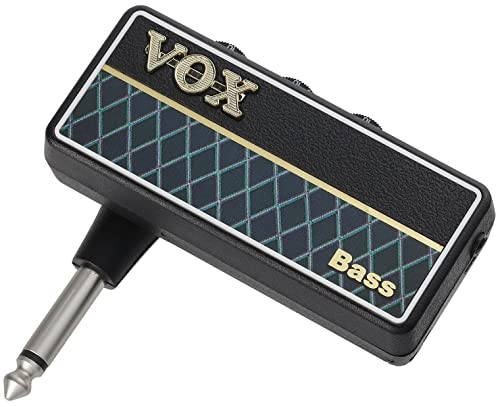
- Compact, plug-and-play headphone amplifier designed for guitar and bass, perfect for silent practice
- Fully analog circuitry ensures rich, detailed sound with clean, crunch, and lead modes
The VOX amPlug 2 represents the ultimate in “ultra-portable” practice, but it is a completely different beast. It is a headphone-only amplifier that plugs directly into your guitar. While it is incredibly affordable and fits in a pocket, it doesn’t offer speakers, Bluetooth streaming, or the high-fidelity VCM modeling found in the Yamaha. We recommend the VOX as a secondary “emergency” tool for silent practice on the go, but it cannot replace the Yamaha THR30II Wireless Guitar Amplifier as a central home practice and recording hub.
The Final Verdict: Is the Yamaha THR30II Wireless Guitar Amplifier Right for You?
After extensive testing, the Yamaha THR30II Wireless Guitar Amplifier has proven itself to be the gold standard for desktop amplification. Its combination of authentic VCM tube-like tones, complete wireless freedom, and high-fidelity audio playback creates a package that is hard to beat. While the price point is higher than some entry-level practice amps, the “return on investment” comes in the form of hours of extra playing time and a simplified workflow. Its main strengths—the responsiveness of the models and the sheer convenience of the wireless system—far outweigh the minor inconvenience of the USB routing limitation.
We highly recommend this amplifier to any guitarist who finds themselves practicing less because of the “setup friction” of their main rig. Whether you are a beginner looking for your first “real” amp or a pro needing a desk-friendly companion, this unit delivers. If you are ready to transform your practice space and enjoy professional tones at any volume, you should grab the Yamaha THR30II Wireless and see why it’s a game-changer for modern musicians. Don’t let your gear hold back your creativity—experience the freedom of the THR series today.
Last update on 2026-09-15 / Affiliate links / Images from Amazon Product Advertising API