
Roland JU-06A Keyboard Synthesizer Module Review: The Ultimate 80s Time Machine for Modern Producers
There is a specific kind of frustration that only a synth enthusiast can truly understand. It starts with a melody in your head—something lush, warm, and distinctly “80s”—and ends with you staring at a computer screen, clicking through endless software presets that just don’t have the soul you’re looking for. For years, I chased the sound of the vintage Juno-60 and Juno-106. I scoured local listings, only to find units with failing voice chips or price tags that rivaled a used car. The struggle to find that authentic, tactile experience without the vintage maintenance headache is what led me to the Roland JU-06A Keyboard Synthesizer Module. Solving this problem isn’t just about getting “close” to the sound; it’s about having a reliable, portable, and inspiring instrument that reacts to your touch in real-time. Without the right hardware, your music can often feel sterile, lacking the harmonic richness and “happy accidents” that occur when you’re physically sliding faders on a dedicated synthesis engine.
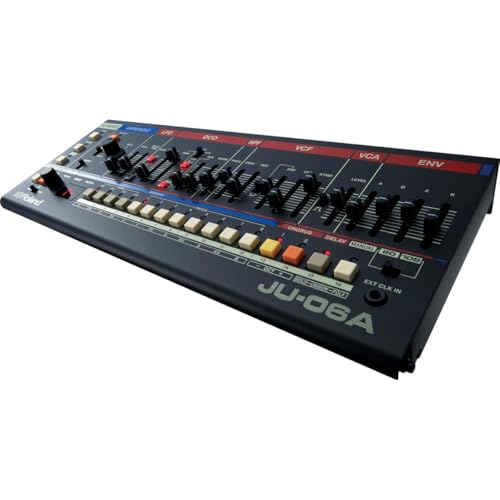
- Sound Patch: 64 + 64 (8 patches x 8 banks pre each 60 and 106 mode)
- Sequencer Pattern: 16

Choosing the Right Electronic Music Equipment for Your Studio
Electronic music equipment is more than just an item; it’s a key solution for bridging the gap between digital convenience and analog character. In an era where “in-the-box” production is the norm, adding a dedicated sound module provides a hands-on workflow that forces you to listen rather than look at a waveform. This category of equipment solves the problem of “option paralysis” by providing a focused set of parameters that encourage creativity through limitation. The main benefit is the immediate gratification of physical controls—every nudge of a slider results in a tangible change in the harmonic structure of your sound, something that a mouse and keyboard simply cannot replicate.
The ideal customer for this type of product is an intermediate to advanced producer who values authenticity and workflow. It is perfect for the touring musician who needs classic sounds in a compact footprint, or the studio owner who wants the Juno sound without the footprint of a full-sized vintage keyboard. Conversely, it might not be suitable for those who require high polyphony (as this unit is limited to four voices) or beginners who prefer the visual feedback of a large DAW screen. If you need 16-voice pads or a full-sized 61-key bed, you might consider looking at larger workstation synthesizers or specialized software emulations.
Before investing, consider these crucial points in detail:
- Dimensions & Space: Studio real estate is precious. Look for modules that fit comfortably on a desk or can be integrated into a mobile rig without requiring a dedicated heavy-duty stand. The portability of a module determines how often you’ll actually use it outside of your main workspace.
- Capacity/Performance: In the world of synthesizers, performance is measured by polyphony and the accuracy of the sound engine. Ensure the device can handle the complexity of the chords or sequences you intend to play, and check if the digital modeling accurately recreates the nuances of analog circuitry.
- Materials & Durability: While plastic is common, a metal faceplate and sturdy sliders are essential for equipment that will be frequently adjusted. Durability is a key factor if you plan on taking the module to live gigs or jam sessions where it might be bumped or dropped.
- Ease of Use & Maintenance: Unlike vintage gear, modern modules should be “plug and play.” Look for USB connectivity for MIDI and audio, battery power options for portability, and a layout that doesn’t require constant menu-diving to access core features.
While the Roland JU-06A Keyboard Synthesizer Module is an excellent choice, it’s always wise to see how it stacks up against the competition. For a broader look at all the top models, we highly recommend checking out our complete, in-depth guide:

- Your Easy Entry into MPC Sampling - Compact portable sampler, sequencer, and effects processor that delivers the iconic MPC workflow in a simple, modern format, ideal for new and experienced...

- 【Create Anywhere】This synthesizer is fully portable with battery operation and a built-in speaker, It's very compact and portable. 27 full-range silicone keys with soft, comfortable touch...

- Compact stylus drum machine - 4 drum kits, 4 bass sounds
First Impressions: Unboxing the Legend in Miniature
When I first pulled the Roland JU-06A Keyboard Synthesizer Module out of its box, I was immediately struck by the build quality. Despite its small size, it feels substantial—weighing in at about 2 pounds with a sleek, black metal top-panel that screams professional-grade gear. The sliders, though small, have a satisfying resistance that allows for precise adjustments. It feels like a premium piece of kit, not a toy. Comparing it to previous Boutique modules, Roland has clearly refined the aesthetics; it perfectly mirrors the color scheme and typography of the original Juno series. Within minutes, I had it powered by batteries and was scrolling through the presets using the built-in speaker. While the speaker won’t replace your studio monitors, it’s a fantastic inclusion for sketching out ideas on the couch. You can check the latest price and availability to see why this has become a staple in so many modern setups.
Key Benefits
- Authentic reproduction of both Juno-60 and Juno-106 sound engines.
- Incredibly portable design with battery power and built-in speaker.
- Robust build quality with a professional metal faceplate.
- Includes a powerful 16-step sequencer and chord memory.
Limitations
- Limited to 4-voice polyphony (original Junos had 6).
- Small fader throw may feel cramped for those with large hands.
A Deep Dive into the Performance of the Roland JU-06A Keyboard Synthesizer Module
The Dual-Engine Architecture: Two Icons in One Box
The standout feature that we explored during our testing was the ability to toggle between the Juno-60 and Juno-106 modes. This isn’t just a simple EQ shift; it fundamentally changes how the synthesizer behaves. The Juno-60 mode delivers that punchy, aggressive filter and faster envelope response that made the original a favorite for basslines and driving arpeggios. On the other hand, switching to the 106 mode provides a smoother, more “liquid” filter sound, which is absolutely legendary for pads and strings. We found that having both engines accessible via a single switch is a game-changer for studio workflow. Instead of needing two vintage keyboards, we could dial in the precise era of Roland sound we needed for a specific track in seconds. The ACB (Analog Circuit Behavior) technology is remarkably accurate here, capturing the way the oscillators drift and how the resonance growls at high settings. For anyone chasing that specific vintage character, you should see its full feature set and user reviews to understand just how close Roland has gotten to the original hardware.
The Iconic Chorus and Tactile Control
You cannot talk about a Juno without mentioning the chorus. The Roland JU-06A Keyboard Synthesizer Module features the classic two-button chorus that defined the sound of the 80s. When we engaged both buttons simultaneously, the sound blossomed into a wide, swirling stereo image that immediately filled the room. We also appreciated the inclusion of the adjustable noise floor in the chorus, which adds that bit of vintage “grit” if you want it, or can be kept clean for modern productions. The control surface itself is a joy to use. Every parameter—from the DCO (Digitally Controlled Oscillator) to the LFO and the VCF (Voltage Controlled Filter)—has its own dedicated slider. This 1-to-1 mapping means you rarely have to look at the 7-segment LED display. This tactile immediacy is a feature that really sets it apart from software plugins. During a long recording session, we found ourselves making minute adjustments to the VCF envelope, breathing life into a sequence in a way that felt organic and musical.
Sequencing, Arpeggiation, and Chord Memory
While the original Junos were relatively simple in terms of features, the Roland JU-06A Keyboard Synthesizer Module adds modern utilities that significantly expand its creative potential. The 16-step sequencer is intuitive and allowed us to quickly lock in melodic ideas. We particularly enjoyed the “Chord Memory” function, which lets you play complex, rich chords with a single finger—a staple technique for house and techno producers. When combined with the onboard arpeggiator, the module becomes a rhythmic powerhouse. We spent hours syncing the arpeggiator to an external clock and manipulating the sliders in real-time to create evolving textures. This performance-oriented design makes it much more than a simple “sound module”; it’s a creative partner. The ability to save 128 patches (64 for the 60 mode and 64 for the 106 mode) ensures that your favorite creations are always a button-press away. If you’re looking for an instrument that sparks ideas the moment you turn it on, this is it.
Connectivity and Studio Integration
In a modern studio, connectivity is king. The Roland JU-06A Keyboard Synthesizer Module features a Micro USB port that handles both MIDI and high-quality 24-bit/44.1kHz audio. This means you can plug it directly into your computer and record the synth’s output without needing an external audio interface—a massive plus for mobile setups. We also tested the traditional 5-pin MIDI IN/OUT ports and found them to be rock-solid, allowing us to control the module with a full-sized keyboard. The inclusion of an external clock input is a thoughtful touch, allowing the internal sequencer or arpeggiator to sync with modular gear or vintage drum machines. This flexibility ensures that the JU-06A fits into any workflow, whether you’re a “laptop-only” producer or a hardware enthusiast with a room full of gear. For those curious about how it integrates with other equipment, you can see more technical details here.
What Other Users Are Saying
The general consensus among the community is overwhelmingly positive, with many users praising Roland for finally combining the best of both Juno worlds. One veteran user, who has been programming synthesizers since 1972, noted that while they never owned the originals, the JU-06A provides a level of quality and authenticity that “steps up the game in the Boutique department.” This sentiment is echoed by younger producers who discovered the Juno sound through YouTube tutorials; one reviewer mentioned that the unit sounds “mostly identical” to the vintage hardware they had seen in professional studio demos. A Spanish-speaking user highlighted that for their taste, it is the “best synthesizer” because it manages to combine both the 60 and 106 sounds so seamlessly, and they expressed great satisfaction with the overall purchase experience. While some users mention the 4-voice limit as a minor drawback, the general feeling is that the portability and sound quality far outweigh this limitation. We found these user insights to be highly relevant, as they confirm that the Roland JU-06A Keyboard Synthesizer Module appeals to both “purists” and modern creators alike. You can read more user testimonials here to see if it fits your specific needs.
Comparing the Roland JU-06A Keyboard Synthesizer Module to Its Top Alternatives
1. Roland TR-8S Rhythm Performer Drum Machine

- Heritage Meets Modern Production: The TR-8S combines the best of its Roland heritage with modern production techniques and professional sound design
- Versatile Kit Design: Design Kits with Authentic TR Drums, Sampled Sounds, and Customizable Effects
If your primary goal is rhythm and percussion rather than melodic synthesis, the Roland TR-8S is the logical sibling to the JU-06A. While the JU-06A excels at lush pads and lead lines, the TR-8S is a powerhouse for drums, featuring ACB versions of the 808, 909, and 707. We recommend this alternative for producers who need a comprehensive drum solution with deep sequencing and effects. It’s a much larger unit, so it’s less portable than the Boutique series, but it offers far more voices and specialized performance controls for live beat-making. It’s the perfect companion for the JU-06A if you want to build a complete Roland-style hardware setup.
2. Teenage Engineering PO-33 K.O.! Micro Sampler & Drum Machine

- pocket-sized sound – with PO-33 K.O.! you can sample any sound source using 3.5 mm line in or the built in microphone. melodic mode lets you play chromatic melodies and drum mode lets you to create...
- 40 second sample memory – the built-in microphone lets you easily sample any sound source, making for a convenient and versatile sampling experience. from environmental sounds to vocals, you can...
For those on a strict budget or who need the absolute maximum in portability, the Teenage Engineering PO-33 K.O.! is a fascinating alternative. It’s a micro-sampler that fits in your pocket, allowing you to record sounds via a built-in microphone and sequence them on the fly. While it lacks the high-fidelity ACB modeling and tactile sliders of the Roland JU-06A Keyboard Synthesizer Module, it offers a “lo-fi” charm and a level of quirkiness that is incredibly fun. It’s ideal for the hobbyist or the producer looking for a “sketchpad” to use on the subway, though it won’t replace the professional sound of a dedicated Roland module in a final mix.
3. Teenage Engineering Pocket Operator PO-20 Arcade Synthesizer

- pocket-sized sound – start rapid beat making with chiptune improvisation synthesized arcade sounds, all in one tiny pocket synthesizer.
- sequence and add effects – sequence your beats. the nano sized PO-20 also includes 16 punch-in effects to enhance and modify your sounds, get creative and tweak your compositions in any direction...
The PO-20 Arcade is another ultra-portable option from Teenage Engineering, but it focuses on synthesized “chiptune” sounds rather than sampling. It features a unique chord control system and punch-in effects that make it surprisingly deep for its size. Compared to the JU-06A, the PO-20 is more of a specialized tool for 8-bit aesthetic music. It doesn’t offer the professional connectivity or the classic “analog” warmth of the Roland Boutique series, but for producers who want to add some vintage video game flair to their tracks without spending a lot, it’s a great “flavor” tool to have in the drawer.
Final Verdict: Is the Roland JU-06A Keyboard Synthesizer Module the Right Choice for You?
After extensive testing and comparison, we can confidently say that the Roland JU-06A Keyboard Synthesizer Module is one of the most successful recreations of classic hardware on the market today. It successfully distills the essence of two legendary synthesizers into a package that is portable, affordable, and incredibly fun to play. Its main strengths lie in its authentic ACB sound engine, its tactile interface, and its modern connectivity options. While the 4-voice polyphony might be a constraint for those wanting to play massive, two-handed piano-style chords, for most synth-pop, house, and electronic applications, it is more than sufficient. We recommend this module to any producer who wants to inject their music with authentic 80s warmth without the unpredictability of vintage gear. It’s a professional tool that sounds as good as it looks. If you’re ready to stop clicking and start sliding, we highly recommend you grab your own Roland JU-06A Keyboard Synthesizer Module today and start exploring the legendary sounds of the Juno series for yourself.
Last update on 2026-09-15 / Affiliate links / Images from Amazon Product Advertising API