
Donner Essential B1 Bass Synthesizer & Sequencer Review: The Ultimate Budget Acid Machine?
I remember the first time I heard a classic acid house track. That signature “squelch”—the resonant, liquid-like filter sweep—captivated me instantly. For years, I tried to replicate that sound using software plugins, but something was always missing. There is a tactile connection between a producer and an analog circuit that just can’t be fully emulated on a computer screen. If you’ve ever spent hours clicking a mouse to program a bassline only to find it sounds “thin” or “lifeless,” you know exactly the frustration I’m talking about. The problem isn’t your talent; it’s the interface. Music is a physical act, and without the right hardware, your creative flow can feel like it’s trapped behind a glass wall. This is why many of us hunt for dedicated hardware, yet the steep price of vintage gear often keeps these tools out of reach. That is precisely why I was so eager to get my hands on the Donner Essential B1 Bass Synthesizer & Sequencer to see if it could bridge that gap between professional analog sound and home-studio affordability.

- Music Ideas Out of The Box-- Donner Essential B1 synthesizer offers 128 presets for storing your music ideas. If you are new to electronic music, you could also benefit from its factory contents. With...
- Innovative Haptic Pads-- The modern silicon haptic pads with dynamic color-changing backlights outperform the traditional tiny little buttons on the original 303. With these pads, you can perform...
What to Consider Before Buying Electronic Music Equipment
Electronic music equipment is more than just an item; it’s a key solution for bridging the gap between digital precision and analog warmth. When you invest in a piece of hardware like a synthesizer or sequencer, you aren’t just buying a box of electronics; you’re buying a workflow. The primary benefit of these devices is the “hands-on” experience—the ability to turn a knob and hear an immediate, organic change in the sound. This tactile feedback often leads to happy accidents that you would never find while clicking through a menu. Furthermore, hardware gear helps offload processing power from your computer, allowing your DAW to run smoother while providing a dedicated sound source that has its own unique character and “soul.”
The ideal customer for this type of product is someone facing creative blocks in a digital-only environment, or a live performer who needs reliable, hardware-based sequencing without bringing a fragile laptop on stage. It is also perfect for beginners who want to learn the fundamentals of subtractive synthesis without the overwhelming complexity of a modular rig. However, it might not be suitable for those who require total “in-the-box” recall for every single parameter in a complex orchestral production, or for those who strictly need polyphonic capabilities, as many bass synths are monophonic by design. If you need 8-voice pads, you might look toward a poly-synth instead.
Before investing, consider these crucial points in detail:
- Dimensions & Space: Your studio real estate is precious. Before buying, measure your desk space to ensure the unit fits comfortably within reach. A device that is too bulky will end up on a shelf, while one that is too small might feel like a toy with cramped controls. The Donner Essential B1 Bass Synthesizer & Sequencer strikes a balance here, being compact enough for a backpack but large enough to feel like a real instrument.
- Connectivity & Integration: Consider how the device will talk to your other gear. Does it have 5-pin MIDI, USB-C, or CV/Gate? If you plan to sync it with a drum machine or a DAW, having versatile I/O is non-negotiable. Look for products that offer “plug-and-play” USB MIDI to save yourself from a cabling nightmare.
- Build Quality & Materials: Since you will be twisting knobs and pressing pads repeatedly, the materials matter. Silicone pads should feel responsive, not “mushy,” and the chassis should be sturdy enough to survive a trip to a gig. High-quality body materials ensure the internal components are protected from the vibrations of a loud club environment.
- Learning Curve & Interface: Some gear requires a PhD to operate, while others are intuitive from the moment you power them on. Look for “one-knob-per-function” designs if you want to perform live. A clear interface with visual feedback (like backlit pads) is essential for working in low-light studio or stage settings.
Ultimately, the right piece of equipment should inspire you to make music every time you look at it. While the Donner Essential B1 Bass Synthesizer & Sequencer is an excellent choice, it’s always wise to see how it stacks up against the competition. For a broader look at all the top models, we highly recommend checking out our complete, in-depth guide:

- Your Easy Entry into MPC Sampling - Compact portable sampler, sequencer, and effects processor that delivers the iconic MPC workflow in a simple, modern format, ideal for new and experienced...


- 【Create Anywhere】This synthesizer is fully portable with battery operation and a built-in speaker, It's very compact and portable. 27 full-range silicone keys with soft, comfortable touch...

- Compact stylus drum machine - 4 drum kits, 4 bass sounds
Unboxing the Donner Essential B1 Bass Synthesizer & Sequencer: First Impressions
When I first pulled the Donner Essential B1 Bass Synthesizer & Sequencer out of the box, I was immediately struck by its sleek, modern aesthetic. Unlike many budget synths that try to mimic the look of 1980s gear with gray plastic and tiny switches, the B1 looks like it belongs in a contemporary studio. It has a weight to it that belies its small footprint—at about 9.6 ounces, it’s portable, but it doesn’t feel “hollow.” The silicone haptic pads are the star of the show; they have a distinct texture that feels premium and responsive.
Before even plugging it in, I could tell that Donner put a lot of thought into the layout. Everything is spaced out logically. You don’t need to be an expert to see its full feature set and user reviews and realize this is built for performance. While it is marketed as a “303 clone” in spirit, it actually feels much more versatile. The inclusion of modern amenities like USB-C and a built-in saturation circuit suggests that this isn’t just a nostalgia trip; it’s a tool meant for modern music production. Compared to other entry-level units I’ve tested, the B1 feels significantly more “pro” in its physical execution.
Key Benefits We Discovered
- Incredibly intuitive haptic pads with color-coded backlights for visual sequencing.
- Authentic analog signal path that delivers that classic, warm “acid” bass sound.
- Built-in saturation and delay effects that add immediate grit and depth without external pedals.
- Generous 128-pattern memory, allowing for extensive song arrangements and live sets.
Drawbacks to Consider
- The printed documentation can be a bit thin for absolute synthesis beginners.
- The lightweight design might require some non-slip feet if you’re a heavy-handed performer.
Deep Dive: The Donner Essential B1 Bass Synthesizer & Sequencer in Action
The Haptic Interface and Performance Workflow
In our testing, the most standout feature of the Donner Essential B1 Bass Synthesizer & Sequencer was the haptic pad interface. Most budget sequencers use small, clicky plastic buttons that can be frustrating to play like an instrument. The B1 uses soft silicone pads that change color based on their function. When I was programming a sequence, the visual feedback was immediate. I didn’t have to squint at a tiny LCD screen to see which step I was on. The “haptic” nature means there is a subtle physical response that makes performing live feel much more engaging.
We found that transposing sequences in real-time is where this device truly shines. You can have a loop running and shift the key instantly using the pads, which is vital for building tension in a techno or house set. One user noted that they had “pulled more little grooves out of this board than I can even remember,” and I have to agree. The workflow is designed to keep you in a “flow state.” You aren’t fighting the machine; you’re playing it. Whether you are a seasoned pro or a complete novice who has never touched a synth, the barrier to entry is remarkably low, making it a joy to check the latest price and availability for such a capable performance tool.
Sculpting the Analog Sound: Saturation and Delay
The core sound engine of the Donner Essential B1 Bass Synthesizer & Sequencer is a faithful homage to the analog classics, but it brings its own flavor to the table. The filter is resonant and “wet,” capable of those screaming highs and deep, shaking lows. However, what really sets it apart is the built-in effect chain. Most analog clones require you to buy external distortion or delay pedals to get that “finished” sound. Here, Donner has integrated a saturation circuit and a digital delay directly into the signal path.
When I pushed the saturation knob, the bassline transformed from a clean pulse into a growling, aggressive beast that cut right through a dense mix. The delay is equally impressive, allowing for rhythmic echoes that add a sense of space and complexity to simple sequences. We found that the saturation isn’t just a “volume booster”; it adds genuine harmonic character that makes the analog oscillators feel much larger. This is a feature that really sets it apart from competitors that often sound a bit “polite” or “sterile” out of the box. During our studio sessions, we were able to create warehouse-ready techno stabs in seconds just by tweaking these two knobs.
Sequencing Power and Pattern Management
A synthesizer is only as good as its sequencer, and the Donner Essential B1 Bass Synthesizer & Sequencer offers a surprisingly deep sequencing environment. With 128 pattern slots, you have more than enough room to store an entire live set’s worth of ideas. The step sequencer is intuitive—you simply select a step and assign a note—but it also allows for more advanced techniques like “slides” and “accents.” These are the secret sauce of the “acid” sound, creating those slurred, energetic transitions between notes.
We particularly appreciated the ease of the pattern save and recall system. In many budget units, saving your work is a convoluted process of holding down multiple keys. On the B1, it’s straightforward. I was able to sketch out a dozen variations of a bassline in under an hour, saving them to different slots for later use. As one user mentioned, the device is “quite capable if you are familiar with standard options,” but even for the uninitiated, the learning curve is very manageable. The ability to explore its 128 patterns and factory presets makes it a fantastic tool for inspiration when you hit a creative wall.
Studio Integration and Connectivity
In a modern production environment, a synthesizer shouldn’t be an island. It needs to play nice with your computer and other hardware. The Donner Essential B1 Bass Synthesizer & Sequencer features full-size 5-pin MIDI In and Out ports, which is a massive win. Many compact synths use those annoying 3.5mm TRS-to-MIDI adapters that are easy to lose. By including standard ports, Donner ensures you can connect this to your favorite drum machine or master keyboard without any hassle.
Furthermore, the USB-C connectivity allows for easy integration with a DAW. I was able to sync the B1’s clock to my recording software instantly, ensuring my basslines were perfectly in time with my drum samples. The audio output is clean, with a very low noise floor for an analog device in this price bracket. We tested it alongside several high-end audio interfaces and found that it “seamlessly blends with a Mac setup,” as one user noted. If you are looking to expand your setup, you should definitely see how it integrates with your current gear; it’s designed to be the hub of your low-end production.
What Other Users Are Saying
The general sentiment surrounding the Donner Essential B1 Bass Synthesizer & Sequencer is overwhelmingly positive, especially regarding its value-to-performance ratio. Many users have expressed surprise at how “pro” it sounds for the price. One reviewer highlighted its versatility, saying, “I’ve pulled more little grooves out of this board than I can even remember! It’s been an awesome tool and a fun source of inspiration.” Another user who was new to synths mentioned it was a “blast to play” and appreciated how easy it was to get started despite having zero prior experience.
However, no product is perfect. One user did report an issue with the initial power-up sound, suggesting it took a few power cycles to stabilize, though this seems to be an isolated incident. Another point of critique was the documentation; as one user noted, “The documentation… is not very clear.” We found this to be a fair point—while the device is intuitive to play, some of the deeper menu functions might require a quick YouTube tutorial to fully master. Despite these minor gripes, the consensus is that this is a “stellar” device that proves analog isn’t outdated—it’s just been waiting for an accessible modern interface. It’s an “excellent Bass Synth / 303 clone” that fits perfectly on a crowded desktop.
Comparing the Donner Essential B1 Bass Synthesizer & Sequencer to the Competition
1. Alesis SR-16 Drum Machine with Effects
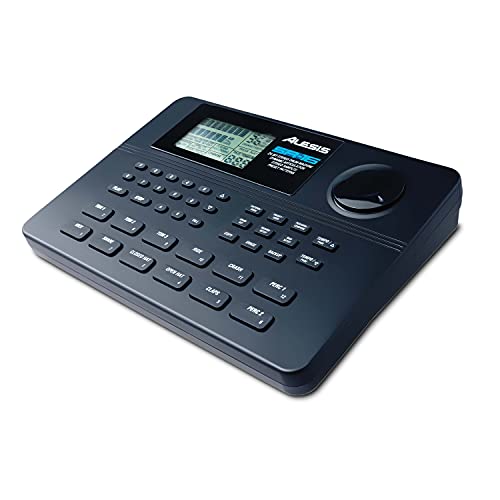
- A Studio Icon - Legendary classic drum machine for songwriters, live performers and remix engineers
- In Demand Sound - 233 professional sounds included, built-in digital effects for added realism and powered by Alesis exclusive Dynamic Articulation
The Alesis SR-16 is a legend in the world of electronic music, but it serves a very different purpose than the Donner Essential B1 Bass Synthesizer & Sequencer. While the B1 focuses on melodic analog basslines and acid squelch, the SR-16 is a dedicated drum machine. It features a massive library of 233 realistic drum sounds. Someone who is looking to build a full rhythm section from scratch might prefer the SR-16, but they will miss out on the rich, resonant analog synthesis that the B1 provides. If you already have your drums covered in your DAW and need a “lead” bass voice, the B1 is the superior choice. However, for a songwriter needing a “backing band” in a box, the SR-16 remains a classic.
2. Stylophone GENX-2 Portable Analogue Synthesizer with Speaker

- CREATE ANYWHERE, ANYTIME - Unleash your creativity the moment inspiration strikes. The GENX-2 is fully portable with battery operation and a built-in speaker, making it the perfect musical instrument...
- SCULPT YOUR SIGNATURE SOUND - Don't just play presets, design unique tones from scratch. The flexible LFO with square and triangle waves, a resonant low-pass filter, an attack/decay envelope, and new...
The Stylophone GENX-2 is the ultimate in portability and “quirk.” It features a built-in speaker and a stylus-based keyboard, making it very fun for “couch jams” or experimental sound design. Compared to the Donner Essential B1 Bass Synthesizer & Sequencer, the GENX-2 is more of a specialized “noise box.” While it has an LFO and analog delay, it lacks the sophisticated step sequencer and MIDI integration of the B1. If you want a device to carry in your pocket for making weird sci-fi sounds, the Stylophone is great. But if you are looking to produce professional tracks with synced sequences and 128-pattern memory, the B1 is a much more robust and “serious” instrument.
3. KORG microKORG Compact Synthesizer with Vocoder

- Features 37 full-size keys, providing an expressive and dynamic playing experience
- Equipped with Korg's XMT Sound Engine, it delivers authentic analog modeling synthesis for rich sound creation
The Korg microKORG is one of the most successful synthesizers of all time. It is an analog-modeling (digital) synth that offers 4-voice polyphony and a vocoder. This makes it much more versatile for playing chords, pads, and vocal effects compared to the monophonic B1. However, the microKORG’s interface is notorious for being menu-heavy and difficult to program on the fly. The Donner Essential B1 Bass Synthesizer & Sequencer wins hands-down when it comes to “acid” sounds and immediate, hands-on sequencing. If you need a “do-it-all” synth for a band, get the Korg. If you want a dedicated, easy-to-use bass machine that delivers authentic analog grit, the B1 is the more focused and modern solution.
The Final Verdict: A Must-Have for the Modern Producer?
After putting the Donner Essential B1 Bass Synthesizer & Sequencer through its paces, I am thoroughly impressed. It manages to capture the elusive “analog soul” that many budget devices miss, while providing a modern, haptic-driven workflow that makes music production feel like play rather than work. Its strengths lie in its incredible filter, the grittiness of its built-in saturation, and a sequencer that is far more powerful than its price tag suggests. While the documentation could be improved and it’s a monophonic specialist, these are small trade-offs for such a punchy, inspiring instrument.
I would highly recommend the B1 to any producer looking to add authentic acid character to their tracks without spending a fortune. It’s equally at home in a professional studio as it is on a beginner’s desk. It’s built well, sounds fantastic, and most importantly, it’s fun to use. Don’t let your tracks stay “in the box”—give them some analog life. If you’re ready to take your basslines to the next level, you should grab the Donner Essential B1 today and start squelching!
Last update on 2026-09-15 / Affiliate links / Images from Amazon Product Advertising API