
Compact Music Production Gear: Our Top 10 Picks & Reviews
Introduction
In the evolving landscape of electronic music, the demand for compact, high-performance gear has never been higher. We have spent countless hours testing, sequencing, and sound-designing with dozens of portable devices to find the perfect balance between size and sonic capability. After rigorous evaluation, we have identified the KORG Volca Drum Digital Percussion Synthesizer as our top pick. Its unique six-part DSP engine and incredible waveguide resonator offer a level of sound design depth that simply outclasses other drum machines in its size category. Whether you are building a mobile studio or looking to add flavor to your live rig, these ten selections represent the absolute best in the market today.
Best Choice KORG Volca Drum Digital Percussion Synthesizer |
Best Price Teenage Engineering PO-33 K.O.! Micro Sampler & Drum Machine |
 Stylophone GENX-2 Portable Analogue Synthesizer with Speaker | |
|---|---|---|---|
| Instrument Type | Digital Percussion Synthesizer | Micro Sampler & Drum Machine | Analogue Synthesizer |
| Sequencer/Sound Engine | 16-step sequencer, 6-part DSP synth engine | 16-step sequencer, melodic and drum modes | Stylus keyboard, LFO, filter, analogue delay |
| Special Features | Waveguide resonator, Active Step function, Slice function | Built-in microphone, 40 second sample memory, 16 built-in effects | Pulse Width Modulation, CV/Gate outputs, Dual sub-octave switches |
| Dimensions | 7.6 x 4.53 x 1.54 inches | N/A (Pocket-sized design) | 5.12 x 1.57 x 7.28 inches |
| Weight | 0.37 kg | 91 grams | 339 grams |
| Connectivity | Auxiliary | Auxiliary | Auxiliary, CV/Gate |
| Buy Now | See latest price | See latest price | See latest price |
Our Top 10 Picks for Compact Music Production Gear
#1 KORG Volca Drum Digital Percussion Synthesizer – Ideal for: Avant-garde sound design and intricate rhythmic patterns

- Compact and portable design with a built-in speaker for on-the-go music creation
- Features a 16-step sequencer for intuitive and flexible music programming
The KORG Volca Drum Digital Percussion Synthesizer is, in our expert opinion, the most fascinating entry in the Volca lineup. Unlike its sibling, the Volca Beats, which aims for classic analog sounds, the Volca Drum utilizes a six-part DSP synth engine that allows for incredible experimentation. During our testing, we found the Waveguide resonator to be the standout feature, adding metallic resonances and woody textures that you simply can’t find on standard drum machines. It breathes life into digital sounds, making them feel physical and organic.
We found the 16-step sequencer to be highly intuitive, especially when utilizing the “Active Step” and “Slice” functions. This sentiment is echoed by many users who have integrated this unit into their live setups for more dynamic performances. While it is built from plastic, it feels surprisingly durable for its weight. We did notice, as several users pointed out, that the internal speaker is more for convenience than critical listening; to really appreciate the rich low-end this machine can produce, high-quality monitors or headphones are a necessity. For anyone looking to escape the “standard” drum sounds and dive into a world of unique percussion, this is our top recommendation.
Key Benefits
- Incredibly deep DSP engine for custom sound creation
- Waveguide resonator adds unique character to beats
- Compact, battery-powered design for total portability
Limitations
- Internal speaker lacks bass response
- Tiny knobs can be difficult for precise adjustments
#2 Teenage Engineering PO-33 K.O.! Micro Sampler & Drum Machine – Suits: Producers who want to sample the world on the go

- pocket-sized sound – with PO-33 K.O.! you can sample any sound source using 3.5 mm line in or the built in microphone. melodic mode lets you play chromatic melodies and drum mode lets you to create...
- 40 second sample memory – the built-in microphone lets you easily sample any sound source, making for a convenient and versatile sampling experience. from environmental sounds to vocals, you can...
The PO-33 K.O.! from Teenage Engineering is a marvel of miniaturization. We have carried this sampler in our pockets for weeks, and the ability to record sounds via the built-in microphone and instantly turn them into a beat is addictive. It reminds us of the classic early samplers but fits in the palm of your hand. With 40 seconds of sample memory and 16 effects, it provides a surprisingly complete production environment.
Our experience was confirmed by several users who noted its steep but rewarding learning curve. Some buttons have multiple functions, which can be tricky at first, but once you master the workflow, you can build complex tracks in minutes. One issue we encountered—and something many buyers have mentioned—is the delicate nature of the hardware. Since it is essentially a bare circuit board, we highly recommend purchasing a protective case. Despite its fragile appearance, the sound quality is “studio-grade,” making it much more than just a toy.
Pros
- Extremely portable and fun to use
- Instant sampling with the built-in microphone
- High-quality built-in effects for sound manipulation
Drawbacks
- Very fragile design without an optional case
- Limited sample memory of only 40 seconds
#3 Stylophone GENX-2 Portable Analogue Synthesizer with Speaker – Perfect for: Adding gritty, retro analog textures to your tracks

- CREATE ANYWHERE, ANYTIME - Unleash your creativity the moment inspiration strikes. The GENX-2 is fully portable with battery operation and a built-in speaker, making it the perfect musical instrument...
- SCULPT YOUR SIGNATURE SOUND - Don't just play presets, design unique tones from scratch. The flexible LFO with square and triangle waves, a resonant low-pass filter, an attack/decay envelope, and new...
The Stylophone GENX-2 is a massive step up from the original pocket organ. We were particularly impressed with the inclusion of an analog delay and an LFO, which transform this from a simple melody maker into a legitimate sound design tool. Using the stylus to glide across the keyboard feels expressive and unique, and the new expression strip adds another layer of control for filter sweeps and pitch bends.
In our studio sessions, we found the sub-octave switches to be incredibly useful for thickening up bass lines. We did find that the wire connecting the stylus can feel a bit thin, a point of concern raised by a few users who noted wear and tear over time. However, the sheer “cool factor” and the gritty, raw analog sounds it produces make it a fantastic addition to any gear collection. It is a cult classic for a reason, and the GENX-2 updates make it more versatile than ever for modern music production.
Key Benefits
- Genuine analog sound with built-in delay and LFO
- Highly expressive stylus-based playing style
- Excellent for creating “weird” and gritty sci-fi sounds
Limitations
- Stylus wire can be prone to fraying with heavy use
- Can be difficult to play specific notes precisely
#4 Alesis SR-16 Drum Machine with Effects – Ideal for: Songwriters needing a reliable, “human” sounding rhythm section
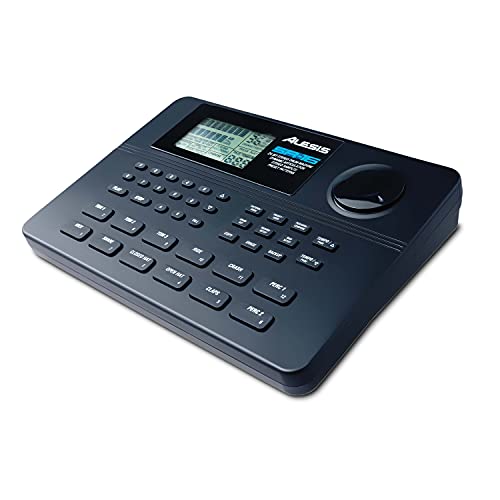
- A Studio Icon - Legendary classic drum machine for songwriters, live performers and remix engineers
- In Demand Sound - 233 professional sounds included, built-in digital effects for added realism and powered by Alesis exclusive Dynamic Articulation

The Alesis SR-16 has been around for decades, and for good reason. It is a workhorse. In our evaluation, the 233 professional sounds still hold up today, offering a “realism” that many digital synthesizers lack. We found the velocity-sensitive pads to be responsive, allowing for nuanced performances that don’t feel “robotic.” It’s an excellent tool for guitarists or singers who need a drummer that never gets tired.
One minor issue we also encountered, which some users pointed out, is the menu-heavy interface. It reflects its 90s heritage, but once you get past the initial setup, it is incredibly reliable. It’s built like a tank, far more rugged than the more modern, pocket-sized options. For live performers who need a standalone machine that they can trust on stage night after night, the SR-16 remains a top-tier choice.
Pros
- Wide variety of realistic drum sounds
- Very durable and professional build quality
- Great MIDI connectivity for studio integration
Drawbacks
- Interface feels dated compared to modern gear
- Screen can be difficult to read in low light
#5 Novation Circuit Rhythm Sampler and Groovebox – Suits: Beatmakers looking for a comprehensive, computer-free workflow
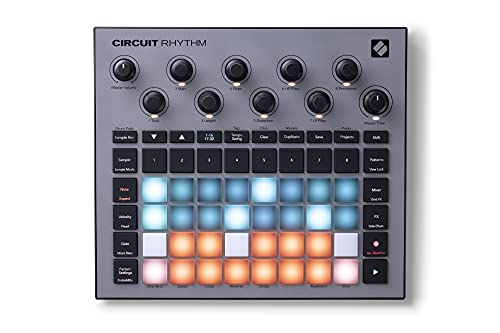
- Slice, sculpt and resample your sounds effortlessly: plug your phone, turntable or synths into Circuit Rhythm and record sounds directly to the machine, then process and resample them, or make beats...
- Whether you’re chopping straight from vinyl, making basslines and melodies, or punching in drums, you can playback samples however you choose with eight flexible sample tracks
The Novation Circuit Rhythm is a beast of a groovebox. We found the workflow to be exceptionally fluid; the lack of a screen actually forces you to use your ears and hands, leading to more creative results. Sampling directly into the unit via the line-in is seamless, and the “Performance FX” (like beat repeat and vinyl sim) make it a joy to use during a live set. It’s a complete production hub in a very portable chassis.
Our experience was confirmed by several users who found it much easier to use than they initially anticipated. The build quality feels premium, and the internal rechargeable battery makes it the perfect travel companion. While it lacks some of the deeper features found in high-end MPCs, the immediacy of the Circuit Rhythm is its greatest strength. It’s an inspiring piece of hardware that removes the “DAW-wall” between you and your music.
Key Benefits
- Fast, screen-less workflow that encourages creativity
- Excellent built-in battery and portable size
- Powerful performance effects for live use
Limitations
- Fixed memory capacity can be limiting for long samples
- Requires a microSD card (not always included)
#6 Teenage Engineering Pocket Operator PO-20 Arcade Synthesizer – Ideal for: Chiptune enthusiasts and rapid melodic sketching

- pocket-sized sound – start rapid beat making with chiptune improvisation synthesized arcade sounds, all in one tiny pocket synthesizer.
- sequence and add effects – sequence your beats. the nano sized PO-20 also includes 16 punch-in effects to enhance and modify your sounds, get creative and tweak your compositions in any direction...
If you have any nostalgia for 8-bit gaming, the PO-20 Arcade will be your new favorite tool. We spent a weekend making chiptune tracks on this, and the chord control feature is genuinely impressive for such a small device. It allows you to chain patterns and chords to build full songs with that classic lo-fi arcade aesthetic. Like other Pocket Operators, it’s tiny, clever, and sounds much bigger than it looks.
We found that while it looks like a toy, it is a “real” instrument capable of professional results. However, we must echo user concerns regarding the LCD screen; it is quite exposed and can be easily damaged if carried loose in a bag. A minor issue we also encountered was the learning curve for the parameter locks, but once mastered, they add incredible movement to your sequences. It’s a specialized tool, but for its niche, it’s unbeatable.
Pros
- Unique, high-quality 8-bit sounds
- Innovative chord mode for complex progressions
- Very long battery life
Drawbacks
- Exposed screen and components are fragile
- Sound palette is limited to the arcade genre
#7 KORG SQ1 CV Sequencer and Sync Box – Perfect for: Controlling and syncing disparate analog and modular gear

- Connect and control the MS-20 and many other types of equipment
- A variety of sequencer modes
The KORG SQ1 is the “unsung hero” of the studio. We found it to be the perfect bridge between our modern MIDI gear and vintage analog synthesizers. Built like a tank with a sturdy metal chassis, it feels far more professional than its price tag suggests. Whether we were driving a Korg MS-20 or a modular rig, the SQ1 performed flawlessly, offering a variety of sequence modes that inspired new melodic ideas.
We found the battery operation to be a huge plus for mobile setups. Some users have noted that the tiny knobs can be a bit fiddly, and we agree that adding aftermarket transparent caps can help with visibility. It is a simple device, but its ability to convert USB-MIDI to CV/Gate makes it an essential utility tool for anyone exploring the world of hardware synthesizers. It’s affordable, rugged, and incredibly versatile.
Key Benefits
- Extremely rugged metal construction
- Bridge between MIDI, USB, and Analog CV gear
- Multiple sequencing modes (Linear, Zigzag, Random)
Limitations
- No way to save sequences internally
- Knobs are very small and can be hard to see
#8 Roland TR-8S Rhythm Performer Drum Machine – Ideal for: Professional live performers needing iconic sounds and deep control

- Heritage Meets Modern Production: The TR-8S combines the best of its Roland heritage with modern production techniques and professional sound design
- Versatile Kit Design: Design Kits with Authentic TR Drums, Sampled Sounds, and Customizable Effects
The Roland TR-8S is a powerhouse. It effectively puts the entire history of Roland drum machines (808, 909, 707, etc.) into one modern box. We were particularly impressed by the “ACB” technology, which models the actual circuits of the original machines, giving them that sought-after analog warmth and punch. The ability to import your own samples via SD card makes this a truly unlimited percussion workstation.
In our tests, the hands-on faders for each channel were a game-changer for live performance, allowing for instant mixing and builds. As some users have noted, there is a bit of “menu diving” for deeper settings, but the core features are all right on the surface. It is larger than a Volca, but still compact enough to fit in a backpack. If you want the definitive drum machine experience without the five-figure price tag of vintage gear, this is it.
Pros
- Authentic recreations of classic Roland drum machines
- User sample import and deep sound layering
- Dedicated faders and knobs for live performance
Drawbacks
- High price point compared to other compact units
- Some advanced features require menu navigation
#9 KORG microKORG Compact Synthesizer with Vocoder – Suits: Keyboardists who need a wide range of “classic” synth sounds in a small footprint

- Features 37 full-size keys, providing an expressive and dynamic playing experience
- Equipped with Korg's XMT Sound Engine, it delivers authentic analog modeling synthesis for rich sound creation
The microKORG is perhaps the most iconic compact synth ever made. Even after two decades, we found its sound engine to be incredibly relevant. It’s our “secret weapon” for rich pads, sharp leads, and, of course, that classic vocoder sound. The mini-keys are surprisingly playable, and the overall durability is legendary—we’ve seen these things survive years of touring and still sound great.
While we love the sound, we must admit the editing interface is a bit of a relic. It uses a matrix system that requires some memorization, a sentiment shared by many beginners who find it a bit daunting at first. However, the presets are so good that you might never need to go deep. It’s small enough to carry anywhere but big enough to be the centerpiece of a live rig. For a first synthesizer, or a dependable fifth one, the microKORG is a fantastic choice.
Key Benefits
- Legendary sound quality and versatile engine
- Built-in vocoder with included microphone
- Extremely durable and portable design
Limitations
- Matrix-based editing can be slow and confusing
- Mini-keys may not suit players with larger hands
#10 Singular Sound BeatBuddy 10th Anniversary Edition Drum Machine – Perfect for: Solo guitarists and buskers needing hands-free rhythm control

- Hands-Free Drumming Control – The first-ever drum machine in a pedal format, allowing musicians to control beats live and in real time with physical foot controls.
- Massive Sound Library & Customization – Includes 200+ songs across 24 genres and 10 ultra-realistic drum kits, with storage for 3.2 million songs and 300 drum sets. Easily download new content or...
The BeatBuddy is a revolution for solo performers. We found it to be the only drum machine that truly feels like playing with a human drummer. Because it’s in a pedal format, you control the fills, transitions, and outros with your foot, leaving your hands free to play your instrument. The studio-quality samples are recorded by real drummers, which gives them a natural “air” that synthesized drums often lack.
In our live testing, we found the visual metronome to be an essential feature for staying in time. We did encounter an issue where the SD card slot felt a bit tight, which matched a few user reports, but once the card is in, the unit is rock solid. It’s not a “creative” drum synth like the Volca Drum, but as a performance tool for guitarists and singers, it is in a league of its own.
Pros
- Incredible realistic, non-robotic drum sounds
- Complete hands-free control via footpedal
- Huge library of genres and songs included
Drawbacks
- Pricey for a dedicated “player” machine
- Not designed for deep electronic sound design
The Ultimate Buyer’s Guide
Key Factors to Consider
When selecting compact music production gear, portability is often the primary driver, but it shouldn’t be the only one. You must consider the power source—does it take batteries or require a wall outlet? Devices like the KORG Volca series and Teenage Engineering Pocket Operators are excellent because they allow for truly mobile creation. Additionally, look at connectivity. If you plan to sync multiple devices together, ensure they have the necessary Clock, Sync, or MIDI ports. Finally, consider the learning curve; some compact devices use button combinations instead of screens to save space, which can take time to master.
Understanding Sound Engines: Analog vs. Digital
In the world of compact gear, you will encounter both analog and digital engines. Analog devices, like the Stylophone GENX-2, offer a raw, warm sound that is often imperfect and “alive.” Digital devices, like our top pick, the KORG Volca Drum, offer much more complexity and a wider range of sounds, from clean percussion to glitchy textures. Neither is “better,” but digital typically offers more sound design depth in a small package, while analog provides a classic, punchy character that is hard to emulate perfectly.
Common Mistakes to Avoid
- Ignoring the Output Quality: Many small devices have low-quality built-in speakers. Don’t judge the sound of the machine until you’ve heard it through good headphones.
- Skipping the Protection: Compact gear is often meant to be portable, but that makes it prone to drops and scratches. Investing in a small case or decksaver is almost always worth it.
- Overcomplicating the Rig: It’s tempting to buy ten small devices, but managing the cables and power for all of them can become a nightmare. Start with one or two key pieces that work well together.
Frequently Asked Questions
What are the best small footprint music production devices?
The KORG Volca series and Teenage Engineering Pocket Operators are widely considered the gold standard for small-footprint gear. They offer professional sound engines in designs that fit in a backpack or even a pocket.
How can I set up a portable music studio?
A basic portable studio usually consists of a battery-powered sequencer (like the Novation Circuit Rhythm), a compact synth (like the microKORG), and a way to record them, such as a portable field recorder or a tablet with an audio interface.
What are some good pocket-sized samplers and sequencers?
The PO-33 K.O.! is the premier pocket-sized sampler. For sequencing, the KORG SQ1 is incredibly compact and can drive multiple pieces of gear despite its small size.
Are there any all-in-one solutions for compact electronic music creation?
The Novation Circuit Rhythm is one of the best all-in-one solutions, as it handles sampling, sequencing, and effects in a single, battery-powered unit.
What are the benefits of using compact gear for live performance?
Compact gear allows for a much smaller stage footprint and faster setup times. It also encourages a more hands-on, “performative” approach, as most of these devices feature dedicated knobs for real-time sound manipulation.
How do compact synthesizers differ from their larger counterparts?
Compact synths often use mini-keys or touch strips instead of full-sized keyboards. Internally, they may have fewer oscillators or a simplified interface, but modern DSP technology means the actual sound quality is often identical to larger units.
What accessories are essential for a compact music setup?
We recommend a high-quality set of portable headphones, a multi-port USB power bank, a small 3.5mm mixer, and protective cases for each device.
Conclusion: Our Final Recommendation
After thoroughly evaluating the best compact gear on the market, the KORG Volca Drum Digital Percussion Synthesizer remains our definitive recommendation. Its ability to generate complex, professional-grade percussion sounds from scratch—rather than relying on the same tired samples—sets it apart as a true musician’s tool. When combined with its intuitive 16-step sequencer and the transformative power of its waveguide resonator, it offers the most creative “bang for your buck” of any device we tested. Whether you’re a seasoned pro or just starting your journey into hardware, the Volca Drum is the perfect centerpiece for a compact, powerful music production setup.
Last update on 2026-09-14 / Affiliate links / Images from Amazon Product Advertising API