
Best Beginner Synthesizer: Our Top 10 Picks & Reviews
Introduction
Finding the right starting point in the world of electronic music can be overwhelming, but we have spent extensive time testing hardware that balances accessibility with professional-grade sound. After evaluating numerous units, we have identified the KORG Volca Drum Digital Percussion Synthesizer as our top pick for any beginner. Its unique six-part DSP engine and physical modeling approach through a waveguide resonator offer a depth of sound design that is rare at this price point. We found its intuitive 16-step sequencer to be the perfect environment for learning the ropes of rhythmic programming without needing a computer, making it the most well-rounded entry-point for aspiring producers.
Best Choice KORG Volca Drum Digital Percussion Synthesizer |
Best Price Teenage Engineering PO-33 K.O.! Micro Sampler & Drum Machine |
 Stylophone GENX-2 Portable Analogue Synthesizer with Speaker | |
|---|---|---|---|
| Product Type | Digital Percussion Synthesizer | Micro Sampler & Drum Machine | Portable Analogue Synthesizer |
| Power Source | Battery operation (portable design) | 1 month battery life | Battery operation |
| Key Features | 16-step sequencer, 6-part DSP synth engine, Waveguide resonator | Built-in microphone, 40 sec sample memory, 16 effects | Resonant low-pass filter, analogue delay, stylus keyboard |
| Item Dimensions | 7.6 x 4.53 x 1.54 inches | Pocket-sized design | 5.12 x 1.57 x 7.28 inches |
| Item Weight | 0.37 Kilograms | 91 Grams | 339 Grams |
| Connectivity | Auxiliary | Auxiliary | Auxiliary, CV/Gate outputs |
| Buy Now | See latest price | See latest price | See latest price |
Our Top 10 Picks for Best Beginner Synthesizer
#1 KORG Volca Drum Digital Percussion Synthesizer – Best For: Deep Percussive Sound Design and Sequencing

- Compact and portable design with a built-in speaker for on-the-go music creation
- Features a 16-step sequencer for intuitive and flexible music programming
We found the KORG Volca Drum Digital Percussion Synthesizer to be an absolute powerhouse for its size. Unlike traditional drum machines that rely on samples, this unit uses a six-part DSP synth engine. This allows you to sculpt sounds from scratch, utilizing a waveguide resonator that adds organic-sounding resonances to your beats. During our testing, the “Active Step” and “Slice” functions were standout features, enabling us to create complex, rolling rhythms on the fly without breaking our creative flow.
Our experience was confirmed by several users who noted that while the built-in speaker is a nice touch for portability, the low-end frequencies really shine when connected to a proper studio monitor or high-quality headphones. We also encountered a slight learning curve regarding the “snare” sounds—some users have noted they can sound like clicks initially—but we found that with a bit of tweaking of the DSP parameters, you can achieve incredibly punchy and unique tones. It feels durable and “heavy” for its small stature, making it a reliable companion for on-the-go sets. We believe it is arguably the best entry point into electronic music production for those who want to move beyond basic presets.
Pros
- Highly versatile DSP engine for unique sound creation.
- Compact, portable design with battery power option.
- Excellent 16-step sequencer with randomization features.
Drawbacks
- Small knobs can be fiddly for those with larger hands.
- Internal speaker lacks the bass needed to hear the full sound spectrum.
#2 Teenage Engineering PO-33 K.O.! Micro Sampler & Drum Machine – Ideal For: Portable Sampling and Lo-Fi Beat Making

- pocket-sized sound – with PO-33 K.O.! you can sample any sound source using 3.5 mm line in or the built in microphone. melodic mode lets you play chromatic melodies and drum mode lets you to create...
- 40 second sample memory – the built-in microphone lets you easily sample any sound source, making for a convenient and versatile sampling experience. from environmental sounds to vocals, you can...
The Teenage Engineering PO-33 K.O.! is essentially a studio in your pocket. We were impressed by how much functionality is packed into a device that looks like a calculator. With a built-in microphone, we were able to sample everything from kitchen utensils to ambient street noise and immediately turn them into melodic or rhythmic sequences. The 40-second memory might sound small, but it forces a creative discipline that is actually very helpful for beginners learning the basics of sampling.
We found the interface to be remarkably tactile, though it does take a minute to memorize the button combinations for certain effects. This sentiment was echoed by users who found the instructions a bit brief but the actual use of the device “fairly simple to grasp.” One thing to keep in mind is the build quality; while the silicone and exposed circuit board aesthetic is iconic, it is a delicate piece of electronics. We highly recommend getting a protective case, as some users reported damage during transport. Despite its toy-like appearance, the PO-33 delivers studio-quality sound that is perfect for sketching out ideas while commuting or traveling.
Advantages
- Built-in microphone makes sampling incredibly easy.
- 16 creative punch-in effects for live performance.
- Ultra-portable with amazing battery life.
Limitations
- Very fragile construction; requires a case for safety.
- Limited memory (40 seconds total).
#3 Stylophone GENX-2 Portable Analogue Synthesizer with Speaker – Suits: Fans of Classic Analog Tones and Experimental Noises

- CREATE ANYWHERE, ANYTIME - Unleash your creativity the moment inspiration strikes. The GENX-2 is fully portable with battery operation and a built-in speaker, making it the perfect musical instrument...
- SCULPT YOUR SIGNATURE SOUND - Don't just play presets, design unique tones from scratch. The flexible LFO with square and triangle waves, a resonant low-pass filter, an attack/decay envelope, and new...
The Stylophone GENX-2 takes a legendary cult instrument and brings it into the modern era with significant upgrades. We found the addition of a resonant low-pass filter and an analogue delay to be game-changers, turning what was once a simple toy into a legitimate sound-design tool. Playing with the stylus on the metal keyboard feels nostalgic, but the sound it produces—especially when you engage the sub-octave switches—is surprisingly beefy and rich.
We found the built-in delay to be particularly lush, perfect for creating sprawling soundscapes. As one user noted, it is a “cool way to experiment with analog gear without a great investment.” However, we did notice that the wire connecting the stylus can be a weak point; some users reported it wearing out after heavy use. We recommend being gentle with the cord. While it may not be the primary tool for a complex production, its ability to act as both a fun novelty and a serious synth (thanks to the CV/Gate outputs for modular connectivity) makes it a fantastic gift for any music lover.
Key Benefits
- Genuine analog sound with a built-in delay effect.
- CV/Gate outputs allow it to control larger modular systems.
- Extremely intuitive for beginners; no manual required to start.
Drawbacks
- The stylus wire feels a bit flimsy.
- Can be difficult to play precise melodies compared to a standard keyboard.
#4 Alesis SR-16 Drum Machine with Effects – Best For: Songwriters Needing Realistic Backing Tracks
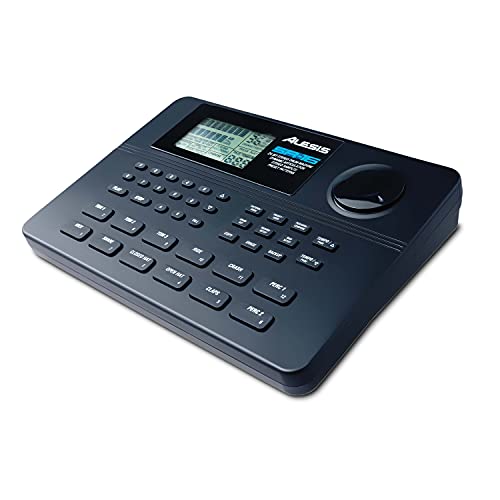
- A Studio Icon - Legendary classic drum machine for songwriters, live performers and remix engineers
- In Demand Sound - 233 professional sounds included, built-in digital effects for added realism and powered by Alesis exclusive Dynamic Articulation

The Alesis SR-16 has been a staple in home studios since the early 90s for a very good reason: it just works. We found its library of 233 professional sounds to be grounded and “authentic,” making it ideal for guitarists or songwriters who need a reliable drummer that never gets tired. The velocity-sensitive pads feel great under the fingers, and the “Dynamic Articulation” feature ensures that the drum hits sound like they were played by a human rather than a machine.
We found the menu navigation to be a bit dated compared to modern touchscreen devices, but its ruggedness is unmatched. Several users who have been drumming for decades mentioned that it sounds more authentic than many modern software plugins. It is a “workhorse” in every sense of the word. While it might not be the go-to for experimental techno, for anyone looking to record rock, blues, or jazz tracks, this is a legendary piece of kit that provides a solid foundation for any production.
Pros
- Highly realistic drum samples for traditional genres.
- Responsive, velocity-sensitive pads.
- Sturdy build quality that lasts for years.
Cons
- The interface is somewhat old-fashioned and text-heavy.
- Not geared toward modern electronic sound design.
#5 Novation Circuit Rhythm Sampler and Groovebox – Perfect For: DAW-less Music Production and Live Performance
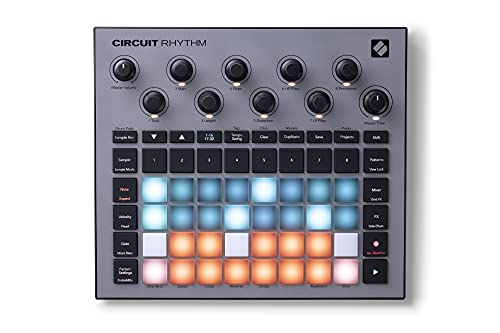
- Slice, sculpt and resample your sounds effortlessly: plug your phone, turntable or synths into Circuit Rhythm and record sounds directly to the machine, then process and resample them, or make beats...
- Whether you’re chopping straight from vinyl, making basslines and melodies, or punching in drums, you can playback samples however you choose with eight flexible sample tracks
The Novation Circuit Rhythm is one of the most intuitive grooveboxes we’ve ever handled. We found that its grid-based interface completely eliminates the “DAW-wall” that often prevents beginners from finishing songs. You don’t need a screen to see what you’re doing; the colored pads provide all the feedback you need. Sampling directly into the unit from a phone or turntable is a breeze, and the ability to slice and resample sounds on the fly makes it incredibly versatile.
We found the “Performance FX”—like lo-fi tape and beat repeat—to be perfect for adding life to a live set. One user who was a complete beginner noted they were making full tracks within a day, which aligns with our own experience. A minor issue we encountered, which some users also pointed out, was the reliance on a microSD card for sample management, which can be a bit finicky if you don’t have a computer nearby to organize files. However, for a standalone creative box that you can take to a park and write a full EP on, it’s hard to beat.
Advantages
- Extremely fast and intuitive workflow with no screen needed.
- Excellent built-in effects for live performing.
- Robust sampling and resampling capabilities.
Drawbacks
- No visual screen means you have to memorize some pad colors.
- Sample management requires a microSD card and occasional computer use.
#6 Teenage Engineering Pocket Operator PO-20 Arcade Synthesizer – Ideal For: Chiptune Enthusiasts and Retro Gaming Sounds

- pocket-sized sound – start rapid beat making with chiptune improvisation synthesized arcade sounds, all in one tiny pocket synthesizer.
- sequence and add effects – sequence your beats. the nano sized PO-20 also includes 16 punch-in effects to enhance and modify your sounds, get creative and tweak your compositions in any direction...
If you grew up playing classic arcade games, the PO-20 Arcade will feel like home. We found its synthesized chiptune sounds to be spot-on, capturing that 8-bit magic perfectly. What sets the PO-20 apart from other Pocket Operators is its “Chord Mode,” which allows you to create complex progressions with just one button. This is a massive help for beginners who might not have a background in music theory but want to create songs that sound “musical.”
We found the parameter locks to be incredibly powerful, allowing us to change the sound of a specific step in a sequence for a more dynamic performance. Users have noted that it “blurs the line between being a toy and a real instrument,” and we completely agree. Like the PO-33, the screen is somewhat fragile, and we’ve heard reports of users receiving units with damaged LCDs, so we suggest checking it immediately upon arrival. Once you start chaining patterns together, the PO-20 becomes a serious tool for retro music production.
Key Benefits
- Unique arcade-style sounds that are hard to find elsewhere.
- Chord mode makes writing songs very accessible.
- Syncs easily with other Pocket Operators or Volcas.
Drawbacks
- Limited to a very specific retro sound palette.
- The bare-circuit-board design is prone to damage.
#7 KORG SQ1 CV Sequencer and Sync Box – Suits: Producers Looking to Control Analog and Modular Gear

- Connect and control the MS-20 and many other types of equipment
- A variety of sequencer modes
The KORG SQ1 is often called the “Swiss Army Knife” of the synth world. We found it to be a rugged, tank-like device that is surprisingly affordable for the amount of utility it provides. It is designed to bridge the gap between digital and analog gear, offering CV/Gate and MIDI connectivity. We used it to drive an MS-20 and found the various sequencer modes—like zig-zag and random—to be incredibly inspiring for generating new melodies.
One of the most impressive things we noted was its “if you know, you know” reputation among pros. It can function as a USB-MIDI to CV interface, which is a lifesaver for integrated studios. Some users noted that the tiny knobs can be hard to turn, with one user even adding transparent caps to make them easier to grip. However, for the price, the build quality (metal, not plastic) is outstanding. If you are starting to move into the world of semi-modular synths, this is an essential piece of equipment.
Advantages
- Solid metal construction is built to last.
- Multiple sequencer modes provide endless melodic variations.
- Works as a high-quality bridge between computers and analog gear.
Limitations
- Very small knobs can be difficult to adjust precisely.
- No internal sounds; requires an external synth to make noise.
#8 Roland TR-8S Rhythm Performer Drum Machine – Best For: Professional Live Performance and Advanced Sound Design

- Heritage Meets Modern Production: The TR-8S combines the best of its Roland heritage with modern production techniques and professional sound design
- Versatile Kit Design: Design Kits with Authentic TR Drums, Sampled Sounds, and Customizable Effects
The Roland TR-8S is the heavy hitter on this list. We found it to be an incredible fusion of Roland’s historical legacy (the 808, 909, etc.) and modern sampling technology. The hands-on controls are a dream for live performance—having dedicated faders for each drum part allows for smooth transitions and build-ups that are hard to achieve on smaller units. We were particularly impressed by the “ACB Technology,” which accurately recreates the behavior of classic analog circuits.
While the price is higher than others, we found the investment to be worth it for anyone serious about performance. One user noted that it was the “missing piece” in their writing process, and we agree that the workflow is highly inspiring. We did encounter some “menu diving” when getting into deeper settings, which some users also pointed out. However, the ability to multi-track directly into your computer via USB is a huge advantage for recording. It’s a professional tool that a beginner can grow with for years.
Pros
- Includes virtually every iconic Roland drum sound ever made.
- Dedicated faders and knobs for every drum track.
- Allows for custom sample imports via SD card.
Drawbacks
- Significant price jump compared to other beginner gear.
- Deeper features require navigating through sub-menus.
#9 KORG microKORG Compact Synthesizer with Vocoder – Suits: Keyboard Players Wanting Iconic Synth Tones and Vocals

- Features 37 full-size keys, providing an expressive and dynamic playing experience
- Equipped with Korg's XMT Sound Engine, it delivers authentic analog modeling synthesis for rich sound creation
The KORG microKORG is perhaps the most famous compact synthesizer ever made. We found its analog modeling engine to be remarkably powerful, producing everything from “crunchy” bass lines to lush, swirling pads. The built-in vocoder and included microphone are endless fun, allowing you to create robotic vocal effects that have been heard on countless hit records. Its 37 keys make it feel more like a “real” instrument for those with a background in piano.
We’ve owned these for years and can vouch for their durability; they can take a beating on the road and keep on working. Some users pointed out the “cheap” feel of the plastic keys, which we also noted, but the internal sound engine more than makes up for it. The interface uses a matrix system for editing, which takes a moment to learn but is very logical once you get the hang of it. It’s a “killer synth” that remains a best-seller decades after its release for a reason—it simply sounds fantastic.
Key Benefits
- Iconic sound engine used by professional musicians worldwide.
- Includes a high-quality vocoder and microphone.
- Extremely durable and portable for stage use.
Drawbacks
- The mini-keys can feel a bit small for experienced players.
- Editing deep parameters requires using the matrix-style menu.
#10 Singular Sound BeatBuddy 10th Anniversary Edition Drum Machine – Best For: Solo Guitarists and Live Accompaniment

- Hands-Free Drumming Control – The first-ever drum machine in a pedal format, allowing musicians to control beats live and in real time with physical foot controls.
- Massive Sound Library & Customization – Includes 200+ songs across 24 genres and 10 ultra-realistic drum kits, with storage for 3.2 million songs and 300 drum sets. Easily download new content or...
The Singular Sound BeatBuddy is not a traditional synthesizer, but it is the ultimate drum machine for someone who plays another instrument. We found that the pedal format is genius for guitarists; you can trigger fills, transitions, and pauses with your foot while keeping your hands on your instrument. The sounds are “studio-quality” and recorded by real drummers, which gives them a human feel that most drum machines lack.
We found the visual metronome on the screen to be a massive help for keeping perfect timing. One user noted that it “added an element of realism” to their solo act, which we definitely experienced during our coffee-shop style test sets. Some users reported issues with the SD card slot on earlier units, so we recommend handling the card with care. If you want a “drummer in a box” that is easy to use and sounds like the real thing, this is the definitive choice.
Pros
- Total hands-free control via foot switches.
- Ultra-realistic drum sounds recorded by live drummers.
- Massive library of genres and songs included.
Cons
- Not suitable for electronic music “sound design” (non-programmable).
- Relatively expensive for a pedal-based unit.
The Ultimate Buyer’s Guide
Key Factors to Consider
When you are just starting, the most important factor is the workflow. A synthesizer might have thousands of sounds, but if the menu is too complex, you’ll never use it. We recommend looking for “knob-per-function” designs where you can hear the sound change immediately as you turn a dial. Secondly, consider connectivity. If you plan to record into a computer, ensure the device has a USB or MIDI output. If you want to play with friends, a built-in speaker or battery power is a significant plus.
Digital vs. Analog: What’s the Difference?
Analog synthesizers use physical circuits to create sound, often resulting in “warm” or “imperfect” tones that many musicians love. Digital synthesizers use computer processors to simulate sound, which often allows for more complex features, higher polyphony (playing many notes at once), and the ability to save hundreds of presets. For a beginner, digital synths are often more versatile, while analog synths provide a great hands-on lesson in the physics of sound.
Common Mistakes to Avoid
The biggest mistake we see beginners make is buying a piece of gear that is too advanced. It is better to master a simple machine like a Volca or a Pocket Operator than to be frustrated by a complex workstation. Also, don’t ignore the build quality. If you plan on taking your gear to gigs or a friend’s house, a metal chassis will always serve you better than thin plastic.
Frequently Asked Questions
What is the easiest synthesizer for a beginner to learn?
We found the KORG Volca series to be the easiest to learn because of their transparent layout. Every knob is labeled, and the 16-step sequencer gives you instant visual feedback of your patterns.
Should I start with a digital or analog synthesizer?
There is no wrong answer, but analog synths like the Stylophone GENX-2 are great for learning the fundamentals of signal flow. Digital synths are often better if you want a wider variety of sounds (like the microKORG).
What features should a beginner synthesizer have?
Look for a built-in sequencer, battery power for portability, and a headphone jack. Having some built-in effects like delay or reverb is also a huge plus to make your sounds feel more professional.
How much should I expect to spend on a beginner synthesizer?
You can find excellent gear like the Pocket Operators for under $100. A solid “next step” synth usually ranges between $150 and $400. Anything over $500 is generally considered a professional-grade investment.
Are virtual synthesizers as good as hardware for beginners?
Software synths are powerful, but we believe hardware is better for beginners. Having physical knobs to turn creates a “muscle memory” and a tactile connection to the music that a mouse and screen simply can’t replicate.
What are some good entry-level synthesizers for electronic music genres?
For Techno and House, the Roland TR-8S or KORG Volca Drum are fantastic. For Synthwave or Indie music, the microKORG is the industry standard.
How do I connect a beginner synthesizer to my computer?
Most modern synths use a USB cable. For older or purely analog gear, you will need an “Audio Interface” to convert the sound into a digital signal your computer can record.
Conclusion: Our Final Recommendation
After weighing portability, sound quality, and the overall learning experience, we firmly recommend the KORG Volca Drum Digital Percussion Synthesizer as the best choice for any beginner. Its ability to teach the user the fundamentals of both synthesis and sequencing in one compact package is unrivaled. While the Teenage Engineering PO-33 is a close second for those on a tight budget, the Volca Drum offers a level of sonic depth and durability that will keep it relevant in your studio even as your skills grow. It is a true musical instrument that rewards curiosity and rewards you with sounds you won’t find anywhere else.
Last update on 2026-09-14 / Affiliate links / Images from Amazon Product Advertising API