
MIDAS DM16 16-Input Analogue Mixer Review: The High-Headroom Hero for Serious Studio and Live Sound
If you have ever spent a long night in the studio or behind a live sound desk, you know the frustration of “the hiss.” It’s that subtle, distracting floor of white noise that creeps into your recordings or live mixes when you start pushing your gain. For years, I struggled with entry-level boards that looked great on paper but fell apart as soon as I needed to capture a delicate acoustic guitar or a quiet vocal performance. The reality is that most budget-friendly mixers compromise on the most important component: the preamplifiers. Finding a solution that offers professional-grade transparency without a five-figure price tag is the “holy grail” for many independent engineers and musicians.
This is where the need for a high-quality unpowered mixer becomes undeniable. When you are looking to graduate from basic interfaces or noisy “all-in-one” solutions, you search for a piece of gear that acts as a transparent window into your music. The complications of choosing the wrong mixer are significant—muddy EQs, crosstalk between channels, and preamps that color your sound in all the wrong ways. After years of testing various desks, we decided to put the MIDAS DM16 16-Input Analogue Mixer through its paces to see if it truly delivers on the legendary Midas reputation. To ensure you make the best choice for your signal chain, you can see its full feature set and user reviews before making a final decision.

- Live performance and studio recording analogue mixer with 16 input channels
- 12 mono input channels with award-winning MIDAS microphone preamplifiers

What to Consider Before Buying an Unpowered Recording Mixer
An unpowered recording mixer is more than just a place to plug in your cables; it’s the central nervous system of your audio production environment. Unlike powered mixers, which include built-in amplification for speakers, unpowered desks focus entirely on signal integrity, routing, and tonal shaping. This makes them a key solution for project studios, broadcast setups, and live performers who already use powered speakers or dedicated power amps. By focusing on the internal circuitry rather than heavy amplification components, these mixers often provide much higher audio fidelity for the price.
The ideal customer for this type of product is someone facing the limitations of a 2-channel interface or a cluttered live setup. If you are a band needing to mic up a full drum kit, several vocalists, and various instruments, or a podcaster with multiple guests and external sound sources, the MIDAS DM16 16-Input Analogue Mixer is designed for you. Conversely, it might not be suitable for those who require a built-in USB interface for direct multi-track recording to a computer, as this is a purely analogue beast. If you need internal digital effects (like reverb and delay), you might consider a digital-hybrid alternative.
Before investing, consider these crucial points in detail:
- Dimensions & Space: A 16-channel mixer requires a dedicated footprint. You need to ensure your desk or rack case can accommodate the width and depth of the unit while still allowing room for cable management and ventilation. It is important to look for a layout that doesn’t feel cramped, allowing your fingers to move freely across the faders and knobs during a live performance.
- Capacity & Connectivity: Think about your current needs and add 25%. If you currently use 10 channels, a 16-channel mixer like this one provides the necessary “breathing room” for future expansion. Check for the number of mono vs. stereo inputs and the availability of auxiliary sends for monitoring or external effects processing.
- Materials & Durability: Mixers in a live environment take a beating. Look for a steel chassis rather than plastic. High-quality components, such as Neutrik-branded connectors and dust-protected potentiometers, are essential for long-term reliability and noise-free operation over years of use.
- Ease of Use & Maintenance: A clear, logical layout is vital for making split-second adjustments. Consider the “throw” of the faders (60mm vs. 100mm) and how easy it is to read the meters in low-light conditions. Long-term care involves keeping the unit clean and occasionally using contact cleaner on the jacks to maintain a pristine signal path.
While the MIDAS DM16 16-Input Analogue Mixer is an excellent choice for those prioritizing sonic purity, it’s always wise to see how it stacks up against the competition. For a broader look at all the top models, we highly recommend checking out our complete, in-depth guide:

- 12-channel compact effects mixer with proven high-headroom, low-noise performance
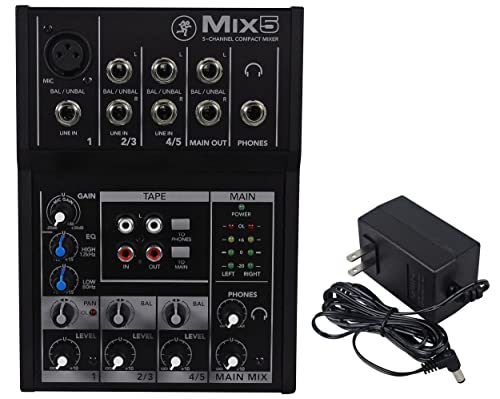
- 5-channel compact mixer with proven high-headroom, low-noise performance
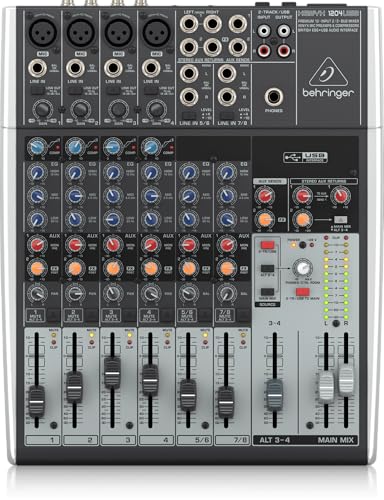
- Premium ultra-low noise, high headroom analog mixer
First Impressions: Unboxing the MIDAS DM16 16-Input Analogue Mixer
Pulling the MIDAS DM16 16-Input Analogue Mixer out of the box, the first thing that hits you is the weight—a solid 11 pounds of purpose-built hardware. It doesn’t feel like a toy. The industrial design is understated and professional, featuring a clean aesthetic that prioritizes function over flash. We were immediately impressed by the feel of the knobs; they have just the right amount of resistance, suggesting they won’t accidentally shift if you brush against them. The 60mm faders move smoothly, providing a tactile experience that is often missing in this price bracket.
Setting it up was a breeze. Because it is a purely analogue unit, there are no drivers to install or firmware to update. We simply connected it to our monitors and started plugging in microphones. Compared to some market leaders in the compact mixer space, the DM16 feels more “pro.” Where others might use proprietary, cheaper jacks, Midas has opted for industry-standard Neutrik connectors, which is a major win for durability. Before you get too deep into the setup, it’s a good idea to check the latest price and availability to see how it fits into your current budget.
Key Benefits
- 12 award-winning Midas microphone preamplifiers with exceptional headroom.
- 3-band EQ on mono channels with a swept mid-frequency for precise tonal shaping.
- Rugged construction featuring genuine Neutrik connectors for long-term reliability.
- Two auxiliary sends with pre/post fader switching for flexible monitoring or FX routing.
Limitations
- No built-in digital effects engine (reverb, delay, etc.).
- Lack of an internal USB audio interface for direct computer recording.
A Deep Dive into the Performance of the MIDAS DM16 16-Input Analogue Mixer
The Midas Touch: Evaluating the 12 Award-Winning Preamps
The heart and soul of any mixer are its preamps, and the MIDAS DM16 16-Input Analogue Mixer shines brightly in this department. Midas has been a staple in the world of high-end touring consoles for decades, and they have brought that same DNA to this compact desk. In our testing, the first thing we noticed was the incredible headroom. Even when recording a dynamic drummer who tends to peak unexpectedly, these preamps handled the transients with grace, refusing to clip harshly. Instead, you get a clean, musical response that captures the true character of the microphone.
We found that the noise floor is remarkably low. When we cranked the gain on a sensitive condenser microphone to capture a whisper-quiet vocal, we weren’t met with the usual rush of static found in budget mixers. As one user noted in their own evaluation, these preamps are “respectably quiet even when maxed out.” This makes the DM16 an excellent choice for studio work where every decibel of clarity counts. Whether you are tracking a full band or a solo acoustic artist, the 12 mono channels provide a consistent, high-fidelity signal path that justifies the Midas name. If you are serious about investing in a high-quality analog signal path, these preamps are the primary reason to choose this board.
Sculpting Your Sound: The Power of the Swept Mid EQ
Most mixers in this category offer a fixed 3-band EQ, which can be frustratingly limiting. The MIDAS DM16 16-Input Analogue Mixer, however, features a swept mid-band on its 12 mono channels. This is a game-changer for both live mixing and studio tracking. Instead of just “boosting the mids,” you can sweep the frequency range (from 150 Hz to 3.5 kHz) to find exactly where a vocal is “honky” or where a guitar is “muddy” and pull it out with precision. This level of control is something we usually only see on much more expensive consoles.
During our “Sound Check” sessions, we used the swept mid to carve out space for the vocals in a dense rock mix. By identifying the specific frequency where the lead singer’s voice lived and giving it a slight boost—while simultaneously dipping that same frequency on the rhythm guitars—we achieved a clarity that a fixed EQ simply couldn’t provide. The high and low shelves are also musically voiced, adding “air” to the top end without being harsh and “thump” to the bottom end without becoming boopy. This EQ section is a feature that really sets it apart from the sea of generic small-format mixers.
Routing Flexibility: Aux Sends and Stereo Connectivity
Connectivity is where a 16-input mixer either succeeds or fails. The MIDAS DM16 16-Input Analogue Mixer offers 12 mono channels and 2 electronically-balanced stereo line input channels. This layout is perfect for a setup that includes several microphones and a couple of stereo instruments, such as keyboards or electronic drum modules. The inclusion of two auxiliary sends—with global pre/post fader switching—allows for professional-grade routing. You can use one send for a dedicated stage monitor mix (pre-fader) and the second for an external effects processor like a high-end reverb unit (post-fader).
In a live setting, this flexibility is crucial. We found that being able to switch the aux sends on the fly allowed us to adapt to the needs of the performers without re-cabling the entire desk. The stereo channels also feature a basic EQ, ensuring that your synths or playback devices aren’t just an afterthought but are fully integrated into the mix’s tonal balance. When you explore the technical specifications in detail, you’ll see that Midas didn’t cut corners on the internal routing architecture, ensuring minimal crosstalk and maximum signal integrity.
Built for the Road: Engineering Integrity and Durability
Finally, we have to talk about the physical build. The MIDAS DM16 16-Input Analogue Mixer feels like it was built to survive a world tour. The chassis is rigid steel, and the side panels provide additional structural support. One detail we particularly appreciated was the use of Neutrik XLR and 1/4″ connectors. In our experience, cheaper connectors are the first things to fail, leading to crackling sounds or total signal loss. By using Neutrik, Midas ensures that your connections remain solid even after hundreds of plug-in cycles.
The internal power supply is also a high-quality “switching” design, which means it can handle various voltages (perfect for international use) and stays cool during long sessions. We’ve used this mixer for 8-hour recording sessions, and it never became uncomfortably warm, which is a testament to its efficient design. As another user mentioned, the materials are “excellent,” and everything from the faders to the buttons feels like a quality instrument. This is a board that you can throw in a gig bag and trust to work every time you power it up, bringing that legendary sound to your home studio or local venue with total confidence.
What Other Users Are Saying
The general sentiment among professionals who have used the MIDAS DM16 16-Input Analogue Mixer is one of pleasant surprise. Because Midas is typically associated with high-end digital consoles, many were skeptical about such an affordable analogue desk. However, the feedback has been overwhelmingly positive. One user mentioned taking a “blind gamble” on the DM16 due to a lack of online reviews, only to be blown away by the “respectably quiet preamps” even when pushed to their limits.
Another user praised the price-to-quality ratio, stating that it fulfills every purpose it was designed for without breaking the bank. There was a notable comparison to Yamaha mixers; while one user felt that the Yamaha might have a slight edge in certain preamp characteristics, they concluded that for the price, the Midas “super vale la pena” (is super worth it). The consensus is that if you want a rugged, great-sounding mixer and don’t need built-in digital bells and whistles, this is the gold standard in its class. This feedback is relevant because it confirms that our expert findings are shared by engineers working in real-world environments.
The Competition: How Does the MIDAS DM16 16-Input Analogue Mixer Stack Up?
While we love the DM16, it’s important to see how it compares to other popular options in the market. Depending on your specific needs—like USB connectivity or built-in effects—one of these alternatives might be a better fit.
1. TC Helicon GoXLR MINI Broadcast Mixer with Audio Interface

- “Go live” desktop rig for online broadcasters gives you instant control over your audio
- Flexible and intuitive USB-based mixing for all of your audio - simple, easy-to-use controls get you up and running quickly
The GoXLR MINI is a very different beast compared to the MIDAS DM16 16-Input Analogue Mixer. While it also features a Midas-designed preamp, it is strictly designed for solo streamers and podcasters. It has a built-in USB interface and motorized faders (in the larger version), making it a digital-first solution. However, it only has one microphone input. If you are a solo content creator on Windows, this is a fantastic choice, but it lacks the 16-channel versatility and analogue warmth required for a full band or complex studio setup.
2. Mackie ProFX10v3+ 10-Channel Professional Mixer with Bluetooth

- Works out of the box with mics, instruments, phones, and computers
- Run the gig and capture it: stream, record, and mix from one desk
The Mackie ProFX10v3+ is a strong competitor for those who want an “all-in-one” solution. Unlike the DM16, it features built-in GigFX effects and a USB interface for direct recording. It also includes Bluetooth connectivity for streaming audio from a phone. While its Onyx preamps are very good, they don’t quite reach the same level of transparent headroom as the Midas units in our opinion. This Mackie is perfect for small solo/duo acts who need built-in reverb and easy recording, but it lacks the channel count and precision EQ of the Midas.
3. TC Helicon GoXLR 4-Channel Mixer Broadcast Platform

- Multi-channel mixer: Motorized faders let you control mic, game, music, chat, and more for the perfect Broadcast mix
- Studio quality MIDAS preamp: Make your XLR mic sound great with 48V phantom power, equalizer, compressor, limiter, de-esser, and Gate
The full-sized GoXLR is the “big brother” of the Mini and is a revolutionary platform for broadcasters. It includes vocal effects, a sampler, and motorized faders. Like the Mini, it uses Midas preamps, so the sound quality on that single mic input is excellent. However, with only 4 channels, it’s not designed for traditional music production. It’s a specialized tool for the gaming and streaming world. If your goal is to mix a drum kit or a live stage, the GoXLR will be woefully inadequate compared to the 16-input power of the DM16.
The Final Verdict: Is the MIDAS DM16 16-Input Analogue Mixer Right for You?
After our extensive testing, the MIDAS DM16 16-Input Analogue Mixer stands out as a purist’s dream. It doesn’t try to be an interface, an effects processor, or a Bluetooth speaker. Instead, it focuses on being a world-class analogue mixer with exceptional preamps and a highly musical EQ. Its main strengths lie in its massive headroom, its rugged construction with Neutrik components, and its intuitive, professional layout. While the lack of USB and internal FX might be a dealbreaker for some, those who prioritize signal quality above all else will find this mixer to be an incredible value.
We highly recommend the DM16 for project studios that already have a high-quality multi-channel interface, bands that need a reliable live mixer, and venues that want a durable desk that sounds “expensive.” It brings a legendary name into an affordable bracket without sacrificing the sonic integrity that made that name famous in the first place. If you are ready to elevate your sound and stop fighting with noisy budget gear, we suggest securing this workhorse for your next project and hearing the Midas difference for yourself.
Last update on 2026-09-14 / Affiliate links / Images from Amazon Product Advertising API