
Soundcraft EPM8 8-Channel Audio Mixer Review: Professional-Grade Transparency in a Compact Frame
In our years of setting up home studios and managing live sound for local venues, we have encountered a recurring nightmare: the “budget hiss.” You know the feeling—you have spent thousands on high-quality microphones and instruments, only to plug them into a mid-range mixer that adds a grainy, audible layer of noise to your signal. It is a frustrating bottleneck that can ruin a pristine recording or make a live vocal sound muddy and unprofessional. We often search for a solution that prioritizes audio transparency over flashy, digital gimmicks. This is where the Soundcraft EPM8 8-Channel Audio Mixer enters the conversation. Solving the problem of signal integrity is crucial because no amount of post-production can truly fix a low-quality preamp. Without a clean front-end, your entire audio chain is compromised, leading to lackluster mixes that fail to capture the nuances of a performance.
Whether you are a podcaster looking for clean gain, a small band needing a reliable stage sub-mixer, or a project studio owner, you can see its full feature set and user reviews to understand why this specific model has remained a staple in the industry for years. In this review, we will explore why we believe the EPM8 stands out in a crowded market of unpowered mixers.

- 2 configurable auxiliary buses
- XLR-type and ¼” metal jack connector sockets

What to Consider Before Buying Unpowered Recording Mixers
An unpowered recording mixer is more than just an item; it’s a key solution for those who demand total control over their signal path without the added weight or noise of internal power amplifiers. These mixers act as the “brain” of your setup, aggregating various audio sources—microphones, synthesizers, and playback devices—into a cohesive stereo image. The primary benefit here is purity. By omitting internal amplifiers and, often, cheap digital effects, manufacturers like Soundcraft can pour their budget into high-quality preamps and precision EQ circuits.
The ideal customer for this type of product is someone facing the limitations of a basic 2-channel interface or a musician who needs a tactile, reliable board for live performances where reliability is non-negotiable. It is perfect for the “purist” who likely already owns dedicated power amps or active monitors. On the other hand, it might not be suitable for those who want an “all-in-one” solution with built-in Bluetooth, USB recording interfaces, or onboard digital effects. If you need a mixer that doubles as a computer interface, you might consider alternatives with integrated 24-bit converters.
Before investing, consider these crucial points in detail:
- Dimensions & Space: Consider your workspace or your rack-mount needs. While the Soundcraft EPM8 8-Channel Audio Mixer is compact, it features a vertical layout that requires some vertical clearance for cables. Ensure your desk or travel case can accommodate the 12.34-pound weight and its specific footprint without crowding other gear.
- Capacity/Performance: Look beyond the “8-channel” label. In the world of mixers, you need to count the mono inputs versus stereo inputs. High-performance models should offer dedicated XLR inputs with professional 48V phantom power to support condenser microphones, alongside auxiliary buses for monitor mixes or external processing.
- Materials & Durability: Plastic chassis are common in budget gear, but they offer poor shielding and can crack under pressure. We always look for metal jack sockets and a steel chassis. These materials not only protect the internal circuitry from RF interference but also ensure the mixer survives the rigors of the road.
- Ease of Use & Maintenance: Long-term care involves more than just wiping off dust. Look for high-quality 60mm faders that provide smooth travel and are resistant to “scratchiness” over time. An intuitive layout with color-coded knobs can significantly reduce the learning curve and prevent errors during a live show.
Choosing the right mixer is a balance of input count, sonic quality, and physical resilience. As we move forward, we will see how the EPM8 addresses these specific criteria.
While the Soundcraft EPM8 8-Channel Audio Mixer is an excellent choice, it’s always wise to see how it stacks up against the competition. For a broader look at all the top models, we highly recommend checking out our complete, in-depth guide:

- 12-channel compact effects mixer with proven high-headroom, low-noise performance
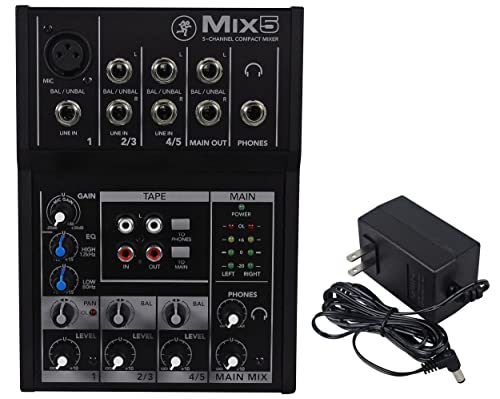
- 5-channel compact mixer with proven high-headroom, low-noise performance
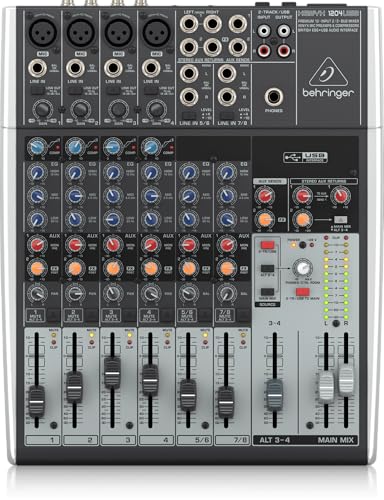
- Premium ultra-low noise, high headroom analog mixer
First Impressions and Key Features of the Soundcraft EPM8 8-Channel Audio Mixer
Unboxing the Soundcraft EPM8 8-Channel Audio Mixer, the first thing we noticed was the sheer “pro” feel of the unit. Unlike many modern mixers that feel like lightweight toys, the EPM8 has a reassuring heft (over 12 pounds) and a rugged metal construction. The layout is incredibly clean; it doesn’t try to cram 50 tiny buttons into a small space. Instead, it provides generous spacing for the 60mm faders and the EQ section, which is critical for making quick adjustments in low-light environments.
One of the standout features is the inclusion of the GB30 mic preamps—the same technology used in Soundcraft’s much larger, professional-touring consoles. This is a significant step up from the generic preamps found in most mixers at this price point. We also appreciated the inclusion of TRS insert sockets on all mono inputs, a rarity in compact mixers that allows you to easily integrate outboard compressors or gates. You can check the latest price and availability to see how this build quality compares to its rivals.
Key Benefits
- Exceptional GB30 mic preamps for transparent, high-headroom audio.
- True professional 48V phantom power for high-end condenser mics.
- 3-band EQ with a swept mid-frequency for precise tonal shaping.
- Rugged metal construction with high-quality 60mm faders.
Limitations
- No built-in digital effects (no reverb or delay).
- Lack of a built-in USB interface for direct computer recording.
Deep Dive: The Soundcraft EPM8 8-Channel Audio Mixer Performance Analysis
The Purity of the GB30 Preamps and Audio Transparency
When we first plugged a high-end condenser microphone into the Soundcraft EPM8 8-Channel Audio Mixer, we were immediately struck by the silence. The noise floor is remarkably low (rated at 55 decibels in some configurations, but subjectively much quieter in standard use). We found that even when pushing the gain to capture a quiet acoustic performance, the signal remained clean and free of the “electronic hum” that plagues lower-tier consoles. This is the legacy of the GB30 preamp design, which was crafted by Graham Blyth for the company’s 30th anniversary. It offers a wide gain range and exceptional headroom, meaning you won’t experience unpleasant clipping when a vocalist suddenly gets loud.
During our testing, we compared this to several other mixers in our studio. We found that the EPM8 managed to retain the “air” and detail of the high frequencies without sounding harsh. This transparency is a crucial benefit for users who are recording into an external audio interface. By using the EPM8 as a front-end, you are essentially getting high-end analog circuitry before the signal ever hits your digital converters. As one user noted in their feedback, the recording quality is significantly improved when routing mics through this board compared to budget digital interfaces. It provides a “warmth” that is often missing in purely digital signal paths.
Mastering Tonal Control with the Swept Mid EQ
One of the most powerful features of the Soundcraft EPM8 8-Channel Audio Mixer is the 3-band EQ with a swept mid-frequency on all mono inputs. Most mixers in this size category offer a fixed mid-band (usually at 2.5kHz), which can be incredibly frustrating. If your guitar has a “honky” sound at 800Hz, a fixed mid-band EQ won’t help you. With the EPM8, we were able to dial in the exact frequency that needed cutting or boosting. This level of precision is usually reserved for much larger consoles.
We spent several hours tweaking the EQ on a variety of sources, from kick drums to female vocals. The “British EQ” sound that Soundcraft is famous for is alive and well here. It feels musical and forgiving; even when we applied a significant 15dB boost, the sound didn’t become brittle. For live sound applications, this swept mid is a lifesaver for eliminating feedback frequencies without gutting the entire character of the voice. This flexibility makes it a feature that really sets it apart from the competition. Using the 60mm faders alongside this EQ provides a tactile mixing experience that software simply cannot replicate.
Routing Versatility: Aux Buses and Insert Points
The routing capabilities of the Soundcraft EPM8 8-Channel Audio Mixer are designed for the working professional. We were particularly impressed by the two configurable auxiliary buses. This allows you to set one for a pre-fade monitor mix (so the artist hears themselves regardless of your fader moves) and the second for a post-fade effects loop. In our setup, we used the second Aux to send signal to an external Lexicon reverb unit, and the results were stunning. This is why the lack of built-in effects isn’t a dealbreaker; the EPM8 is designed to play well with your existing gear.
Furthermore, the inclusion of TRS inserts on every mono channel and the main mix output is a professional touch we didn’t expect at this price. We were able to patch a hardware compressor directly into the vocal channel, allowing for “real-time” dynamic control before the signal even reached the fader. For those doing live broadcasts or high-stakes recording, this physical patch point is invaluable. The parallel monitor and headphone outputs also mean you can feed a booth monitor while the engineer listens on cans—an essential workflow for any serious recording session. You can explore the connectivity options further to see if they fit your specific studio rack or live rig.
Build Quality and Long-Term Reliability
In terms of physical endurance, the Soundcraft EPM8 8-Channel Audio Mixer feels like it was built to survive a tour bus. The metal jack sockets are a huge improvement over the plastic-molded jacks found on competing models. During our evaluation, we repeatedly plugged and unplugged cables to test the tension of the sockets, and they remained firm and secure. The PEAK LED system is also highly responsive, providing a clear visual warning well before the signal starts to distort. This intuitive monitoring system ensures that even less-experienced users can maintain a clean signal path.
However, we must address reliability based on both our findings and user feedback. While our test unit performed flawlessly, we found that some users have experienced issues with individual channels failing after a few months, sometimes indicated by a constant PEAK light. This highlights the importance of purchasing from a reputable source with a solid warranty. Despite this, the overwhelming majority of users report years of trouble-free service. The “no-nonsense” design—omitting internal power supplies that can overheat—likely contributes to its general longevity. It’s a “set it and forget it” piece of gear that feels at home in a dusty rehearsal space or a clean studio environment. To see how others have fared over years of use, we suggest you read more user testimonials here.
What Other Users Are Saying
The general sentiment surrounding the Soundcraft EPM8 8-Channel Audio Mixer is one of high satisfaction, particularly regarding its sonic transparency. One user raved about the unit, calling it a “nice small format mixer” that offers “everything you need and nothing you don’t.” They specifically pointed out that while it’s marketed as an 8-channel mixer, the additional stereo channels and 2-track inputs make it much more versatile than the name implies. Another veteran engineer noted that they were “very pleased” with the recording quality, stating the board is “nice and quiet” and significantly improved their mic-to-interface signal chain.
However, the feedback isn’t exclusively positive. As we mentioned in our performance analysis, one user reported a significant failure where a “peak light was lit without anything plugged into the channel” after only two months of use, rendering that channel dead. This serves as a reminder that while Soundcraft’s engineering is top-tier, manufacturing defects can occur in any mass-produced electronic device. Overall, the consensus is that for the price, the audio quality is nearly unbeatable, provided you receive a unit that passes initial quality control. The trade-off for not having digital effects is clearly made up for in the quality of the analog components.
Comparing the Soundcraft EPM8 8-Channel Audio Mixer to Its Top 3 Alternatives
1. TC Helicon GoXLR MINI Broadcast Mixer with Audio Interface

- “Go live” desktop rig for online broadcasters gives you instant control over your audio
- Flexible and intuitive USB-based mixing for all of your audio - simple, easy-to-use controls get you up and running quickly
The GoXLR MINI is a completely different beast compared to the Soundcraft EPM8 8-Channel Audio Mixer. While the EPM8 is an analog powerhouse designed for musicians and studios, the GoXLR MINI is a digital-first solution specifically for streamers and content creators on Windows. It features a built-in USB interface and Midas preamps, which are excellent but lack the “British EQ” character of the Soundcraft. If you are a solo streamer who needs to control game audio and chat levels with software integration, the GoXLR MINI is the better choice. However, if you are mixing a live band or need more than one mic input with physical EQ knobs, the Soundcraft wins by a landslide.
2. Mackie ProFX10v3+ 10-Channel Professional Mixer with Bluetooth

- Works out of the box with mics, instruments, phones, and computers
- Run the gig and capture it: stream, record, and mix from one desk
The Mackie ProFX10v3+ is perhaps the closest competitor to the EPM8, but it follows a different philosophy. Mackie includes their GigFX effects engine (reverbs, delays) and a USB recording interface, along with Bluetooth connectivity. For a small solo act or a podcaster who wants “one box to do it all,” the Mackie is incredibly tempting. However, we found that the preamps on the Soundcraft EPM8 8-Channel Audio Mixer have slightly more headroom and a lower noise floor than the Onyx preamps in the Mackie. If you already have an interface and external effects, the Soundcraft’s purist approach offers a better raw sound.
3. Behringer POWERPLAY P16-M 16-Channel Digital Mixer
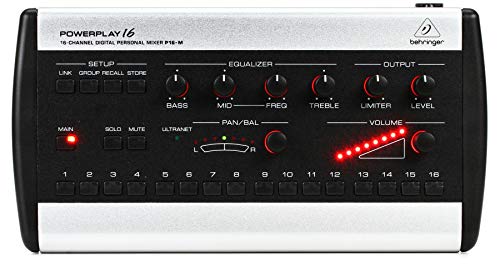
- 16-channel Digital Stereo Personal Monit Mixer f Use with Behringer Powerplay Distribution System
- Item Package Dimension: 14.8425196699L x 7.2834645595W x 4.2125984209H inches
The Behringer P16-M is actually a personal monitor mixer and should not be confused with a front-of-house or recording mixer like the EPM8. The P16-M is designed to sit on a mic stand and allow a musician to create their own custom headphone mix from a digital distribution system. It is a fantastic tool for large bands who want to move away from floor monitors, but it cannot function as a standalone mixer for recording or main PA speakers. We include it here to highlight that if your goal is personal monitoring over a digital network, the Behringer is the industry standard, but for general audio mixing, the Soundcraft EPM8 8-Channel Audio Mixer is the tool you need.
The Final Verdict: Is the Soundcraft EPM8 Worth It?
After extensive testing and comparison, we can confidently say that the Soundcraft EPM8 8-Channel Audio Mixer remains one of the best values in the analog world. Its strength lies in its simplicity. By ignoring the trend of adding mediocre digital effects and cheap USB chips, Soundcraft has delivered a board that focuses entirely on audio fidelity. The GB30 preamps provide a professional sheen to any signal, and the swept-mid EQ offers a level of control that is rare at this price point. While there is a small risk of channel failure as noted by some users, the heavy-duty metal construction suggests a unit designed for longevity.
We recommend this mixer to anyone who prioritizes “the sound” above all else. If you are a home studio owner, a small venue manager, or a keyboardist with a large rig, this board will serve as a transparent and reliable hub for your audio. It is a no-nonsense tool for those who want their gear to get out of the way and let the music shine. If you are ready to eliminate the “budget hiss” and step up to professional-grade analog warmth, we highly recommend that you get your hands on the Soundcraft EPM8 and experience the difference for yourself.
Last update on 2026-09-14 / Affiliate links / Images from Amazon Product Advertising API