
Zoom PodTrak P4next Podcast Recorder Review: The Ultimate Field Recording Solution for Modern Creators
In the early days of my podcasting journey, I vividly remember the “mobile setup” I used to lug around. It consisted of a heavy laptop, a bulky audio interface that required a wall outlet, and a tangled mess of XLR cables that seemed to have a mind of their own. I once attempted to record an interview in a bustling café, only to realize my setup was so intrusive that the owner nearly asked us to leave. Worse yet, the background noise was so overwhelming that the recording was virtually unusable. This is a common frustration for many of us: the desire for studio-quality audio without being tethered to a desk. Whether you are a field journalist, a traveling podcaster, or a professional who needs clear audio for remote meetings, the complication is always the same—balancing portability with high-end performance. Failing to solve this usually results in “good enough” audio that sounds amateurish, losing listeners or clients in the process. This is precisely why a dedicated device like the Zoom PodTrak P4next Podcast Recorder is no longer just a luxury; it is a necessity for anyone serious about their sound.
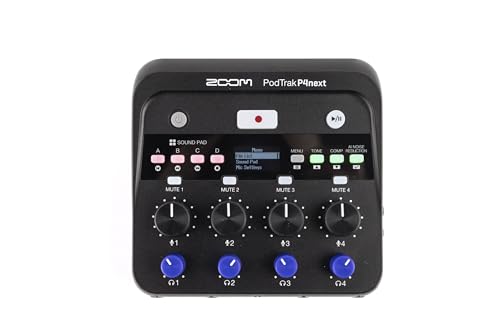
- FOUR MICS, ONE ROOM, ONE RECORDER – Four XLR inputs with multitrack recording support up to four people plus a call-in guest, giving you flexibility for in-person and remote recording.
- AI TOOLS THAT DO THE MIXING FOR YOU – AI noise reduction, Tone Enhancement, and COMP help you achieve clear, balanced audio with minimal effort.

What to Consider Before Buying a Portable Studio Recorder
A Portable Studio Recorder is more than just an item; it’s a key solution for capturing high-fidelity audio in environments where a traditional computer-based setup is impractical. These devices act as the brain of your audio production, handling everything from phantom power for microphones to multi-track recording and even live signal processing. The main benefit is independence; you gain the ability to capture broadcast-ready audio in a park, a car, or a hotel room with the same confidence you would have in a soundproofed booth. By consolidating a mixer, recorder, and headphone amp into one handheld unit, you eliminate points of failure and streamline your creative workflow.
The ideal customer for this type of product is someone facing unpredictable recording environments—think on-the-go interviewers, tabletop RPG gamers who need multiple mic inputs, or remote workers who want to stand out with pristine voice quality during video calls. It is perfect for those who value “one-touch” recording and tactile controls over clicking through software menus. However, it might not be suitable for those who require massive track counts (8+) for recording full musical bands, or for those who strictly work in a fixed studio environment where a rack-mounted interface might offer more specialized routing options. For the vast majority of content creators, the Zoom PodTrak P4next Podcast Recorder hits that “sweet spot” of functionality and form factor.
Before investing, consider these crucial points in detail:
- Dimensions & Space: When you’re recording on location, every inch of your bag counts. Look for a device that fits comfortably in a backpack side pocket or a small camera bag. You want something that provides enough surface area for comfortable knob turning but doesn’t dominate the table during an interview.
- Capacity & Performance: Pay close attention to the Equivalent Input Noise (EIN) and the storage limits. A low EIN (like -125 dBu) ensures that your “quiet” moments don’t hiss, while support for high-capacity SD cards means you won’t run out of space during a marathon four-hour recording session.
- Materials & Durability: Since these are “field” recorders, they will be bumped, dropped, and exposed to the elements. While high-grade plastic keeps the weight down, look for robust jacks and well-seated buttons that won’t wiggle or fail after a few months of heavy travel.
- Ease of Use & Maintenance: Long-term care involves firmware updates and battery management. Look for devices with clear screens (like OLED) that are readable in sunlight and options for multiple power sources, such as AA batteries, lithium packs, or USB-C bus power, to ensure you’re never left stranded with a dead unit.
While the Zoom PodTrak P4next Podcast Recorder is an excellent choice, it’s always wise to see how it stacks up against the competition. For a broader look at all the top models, we highly recommend checking out our complete, in-depth guide:

- 4 high quality microphone inputs with phantom power

- CAPTURE BIGGER PROJECTS WITH CONFIDENCE – Record music, interviews, podcasts, video audio, and live performances with a 4-track recorder that helps you capture more of the moment without worrying...

- CREATE CONTENT WITH BETTER SOUND – Capture clear stereo audio for videos, reels, tutorials, voiceovers, behind-the-scenes clips, and other content that needs more polished sound than your camera or...
First Impressions: A Compact Powerhouse
When I first unboxed the Zoom PodTrak P4next Podcast Recorder, the first thing that struck me was the weight—or lack thereof. Weighing in at just 0.66 pounds, it feels incredibly light, yet the construction feels intentional and solid. Unlike its predecessor, which felt a bit more “toy-like,” the P4next has a professional matte finish and an OLED display that is remarkably crisp. Setting it up was a breeze; I had four XLR microphones plugged in and levels set within three minutes. It’s clear that Zoom looked at the market leaders and decided to refine the “mobile studio” concept by making it even more intuitive. Before you even hit the record button, you can see its full feature set and user reviews to understand just how much of an upgrade this is over the original P4.
Key Benefits
- Exceptional -125 dBu EIN preamps for incredibly clean, low-noise recordings.
- Four dedicated XLR inputs with independent gain and headphone monitoring.
- AI-powered Noise Cancellation that effectively scrubs environmental hum in real-time.
- Support for massive 2 TB storage cards, allowing for weeks of recorded content.
Limitations
- AI Noise Cancellation introduces a slight 6ms latency, which might be noticeable to some.
- The lightweight plastic build requires a carrying case for maximum protection during travel.
Deep Dive: Putting the Zoom PodTrak P4next Podcast Recorder to the Test
Audio Fidelity and Preamp Performance
When we talk about professional audio, the conversation always starts and ends with the preamps. In my testing, the Zoom PodTrak P4next Podcast Recorder truly punched above its weight class. With an Equivalent Input Noise (EIN) of -125 dBu, these preamps are remarkably quiet. I tested this by using a gain-hungry dynamic microphone—the kind that usually requires an external booster—and I was able to get a clean, usable signal without the “hiss” that plagues cheaper recorders. This is a significant benefit for podcasters who record in bedrooms or offices that aren’t perfectly soundproofed.
We found that even when pushing the gain to its upper limits, the signal remained transparent. This clarity is a feature that really sets it apart from budget interfaces that often color the sound with unwanted warmth or muddy low-mids. If you are someone who interviews guests with varying vocal volumes, the headroom provided here is a lifesaver. You can check the latest price and availability to see how this level of audio quality fits into your budget, but from a purely technical standpoint, it rivals recorders twice its price.
Advanced DSP: Tone, Comp, and AI Noise Cancellation
One of the standout features of the Zoom PodTrak P4next Podcast Recorder is the onboard digital signal processing (DSP). It includes dedicated “TONE” and “COMP” (compression) settings that are absolute game-changers for live streaming and web meetings. During our evaluation, the “TONE” setting effectively rolled off harsh frequencies, making the voice sound “radio-ready” without any post-production. The compressor was equally impressive, smoothing out the peaks of an excited co-host so the listener doesn’t have to reach for the volume knob.
The AI Noise Cancellation is the “secret sauce” of this unit. In a side-by-side test with a noisy air conditioner running in the background, the P4next successfully filtered out the consistent drone. As one user noted in their feedback, the AI processing does add about 6ms of latency (bringing the total to roughly 10ms), which is a small price to pay for a clean signal in a dirty environment. For those using this as a USB interface for Zoom or Teams calls, these features make you sound significantly more professional than anyone else in the meeting. Using the COMP and TONE buttons in tandem creates a polished, professional sound profile that previously required a rack of gear or complex VST plugins.
Portability and Battery Life for the Traveling Creator
The Zoom PodTrak P4next Podcast Recorder was clearly designed with the “digital nomad” in mind. Its dimensions (4.95 x 4.72 x 1.57″) mean it takes up less space than a hardcover book. In my field tests, I was able to run the unit for over 8 hours using lithium AA batteries, even with phantom power engaged on two microphones. This is a massive improvement over older portable units that would chew through batteries in less than three hours.
The build quality, while lightweight, feels “travel-ready.” The buttons have a satisfying click, and the knobs are recessed enough that they won’t be easily sheared off in a bag. Furthermore, the inclusion of four independent headphone jacks with their own volume controls is a stroke of genius. Most portable recorders only offer one or two, forcing you to use splitters that degrade signal quality. On the P4next, every participant gets a custom, high-fidelity monitor mix. If you’re planning a remote recording trip, this is a feature that really sets it apart and makes the logistics of a four-person podcast infinitely easier.
Workflow and Massive Storage Capacity
Finally, we have to talk about the workflow and storage. The Zoom PodTrak P4next Podcast Recorder supports microSDXC cards up to 2 TB. To put that in perspective, that is roughly 3,000 hours of high-quality recording time. You could essentially go on a year-long world tour and never have to offload your files to a computer. The file structure is clean, creating separate folders for each session and individual WAV files for each track. This makes multitrack editing in your DAW (Digital Audio Workstation) a breeze.
We also tested its capabilities as a USB audio interface. It is class-compliant, meaning it worked instantly with both my PC and my iPad without needing to install specialized drivers. The ability to record to the SD card and stream over USB simultaneously provides a much-needed “failsafe” for live broadcasters. If your computer crashes during a stream, the SD card is still capturing every word. For anyone who has ever lost a precious interview to a software glitch, this redundancy is worth the investment alone. You can find more details on its interface compatibility to see if it fits your current hardware setup.
What Other Users Are Saying
The general sentiment surrounding the Zoom PodTrak P4next Podcast Recorder is overwhelmingly positive, with many users highlighting its value as a significant upgrade over previous generations. One experienced user, who had previously used the larger P8 model, mentioned that this unit “absolutely blew me away,” noting that the four mic inputs are perfect for on-location interviews without the bulk of a larger desk. Another user focused on its practicality, calling it a “cost-effective way to record multiple microphones on location,” specifically praising its ability to send usable signals directly to a camera or computer.
From the international community, we’ve seen praise for the “Tone” and “Comp” functions, with one reviewer noting how it makes voices “easy to hear for long periods” by suppressing harsh noises. However, it’s not all perfect; some users pointed out that while the AI noise cancellation is effective, it cannot handle rapidly changing environmental noises and does add a slight latency of about 6ms. This feedback is crucial because it confirms our findings: the Zoom PodTrak P4next Podcast Recorder is a tool for professionals who know how to work within its technical parameters to achieve stellar results. You can read more real-world experiences here to see how it performs in different scenarios.
Comparing the Zoom PodTrak P4next Podcast Recorder to its Top 3 Alternatives
1. Zoom H6 6-Track Portable Recorder
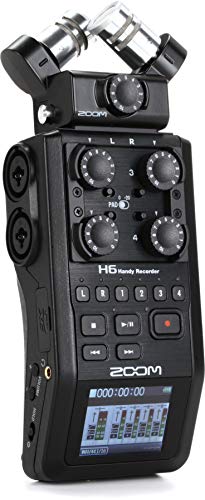
- Record Like a Pro: With up to 24-bit/96kHz audio and six-track simultaneous recording, our audio recorder lets you capture every detail of your sound.
- Versatile Recording: Our digital voice recorder with four mic/line inputs and interchangeable capsules makes it perfect for recording everything from meetings to music.
The Zoom H6 is a legendary piece of gear, but it serves a slightly different purpose than the P4next. While the H6 offers more tracks (6 total) and swappable microphone capsules, it lacks the specific “podcast” features like dedicated sound pads and the simplified four-headphone output system found on the P4next. The H6 is better suited for musicians or film sound recordists who need to capture ambient stereo sound along with XLR inputs. However, for podcasters and interviewers, the Zoom PodTrak P4next Podcast Recorder provides a more streamlined, specialized workflow that makes managing multiple voices much easier.
2. Tascam DR-22WL Portable Audio Recorder with WiFi

- The first portable recorder to include Wi-Fi for transport control, file transfer, and audio streaming to your smartphone or PC
- The new eight-position Scene Dial make it easier than ever to capture great-sounding recordings and share them online
The Tascam DR-22WL is a much smaller, handheld recorder that focuses on simplicity and wireless connectivity. Its primary advantage is the built-in WiFi, which allows you to transfer files to a smartphone or control the device remotely via an app. While this is great for solo field journalists or musicians recording rehearsals, it lacks the multiple XLR inputs and the advanced DSP (AI noise cancellation) that makes the P4next so powerful. If you only ever need to record one or two sources and want the smallest possible footprint, the Tascam is a solid choice, but it can’t compete with the P4next for group recordings.
3. Tascam DR-05 Portable Recorder
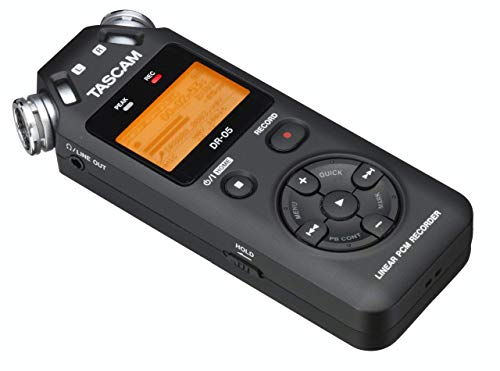
- Discontinued Model Replaced by Improved DR-05X
- Portable recorder
The Tascam DR-05 is the “budget-friendly” alternative in this list. It is an entry-level stereo recorder that is fantastic for students or those just starting out. It is incredibly easy to use but lacks XLR inputs entirely, relying instead on built-in microphones or a 3.5mm input. This means you cannot use professional-grade studio microphones with it. While the DR-05 is a workhorse for basic voice notes or simple ambient recording, the Zoom PodTrak P4next Podcast Recorder is in a completely different league of performance, offering the connectivity and audio quality required for professional broadcast and distribution.
Final Verdict: Is the Zoom PodTrak P4next Podcast Recorder Right for You?
After extensive testing and comparing it with both its predecessors and its competitors, our verdict is clear: the Zoom PodTrak P4next Podcast Recorder is currently the best value-for-money portable podcasting studio on the market. It masterfully bridges the gap between amateur “voice memo” recorders and high-end studio interfaces. Its primary strengths lie in its ultra-clean preamps, the intelligent AI noise cancellation, and the thoughtful inclusion of four independent headphone mixes. While the plastic casing and slight AI latency are minor trade-offs, they do not detract from the overall utility of the device.
We highly recommend this recorder for anyone who needs to produce professional audio outside of a controlled studio environment—from traveling podcasters to corporate professionals. It simplifies the technical side of recording so you can focus on the content. If you’re ready to take your audio quality to the next level without breaking your back or your bank account, we suggest you check out the Zoom PodTrak P4next Podcast Recorder today and experience the difference that professional-grade portable gear can make for your brand.
Last update on 2026-09-14 / Affiliate links / Images from Amazon Product Advertising API