
Ibanez SRH505F Fretless Bass Review: The Bridge Between Electric Precision and Upright Soul
For many of us bassists, there comes a moment where the percussive “clank” of a fretted instrument no longer satisfies the melodic voice inside our heads. We start searching for that elusive, singing sustain—often referred to as “the mwah”—that only a fretless instrument can provide. However, many electric fretless basses feel like a compromise; they are essentially standard guitars with the frets ripped out, often lacking the organic resonance and “air” of a double bass. This leaves players in a difficult spot: lugging around a massive upright bass or settling for a thin, sterile electric tone. We found that the Ibanez SRH505F Fretless Bass was designed specifically to bridge this gap, offering a hollowbody resonance in a sleek, modern package that doesn’t require a van to transport. If you have been struggling to find an instrument that captures the woody, acoustic soul of a jazz club while maintaining the playability of a modern 5-string, you are likely at a crossroads where this specific model becomes incredibly relevant.

- 5-string Fretless Hollowbody Electric Bass with Mahogany Body
- AeroSilk Piezo System - Natural Browned Burst Flat
What to Consider Before Buying an Electric Bass Guitar
An electric bass guitar is more than just a musical instrument; it’s the foundation of your sound and a key solution for bridging the rhythmic and melodic gaps in a band. Choosing the right one is a journey into self-expression. The Ibanez SRH505F Fretless Bass falls into a niche category known as the “Aero” bass—a semi-hollow hybrid. Before you invest in this unique instrument, you need to understand the nuances of the fretless world and the specific mechanics of hollowbody electronics.
The ideal customer for this type of product is a jazz, fusion, or folk bassist who values nuance and tonal warmth over aggressive, distorted rock tones. It is perfect for the player who wants the “vibe” of an upright bass without the physical toll of a 40-pound wooden behemoth. Conversely, it might not be suitable for those who play heavy metal or genres requiring a sharp, fretted attack and high-output magnetic pickups. If you are looking for a slap-heavy funk machine, you might consider a traditional solid-body instead.
Before investing, consider these crucial points in detail:
- Dimensions & Ergonomics: The physical footprint of a 5-string bass is larger than a 4-string, requiring a wider nut and slightly more reach. Look for contoured bodies and “Aero” designs that reduce weight and thickness, as this prevents shoulder fatigue during long sets or recording sessions.
- Capacity/Performance (Electronics): Unlike standard basses with magnetic pickups, models like the Ibanez SRH505F Fretless Bass often use Piezo systems. These pick up the vibrations from the bridge rather than the strings’ magnetic field, resulting in a more acoustic, “microphonic” quality that is essential for fretless expression.
- Materials & Tonewoods: In a fretless instrument, the fingerboard material is everything. Dense woods like Panga Panga or Ebony provide better wear resistance and a snappier response, whereas softer woods might get “chewed up” by roundwound strings over time.
- Ease of Use & Maintenance: Fretless basses require a more trained ear for intonation. Additionally, maintaining a hollowbody requires awareness of humidity, and the specific electronics (like the AeroSilk system) may require occasional internal adjustments to balance string volumes.
Understanding these factors ensures that you aren’t just buying a pretty guitar, but a tool that fits your physiological needs and musical goals.
While the Ibanez SRH505F Fretless Bass is an excellent choice, it’s always wise to see how it stacks up against the competition. For a broader look at all the top models, we highly recommend checking out our complete, in-depth guide:

- One Squier Debut Series Precision bass guitar, Rumble 15 amplifier, padded gig bag, instrument cable, picks, clip-on tuner, guitar stand, and an extra set of strings


- One Squier Debut Series Precision Bass Guitar – a perfect beginner guitar for all ages
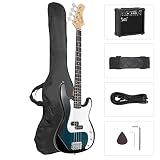
- STABLE QUALITY & GREAT FEELINGS: The 4 string bass guitar is made of high-quality basswood on body and stable rosewood on bridge and fingerboard. The ergonomic cut surface of the full size bass guitar...
First Impressions: Unboxing the Ibanez SRH505F Fretless Bass
When we first pulled the Ibanez SRH505F Fretless Bass out of its packaging, the immediate reaction was one of aesthetic appreciation. The Natural Browned Burst Flat finish is stunningly understated; it doesn’t shout for attention with glossy plastics but rather invites you to touch the wood grain. I suggest you check the latest price and availability because the build quality feels significantly higher than its mid-range price tag suggests.
The instrument feels incredibly light yet substantial. At 13 pounds (shipping weight), the actual bass feels well-balanced on a strap. The hollowbody construction provides a unique tactile feedback—you can feel the air moving inside the body as you pluck the strings. Comparing it to previous SR models, the SRH505F feels more “mature.” It lacks the aggressive, pointy edges of some metal-focused Ibanez guitars, opting instead for a smooth, organic contour that rests comfortably against the ribs. The Jatoba/Bubinga neck is a highlight; it’s thin enough for fast runs but rigid enough to feel stable despite the absence of frets. Initial setup was surprisingly good, though as with any fretless, we found that a slight adjustment to the individual bridge saddles helped perfectly dial in the intonation for our playing style.
What We Like
- Exceptional AeroSilk Piezo system that realistically mimics a double bass.
- Lightweight hollowbody design that reduces back and shoulder strain.
- Stunning Natural Browned Burst Flat aesthetic with high-quality wood grains.
- Durable Panga Panga fingerboard that provides excellent “mwah” sustain.
What We Didn’t Like
- Lack of traditional magnetic pickups might limit tonal versatility for rock.
- Piezo system requires a 9V battery to function, which can fail mid-performance if not monitored.
A Deep Dive into the Ibanez SRH505F Fretless Bass’s Performance
The AeroSilk Piezo System: Acoustic Soul in an Electric Body
The heart of the Ibanez SRH505F Fretless Bass is undoubtedly the AeroSilk Piezo system. Unlike traditional basses that use magnetic pickups to “hear” the strings, this system uses sensors located within the custom bridge. We found that this allows the instrument to capture the “thump” and “air” of the hollowbody construction in a way that magnetic pickups simply cannot. When playing, the touch response is incredibly sensitive; if you pluck near the neck, you get a round, upright-like bloom. If you move your hand closer to the bridge, the sound tightens up, offering a punchy, mid-forward growl that cuts through a mix.
This system allows you to see its full feature set and user reviews to understand just how much engineering went into the bridge. One feature we found particularly impressive is the ability to adjust the gain for each individual string via small trim pots on the back of the bass. This ensures that the 5th string (Low B) doesn’t overpower the G string—a common issue with Piezo-equipped basses. In our testing, the Low B was clear and authoritative, not “muddy,” which is a testament to the Spruce top and Mahogany back combination working in tandem with the AeroSilk sensors.
Ergonomics and the “Aero” Body Design
The “Aero” in the body design isn’t just a marketing buzzword; it refers to the semi-hollow construction that provides a massive internal cavity while maintaining a slim profile. We found that this drastically changes the playing experience. Standard solid-body 5-string basses can be cumbersome and heavy, but the Ibanez SRH505F Fretless Bass feels nimble. The contoured neck heel allows for effortless access to the upper reaches of the Panga Panga fingerboard, making those high-register melodic fills a joy to play rather than a physical struggle.
The hollowbody also means that the bass has a decent unplugged volume. While it’s not loud enough to compete with an acoustic guitar in a campfire setting, it is perfect for late-night practice on the couch without needing an amp. This resonance translates into a longer sustain when plugged in. Because the body is vibrating along with the strings, the notes don’t just die out; they “bloom” and then slowly fade, which is exactly what you want when seeking that signature fretless vocal quality. This is a feature that really sets it apart from its solid-body cousins in the SR line.
The Panga Panga Fingerboard and Neck Stability
A fretless bass is only as good as its fingerboard, and Ibanez has chosen Panga Panga for the SRH505F. This is a dense, durable wood that shares many tonal characteristics with Wenge. We found the surface to be incredibly smooth, allowing for effortless slides and vibrato. Because it is a 5-string, neck stability is a major concern—the tension of that low B string can cause cheaper necks to bow or twist. However, the 5-piece Jatoba/Bubinga neck construction is rock-solid. During our weeks of testing in varying humidity, the neck didn’t budge, which is vital for maintaining consistent intonation on a fretless.
The lack of fret lines on the face of the board (it has side dots for reference) gives it a clean, professional “boutique” look. While this might be intimidating for beginners, we found that it actually encourages the player to use their ears more than their eyes, ultimately leading to better musicianship. The 34-inch scale length feels familiar and comfortable, and the 16.5mm string spacing at the bridge is perfect for fingerstyle playing, though it might feel a bit tight for those used to wider “Precision-style” spacing. We highly recommend you look closely at the high-resolution images of the finish to see the beautiful contrast between the fingerboard and the browned burst top.
Simplicity in Control: Volume and Tone
In an age where many basses are cluttered with 5-knob active EQ systems, the Ibanez SRH505F Fretless Bass takes a refreshingly minimalist approach. It features only two knobs: Volume and Tone. Initially, we were skeptical—would this be enough to shape a professional sound? However, we quickly realized that the tone is so baked into the wood and the Piezo system that “less is more.” The Tone knob acts as a high-frequency roll-off; when fully open, you get a crisp, detailed “hi-fi” acoustic sound. When rolled back, the bass enters “vintage double bass” territory, with a warm, thumping low end that fits perfectly into a traditional jazz trio.
The internal AeroSilk system handles all the complex EQ work behind the scenes, leaving the player free to focus on their fingers. We found that the simplicity of the controls actually made us more creative. Instead of fiddling with knobs, we adjusted our plucking position or pressure to change the timbre. This is a purist’s instrument, designed for those who want their character to come from their hands, not a circuit board. This minimalist philosophy is a major reason why this bass is so highly regarded among session players who need a reliable, “set-it-and-forget-it” tone.
What Other Users Are Saying
The general consensus among users is one of pleasant surprise. Most players initially buy the Ibanez SRH505F Fretless Bass for its looks but end up falling in love with its voice. One user noted that they found the instrument “magnificent,” highlighting that the sound is remarkably close to a double bass. This sentiment is echoed across many platforms, with players praising the simplicity of the two-knob layout (Volume and Tone) and the “pleasant to play” nature of the neck.
Many users have specifically mentioned the factory strings, noting that the instrument often arrives with flatwounds, which further enhances that woody, mellow tone. While a few users suggested that they might take it to a luthier for a professional setup—standard for any high-quality instrument—most found that it was “perfectly fine” right out of the box. A minor point of criticism from some users is that the lack of magnetic pickups makes it less suitable for high-gain environments, but as one reviewer aptly put it, “that’s not what this bass is for.” Overall, the feedback confirms our expert findings: this is a specialized tool that excels brilliantly in its intended niche.
Comparing the Ibanez SRH505F Fretless Bass to Top Alternatives
1. Yamaha TRBX304 Electric Bass Guitar
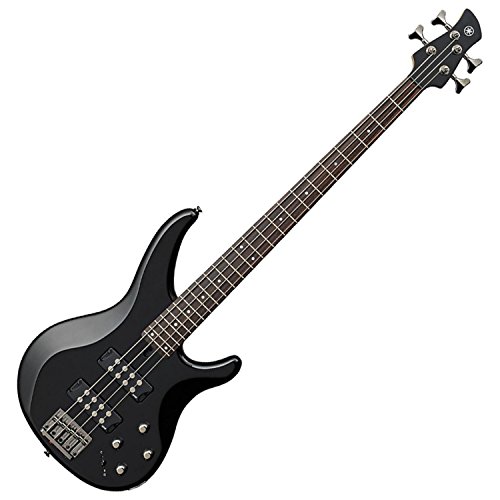
- Perfectly balanced, ultra-comfortable solid mahogany body provides the optimum tonal foundation
- Solid Mahogany Body
The Yamaha TRBX304 is a very different beast compared to our main subject. It is a 4-string, solid-body fretted bass with active electronics and a 5-position “Performance EQ” switch. While the Ibanez focuses on acoustic warmth and fretless expression, the Yamaha is built for versatility across rock, pop, and metal. We would recommend the Yamaha for beginners or multi-genre players who need a “Swiss Army Knife” bass. However, if you are looking for that specific “mwah” and the resonance of a hollowbody, the Yamaha will feel far too sterile and aggressive by comparison. It lacks the soul of the AeroSilk system but wins on pure durability and “plug-and-play” simplicity for standard electric tones.
2. Ibanez GSR200BWNF GIO Bass Guitar

The GSR200 is Ibanez’s entry-level offering. It is a 4-string, fretted solid-body from the GIO series. It features a P/J pickup configuration, which provides a classic electric bass sound. When compared to the Ibanez SRH505F Fretless Bass, the GSR200 feels much more like a traditional “beginner” instrument. It lacks the hollowbody complexity and the premium Panga Panga fingerboard. We recommend this for someone just starting their journey who wants the Ibanez feel at a fraction of the cost. However, experienced players will immediately notice the difference in sustain and tonal depth. It doesn’t compete in the same league as the SRH505F in terms of professional recording or performance quality.
3. Ibanez GSR205BWNF GIO Bass Guitar
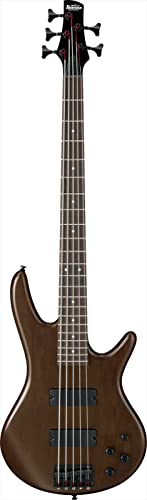
- 5-string Electric Bass with Mahogany Body
- 2 Active Humbucking Pickups - Walnut Flat
The GSR205 is the 5-string sibling of the GSR200. It offers a low B string at an incredibly accessible price point. Like the 4-string version, it is a solid-body fretted bass with a focus on value. While it provides the extended range that the SRH505F offers, it does so through standard magnetic pickups and a solid Mahogany body. It is an excellent “utility” 5-string for a working bassist on a budget. However, it lacks the fretless nuances and the unique AeroSilk Piezo “thump.” If your goal is to emulate an upright bass or play expressive fusion, the GSR205 will feel limiting. It is a workhorse, whereas the SRH505F is an artist’s tool.
The Final Verdict: Is the Ibanez SRH505F Fretless Bass Your Next Instrument?
The Ibanez SRH505F Fretless Bass is a specialized masterpiece. It isn’t trying to be everything to everyone; instead, it focuses on doing one thing better than almost any other bass in its price range: delivering a convincing, organic, upright-adjacent tone in a portable electric package. Its strengths lie in its incredible AeroSilk Piezo system, the lightweight and resonant hollowbody design, and the professional-grade stability of its 5-piece neck. While its lack of magnetic pickups and its minimalist controls might deter those seeking a traditional “rock” bass, those specific features are exactly what make it a dream for jazz, fusion, and experimental musicians.
After our extensive evaluation, we can confidently say that if you are a 5-string player looking to dive into the world of fretless playing—or a veteran looking for a lighter, more resonant alternative to solid-body basses—this is a top-tier choice. It offers a level of sophistication and tonal “air” that is usually reserved for custom-shop instruments costing three times as much. For anyone serious about their fretless tone, it is highly recommended to pick up this fretless gem and experience the “mwah” for yourself. Your back, and your audience’s ears, will thank you.
Last update on 2026-09-15 / Affiliate links / Images from Amazon Product Advertising API