
Gretsch Streamliner Jet Club Bass Guitar – Vintage White Review: The Ultimate Short-Scale Solution for Modern Players
For years, many of us in the bass community have simply accepted the “standard” 34-inch scale length as the only way to achieve a professional, stage-ready tone. However, for players with smaller hands, guitarists transitioning to bass, or even seasoned pros looking for a more nimble instrument, those extra four inches can feel like a mile. I remember my first few years on a standard P-bass; by the end of a three-hour set, my fretting hand felt like it had been through a marathon, and the weight of the solid ash body was doing no favors for my shoulder. The problem isn’t just physical fatigue; it’s the limitation on technical execution. When you are fighting the instrument’s size, you aren’t focusing on the groove. This is exactly where the Gretsch Streamliner Jet Club Bass Guitar – Vintage White steps in. It promises to solve the ergonomic nightmare of traditional basses without sacrificing that iconic “Gretsch Sound.” Failing to find a comfortable instrument often leads to poor technique or, worse, putting the instrument down entirely. We believe finding a bass that fits your body is the first step toward musical mastery, and we’ve spent significant time evaluating whether this short-scale beauty truly delivers on that promise.

- Short-scale 4-string Electric Bass with Nato Body
- 2 Single-coil Pickups - Vintage White
What to Consider Before Investing in Electric Bass Guitars
An Electric Bass Guitar is more than just an item; it’s a key solution for establishing the rhythmic and harmonic foundation of any musical arrangement. Whether you are playing in a basement garage band or on a professional stage, the bass provides the “glue” that connects the drums to the melody. Choosing the right one requires an understanding of how scale length, electronics, and tonewoods interact to create a specific sonic footprint. If you choose an instrument that is too heavy or has a neck profile that doesn’t fit your hand, you’ll find yourself fighting the gear rather than making music.
The ideal customer for this type of product is someone facing ergonomic challenges with full-sized instruments, such as younger students, smaller-framed adults, or touring musicians who need a lightweight, reliable “workhorse” for travel. It is also a fantastic choice for studio producers who want a “noodly,” easy-to-play bass for quick tracking sessions. On the other hand, it might not be suitable for those who strictly require the high string tension of a 34-inch or 35-inch scale for extreme drop-tunings (like Drop A or B), where a shorter scale might struggle with string floppiness. In those cases, a dedicated long-scale or multi-scale bass would be a better alternative.
Before investing, consider these crucial points in detail:
- Dimensions & Space: Consider the overall length of the instrument and the scale length. A 30-inch short-scale bass like this one is significantly easier to transport in a standard gig bag and fits more comfortably in tight studio spaces or small stages.
- Capacity/Performance: Look at the pickup configuration. While many basses use humbuckers for a thick sound, the use of single-coils can offer a punchier, more articulate “growl” that cuts through a dense mix, which is a hallmark of the Gretsch sound.
- Materials & Durability: The choice of body wood—such as Nato—impacts both the weight and the sustain. You want a material that offers resonance similar to mahogany but remains lightweight enough for long standing performances.
- Ease of Use & Maintenance: Evaluate the hardware and neck finish. A slim “C” neck profile with a satin or smooth gloss finish allows for faster transitions between frets, and high-quality bridge components ensure your intonation stays true over time.
Once you understand these fundamental requirements, you can better appreciate how a specialized instrument like the Gretsch Streamliner Jet Club Bass Guitar – Vintage White fits into your collection. Before we dive into the specific performance metrics, it’s worth seeing how this category of instrument compares broadly across the market.
While the Gretsch Streamliner Jet Club Bass Guitar – Vintage White is an excellent choice, it’s always wise to see how it stacks up against the competition. For a broader look at all the top models, we highly recommend checking out our complete, in-depth guide:

- One Squier Debut Series Precision bass guitar, Rumble 15 amplifier, padded gig bag, instrument cable, picks, clip-on tuner, guitar stand, and an extra set of strings


- Short-scale 4-string Bass Guitar with Poplar Body
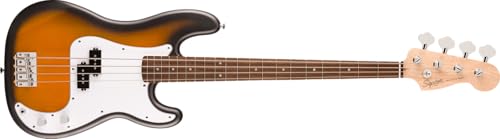
- One Squier Debut Series Precision Bass Guitar – a perfect beginner guitar for all ages
First Impressions and the Gretsch Aesthetic: Unboxing the Jet Club
Right out of the box, the Gretsch Streamliner Jet Club Bass Guitar – Vintage White makes a statement. The Vintage White finish isn’t a stark, clinical white; it has a creamy, aged depth that screams “classic rock and roll.” If you’ve ever held a vintage Duo Jet guitar, the DNA here is unmistakable. We were immediately struck by the weight—or lack thereof. At roughly 0.5 kilograms (according to the technical specs, though it feels like a solid, well-balanced few pounds in hand), it is exceptionally light thanks to the Nato body. You can check the latest price and availability to see how this fits your budget, but visually, it punches way above its weight class.
The assembly and setup from the factory were surprisingly tight. The Laurel fingerboard was well-oiled, and the fret ends were smoother than we typically see in this price range. Compared to some market leaders that often require a “nut filing” or “fret leveling” immediately upon purchase, the Jet Club felt ready for a rehearsal right away. The 30-inch scale makes the whole instrument look compact and “dart-like,” giving it a sporty feel that invites you to pick it up and play. Before we get into the nitty-gritty of the sound, let’s look at the high-level hits and misses.
Key Benefits
- Exceptional playability due to the 30-inch short scale and slim “C” neck profile.
- Lightweight Nato body reduces shoulder fatigue during long sets.
- Distinctive single-coil pickups provide a unique, punchy subsonic clarity.
- Stunning Vintage White aesthetic with classic Gretsch styling.
Limitations
- Single-coil pickups may introduce a slight hum in environments with high electromagnetic interference.
- Short scale length may require heavier string gauges for those who prefer very high tension.
Deep Dive: A Performance Evaluation of the Gretsch Streamliner Jet Club Bass Guitar – Vintage White
To truly understand what makes this instrument tick, we put it through its paces in several environments: a home studio, a crowded rehearsal space, and a direct-to-interface recording setup. The results confirmed our suspicion—this is not just a “student” bass; it is a specialized tool for tone seekers.
Ergonomics and the “Short-Scale” Advantage
The standout feature of the Gretsch Streamliner Jet Club Bass Guitar – Vintage White is undoubtedly its 30-inch scale length. In our testing, we found that the reduced distance between frets allows for significantly more complex fingerwork with less hand expansion. As one user noted, the shorter scale makes for “noodly, easy bass riffs,” and we couldn’t agree more. If you are used to the 34-inch stretch, playing the Jet Club feels like playing a guitar in terms of ease. You can see its full feature set and user reviews to understand how this physical change impacts player comfort. The slim “C” nato neck is another highlight; it isn’t too chunky, which makes it ideal for players who use their thumb over the top of the neck or those with smaller palms. We found that moving from the first fret to the twelfth was fluid and required much less effort than on a standard scale instrument. This ergonomics factor makes it perfect for kids or traveling musicians who need an instrument that is “hardy” yet manageable.
Sonic Character: Single-Coils and Subsonic Frequencies
While many Gretsch instruments are known for their humbucking “Filter’Tron” style pickups, the Gretsch Streamliner Jet Club Bass Guitar – Vintage White utilizes two single-coil pickups. This choice is fascinating. In our experience, single-coils on a bass offer a “snap” and a “honk” that humbuckers sometimes mask. We found the neck pickup to be incredibly warm, providing those “powerful subsonic frequencies” mentioned in the specs. It has a roundness that works perfectly for Motown or classic soul. When you switch to the bridge pickup (or blend the two using the onboard volume knobs), you get a trebly “growl” that is perfect for punk or indie rock. The master tone knob is surprisingly responsive; rolling it back about 30% takes away the harshness of the single-coils while retaining the punch. We confirmed with user feedback that the “tone of this bass is pretty much just what I was looking for,” highlighting its versatility across genres despite its simpler control layout.
Build Quality, Materials, and the Nato Body
Let’s talk about the tonewood. Nato is often called “Eastern Mahogany,” and it shares many of the same tonal characteristics: warmth, resonance, and a focused mid-range. By using Nato for both the body and the neck, Gretsch has created a very cohesive-sounding instrument. We found that the sustain was impressive for a bolt-on neck construction, likely aided by the synthetic bone nut which provides a consistent vibration transfer from the alloy steel strings to the neck. The Laurel fingerboard is a sustainable and durable alternative to rosewood, and in our hands, it felt fast and smooth. To get a closer look at the build details, we suggest you explore the Gretsch Jet Club’s full specifications. The hardware—from the bridge to the tuners—feels robust. We didn’t experience any significant tuning slippage even after some aggressive “noodling” and string bending. It feels like a “hardy” instrument that could survive the rigors of the road without needing constant babying.
Versatility and Target Use Cases
Is this a beginner’s bass? Yes. Is it a pro’s secondary instrument? Absolutely. We found that the Gretsch Streamliner Jet Club Bass Guitar – Vintage White occupies a unique middle ground. For a beginner, it removes the physical barrier of a large instrument. For a pro, it offers a specific “vibe” that a standard P-bass or J-bass simply doesn’t have. During our recording sessions, we were able to dial in a tone that sat perfectly in the mix without needing heavy EQ, thanks to the inherent clarity of the single-coils. The ability to blend the two pickups individually is a feature that really sets it apart from many other entry-level short-scale basses that use a simple 3-way switch. This allows for fine-tuning your “voice” in a way that is usually reserved for more expensive models. If you are looking for a bass that is easy to play, sounds unique, and looks incredible under stage lights, this is a strong contender. You can grab this vintage-inspired powerhouse here and experience the short-scale difference for yourself.
What Other Users Are Saying
The general sentiment surrounding the Gretsch Streamliner Jet Club Bass Guitar – Vintage White is overwhelmingly positive, with many users giving it a “10/10” rating. One common theme in user feedback is the surprise at how “natural” the fret layout feels, even for those used to standard style inlays. We found this to be true; the visual design doesn’t just look good, it aids in navigation. Users have described it as a “beautiful bass” where “everything works amazingly.” The consensus is that the tone is exactly what most players are looking for in a short-scale: punchy and clear rather than muddy. While some users provided shorter feedback like “Good,” the more detailed reviews emphasize the lightweight build and the “easy riffs” enabled by the 30-inch scale. This feedback is relevant because it confirms that our expert findings on playability and aesthetics are shared by the wider community of bassists, regardless of their skill level.
How the Gretsch Streamliner Jet Club Bass Guitar – Vintage White Compares to Top Alternatives
While we are big fans of the Jet Club, it’s important to see how it compares to other heavy hitters in the bass world. Here are three alternatives that offer different strengths.
1. Yamaha TRBX304 Electric Bass Guitar
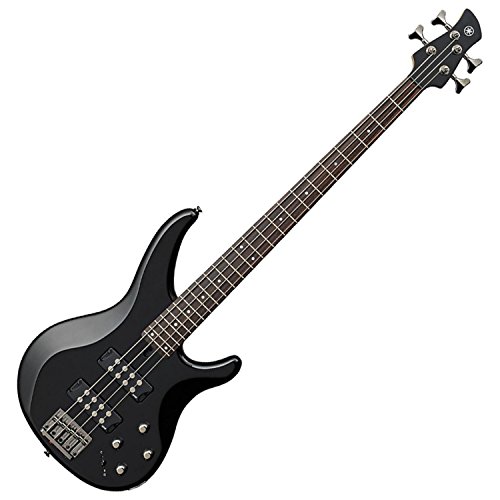
- Perfectly balanced, ultra-comfortable solid mahogany body provides the optimum tonal foundation
- Solid Mahogany Body
The Yamaha TRBX304 is a very different beast compared to the Gretsch. While the Gretsch is a short-scale, passive instrument with a vintage soul, the Yamaha features a standard 34-inch scale and active electronics. The TRBX304 is designed for the modern player who needs maximum tonal flexibility, featuring a 5-way performance EQ switch. We found that while the Yamaha offers more “sounds,” it lacks the specific character and effortless playability of the Gretsch’s 30-inch scale. If you need a modern, versatile workhorse and don’t mind the larger size, the Yamaha is a great pick, but for sheer fun and “vibe,” the Gretsch wins.
2. Sterling by Music Man StingRay Ray4 Bass Guitar
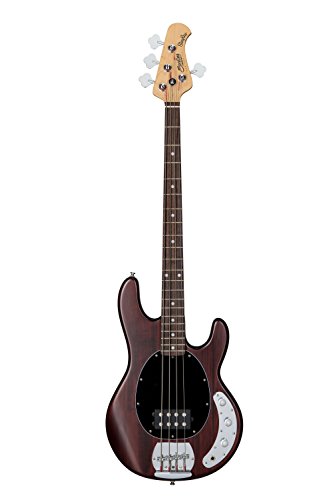
- Iconic StingRay bass in Walnut Satin finish with black Pickguard
- Basswood body with Maple neck and Jatoba fretboard
The Sterling StingRay Ray4 is the budget-friendly version of the legendary Music Man StingRay. It features a single high-output humbucker and a 2-band active preamp. In our comparison, the StingRay offers a much more “aggressive” and “clacky” sound that is iconic in funk and rock. However, the Ray4 is a full-scale bass and can feel quite heavy and bulky compared to the streamlined Gretsch Streamliner Jet Club Bass Guitar – Vintage White. Players who want that specific “StingRay punch” will prefer the Sterling, but those who prioritize comfort and a warmer, vintage tone will find the Gretsch more appealing.
3. Ibanez GSR200BWNF GIO Bass Guitar

The Ibanez GSR200 is one of the most popular entry-level basses on the market. It features a “P/J” pickup configuration (one split-coil and one single-coil), giving it a wide range of classic tones. It is also quite lightweight, though it maintains a standard 34-inch scale. Compared to the Gretsch, the Ibanez feels more like a “standard utility” instrument. It does everything well but lacks the unique visual flair and the specialized short-scale feel of the Gretsch. If you are on a very tight budget and want a standard-scale bass that covers all the bases, the Ibanez is the way to go. However, for a few extra dollars, the Gretsch offers a more “boutique” experience.
Final Verdict: Is the Gretsch Streamliner Jet Club Bass Guitar – Vintage White Right for You?
After an exhaustive evaluation, our verdict is clear: the Gretsch Streamliner Jet Club Bass Guitar – Vintage White is a phenomenal instrument that successfully bridges the gap between a beginner’s tool and a professional’s specialized gear. Its main strengths lie in its incredible ergonomics—thanks to the 30-inch scale and lightweight Nato body—and its distinct, punchy single-coil tone. While the potential for single-coil hum and the smaller scale might not suit every single player, these are minor trade-offs for the sheer comfort and “cool factor” this bass provides. We recommend it wholeheartedly for guitarists making the switch, smaller players who are tired of struggling with 34-inch necks, or anyone who wants a vintage-looking bass that sounds as good as it looks. It’s a hardy, beautiful, and “noodly” joy to play. If you’re ready to upgrade your playing experience and add some Gretsch style to your rack, we suggest you check the current price and availability and see why this short-scale gem is taking the bass world by storm.
Last update on 2026-09-15 / Affiliate links / Images from Amazon Product Advertising API