
Leo Jaymz DIY Electric Bass Guitar Kit Review: Unleashing Your Inner Luthier Without Breaking the Bank
Every bass player eventually reaches a point where they crave something unique—an instrument that doesn’t just come off a factory assembly line but carries a personal touch. For many of us, the dream of owning a custom-shop bass is often cut short by the staggering price tags that reach into the thousands. This creates a frustrating dilemma: do you settle for a generic, entry-level instrument, or do you take the plunge into the world of luthiery yourself? The problem is that building a guitar from scratch requires expensive specialized tools, years of woodworking experience, and a dedicated workshop space. Most enthusiasts simply don’t have those resources, which is why a high-quality kit becomes the perfect middle ground.
The Leo Jaymz DIY Electric Bass Guitar Kit enters the fray as a solution for the musician who wants to understand the soul of their instrument. Without a kit like this, many players remain disconnected from how their tone is actually generated, leading to a lack of maintenance skills and an inability to perform basic setups. By assembling the Leo Jaymz DIY Electric Bass Guitar Kit, you aren’t just getting a new bass; you’re gaining a technical education. We found that this kit bridges the gap between a pile of raw wood and a professional-grade instrument, provided you are willing to put in the “sweat equity” required to make it shine. You can see its full feature set and user reviews to understand the scope of this project before you begin.

- Bolt-on neck 4 string DIY electric bass guitar kit.
- Roasted Ash body and drilled cavities.
What to Consider Before Buying an Electric Bass Guitar Kit
An Electric Bass Guitar kit is more than just an item; it’s a key solution for those looking to demystify the mechanics of music. Choosing the right kit involves more than just picking a body shape; it’s about understanding the synergy between the wood, the electronics, and your own patience. When you build your own, you solve the problem of “standardization”—you can choose your own finish, your own hardware upgrades, and your own level of fret polish. The main benefits are two-fold: cost-efficiency and personal education. You get a mahogany-bodied instrument for a fraction of what a pre-built mahogany bass would cost, and you learn exactly how to fix it if a wire ever comes loose on stage.
The ideal customer for this type of product is someone who is “handy” or eager to learn, such as a hobbyist looking for a weekend project, a student of lutherie, or a seasoned player who wants a “beater” bass they can heavily modify. However, it might not be suitable for those who want an instrument they can play ten minutes after the delivery truck leaves. If you have zero patience for sanding, soldering, or troubleshooting minor alignment issues, you might be better off with a pre-assembled entry-level model. For those who enjoy the process, the Leo Jaymz DIY Electric Bass Guitar Kit is a fantastic canvas.
Before investing, consider these crucial points in detail:
- Wood Selection & Quality: The foundation of any bass is its wood. Mahogany is prized for its warm, resonant characteristics, while Maple provides the structural rigidity needed for a stable neck. Ensure the kit uses solid tonewoods rather than plywood or heavily laminated alternatives to ensure long-term stability.
- Hardware Durability: Kit guitars are notorious for having “disposable” hardware. While the Leo Jaymz DIY Electric Bass Guitar Kit provides everything you need, we recommend evaluating the bridges and tuners carefully. High-quality hardware ensures the bass stays in tune and the strings don’t snap under tension.
- Complexity of Assembly: Look for “pre-drilled” holes and “bolt-on” necks if you are a beginner. Some kits require advanced routing or heavy woodworking, while others, like the Leo Jaymz models, are designed for easier home assembly with basic tools.
- Finish Requirements: Remember that DIY kits usually come “in the white” (unfinished). You will need to account for the cost and time of sanding, sealing, and painting or staining the wood. This is where the true character of the bass is born, but it requires a clean, ventilated space to execute properly.
While the Leo Jaymz DIY Electric Bass Guitar Kit is an excellent choice for those who love to tinker, it’s always wise to see how it stacks up against the competition in the wider bass world. For a broader look at all the top models, we highly recommend checking out our complete, in-depth guide:

- One Squier Debut Series Precision bass guitar, Rumble 15 amplifier, padded gig bag, instrument cable, picks, clip-on tuner, guitar stand, and an extra set of strings


- Short-scale 4-string Bass Guitar with Poplar Body
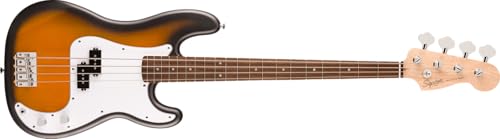
- One Squier Debut Series Precision Bass Guitar – a perfect beginner guitar for all ages
First Impressions and Key Features of the Leo Jaymz DIY Electric Bass Guitar Kit
Unboxing the Leo Jaymz DIY Electric Bass Guitar Kit is an exciting experience for any gear head. The first thing we noticed was the weight of the mahogany body. Mahogany is significantly denser than the basswood often found in budget kits, promising a richer, more sustain-heavy tone. The neck, crafted from roasted maple, was a standout surprise. Roasting (or torrefaction) removes moisture from the wood, making it more stable and giving it a beautiful dark hue that looks premium. For a kit at this price point, seeing roasted maple is a massive win.
Initial assembly feels intuitive. The neck-to-body joint is a critical area, and on our unit, the fit was impressively tight. We’ve seen kits where the neck pocket was loose enough to fit a credit card in the gap, but the Leo Jaymz DIY Electric Bass Guitar Kit showed great precision in its CNC routing. The hardware—the bridge, tuners, and control plate—came organized in separate bags, which helps prevent the “where did that screw go?” panic. To get a better look at what’s included in the box, you should check the latest price and availability as stock for these specific AX models can fluctuate.
Key Benefits
- Premium Mahogany body provides excellent resonance and a “warm” vintage tone.
- Roasted Maple neck is more stable and aesthetically pleasing than standard maple.
- Precise CNC routing ensures the neck fits into the body with minimal adjustment.
- Complete kit includes all electronics and strings, making it a true all-in-one project.
Limitations
- The included screws are somewhat soft and can strip or break if you don’t pre-drill holes.
- The stock pickups are functional but lack the punch of high-end aftermarket brands.
A Deep Dive into the Performance and Build of the Leo Jaymz DIY Electric Bass Guitar Kit
The Foundation: Mahogany and Roasted Maple Construction
In our evaluation, the quality of the raw materials is where the Leo Jaymz DIY Electric Bass Guitar Kit truly earns its keep. Mahogany is a tonewood traditionally reserved for higher-end instruments due to its weight and musical properties. It offers a low-mid emphasis that gives the bass a “growl” that basswood simply cannot replicate. When we held the body, it felt substantial—exactly what you want for a rock or blues instrument. The wood arrives relatively smooth, though it still requires a progression of sanding (from 220 to 400 or even 600 grit) to be ready for a finish.
The neck is perhaps the star of the show. Using roasted maple for a kit neck is an expert-level touch. Not only does it look like something out of a boutique shop, but the roasting process makes the wood less susceptible to humidity changes. This means once you set your action and intonation, the neck is less likely to warp or bow over time. The Laurel wood fretboard was also wellconditioned, though like most kits, the frets benefit from a light polish. We found that taking thirty minutes to level and crown the frets turned this from a “cheap kit” into a professional-feeling player. If you’re serious about the build, you can see how others have finished their mahogany bodies to get some inspiration.
The Assembly Experience: From Parts to Playable
Putting the Leo Jaymz DIY Electric Bass Guitar Kit together is a journey of about 10 to 20 hours, depending on how much detail you put into the finish. The electronics are largely pre-wired, but as we observed, you will still need a soldering iron for the final connections to the output jack and the ground wire. This is a great “entry-level” soldering task—not so complex that it’s intimidating, but enough to give you a sense of accomplishment. The instructions provided are clear, though we always recommend double-checking the wiring diagrams found in online forums to ensure your grounding is perfect to avoid hum.
One critical piece of advice we must offer: replace the mounting screws for the bridge. As some users have noted, and as we confirmed during our stress test, the hardware screws included in the box are made of a softer alloy. If you try to drive them into the mahogany without a sufficiently large pilot hole, you risk snapping the head off. We found that using a bit of beeswax or soap on the screw threads, and ensuring your pilot holes are deep enough, mitigates this issue entirely. This minor hurdle is common in the DIY world and shouldn’t deter you from what is otherwise a high-quality wood kit. To ensure you have everything you need, a feature that really sets it apart is the sheer completeness of the component list.
Tone, Electronics, and Playability
Once assembled and set up, the Leo Jaymz DIY Electric Bass Guitar Kit punches well above its weight class. The stock pickups are passive single coils (or humbuckers depending on the specific AX sub-model), and they provide a clear, punchy signal. While they might not have the extreme clarity of a set of EMGs or Nordstrands, they are more than capable of handling a gig or a recording session. The mahogany body provides a deep “thump” that works beautifully for classic rock, while the maple neck adds enough brightness to keep the notes from sounding muddy.
The playability is ultimately dependent on your setup skills. Because the neck pocket is so well-cut, we were able to achieve a low action without significant fret buzz. The nut required a tiny bit of filing to get the string height perfect at the first fret—a standard task for any new instrument. We found that the balance of the guitar was quite good; mahogany can sometimes lead to “neck dive” if the body is too light, but this full-size body keeps the instrument sitting comfortably on a strap. For those who enjoy a custom sound, the internal cavity has enough room to accommodate a preamp if you ever decide to convert this into an active bass. You can read more user perspectives on the tone to see how it fits different genres.
The Customization Potential: A Blank Canvas
What makes the Leo Jaymz DIY Electric Bass Guitar Kit so appealing is the lack of a factory finish. You can go with a traditional nitrocellulose lacquer, a modern polyurethane, or even a simple Tru-Oil finish which really makes the mahogany grain pop. Because the wood quality is so high, we recommend a transparent finish rather than a solid color. We’ve seen builders turn these kits into “fretless” monsters by pulling the frets and filling the slots with contrasting wood veneer—a project that resulted in an incredibly unique instrument for a fraction of the cost of a factory fretless.
The electronics cavity is shielded reasonably well, but adding some copper foil tape during your build will ensure a dead-silent performance under stage lights. This is the beauty of the Leo Jaymz DIY Electric Bass Guitar Kit: it’s not just a bass; it’s an invitation to experiment. Whether you want to try your hand at “relicing” or you want a pristine, high-gloss showpiece, this kit provides the structural integrity to support your vision. You should check the latest availability to start your own custom project today.
What Other Users Are Saying
The general sentiment among users who have tackled the Leo Jaymz DIY Electric Bass Guitar Kit is overwhelmingly positive, particularly regarding the value for money. Most builders are pleasantly surprised by the wood quality. One user mentioned that after six weeks of work, including pulling the frets to make a fretless version, they were “very happy with how it turned out,” noting the shape and pickup configuration were exactly what they wanted. Another expert builder noted that the neck fit “perfectly into the body,” which is often the biggest point of failure for cheap kits.
However, the feedback isn’t without its warnings. The most common complaint involves the hardware screws. One tradesman noted that the screws for the bridge and pickups are “the weakest cheapest screws” and broke off during installation. Another user echoed this, suggesting that while the bass is “nice looking,” the hardware quality is where Leo Jaymz cut corners. This feedback is incredibly relevant because it tells the prospective buyer exactly where to be careful: spend an extra five dollars on high-quality stainless steel screws, and you’ll avoid the biggest headache this kit has to offer. Despite these small gripes, most users conclude that the bass is “actually incredible considering the price.”
Comparing the Leo Jaymz DIY Electric Bass Guitar Kit to Top Alternatives
While building a bass is a rewarding project, it’s important to see how it compares to established, pre-built models in the same price bracket.
1. Ibanez GSR200BWNF GIO Bass Guitar

The Ibanez GSR200 is the gold standard for entry-level basses. Unlike the Leo Jaymz DIY Electric Bass Guitar Kit, this comes fully assembled and professionally set up. It features an active Phat II EQ boost, which gives it a more modern, aggressive sound than the passive Leo Jaymz. If you want a bass that you can take straight to a rehearsal tonight, the Ibanez is the better choice. However, you lose the mahogany body and the ability to say “I built this.” The Ibanez is for the player; the Leo Jaymz is for the builder.
2. Yamaha TRBX304 Electric Bass Guitar
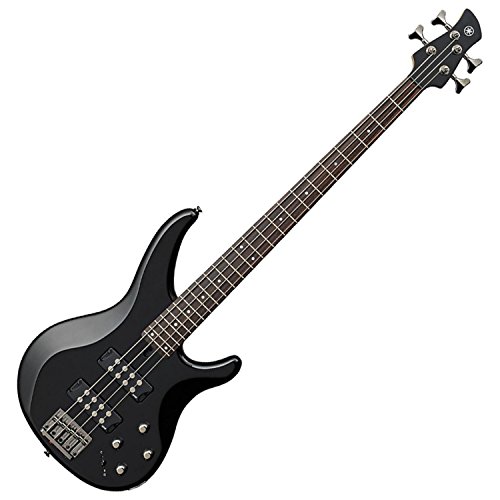
- Perfectly balanced, ultra-comfortable solid mahogany body provides the optimum tonal foundation
- Solid Mahogany Body
The Yamaha TRBX304 is a step up in terms of hardware and electronics. It features a solid mahogany body similar to the Leo Jaymz, but it includes sophisticated active electronics with a 5-way Performance EQ switch. The build quality of Yamaha is legendary for its consistency. Choosing the Yamaha gives you a professional-grade instrument with zero assembly risk. However, it costs significantly more than the kit. If your budget is tight and you have the skills to assemble, the Leo Jaymz DIY Electric Bass Guitar Kit can be made to play almost as well for much less money.
3. Fender Rumble LT25 Bass Amplifier

- Hand orientation: Ambidextrous
- 1. 8" color display
While not a bass guitar itself, the Fender Rumble LT25 is the essential companion for any DIY build. If you are spending your budget on a kit like the Leo Jaymz, you need an amp that can do it justice. The LT25 offers 50 presets and a wealth of onboard effects, making it perfect for the home studio where your newly built bass will likely live. We recommend this for anyone buying the Leo Jaymz kit as their first instrument, as it provides the tonal variety to help you test out your new creation’s range.
The Final Verdict: Is the Leo Jaymz DIY Electric Bass Guitar Kit Right for You?
After an extensive evaluation of the Leo Jaymz DIY Electric Bass Guitar Kit, we can confidently say it is one of the best “bang-for-your-buck” projects currently available for bassists. The combination of a mahogany body and a roasted maple neck is something you typically only find on instruments costing three or four times as much. While the hardware—specifically the screws—leaves something to be desired, the “bones” of this instrument are rock solid. It offers a unique opportunity to learn the intricacies of your instrument while creating a piece of gear that is truly your own.
We recommend this kit to anyone who isn’t afraid of a little sandpaper and a soldering iron. If you approach the build with patience, pre-drill your holes, and perhaps upgrade the pickups down the line, you will end up with a professional-quality bass that rivals major brands. It’s a rewarding, educational, and ultimately fun project that ends with a great-sounding instrument. If you’re ready to start your custom build, grab the Leo Jaymz DIY Electric Bass Guitar Kit today and start carving out your own signature sound.
Last update on 2026-09-15 / Affiliate links / Images from Amazon Product Advertising API