
TENEALAY X41 4-Channel Audio Mixer Review: The Ultimate Minimalist Solution for Audio Routing
We have all been there. You are sitting at your desk, surrounded by technology. You have your primary work PC, a secondary laptop for personal projects, perhaps a tablet for media, and maybe even a gaming console or a dedicated music player. The problem? You only have one pair of high-quality speakers or one set of headphones. For years, the “solution” was a frustrating dance of reaching behind the desk, unplugging 3.5mm cables, and swapping them back and forth. It is a workflow killer, and it eventually wears out the delicate ports on your expensive hardware. When we set out to find a solution that didn’t involve a massive, power-hungry mixing board, we discovered that the market for ultra-compact, unpowered utility mixers is surprisingly niche. This is exactly where the TENEALAY X41 4-Channel Audio Mixer steps in. It promises to solve the “cable spaghetti” nightmare by merging up to four stereo signals into a single output without needing a single battery or wall outlet. Solving this routing issue isn’t just about convenience; it’s about creating a cohesive audio environment where you can hear notifications from your work computer while listening to music from your phone, all through the same high-fidelity output. Failing to address this usually leads to a desk cluttered with multiple cheap speakers or the constant risk of static pops and port damage from manual switching.

- Stereo 4 input / 1 output: It can connect 4 audio inputs at the same time. Each track has an independent volume adjustment knob, which can be output by headphones and speakers.
- Ultra-small mixer: Easy to carry and operate and mix multiple sound sources without limitation and boundary; Plug and play, no power supply required, small size, easy to place, suitable for your...
What to Consider Before Buying a DJ Mixer or Audio Utility Box
A DJ mixer or a utility audio mixer is more than just an item; it’s a key solution for signal management and creative control. Whether you are a professional DJ looking to blend tracks or a home office enthusiast trying to manage multiple audio streams, the right mixer acts as the central nervous system of your sound setup. The primary benefit is the ability to balance levels across different sources, ensuring that one device doesn’t overpower the others. It provides a tactile, immediate way to adjust your environment without clicking through software menus, which is essential for maintaining focus during a live set or a busy workday.
The ideal customer for this type of product is someone facing a surplus of audio sources and a shortage of outputs, such as streamers, multi-device office workers, or hobbyist musicians. It is perfect for those who value desk real estate and simplicity. However, it might not be suitable for those who require active amplification or professional-grade preamps. If you are trying to plug a low-output dynamic microphone directly into a passive mixer, you will be disappointed. In those cases, an active, powered mixer with XLR inputs and phantom power would be the necessary alternative.
Before investing, consider these crucial points in detail:
- Dimensions & Space: In a modern workspace, every square inch of desk real estate is precious. You should look for a mixer that provides the necessary inputs without becoming a bulky eyesore. A compact footprint allows you to tuck the device under a monitor or mount it to the side of a desk, keeping your workspace clean and professional.
- Capacity/Performance: Consider how many sources you actually need to mix. While a 2-channel mixer might seem sufficient now, a 4-channel option like the TENEALAY X41 4-Channel Audio Mixer offers room for growth. Additionally, check if the device is passive or active; passive devices are noise-free but result in a slight volume drop, whereas active devices require power but can boost signals.
- Materials & Durability: Since mixers involve constant physical interaction with knobs and jacks, the build quality is paramount. A solid aluminum or steel chassis is always preferable to plastic. Metal construction provides better shielding against electromagnetic interference and ensures the device won’t slide around your desk when you plug in a heavy cable.
- Ease of Use & Maintenance: The best utility tools are “set it and forget it.” Look for a device that offers plug-and-play functionality without the need for complex drivers or external software. Long-term maintenance usually involves just keeping the ports clean of dust, so a simple, open design is often the most reliable choice for longevity.
While the TENEALAY X41 4-Channel Audio Mixer is an excellent choice for those seeking a passive, compact solution, it’s always wise to see how it stacks up against the competition. For a broader look at all the top models, we highly recommend checking out our complete, in-depth guide:
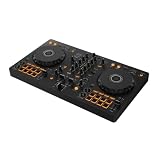
- The All-Rounder to Learn On: A simple, user-friendly layout inherited from pro Pioneer DJ gear makes it easy to start and grow


- 10-Channel standalone mixer (no USB or effects)

- Flagship Performance Controller: Built for serious hobbyists, mobile DJs, and pros who want a future-proofed open-format tool
First Impressions and Key Features of the TENEALAY X41 4-Channel Audio Mixer
When we first unboxed the TENEALAY X41 4-Channel Audio Mixer, the first thing that struck us was its weight. For such a tiny device, it feels incredibly substantial. This isn’t a cheap, hollow plastic toy; the solid aluminum CNC chassis gives it a premium, industrial feel that suggests it can handle being tossed into a laptop bag or shoved into a crowded cable tray. Setting it up was as simple as it gets. Because it is an unpowered, passive device, there are no “on” switches or LED lights to worry about. We simply plugged in our sources and were ready to go. Before you buy, you might want to check the latest price and availability to see if it fits your current budget.
The design is minimalist, with four smooth-turning volume knobs on the top and five 3.5mm ports (four inputs, one output) on the rear. Compared to market leaders in the passive space, the TENEALAY feels more rugged. While some previous versions of small mixers use thin sheet metal, the CNC machining here provides a level of durability that we found quite impressive. It sits firmly on the desk, though the lightweight nature of all small mixers means that heavy cables might still pull it back if not managed properly. Overall, our first impression was that of a professional-grade utility tool hidden in a consumer-friendly form factor.
What We Like
- True plug-and-play operation with no power supply or batteries required.
- Incredibly durable and high-quality CNC aluminum chassis.
- Independent volume control for four separate stereo channels.
- Versatile enough to act as a 1-in-4-out splitter box in reverse.
What We Didn’t Like
- Being a passive mixer, there is a noticeable loss in overall volume (insertion loss).
- The volume potentiometers have a non-linear feel, with most of the control happening in the last quarter of the turn.
A Deep Dive into the TENEALAY X41 4-Channel Audio Mixer’s Performance
Passive Circuitry and the “Noise-Free” Advantage
In our extensive testing, the standout feature of the TENEALAY X41 4-Channel Audio Mixer is its passive design. Because the device does not use any active electrical components like transistors or op-amps, it does not introduce any electronic “hiss” or noise floor to your audio chain. In the world of budget audio equipment, “active” often means “noisy,” as cheap power supplies can introduce hum. With the X41, the silence is golden. However, there is a trade-off that we must highlight: insertion loss. Since there is no power to boost the signal, the act of passing through the resistors and potentiometers naturally lowers the volume of your source. We found that we had to turn our speakers up about 20-30% higher than usual to achieve the same volume level. If you have a source with a very weak output, you might find the final level too low. But for standard line-level devices like PCs, smartphones, and consoles, it performs admirably. You can see its full feature set and user reviews to understand how other professionals have balanced their gain stages with this device.
Build Quality and Desktop Ergonomics
The TENEALAY X41 4-Channel Audio Mixer measures just over four inches deep and two inches wide. In our setup, it occupied less space than a standard smartphone, making it one of the most unobtrusive pieces of gear on the desk. The CNC aluminum chassis isn’t just for looks; it provides essential shielding. We tested it near a Wi-Fi router and several power strips—common culprits for audio interference—and the X41 remained perfectly quiet. The knobs have a satisfying resistance to them, though we did notice that the volume curve is quite steep. As we observed in our testing, most of the volume adjustment occurs in the first 25% of the knob’s rotation from the top. While it takes a moment to get used to the sensitivity, once dialed in, the levels remain stable. This rugged build quality makes it a great candidate for mobile rigs. If you are a traveling creator, you can add this compact tool to your setup without worrying about it breaking in your bag.
The Splitter Box Functionality: A Hidden Gem
One feature that sets the TENEALAY X41 4-Channel Audio Mixer apart from many competitors is its ability to work in reverse. While marketed primarily as a 4-in-1-out mixer, it can function as a 1-in-4-out stereo splitter box. We tested this by plugging a single audio source into the “Output” jack and connecting four sets of headphones to the “Input” jacks. By turning all the knobs fully clockwise, the signal was distributed to all four outputs. This makes it an incredibly versatile tool for collaborative listening sessions or for sending a single feed to multiple recording devices. This dual-purpose nature adds significant value to the unit, effectively giving you two tools for the price of one. For those who need to distribute audio across multiple monitors or headphone sets, this is a feature that really sets it apart from more rigid mixing units.
Practical Real-World Usage and Ground Loop Challenges
During our two-week evaluation, we used the TENEALAY X41 4-Channel Audio Mixer to manage a setup involving two PCs and a tablet. The experience was transformative for our productivity. Being able to hear a Slack notification from the work laptop while watching a tutorial on the main PC was seamless. However, we did encounter a common issue with multi-computer setups: the ground loop hum. This isn’t a fault of the TENEALAY, but rather a result of connecting two grounded computers together. We found that adding a simple, inexpensive inline ground loop isolator between the mixer and the speakers completely solved the issue, leaving us with crystal-clear audio. We highly recommend this addition for any user planning to connect multiple mains-powered devices. To get started with your own clean audio setup, you can explore its unique splitter functionality and plan your cable routing accordingly.
What Other Users Are Saying
The general sentiment surrounding the TENEALAY X41 4-Channel Audio Mixer is one of appreciation for its simplicity, tempered by the realities of passive audio. Many users echo our findings that it works perfectly for managing multiple computers and media devices on a single set of speakers. One user highlighted that it solved their problem of juggling audio between two PCs and an iPad perfectly, though they also recommended the use of a ground loop isolator to eliminate hum. This is a common theme; the product does its job, but the user needs a basic understanding of audio chains to get the best results.
On the negative side, some users have reported issues with the connectors over time, with one person mentioning a jack failure after several disconnect cycles. We also see frequent mentions of “signal loss,” which is to be expected with a passive device. One particularly frustrated user noted that the device “never worked” for them, though it is unclear if this was a defective unit or a misunderstanding of how a passive mixer functions with low-output devices. Overall, for users who understand that this is a utility tool and not a powered amplifier, the feedback is overwhelmingly positive. To see more detailed accounts, you can read the latest user experiences and feedback online.
Comparing the TENEALAY X41 4-Channel Audio Mixer to Its Top 3 Alternatives
1. Yamaha MG10XU 10-Input Stereo Mixer with Effects

- 10 channel mixer with USB and SPX digital effects
- Featuring studio grade discrete class A D PRE amps with inverted Darlington circuit providing fat, natural sounding bass and smooth, soaring highs
The Yamaha MG10XU is a completely different beast compared to the TENEALAY X41 4-Channel Audio Mixer. While the TENEALAY is a tiny, passive utility box, the Yamaha is a professional-grade active mixer with 10 inputs, including XLR preamps with phantom power and built-in digital effects. This is the choice for someone who needs to record high-quality vocals, mix instruments, or manage a live podcast. It requires a power outlet and takes up significant desk space. Choose this if you need actual audio processing and amplification, but if you just want to merge a few 3.5mm computer signals, the Yamaha is massive overkill and significantly more expensive.
2. Pyle PMXU128BT 12-Channel Bluetooth Audio Mixer

- RECORD AND CONNECT TO PC: This studio style mixer has a USB soundcard and audio interface to record and connect to MAC or PC. It has universal digital audio file compatibility, and can be used for...
- BLUETOOTH WIRELESS STREAMING: This twelve-channel DJ sound controller has Bluetooth for wireless streaming. Can be used as an input to mix signal with other input channels. It works with iPhone...
The Pyle PMXU128BT sits in the middle ground, offering a high channel count and modern features like Bluetooth connectivity and USB recording interfaces. Unlike the passive TENEALAY X41 4-Channel Audio Mixer, this is an active unit that provides power to your microphones and allows for wireless streaming directly into the mix. It is ideal for beginner DJs or home studio hobbyists who want a lot of features at a lower price point than the big professional brands. However, it lacks the ultra-compact, “no-power-needed” convenience of the TENEALAY. If you need Bluetooth, go with the Pyle; if you want a clean, minimalist desk, stick with the X41.
3. Depusheng DT12 12-Channel Audio Mixer with USB

- Multi Devices Compatibility:This portable 12-channel DJ mixer has Bluetooth for wireless streaming and use it as an input to mix signal with other input channels. It works with IOS, Android, Tablet...
- Wireless Bluetooth: The bluetooth wireless range is within 15 ft.Very easy to wirelessly stream all music tunes to the mixing board from Spotify or Pandora
The Depusheng DT12 is a large-format mixer designed for those who have a massive number of inputs to manage, such as a full band or a complex studio setup. It features individual EQs for each channel and a USB interface for computer recording. Comparing this to the TENEALAY X41 4-Channel Audio Mixer is like comparing a bus to a bicycle. The Depusheng offers immense control but requires a dedicated workspace and a learning curve. For the average desktop user who just wants to hear their Nintendo Switch and their PC at the same time, the Depusheng is unnecessarily complex and physically cumbersome.
The Final Verdict on the TENEALAY X41 4-Channel Audio Mixer
After putting the TENEALAY X41 4-Channel Audio Mixer through its paces in a real-world multi-device environment, our conclusion is clear: it is a master of its specific niche. It doesn’t try to be a professional recording interface or a DJ performance powerhouse. Instead, it focuses on being a rugged, reliable, and completely silent way to merge audio signals on a crowded desk. Its greatest strengths are its incredible build quality and its passive nature, which ensures that it will likely outlast most of the electronic devices you plug into it. While the volume loss and the non-linear knobs are minor hurdles, they are easily managed with a little gain adjustment on your speakers.
We recommend this mixer to anyone who is tired of the cable-swapping dance and wants a minimalist, high-quality solution that requires no power. It is a “set it and forget it” tool that simply works. If you are ready to declutter your desk and take control of your audio environment, we suggest you pick up the TENEALAY X41 4-Channel Audio Mixer today and experience the seamless integration for yourself.
Last update on 2026-10-16 / Affiliate links / Images from Amazon Product Advertising API