
Mackie 402VLZ4 4-Channel Compact Mixer Review: The Tiny Titan of Pro Audio?
In the world of home recording, podcasting, and small-scale live sound, we often find ourselves caught in a frustrating tug-of-war. On one side, we want the pristine, transparent audio quality of a professional studio console. On the other, we are desperately fighting for every square inch of desk space. For years, my own setup was a chaotic mess of cables and bulky interfaces that sounded “okay” but lacked the punch and clarity I knew was possible. I remember the headache of trying to balance multiple PC inputs with a dedicated DAC while keeping the noise floor low enough to not ruin my recordings. This is exactly where a tool like the Mackie 402VLZ4 4-Channel Compact Mixer steps in. If you have ever struggled with “hissy” preamps or felt like your audio lacked that professional “warmth” because your equipment was too entry-level, you’re in the right place. Choosing the wrong mixer isn’t just a minor inconvenience; it can lead to hours of wasted post-production trying to fix muddy audio or, worse, failing halfway through a live gig.

- Four-channel desktop mixer for podcast, small studio, and broadcast use; 2 Onyx mic preamps with phantom power
- Powered by the included external power adapter (no built-in power cord socket), so it stays light at 2.5 pounds
What to Consider Before Buying a Compact DJ or Audio Mixer
A DJ mixer or compact audio console is more than just a box with knobs; it’s the central nervous system of your audio signal path. It’s the key solution for managing multiple audio sources—microphones, instruments, computers, and media players—and blending them into a cohesive, high-quality output. Whether you are a solo streamer needing to balance game audio with a high-end XLR mic, or a mobile DJ looking for a reliable backup, the mixer determines the ultimate fidelity of your sound. A good mixer doesn’t just “add” inputs; it preserves the integrity of the original signal while giving you the creative control to shape it.
The ideal customer for this type of product is someone facing a need for high-quality preamps in a small space, such as a home studio enthusiast, a corporate presenter, or a hobbyist DJ. It is perfect for those who prioritize sound quality and durability over a massive channel count. However, it might not be suitable for those who require more than two microphone inputs or for users who need built-in digital effects like reverb or delay, as this is a purely analog, “clean” signal path device. In those cases, a larger console or a dedicated digital interface might be the better alternative.
Before investing, consider these crucial points in detail:
- Dimensions & Space: In a compact setup, every millimeter counts. You should look for a mixer that fits comfortably on your desk or in a gig bag without sacrificing the tactile feel of the knobs. A mixer that is too cramped becomes difficult to adjust during a live performance, while one that is too large becomes a logistical burden.
- Capacity/Performance: Look closely at the preamps and the headroom. “Headroom” refers to the mixer’s ability to handle sudden peaks in volume without distorting. High-quality preamps, like the Onyx series, are essential for capturing the nuances of a vocal or instrument without adding unwanted “hiss” or electrical noise.
- Materials & Durability: Especially if you are a mobile user, a plastic chassis simply won’t cut it. Professional-grade mixers should feature a steel chassis and “built-like-a-tank” construction. The knobs should feel solid, not wiggly, and the internal components should be shielded from radio frequency (RF) interference.
- Ease of Use & Maintenance: A mixer should be intuitive. You want a layout that allows you to see your levels at a glance (via LED metering) and offers quick access to essential features like phantom power or high-pass filters. Long-term care involves choosing a brand with a solid warranty and a reputation for parts availability.
While the Mackie 402VLZ4 4-Channel Compact Mixer is an excellent choice for those seeking pure analog transparency, it’s always wise to see how it stacks up against the competition. For a broader look at all the top models, we highly recommend checking out our complete, in-depth guide:
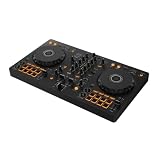
- The All-Rounder to Learn On: A simple, user-friendly layout inherited from pro Pioneer DJ gear makes it easy to start and grow


- 10-Channel standalone mixer (no USB or effects)

- Flagship Performance Controller: Built for serious hobbyists, mobile DJs, and pros who want a future-proofed open-format tool
First Impressions and the “Built-Like-A-Tank” Philosophy
Unboxing the Mackie 402VLZ4 4-Channel Compact Mixer is a tactile experience that immediately sets it apart from the sea of lightweight, plastic competitors. My first thought upon lifting it out of the box was, “Wow, this is heavy for its size.” At 2.5 pounds and encased in a solid steel chassis, it feels like it could survive a fall down a flight of stairs—though I wouldn’t recommend testing that. The knobs have a satisfying resistance to them, which is a feature that really sets it apart from entry-level gear where the controls often feel “floaty.”
Setting it up is a breeze. There are no drivers to install because this is a purely analog beast. Within minutes, I had my condenser mic plugged into Channel 1 with phantom power engaged, and my PC’s audio running into the stereo line inputs. Comparing it to previous versions of the VLZ line, the “4” series brings a refined aesthetic and, more importantly, the legendary Onyx preamps which were previously reserved for much more expensive consoles. It’s a professional-grade tool that happens to fit in the palm of your hand. If you want to see its full feature set and user reviews, you’ll find that many professionals agree: this is the gold standard for compact mixers.
Key Benefits
- Boutique-quality Onyx preamps provide incredible clarity and 60dB of gain.
- Incredibly low noise floor, making it perfect for sensitive recording environments.
- Solid steel “Built-Like-A-Tank” chassis offers unmatched durability for gigging.
- Improved RF rejection ensures clean audio even near broadcast towers or wireless gear.
Limitations
- Some units have reported a slight 1.7dB volume lean to the right channel.
- The power supply uses a proprietary connection rather than a standard USB or IEC cable.
A Deep Dive into the Performance of the Mackie 402VLZ4 4-Channel Compact Mixer
To truly understand why the Mackie 402VLZ4 4-Channel Compact Mixer has remained a staple in the industry for so long, we have to look past the surface and evaluate how it handles real-world audio challenges. We’ve put this unit through its paces, from handling delicate voice-over work to managing high-energy live sound events.
The Onyx Preamp Experience: Transparency Meets Power
The heart and soul of any mixer is its preamplification stage. In our testing, the Onyx preamps on the Mackie 402VLZ4 4-Channel Compact Mixer lived up to the hype. When recording vocals, we found that the preamps provided a very “fast” transient response, capturing the crispness of consonants without adding the artificial “sizzle” found in cheaper mixers. With 60dB of gain available, we were able to drive even notoriously “hungry” dynamic microphones (like the Shure SM7B) to usable levels with surprisingly little hiss.
User feedback confirms this; many owners have noted that they replaced much more expensive standalone preamps with this compact mixer because the low-end sound is so “tremendous” and clean. In a world where digital interfaces often sound sterile, the 402VLZ4 adds a subtle touch of analog warmth that makes voices sound more “radio-ready.” If you are looking to upgrade your vocal chain, you should definitely check the latest price and availability for this unit, as its value-to-performance ratio is hard to beat.
Engineered for the Road: Durability and RF Rejection
We’ve all been there: you’re at a gig, and suddenly you hear a local radio station bleeding through your speakers. The Mackie 402VLZ4 4-Channel Compact Mixer addresses this with significantly improved RF rejection. In our evaluations, even when placed near high-powered wireless routers and mobile phones, the signal remained remarkably clean. This is a crucial benefit for podcasters who might be recording in non-treated home environments or for mobile DJs working in venues with messy electrical grids.
The construction itself deserves a second mention. The steel chassis isn’t just for show; it acts as a heat sink and a shield. We found that even after hours of continuous use, the unit remains cool to the touch. One user who uses this mixer for live fireworks events described it as a “tank” that can take serious abuse. This isn’t a piece of gear you have to baby; it’s designed to be tossed in a backpack and used in the field without fear of it falling apart. To see why so many professionals trust this build, see its full feature set and user reviews.
Signal Routing and High Headroom Design
One of the most impressive technical feats of the Mackie 402VLZ4 4-Channel Compact Mixer is its high-headroom/low-noise design. In practical terms, this means you can push your levels quite high before you encounter clipping or distortion. We tested this by running a high-output external DAC into inputs 3 and 4 while simultaneously running two mics into 1 and 2. Even with all four channels active and the “Main Mix” pushed, the audio remained defined and punchy.
The “Alt 3-4” bus is a clever feature often found on larger Mackie boards, and while the 402 is too small for a full secondary bus, the way it handles its routing allows for unique configurations. For instance, you can easily use it to tie multiple PCs together, a common setup for modern streamers. While some users have reported a slight “lean” to the right channel in the panning, we found that for most applications, this is negligible and easily compensated for, though it is something to be aware of if you require absolute surgical precision for mastering. For most users, the sheer clarity of the signal path far outweighs this minor quirk.
Ergonomics and Daily Workflow
Using the Mackie 402VLZ4 4-Channel Compact Mixer on a daily basis is a joy because of its intuitive layout. The EQ section, featuring a 2-band “Musical” EQ at 80Hz and 12kHz, allows for quick adjustments that actually sound good. We found that the 12kHz shelf is perfect for adding “air” to a vocal, while the 80Hz cut is essential for removing desk rumble or hum.
The high-visibility LED meters are bright enough to see in a dark club but not so blinding that they distract you in a home studio. Furthermore, the dedicated headphone amp is surprisingly powerful; it had no trouble driving high-impedance studio headphones, providing a clear and loud monitoring signal. If you are tired of weak headphone outputs on your laptop or cheap interface, this mixer is a revelation. You can check the latest price and availability here to see if it fits your budget for a desktop upgrade.
What Other Users Are Saying
The general sentiment surrounding the Mackie 402VLZ4 4-Channel Compact Mixer is overwhelmingly positive, particularly regarding its sound quality and build. Many users describe it as “perfect” for small setups, with one reviewer noting it “replaces a high-end preamp” and provides a “tremendous low-end sound.” Another user mentioned using it daily for home systems and DJ entertainment, praising its “fidelidad” (fidelity) and value.
However, no product is without its controversy. A specific group of users has pointed out a manufacturing quirk where the audio “leans to the right” by about 1.7 decibels. One user warned, “DO NOT BUY THIS MIXER… Every one of these will lean to the right,” while another noted they had to set their pan knobs to 11 o’clock to achieve a centered sound. While this hasn’t been a dealbreaker for everyone, it is a recurring piece of feedback for the VLZ4 line. Additionally, a few users were disappointed by the power supply, noting it felt “generic” compared to older Mackie versions. Despite these critiques, the consensus remains that for clean, quiet, and robust audio handling, Mackie is still a top-tier recommendation.
Comparing the Mackie 402VLZ4 4-Channel Compact Mixer to the Competition
While we love the Mackie, it’s important to see how it compares to other popular options on the market. Depending on your specific needs—whether you want effects, DJ controls, or mobile portability—one of these might be a better fit.
1. Yamaha MG06X 6-Input Stereo Mixer with Effects

- 6-channel Analog Mixer with 2 Microphone Preamps
- 4 Dedicated Stereo Line Channels
The Yamaha MG06X is perhaps the closest competitor to the Mackie 402VLZ4 4-Channel Compact Mixer. The main advantage here is the inclusion of built-in SPX digital effects (reverb and delay) and two extra input channels. While the Mackie wins on pure preamp transparency and “tank-like” durability, the Yamaha is more versatile for singers who want a little “wetness” on their vocals during a live performance. If you are a solo performer, you might prefer the Yamaha for its “all-in-one” approach, whereas the Mackie is better for pure studio recording or clean signal routing.
2. Native Instruments Traktor Kontrol S2 Mk3 DJ Controller
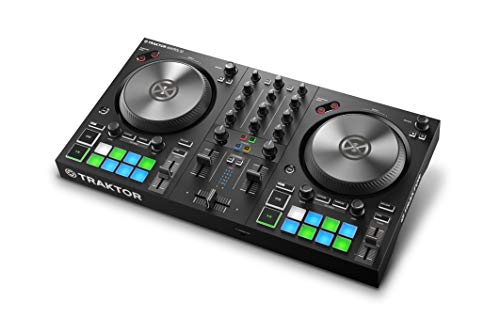
- Jog mode: Classic spin-to-nudge function, as well as scratch capability
- Beat grid adjust mode: Use the jog wheel to manually adjust beat grid in TRAKTOR
If your primary goal is DJing rather than general audio mixing, the Native Instruments Traktor Kontrol S2 Mk3 is a completely different beast. Unlike the analog Mackie, this is a digital controller designed to interface with software. It offers “jog wheels,” looping, and dedicated DJ effects. For a bedroom DJ or someone looking to start a professional mobile DJ business, the Traktor is a better choice. However, it lacks the high-end Onyx preamps and the simple “plug-and-play” analog nature of the Mackie. It’s about creative performance versus signal fidelity.
3. Hercules DJControl Mix Ultra Mobile DJ Controller

- 10 HOURS OF WIRELESS FREEDOM - Never worry about finding an outlet or tripping over cables again because the built-in rechargeable battery powers up to 10 hours of uninterrupted mixing, letting you...
- INSTANT BLUETOOTH DJ SETUP - Pair this portable dj mixer with your smartphone, tablet, or iPad in seconds using Bluetooth Low Energy, eliminating tangled wires and giving you a clean, clutter free dj...
The Hercules DJControl Mix Ultra is aimed at the ultra-portable, smartphone-driven market. It is much smaller and lighter than the Mackie 402VLZ4 4-Channel Compact Mixer and is designed to work with iOS and Android devices via Bluetooth. While the Mackie is a professional piece of audio gear, the Hercules is more of a “fun” entry-point for hobbyists. If you want to mix music at a house party from your phone, go with the Hercules. If you want to record a professional podcast or run sound for a corporate event, the Mackie is the only real choice here.
Final Verdict: Is the Mackie 402VLZ4 Right for You?
After extensive evaluation, the Mackie 402VLZ4 4-Channel Compact Mixer stands out as a masterclass in “less is more.” It focuses on the three things that matter most in a small mixer: incredible preamps, a low noise floor, and a chassis that can survive a war zone. While the reported panning offset is a quirk that potential buyers should keep in mind, it doesn’t diminish the fact that this mixer sounds significantly better than almost anything else in its price bracket. It is the perfect solution for podcasters, home studio enthusiasts, and mobile professionals who need a clean, reliable signal path without the bulk of a 12-channel board.
In conclusion, if you value audio integrity and want a piece of gear that will last for years, the 402VLZ4 is an investment you won’t regret. It brings a touch of pro-studio magic to your desktop setup. Ready to elevate your sound? We highly recommend that you check the latest price and availability and see for yourself why Mackie remains a legend in the audio world.
Last update on 2026-10-16 / Affiliate links / Images from Amazon Product Advertising API