
Roland FP-30X 88-Note Digital Piano Review: The Ultimate Mid-Range Masterpiece for Serious Beginners
When I first decided to get serious about piano again after a decade-long hiatus, I found myself in a frustrating middle ground. I wasn’t a professional looking to drop five thousand dollars on a hybrid workstation, but I was well beyond the point where a plastic, “springy” keyboard would satisfy me. The problem many of us face is finding an instrument that offers an authentic acoustic feel without the massive footprint or the astronomical price tag of a traditional upright. If you choose a keyboard that is too cheap, you risk developing poor technique due to a lack of proper key weighting; if you go too expensive, you’re paying for features you might never use. This is where the Roland FP-30X 88-Note Digital Piano enters the conversation. We spent weeks evaluating how this mid-range powerhouse balances portability with professional-grade performance to see if it truly is the “Goldilocks” solution for the modern home studio. Before we dive into the specifics, you can check the latest price and availability to see how it fits your current budget.

- Affordable Superior Performance: Balancing affordability with superior performance, the FP-30X is the sweet spot of Roland's FP-X series
- Enhanced Sound Engine: This slim and stylish portable piano builds on the entry-level FP-10 with an enhanced sound engine, more powerful onboard speakers, and increased polyphony
What to Consider Before Buying a Digital Piano: A Comprehensive Guide
A Digital Piano is more than just an item; it’s a key solution for bridging the gap between digital convenience and acoustic tradition. For many, the primary hurdle is space. A traditional piano is a heavy, permanent piece of furniture that requires regular tuning and climate control. A high-quality digital piano solves this by providing a compact, maintenance-free alternative that allows for silent practice through headphones and seamless integration with modern recording software. The benefits are clear: you get the discipline of a real piano with the flexibility of a modern tech device.
The ideal customer for this type of product is someone facing the challenge of limited space or a need for portability, such as a student in a dorm or a hobbyist in a small apartment. It’s also perfect for the “re-starter”—someone who played in their youth and wants a high-quality feel to rediscover their skills. However, it might not be suitable for those who require an massive array of synthesizer knobs and sequence controllers, as digital pianos like the Roland FP-30X 88-Note Digital Piano focus more on the “pure” piano experience. If you are looking for a toy-like keyboard for a toddler, this is likely overkill, as its weighted keys require a level of finger strength that very young children might find taxing.
Before investing, consider these crucial points in detail:
- Dimensions & Space: While these are “portable,” an 88-note keyboard is still over 50 inches wide. You need to ensure you have a sturdy stand (either the optional wooden console or a heavy-duty X-stand) that can handle the 46.95-pound weight. Measure your desk or designated area carefully, keeping in mind that you’ll need room for a bench and leg clearance.
- Key Action (The “Feel”): Not all “weighted” keys are created equal. You should look for “hammer action” or “graded” keys, where the lower notes feel heavier than the higher ones, mimicking a real piano’s mechanical structure. The Roland FP-30X 88-Note Digital Piano uses the PHA-4 Standard action, which is widely regarded as one of the best in its price bracket.
- Sound Engine & Polyphony: Polyphony refers to how many notes can ring out at once without cutting off. Look for at least 128-note polyphony (the FP-30X offers 256). Additionally, the sound engine—how the piano actually creates the noise—is vital. Roland’s SuperNATURAL technology uses modeling rather than just simple “snapshots” of sound, providing a more organic decay and resonance.
- Connectivity & Future-Proofing: Does it have Bluetooth? Can it connect to your iPad or laptop via USB? These features are essential for using apps like GarageBand or learning platforms. Having both Bluetooth MIDI and Audio is a significant advantage that allows you to play along with your favorite songs wirelessly through the piano’s speakers.
In our experience, neglecting these points often leads to “buyer’s remorse” six months down the line when your skills outgrow a basic instrument. While the Roland FP-30X 88-Note Digital Piano is an excellent choice, it’s always wise to see how it stacks up against the competition. For a broader look at all the top models, we highly recommend checking out our complete, in-depth guide:

- Acoustic Piano Feel - Touch-sensitive keys allow for true expression and dynamic performance. The weighted action replicates the acoustic piano experience


- 🎹【Weighted Digital Piano】- The digital piano with 88 SEMI-Weighted Keys simulates the real touch of playing the piano. Half-weighted keys reduce the sense of strength than full-weighted keys...

- The Ultimate Practice Keyboard for Beginners - Portable, lightweight, and easy-to-use music keyboard with built-in speakers delivering rich sound for an authentic and inspiring playing experience
First Impressions: Unboxing the Roland FP-30X 88-Note Digital Piano
When we first pulled the Roland FP-30X 88-Note Digital Piano out of its packaging, the first thing that struck us was the build quality. In a market flooded with hollow-feeling plastic shells, this instrument feels remarkably dense and “pro.” The white finish we tested is particularly striking—it has a clean, minimalist aesthetic that doesn’t scream “tech gadget,” making it much more likely to blend into a modern living room. Setup was straightforward, though at nearly 47 pounds, I’d recommend having a second person help you lift it onto a stand.
Compared to the previous FP-30 model, the “X” version feels like a refined evolution. The top panel is uncluttered, with a few essential buttons that rely on “key combinations” for deeper settings. This keeps the design slim and stylish, though it does mean you might want to keep the manual (or the Roland Piano App) handy for the first few days. Initial play revealed a surprisingly powerful speaker system. Despite being tucked into a slim chassis, the 22-watt stereo speakers provide enough volume to fill a medium-sized room without distortion. You can see its full feature set and user reviews to understand why this specific model has become a staple in home studios.
Key Benefits
- Exceptional Key Action: The PHA-4 Standard keyboard with escapement and Ivory Feel is unmatched in this price range.
- High Polyphony: With 256-note polyphony, you will never experience “dropped notes” during complex classical passages.
- Dual Bluetooth: Support for both Bluetooth MIDI and Bluetooth Audio makes it a versatile entertainment and learning hub.
- Powerful Onboard Sound: The 22-watt speakers are significantly louder and clearer than many competitors’ 12-watt systems.
Limitations
- Interface Learning Curve: Accessing certain sounds and settings requires memorizing button-and-key combinations.
- Weight: At 46.95 lbs, it is on the heavier side for a “portable” piano, requiring a very sturdy stand.
Deep Dive: Performance Analysis of the Roland FP-30X 88-Note Digital Piano
To truly understand if the Roland FP-30X 88-Note Digital Piano lives up to the hype, we put it through a rigorous testing phase, focusing on touch, tone, and technology. This is where the “X” series distinguishes itself from entry-level keyboards.
The PHA-4 Action: A True Acoustic Feel
The most critical component of any digital piano is the action. We found that the PHA-4 Standard keyboard on the Roland FP-30X 88-Note Digital Piano is arguably its greatest strength. It features a “graded” weight, meaning the keys in the bass section require a slightly heavier touch than those in the treble, just like a real grand piano. What really impressed us was the “escapement” simulation—a subtle “click” felt when pressing a key slowly, mimicking the hammer mechanism of an acoustic.
Beyond the weight, the “Ivory Feel” texture on the keys is a game-changer. During long practice sessions, your fingers can get slightly sweaty, causing them to slip on cheap plastic keys. The moisture-absorbing surface of the FP-30X provides a tactile grip that feels incredibly premium. One user who was “restoring skills from childhood” noted that the quality of sound and touch is vital for progress, and we couldn’t agree more. This action allows for “triple-sensor” detection, meaning you can repeat notes rapidly without the key having to fully return to its resting position—a feature essential for advanced pieces. You can explore the technical specs of the PHA-4 action here to see why teachers recommend it.
SuperNATURAL Sound Engine & 22-Watt Audio
While many digital pianos use “sampling” (recording a single note at a few volume levels), Roland’s SuperNATURAL engine uses sophisticated modeling to fill in the gaps. When we played the Roland FP-30X 88-Note Digital Piano, we noticed a seamless transition from a soft pianissimo to a thundering fortissimo. There are no “steps” in the volume; it feels organic and responsive. The sustain also behaves naturally, with the harmonics of the strings interacting as they would inside a wooden cabinet.
The speakers deserve their own mention. Most portable pianos in this class offer 12 to 14 watts of power. The Roland FP-30X 88-Note Digital Piano bumps this up to 22 watts. In our studio test, the low-end resonance was surprisingly deep, providing a “thump” that you can actually feel in your hands. If you plan to place the piano on a desk rather than a stand, there is a dedicated setting to optimize the EQ for that specific placement, preventing the sound from becoming “muddy.” This is a feature that really sets it apart from the older model and many current rivals.
Modern Connectivity: Bluetooth and The Roland Piano App
In the modern age, a piano shouldn’t exist in a vacuum. We tested the Bluetooth capabilities extensively and were pleased with the stability. Bluetooth MIDI allows you to connect to the Roland Piano App (or Apple’s GarageBand) wirelessly. This is perfect for beginners who want to use interactive lessons or for composers who want to record MIDI data into their DAW without cables cluttering the workspace.
The Bluetooth Audio feature is equally impressive. We were able to stream backing tracks from a smartphone directly through the piano’s high-quality speakers. This effectively turns the Roland FP-30X 88-Note Digital Piano into a premium Bluetooth speaker for your room when you aren’t playing. While some users noted that the interface on the piano itself is minimalist, the app acts as a remote control, allowing you to change sounds (like electric pianos, organs, and strings) with a simple tap on your tablet screen. It’s a smart way to keep the physical instrument sleek while maintaining deep functionality.
Design, Portability, and Build Quality
The “Slim & Stylish” moniker isn’t just marketing speak. We found the 51.2 x 11.2 x 6-inch footprint to be incredibly manageable. It’s thin enough to slide under a bed if necessary, though it’s far too beautiful for that. The white chassis we reviewed has a matte finish that resists fingerprints well, though we did see one user mention receiving a unit with signs of use—so always ensure you are buying from a reputable source to get a brand-new unit.
The build quality is “Roland tough.” Even when playing aggressively, the chassis doesn’t flex or creak. It feels like a professional tool designed to last for years. We also appreciate the dual headphone jacks (one 1/4 inch and one 3.5mm), which means you and a teacher (or a friend) can listen in without needing an adapter. It’s these small, thoughtful design choices that make the Roland FP-30X 88-Note Digital Piano feel like a mature product. For those looking to make it a permanent fixture, the optional KSC-70 stand and KPD-70 three-pedal unit transform it into a stunning traditional-looking upright. You can check the latest bundle deals for these accessories to see how they complete the look.
What Other Users Are Saying
The general sentiment among users for the Roland FP-30X 88-Note Digital Piano is overwhelmingly positive, particularly from those who transitioned from cheaper keyboards or those just starting their journey. One novice user shared that they “would not recommend buying a cheap model just because you only start,” emphasizing that the quality of sound provides the motivation to keep practicing. Another beginner mentioned that after watching numerous expert reviews, they settled on the FP-30X and called it “the best decision,” praising its slick design and beautiful tone. A common thread among Spanish-speaking users was the “excellent quality-to-price ratio,” with one parent noting that it perfectly fulfills the sensitivity requirements for serious piano students.
However, no product is without its hiccups. Some users highlighted frustrations with the shipping process, noting delays despite choosing fast shipping options. One user also noted a negative experience receiving a unit that appeared to have been repackaged. From a performance standpoint, one “total beginner” noted that while the piano is beautiful and simple, they felt the price was slightly high compared to models like the FP-E50 which offer more “bells and whistles.” Our expert takeaway from these reviews is that the Roland FP-30X 88-Note Digital Piano is a “purist’s” instrument—you are paying for the quality of the keys and the sound engine rather than a hundred different buttons and flashy lights. If you want a real piano experience in a digital frame, this feedback confirms that this is the right choice.
Comparing the Roland FP-30X 88-Note Digital Piano to Its Top Alternatives
While we are huge fans of the Roland FP-30X 88-Note Digital Piano, it’s essential to look at the competition to see which instrument fits your specific lifestyle and budget. Here are three alternatives that offer different strengths.
1. Donner DDP-90 88-Key Weighted Digital Piano
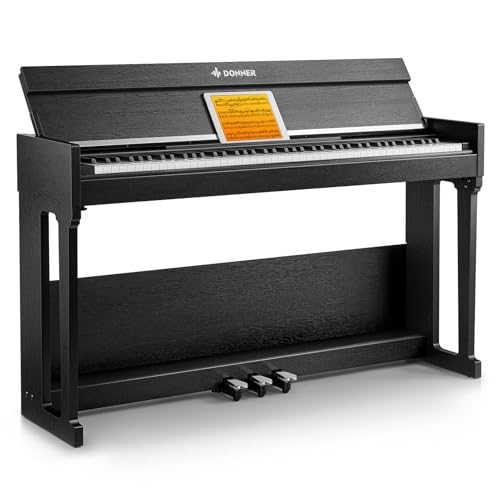
- Updated DDP-90 Pro: This upgraded digital piano now features 238 tones, 200 rhythms, and 100 songs, giving players far more options for practice, composition, and performance
- First Digital Piano For Modern Living Space: DDP-90 Pro is smaller and lighter than the normal piano without affecting sound quality, specially designed for the Compact Family Room. With a...
The Donner DDP-90 is a “furniture-style” piano, which is a major departure from the portable nature of the Roland. If you know for a fact that your piano will never leave your living room and you want it to look like a piece of high-end decor, the Donner is a strong contender. It comes with a built-in stand and three pedals, offering a very traditional look. However, we found that the key action on the Donner, while weighted, lacks the sophisticated “escapement” feel and the nuanced sound modeling of the Roland FP-30X 88-Note Digital Piano. It’s an excellent “furniture” choice for beginners, but serious players will likely prefer the Roland’s superior sound engine.
2. Roland GO:PIANO88PX Portable Digital Piano
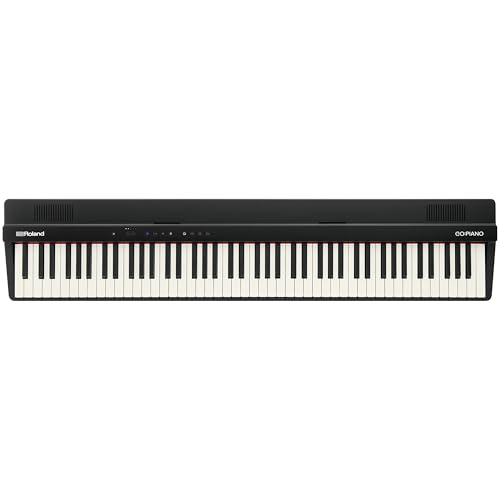
- Premium Piano Performance: Compact and portable instrument delivers premium piano performance in a lightweight package
- 88 Full-Size Keys: Full-size keyboard enables playing everything from pop to classical music with authentic feel
If the 47-pound weight of the FP-30X is a dealbreaker for you, the Roland GO:PIANO88PX is the answer. It is significantly lighter and can even be powered by batteries, making it the ultimate choice for street performers or students who travel frequently. However, there is a trade-off: to achieve this weight, the GO:PIANO88PX does not have fully weighted hammer-action keys. Instead, it uses a “semi-weighted” feel. While it’s much better than a standard keyboard, it won’t build the same finger strength as the Roland FP-30X 88-Note Digital Piano. It’s the perfect secondary piano for a pro or a primary piano for a traveler.
3. Alesis Recital Pro 88-Key Digital Piano with Hammer Action
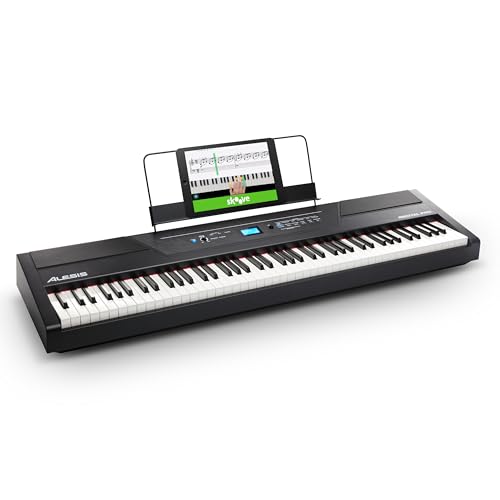
- A Digital Piano That’s Tailored to You - Feature-packed Electric keyboard with 88 premium full-sized weighted hammer action keys with adjustable touch response to suit your preferred playing style
- Premium Sounds - 12 voices (Incl. Acoustic Piano, Electric Piano, Organ, Synth, and Bass), built-in FX - Chorus, Modulation, Reverb, and two built in 20W speakers for clear, room-filling sound
The Alesis Recital Pro is the “budget-friendly” alternative. It offers 88 hammer-action keys at a significantly lower price point than the Roland. It’s a fantastic entry-level instrument that covers all the basics, including a record mode and lesson mode. However, in our side-by-side comparison, the Roland FP-30X 88-Note Digital Piano wins comfortably in the sound quality department. The 20-watt speakers of the Alesis are decent, but they lack the richness and 256-note polyphony of the Roland. If your budget is tight, the Alesis is a solid workhorse, but the Roland is the instrument you’ll keep for a decade.
Final Verdict: Is the Roland FP-30X 88-Note Digital Piano Right for You?
After weeks of testing and comparing, our verdict is clear: the Roland FP-30X 88-Note Digital Piano is the gold standard for mid-range digital pianos. It successfully bridges the gap between affordable “starter” keyboards and professional-grade stage pianos. Its greatest strengths lie in its PHA-4 keyboard action, which offers a tactile realism rarely seen at this price point, and its SuperNATURAL sound engine, which delivers a rich, emotive tone that responds to the subtlest nuances of your playing. While the minimalist interface might take a few days to master, the integration with the Roland Piano App makes it a joy to use once you’re acclimated.
We recommend this piano to any serious beginner who wants to start their journey on the right foot, as well as intermediate players who need a high-quality, space-saving practice instrument. It’s a “buy once, cry once” kind of investment—you might pay a bit more upfront than you would for a budget brand, but the durability, touch, and sound quality will prevent you from needing an upgrade for many years to stream. If you’re ready to take your musical expression to the next level, you should start your musical journey with this professional-grade instrument today and experience the Roland difference for yourself.
Last update on 2026-10-16 / Affiliate links / Images from Amazon Product Advertising API