
Donner DDP-90 88-Key Weighted Digital Piano Review: The Perfect Marriage of Compact Design and Authentic Action
For many aspiring pianists and seasoned musicians living in modern apartments or smaller homes, the dream of owning a traditional upright piano often crashes against the cold reality of floor space and budget. I have spent years evaluating instruments that promise “authentic feel” only to deliver a springy, plastic experience that feels more like a toy than a tool for expression. The frustration of practicing on a non-weighted keyboard is real; you lose the nuance of touch, the strength in your fingers, and the emotional connection to the music. Finding an instrument that bridges the gap between a portable keyboard and a bulky acoustic piano is the ultimate goal. When we first sat down to conduct this Donner DDP-90 88-Key Weighted Digital Piano Review, we were looking for that elusive “middle ground”—a piano that fits against a narrow hallway wall but responds like a concert grand. Failing to find the right weighted action can stifle a beginner’s progress and bore a professional, making the choice of a digital piano one of the most critical investments a musician can make.
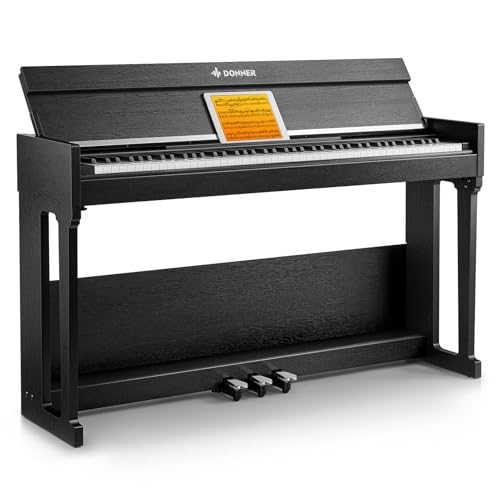
- Updated DDP-90 Pro: This upgraded digital piano now features 238 tones, 200 rhythms, and 100 songs, giving players far more options for practice, composition, and performance
- First Digital Piano For Modern Living Space: DDP-90 Pro is smaller and lighter than the normal piano without affecting sound quality, specially designed for the Compact Family Room. With a...
What to Consider Before Buying a Digital Piano
A digital piano is more than just an item; it’s a key solution for musicians who need the utility of an electronic instrument without sacrificing the soul of an acoustic one. In the modern era, these instruments solve the logistical nightmares of tuning, humidity control, and sheer weight that come with traditional pianos. They provide a gateway to silent practice through headphones and the ability to interface with modern recording software, making them indispensable for the contemporary home studio. Whether you are a student learning your first scales or an amateur musician looking to rekindle a lost passion, a quality digital piano offers the consistency and versatility that an old, out-of-tune upright simply cannot match.
The ideal customer for this type of product is someone facing limited square footage who still demands a full 88-key range and weighted hammer action. It is perfect for parents of students who need a “real” feeling instrument to develop proper technique, or for hobbyists who want an elegant piece of furniture that doesn’t dominate the room. However, it might not be suitable for those who require ultimate portability for frequent gigging, as the furniture-style stand is designed for stability rather than constant travel. For those people, a slab-style portable keyboard might be a better fit.
Before investing, consider these crucial points in detail:
- Dimensions & Space: Most digital pianos with furniture stands require a dedicated “footprint” along a wall. You should measure your intended space carefully, looking specifically for the depth of the unit. A slim profile, like the 14-inch depth found on some modern models, can be the difference between a piano fitting in a hallway or blocking a doorway entirely.
- Capacity/Performance: Look for “weighted hammer action” rather than “semi-weighted.” This ensures the keys have the physical resistance of a real piano, which is vital for building finger strength. Additionally, check the polyphony count; 128-note polyphony is the standard for ensuring that complex pieces with heavy pedaling don’t have notes “cut off” prematurely.
- Materials & Durability: The quality of the cabinet matters. While many affordable options use particle board, look for finishes that resist scratching and hinges that are robust. A slow-closing lid is a premium feature that protects both the keys from dust and small fingers from accidental slams, adding significant long-term value to the instrument.
- Ease of Use & Maintenance: Unlike acoustic pianos, digital models require zero tuning. However, you should consider the simplicity of the interface. Some users prefer a “clean” look without dozens of buttons, focusing instead on a singular, high-quality piano tone. Maintenance usually involves nothing more than a light dusting and ensuring the electronics stay dry.
While the Donner DDP-90 88-Key Weighted Digital Piano is an excellent choice, it’s always wise to see how it stacks up against the competition. For a broader look at all the top models, we highly recommend checking out our complete, in-depth guide:
Discover the Best Portable Digital Pianos: Our Top 10 Expert Picks for Every Skill Level

- Acoustic Piano Feel - Touch-sensitive keys allow for true expression and dynamic performance. The weighted action replicates the acoustic piano experience


- 🎹【Weighted Digital Piano】- The digital piano with 88 SEMI-Weighted Keys simulates the real touch of playing the piano. Half-weighted keys reduce the sense of strength than full-weighted keys...

- The Ultimate Practice Keyboard for Beginners - Portable, lightweight, and easy-to-use music keyboard with built-in speakers delivering rich sound for an authentic and inspiring playing experience
First Impressions: Elegance and the Joy of Unboxing the Donner DDP-90 88-Key Weighted Digital Piano
Upon unboxing the Donner DDP-90 88-Key Weighted Digital Piano, the first thing that strikes you is the sheer elegance of the satin black finish. It doesn’t scream “electronic gadget”; it whispers “musical instrument.” The assembly process is refreshingly straightforward. We found that it took about 30 minutes to put together the four main pieces of the base—the legs, pedal bar, and backboard. The construction feels sturdy, and the wood-grain texture of the stand gives it a premium look that punches way above its price point. It’s an instrument you can see its full feature set and user reviews to understand just how much value is packed into this slim frame.
What sets this apart from previous Donner models and many market leaders is the “no-frills” philosophy. There aren’t fifty flashing lights or a cheap LCD screen. Instead, you get a clean, upright-inspired aesthetic with a flip-up key cover that protects the ivory-feel keys. It’s designed for the purist who wants to sit down and play without navigating menus. The compact design is perhaps its greatest strength; at only 13.7 inches deep, it sits flush against the wall, making it one of the most space-efficient 88-key pianos we have tested. Before you commit, you might want to check the latest price and availability to see if it fits your current budget.
What We Like
- Authentic 88-key weighted hammer action with a satisfying “ivory-feel” texture.
- Incredibly slim and compact cabinet design, perfect for small apartments.
- The slow-closing flip cover adds a touch of class and protects the keyboard.
- Integrated metal triple-pedal system that mimics a real acoustic piano’s response.
What We Didn’t Like
- The internal speakers are clear but lack the deep resonance of high-end consoles.
- Packaging can be bulky and heavy, requiring two people for safe delivery and setup.
Deep Dive: Performance Analysis of the Donner DDP-90 88-Key Weighted Digital Piano
The Authenticity of Weighted Hammer Action
The core of any digital piano is the action, and the Donner DDP-90 88-Key Weighted Digital Piano delivers a surprisingly sophisticated experience. When we played through several classical pieces, the weight of the keys felt consistent and purposeful. Unlike semi-weighted keyboards that “push back” with a spring-like force, this piano uses actual hammer action. This means the lower octaves feel slightly heavier than the higher ones, just as they do on a physical grand piano. We found the ivory-feel texture on the keycaps to be a brilliant addition; it provides a subtle grip that prevents fingers from slipping during fast scales or humid practice sessions.
One of the most impressive aspects we noted during testing was the dynamic response. The sound samples are pulled from real acoustic grand pianos, and the Donner DDP-90 88-Key Weighted Digital Piano responds accurately to the velocity of your strike. If you play softly, you get a mellow, dampened tone; strike the keys with force, and the brightness and volume increase proportionally. For anyone serious about learning, this level of touch sensitivity is non-negotiable. You can a feature that really sets it apart is how well this action prepares a student for a transition to a “real” piano later on.
Space-Saving Cabinet and Modern Design
The physical footprint of the Donner DDP-90 88-Key Weighted Digital Piano is a masterclass in industrial design for musicians. Many digital pianos in this category are either too “portable” (looking like a plastic slab on a shaky X-stand) or too “console” (taking up half the living room). This model finds the “Goldilocks” zone. We measured the depth at just under 14 inches, which allowed us to place it in a narrow corridor without obstructing foot traffic. The satin black finish is understated and fits well with both modern and traditional decor.
The inclusion of the flip-up key cover is a feature we cannot praise enough. Not only does it protect the delicate sensors and keys from dust and pet hair, but it also gives the instrument the look of a miniature upright piano when closed. We also tested the “slow-closing” mechanism, and it works flawlessly, preventing the lid from slamming shut—a must-have for households with curious children. This focus on the “furniture” aspect of the instrument makes it feel like a permanent part of the home rather than a piece of tech that will eventually be hidden in a closet. To see how it looks in a real home setting, you should explore more detailed product images.
Sound Quality and the Triple Pedal System
While the speakers are compact, the sound engine within the Donner DDP-90 88-Key Weighted Digital Piano is remarkably clear. It features a 128-note polyphony, which we tested by playing complex jazz chords while holding the sustain pedal. We experienced no “note dropout,” which is a common failing in cheaper digital pianos. The sound is characterized by a bright, crisp upper end and a solid, if slightly thin, bass. However, when we plugged in a high-quality pair of studio headphones via the 6.35mm jack, the audio experience was transformed. The stereo imaging of the grand piano samples became much more apparent, providing an immersive practice environment that won’t disturb the neighbors.
The integrated metal triple-pedal system (Soft, Sostenuto, and Sustain) is built directly into the stand. In our evaluation, the pedals had just the right amount of tension. They don’t feel like “on/off” switches; they allow for some degree of nuance, particularly the sustain pedal. This is critical for intermediate players who are beginning to experiment with half-pedaling techniques. This level of hardware integration is rare at this price point, making the Donner DDP-90 88-Key Weighted Digital Piano a formidable contender for anyone who wants a complete setup out of the box.
Connectivity and Versatility
In the modern age, a piano shouldn’t exist in a vacuum. We were pleased to find that the Donner DDP-90 88-Key Weighted Digital Piano supports a variety of connections that extend its utility. The USB-MIDI port allowed us to connect the piano to a tablet and a PC effortlessly. We used it to trigger high-end virtual instruments (VSTs) in a digital audio workstation, and the latency was virtually non-existent. This makes it a great “master controller” for a home studio as well as a standalone piano. Furthermore, the support for U-disk music playing means you can plug in a thumb drive and play along with your favorite tracks, which is an excellent tool for ear training and improvisation.
We also appreciated the dual headphone jacks, which are perfect for teacher-student sessions where both parties need to hear the output clearly without external noise. The inclusion of an audio input/output also means you can run the piano into a larger PA system if you ever need to perform in a church or a small hall. It’s a versatile powerhouse hidden behind a minimalist facade. If you are curious about its technical compatibility, you can verify all the technical specifications here.
What Other Users Are Saying
The general sentiment surrounding the Donner DDP-90 88-Key Weighted Digital Piano is overwhelmingly positive, with users frequently citing its value for money and aesthetic appeal. We found that many owners are “returning” pianists—people who gave up their acoustic pianos due to moves and found this to be the perfect replacement. One user noted, “I gave up my real piano years ago because it was just too hard to move… Found I hated the sound and feel of a keyboard, so I tried this. Love it! Wish I’d had it sooner.” This echoes our own findings regarding the transition from acoustic to digital.
Another common theme in user feedback is the ease of assembly. As one customer mentioned, “Assembly was easy, took only 10 minutes to get everything going… Looks super nice!” However, it’s not without its minor criticisms. A few users reported that the high octaves can sometimes sound a bit “plinky” or electronic, and some mentioned that the packaging could be improved to prevent shipping damage. One user shared a story of receiving a damaged unit but noted that “customer service reached out and resolved the issue,” which speaks well of the brand’s support. Overall, the consensus is that for the price, it is one of the most elegant and functional options on the market today. You can read more real-world experiences from other buyers to see if their needs align with yours.
How the Donner DDP-90 88-Key Weighted Digital Piano Compares to the Competition
When choosing a digital piano, it’s vital to see how it stands against industry giants. While the Donner DDP-90 88-Key Weighted Digital Piano wins on cabinetry and slim design, other brands offer different strengths.
1. Yamaha P45B 88-Key Weighted Digital Piano
- Acoustic Piano Keyboard Feel – Touch-sensitive keys allow for dynamic performances. The 88-key weighted keyboard action replicates the acoustic piano experience
- Variety of Instrument Sounds – Choose from 10 unique Voices, including the richness and resonance of a Yamaha grand piano, with full immersive sound and deep bass
The Yamaha P45B is the “industry standard” for entry-level weighted pianos. In comparison to the Donner DDP-90 88-Key Weighted Digital Piano, the Yamaha P45B is a “slab” style piano, meaning it doesn’t come with a built-in furniture stand or the triple pedal system. While the Yamaha’s “GHS” (Graded Hammer Standard) action is legendary for its reliability and realistic feel, you have to purchase a separate stand and pedal if you want a permanent home setup. This makes it more portable but potentially more expensive once you add the necessary accessories. It’s a great choice for someone who needs to move their piano between a home and a practice space frequently.
2. Yamaha P71 88-Key Weighted Digital Piano
- Acoustic Piano Feel - Touch-sensitive keys allow for true expression and dynamic performance. The weighted action replicates the acoustic piano experience
- Elevated Sound - Choose from 10 unique Voices, including the richness and resonance of a Yamaha grand piano, with full dynamic sound and deep bass
The Yamaha P71 is essentially a retail-specific version of the P45, offering the same high-quality weighted action in a slim, portable package. Like its sibling, it lacks the elegant cabinet and flip-cover of the Donner DDP-90 88-Key Weighted Digital Piano. However, the P71 is often praised for its “pure” piano sound. If you are a minimalist who prioritizes brand legacy and internal sound engine over the physical appearance of the instrument as furniture, the P71 is a fantastic alternative. However, for a living room centerpiece, the Donner’s design is much more appealing.
3. Roland GO:PIANO88PX Portable Digital Piano
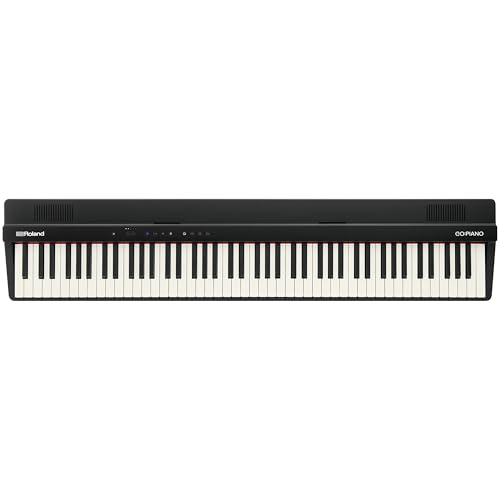
- Premium Piano Performance: Compact and portable instrument delivers premium piano performance in a lightweight package
- 88 Full-Size Keys: Full-size keyboard enables playing everything from pop to classical music with authentic feel
The Roland GO:PIANO88PX takes a different approach. It is designed for ultimate portability, featuring battery-powered operation and Bluetooth connectivity. While it has 88 keys, they are “semi-weighted,” which means they do not have the same authentic hammer-action resistance found in the Donner DDP-90 88-Key Weighted Digital Piano. This makes the Roland much lighter to carry, but it is less ideal for students who need to develop proper piano technique. We recommend the Roland for travelers or buskers, but for home practice and a realistic feel, the Donner is the superior choice.
Final Verdict: Is the Donner DDP-90 88-Key Weighted Digital Piano Right for You?
After our extensive time with the Donner DDP-90 88-Key Weighted Digital Piano, we can confidently say that it is a standout choice in the entry-to-mid-level digital piano market. It solves the primary problem of modern musicians: how to get a full-sized, realistic-feeling instrument into a small living space without sacrificing style. Its strengths lie in its weighted hammer action, its remarkably slim 13.7-inch profile, and the included triple-pedal system which is often a costly add-on with other brands. While the internal speakers may not fill a concert hall, they are more than adequate for home practice, and the headphone output provides a rich, private experience for those midnight practice sessions.
We recommend this piano to beginners who want to start their musical journey with the right “feel,” as well as to experienced players who need a secondary practice instrument that looks as good as it sounds. It is a beautiful, functional piece of furniture that just happens to be a high-quality musical instrument. If you are looking for a piano that balances tradition with modern space-saving needs, the search ends here. We highly suggest you order the Donner DDP-90 today to begin your musical journey and experience the difference that true weighted action can make in your playing.
Last update on 2026-10-17 / Affiliate links / Images from Amazon Product Advertising API