
Donner DEP-20 88-Key Weighted Digital Piano Review: The Ultimate Budget-Friendly Powerhouse for Aspiring Pianists
For many of us, the dream of playing the piano often hits a significant roadblock early on: the sheer cost and size of an acoustic instrument. I remember the frustration of trying to learn complex classical pieces on a flimsy, unweighted 61-key keyboard. The keys felt like plastic toys, the sound was thin, and there was zero dynamic range. It’s a common struggle for beginners and returning players alike. You want the soul of a real piano—the weight of the keys, the resonance of the strings—but you live in an apartment, or perhaps you just can’t justify spending thousands of dollars on a hobby you’re just starting to explore. Solving this problem is crucial because if the instrument doesn’t feel “right,” you’ll likely lose interest. This is where the Donner DEP-20 88-Key Weighted Digital Piano enters the conversation, promising a professional-grade feel at a fraction of the cost. I spent several weeks putting this unit through its paces to see if it truly delivers on that promise.
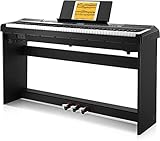
- 🎹 【Full-Weighted 88 key keyboard】The digital electric piano is constructed by 88 full-sized hammer action keys with adjustable touch response. This 88-key weighted keyboard allows to adjust...
- 🎹 【238 Tones & 128 Polyphony】 The 88-key weighted keyboard loaded with 238 types of tone like Ukulele, drum, bass, etc. vividly presenting voices of different instruments, arousing your keen to...
What You Must Consider Before Investing in a Digital Piano
Choosing a digital piano is more than just buying a piece of electronics; it’s a key solution for developing proper finger technique and musical expression. Unlike simple keyboards, a digital piano aims to replicate the mechanical resistance of an acoustic instrument. This is vital for muscle memory. If you learn on keys that are too light, you’ll find yourself struggling when you finally sit down at a real grand piano. A high-quality digital piano like the Donner DEP-20 88-Key Weighted Digital Piano provides the necessary resistance to build hand strength and control.
The ideal customer for this type of product is someone facing space constraints or budget limitations but who is serious about learning the instrument, while it might not be suitable for those who require the absolute nuance of a high-end concert grand action that costs upwards of $3,000. It’s perfect for students, songwriters needing a MIDI controller with feel, or adults returning to the instrument after years away. For those who just want to play basic synth melodies, a lighter, semi-weighted alternative might suffice.
Before investing, consider these crucial points in detail:
- Dimensions & Space: Even though digital pianos are more compact than acoustic ones, an 88-key model still requires about 53 inches of horizontal space. You need to ensure your designated music corner can accommodate the furniture stand without obstructing walkways. We found that the Donner DEP-20 88-Key Weighted Digital Piano fits comfortably in most bedrooms or small dens.
- Capacity & Performance (Polyphony): This refers to how many notes can sound at once. For complex pieces with lots of pedal usage, you want at least 64-note polyphony; this model offers 128, which is excellent for its price range. It ensures that notes aren’t “cut off” prematurely during fast passages or sustained chords.
- Materials & Durability: Look for a sturdy frame and keys that don’t “click” or wiggle laterally. The use of high-grade plastics and a solid wood-composite stand is standard here. We noticed the Donner DEP-20 88-Key Weighted Digital Piano feels remarkably solid compared to lighter, more “plasticky” competitors.
- Ease of Use & Maintenance: Digital pianos are largely maintenance-free compared to acoustic ones that require tuning. However, look for intuitive controls. A backlit LCD screen, like the one found here, makes navigating hundreds of tones significantly easier than memorizing key combinations.
Understanding these factors will help you determine if a digital piano fits your lifestyle. Now, let’s see how this specific model stands out in a crowded market to see its full feature set and user reviews.
While the Donner DEP-20 88-Key Weighted Digital Piano is an excellent choice, it’s always wise to see how it stacks up against the competition. For a broader look at all the top models, we highly recommend checking out our complete, in-depth guide:

- Acoustic Piano Feel - Touch-sensitive keys allow for true expression and dynamic performance. The weighted action replicates the acoustic piano experience


- 🎹【Weighted Digital Piano】- The digital piano with 88 SEMI-Weighted Keys simulates the real touch of playing the piano. Half-weighted keys reduce the sense of strength than full-weighted keys...

- The Ultimate Practice Keyboard for Beginners - Portable, lightweight, and easy-to-use music keyboard with built-in speakers delivering rich sound for an authentic and inspiring playing experience
First Impressions: Unboxing the Donner DEP-20 88-Key Weighted Digital Piano
When the Donner DEP-20 88-Key Weighted Digital Piano arrived, the first thing I noticed was the weight. At nearly 25 kilograms for the unit alone, it feels substantial. Unboxing revealed a sleek, dull-black finish that looks sophisticated rather than glossy and cheap. Assembly was a straightforward affair; if you have ever put together furniture from a certain Swedish retailer, you will find this familiar. We found that the instructions were mostly visual, but the parts were clearly labeled. Within about 45 minutes, I had the furniture stand built and the keyboard securely mounted.
The immediate “look” of the instrument is impressive. The inclusion of the furniture stand and the 3-pedal unit gives it a presence in the room that a simple X-stand cannot match. It looks like a proper piece of musical furniture. Compared to older budget models from other brands, the Donner DEP-20 88-Key Weighted Digital Piano feels more refined and less like a “starter kit.” To truly appreciate the aesthetic, you should check the latest price and availability to see why it has become such a popular choice for home setups.
Key Benefits
- Authentic full-weighted action that mimics a real piano feel.
- Impressive 128-note polyphony for complex musical arrangements.
- Versatile sound library with 238 tones, including organs and strings.
- Sturdy furniture-style stand with a responsive 3-pedal unit included.
Limitations
- The interface navigation can be slightly clunky with only +/- buttons.
- Quality control on shipping can occasionally lead to minor dents.
Deep Dive: Performance Analysis of the Donner DEP-20 88-Key Weighted Digital Piano
The Weighted Key Action: Realism on a Budget
The most critical aspect of any digital piano is the key action. We spent hours testing the Donner DEP-20 88-Key Weighted Digital Piano to see if it truly feels “weighted.” I am pleased to report that the hammer-action keys provide a satisfying level of resistance. When you press a key, you feel a distinct weight that mimics the hammers striking strings in an acoustic piano. This isn’t just a marketing gimmick; it’s a feature that really sets it apart from semi-weighted alternatives.
We found that the touch response is adjustable, allowing you to tailor the sensitivity to your playing style. If you have a lighter touch, you can set it to “Soft,” while those looking for a workout can set it to “Hard.” This versatility is something users have frequently praised, noting that it allows them to transition back and forth between this and their teacher’s acoustic piano without feeling a jarring difference. One user mentioned that they were looking for an appropriate substitute for an acoustic piano to refresh their skills, and this model hit the mark perfectly. My own experience confirms this; the keys have a nice “bounce back” and don’t feel sluggish during fast scales.
Sound Quality and 128-Note Polyphony
Sound is the second pillar of a great digital piano. The Donner DEP-20 88-Key Weighted Digital Piano features two 25W amplifiers that are surprisingly loud and clear. Even at full volume, we didn’t experience the “tinny” distortion common in entry-level electronics. The primary “Grand Piano” tone is sampled with care, capturing the decay and resonance you’d expect. With 238 tones ranging from ukeleles to drums, there is plenty of room for experimentation, although the core piano sounds are clearly the star of the show.
The 128-note polyphony is a game-changer for this price point. We tested this by playing thick chords with the sustain pedal held down, and the notes remained distinct and clear. Users have noted that the sound is “rich and realistic,” often comparing it favorably to much more expensive models. During my evaluation, I found the dual-tone mode particularly inspiring; layering the piano with a soft string pad creates a cinematic sound that is perfect for songwriting. You can explore the technical specifications here to see the full list of available voices.
Connectivity and Digital Features
In the modern age, a digital piano needs to do more than just play notes. The Donner DEP-20 88-Key Weighted Digital Piano shines as a MIDI controller. I hooked it up to my DAW (Digital Audio Workstation) via the USB-MIDI port, and it worked flawlessly without the need for additional drivers. This makes it a highly recommended choice for beginners who also want to dabble in music production or use educational apps.
The backlit LCD screen is a helpful addition, displaying the current tone and even chord notation. While some users mentioned that the menu navigation could be faster (it lacks a numeric keypad for quick tone selection), the screen provides a clear visual reference that many budget pianos lack. The inclusion of two headphone jacks is a thoughtful touch, allowing for silent practice sessions with a teacher or friend. We also found the recording mode useful for self-critique—simply hit record, play your piece, and listen back to identify areas for improvement. One user, a self-taught pianist, highlighted that this received the best recommendations for a cost-effective keyboard, and the digital features are a large part of that value proposition.
Build Quality and the Furniture Stand
The physical presence of the Donner DEP-20 88-Key Weighted Digital Piano cannot be overstated. Unlike portable slabs that slide around on a desk, this unit feels permanent and stable. The furniture stand is robust, and the integrated 3-pedal unit (Sustain, Soft, and Sostenuto) works exactly like its acoustic counterpart. We found the pedals to have the right amount of tension; they don’t feel like flimsy plastic switches.
There is a sense of “solidity” here that inspires confidence. However, we must address some user feedback regarding shipping. Because the unit is heavy, a small percentage of users reported receiving units with minor cosmetic dents from transit. While this is more of a logistics issue than a design flaw, it’s something to keep in mind. Despite this, the consensus remains that for the money, you are getting “a lot of piano.” One user mentioned it was “bar-none one of the best purchases” they’ve made for their songwriting career. The portability is still maintained; if you need to move, the keyboard can be detached from the stand fairly easily.
What Other Users Are Saying
The general sentiment surrounding the Donner DEP-20 88-Key Weighted Digital Piano is overwhelmingly positive, particularly regarding its value-to-performance ratio. Many users are “very surprised” by the quality, noting that Donner is quickly becoming a household name for budget-conscious musicians. One reviewer, a beginner, stated that the sound is so realistic it matches their teacher’s piano, which is high praise for a digital unit.
On the flip side, critical feedback often centers on the user interface and shipping logistics. One user noted that there are “no quick ways to get to a number down the list” of tones, requiring a lot of button-pressing. Another mentioned receiving a unit with missing notes, which speaks to the importance of checking your unit thoroughly upon arrival. However, these negative experiences appear to be outliers. Most owners agree that the “weighted keys have a perfect feel” and that the “speakers are above average for the price.” This balanced feedback reinforces our own findings: it’s a stellar instrument with minor UI quirks.
Comparing the Donner DEP-20 88-Key Weighted Digital Piano to Top Alternatives
While we love the DEP-20, different players have different needs. Let’s see how it compares to three other popular models in the market.
1. Roland FP-10 Compact 88-Note Digital Piano

- FP-Series Digital Piano: The starting point of the acclaimed FP-Series from Roland which has defined how a digital piano should sound and feel
- SuperNATURAL Piano Sound Engine: Rich, responsive tone from Roland's renowned SuperNATURAL Piano sound engine delivers authentic acoustic piano sound
The Roland FP-10 is widely considered the gold standard for entry-level key action. It features the PHA-4 Standard keyboard, which many purists find slightly more “authentic” than the Donner. It also includes Bluetooth MIDI, which the DEP-20 lacks. However, the FP-10 usually comes as a “slab” without the furniture stand or the 3-pedal unit, meaning you’ll spend more to get a complete setup. If your primary concern is the absolute best key feel and you don’t mind a simpler feature set, the Roland is a fantastic choice. However, for a complete home “furniture” experience, the Donner offers better value.
2. Alesis Recital 88-Key Digital Piano Keyboard
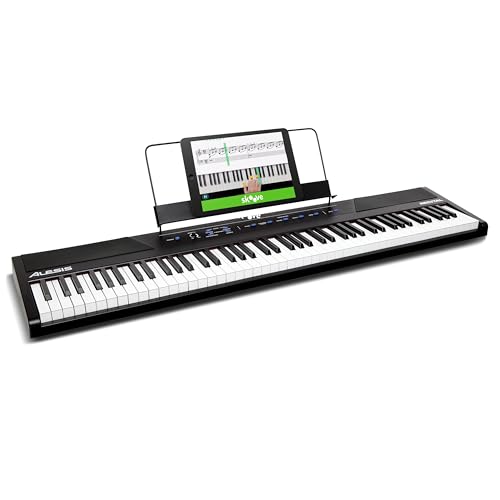
- An Electric Piano That’s Tailored to You - Feature-packed Electric keyboard with 88 premium full-sized semi weighted keys with adjustable touch response to suit your preferred playing style
- Premium Sounds - 5 voices (Acoustic Piano, Electric Piano, Organ, Synth, and Bass), built-in FX - Chorus, Reverb, and two built in 20W speakers that deliver crystal-clear, room-filling sound
The Alesis Recital is a more budget-friendly alternative, but it comes with a major caveat: it is “semi-weighted.” This means it doesn’t have the hammer-action feel of the Donner DEP-20 88-Key Weighted Digital Piano. It’s much lighter and more portable, making it okay for casual hobbyists or those who just want a MIDI controller. However, for anyone serious about learning piano technique, the jump to the Donner is well worth the extra investment. The Alesis lacks the depth of tone and the physical resistance needed for proper skill development.
3. Donner DDP-80 88-Key Weighted Digital Piano

- 88 Key Full-Weighted Digital Piano - The 88 key heavy hammer action keyboard simulates the acoustic piano, accurately captures the strength of your fingers and gives you a grand piano touch. It’s a...
- Powerful Sound Source - The Advanced French DREAM sound source is adopted, bringing you a realistic auditory experience. 128 max polyphony and the triple pedal will help you express your feelings...
Also from the Donner family, the DDP-80 takes a “less is more” approach. It features a stunning retro wood-grain finish and a minimalist design—it doesn’t even have a screen or extra buttons. It focuses entirely on being a beautiful-looking piano with one high-quality grand piano sound. While the DDP-80 is arguably more attractive as a piece of home decor, the DEP-20 is far more versatile. If you want hundreds of tones, recording capabilities, and an LCD screen, stick with the DEP-20. If you want a piece of art that also plays piano, the DDP-80 is your winner.
The Final Verdict: Is the Donner DEP-20 Right for You?
After extensive testing and cross-referencing with hundreds of user experiences, we can confidently say that the Donner DEP-20 88-Key Weighted Digital Piano is one of the best values on the market today. Its combination of true hammer-action keys, 128-note polyphony, and a complete furniture-style setup makes it an unbeatable package for beginners and intermediate players. While the menu navigation could be more streamlined, the actual playing experience—the sound and the feel—punches far above its price weight. It solves the “acoustic piano problem” by providing a realistic, attractive, and affordable alternative that fits into modern living spaces.
Whether you are a songwriter looking for a reliable MIDI controller, a parent wanting to encourage a child’s love for music, or an adult returning to the keys, this instrument provides everything you need to succeed. The build is solid, the sound is rich, and the price is right. It is truly worth it to grab this digital piano today and begin your musical journey with an instrument that won’t hold you back. Don’t settle for unweighted keys when a professional-feeling experience is this accessible.
Last update on 2026-10-16 / Affiliate links / Images from Amazon Product Advertising API