
Electro-Harmonix Slap-Back Echo Analog Delay Review: The Relentless Quest for Vintage Snap
There is a specific, elusive “thwack” that defines the golden era of rock and roll. Whether it’s the early recordings of Elvis at Sun Studios or the surf-rock drenched tones of the 1960s, that single, rapid-fire repeat—the slap-back—is more than just a delay; it’s an architectural element of the guitar’s identity. We have spent years cycling through complex digital workstations and multi-tap monsters, only to realize that sometimes, more options lead to less inspiration. The problem many of us face is “option paralysis.” We want that instant vintage vibe, but we find ourselves scrolling through menus instead of playing. If you’ve ever felt your tone was too dry or lacked that percussive “bounce,” you’ve likely searched for a solution that provides immediate gratification without occupying half your pedalboard. This is precisely where the Electro-Harmonix Slap-Back Echo Analog Delay enters the conversation, promising to solve the complexity crisis with pure, analog simplicity.

- Time switch with 45ms, 65ms, and 100ms delay times
- Up to 20dB of boost
Navigating the Echo Chamber: What to Look for in a Delay Pedal
An Electric Guitar Delay & Reverb Effects unit is more than just an item; it’s a key solution for guitarists looking to add depth, dimension, and rhythmic complexity to their sound. Without these effects, a guitar signal can often feel flat and “two-dimensional,” especially in a recording environment or a dry room. Delay, specifically, simulates the sound of your notes bouncing off walls, creating a sense of space that can range from a subtle thickening of the note to psychedelic soundscapes that evolve over time. For the working musician, a good delay pedal acts as a safety net, filling the gaps in your playing and adding a professional “sheen” to your overall output.
The ideal customer for this type of product is someone facing the limitations of a dry signal—perhaps a blues player wanting to emulate Chicago-style grit, or a rockabilly enthusiast needing that 1950s rhythmic pulse. It’s also perfect for the minimalist who values board real estate and prefers “set-and-forget” controls. However, it might not be suitable for those who require long, cascading delays for ambient swell music or those who need tap-tempo synchronization for complex rhythmic patterns. In those cases, a digital multi-delay might be a better fit.
Before investing, consider these crucial points in detail:
- Dimensions & Space: In the modern era of crowded pedalboards, every millimeter counts. You should look for a pedal that offers high-quality circuitry without a massive footprint. Micro or “Pico” sized pedals are excellent for squeezing into tight spots, provided they don’t sacrifice sound quality for size.
- Capacity/Performance: In the context of delay, performance is measured by “delay time” and “fidelity.” Analog pedals use Bucket Brigade Devices (BBD) which provide a warmer, darker repeat that decays naturally, whereas digital units offer crisp, exact copies of your signal. Consider which texture fits your genre better.
- Materials & Durability: Guitar pedals live a hard life on the floor, being stomped on repeatedly. We look for heavy-duty metal chassis and high-quality switches. A plastic housing is a red flag for any touring musician.
- Ease of Use & Maintenance: Long-term care usually involves ensuring clean power and occasional cleaning of the jacks. However, the real “maintenance” is in the usability—if a pedal requires a manual every time you want to change a setting, it’s not doing its job in a live setting.
While the Electro-Harmonix Slap-Back Echo Analog Delay is an excellent choice, it’s always wise to see how it stacks up against the competition. For a broader look at all the top models, we highly recommend checking out our complete, in-depth guide:

- Dual Effects Design: Digital Delay and Plate Reverb 2 effects combined in 1 guitar effects pedal for versatile sound options, compact dimensions for easy integration into pedalboards

- The Flamma Ekoverb features 3 combinations of delay and reverb effects that consist of a Reverse Delay/Swell Reverb setting, Analog Echo Delay/Mod Reverb, and a classic Analog Delay/Shimmer Reverb...

- 🎸🎸【9 AMP Models & 8 IR CAB】LEKATO Multi-functional Guitar Effects Pedal with Distortion Overdrive,Delay,Reverb effects, including 9 Amp preamps and 8 classic IR cabinets body model, Support...

First Impressions: The Pico Revolution
When we first pulled the Electro-Harmonix Slap-Back Echo Analog Delay out of its box, the immediate reaction was surprise at its stature. This is a “Pico” sized pedal, meaning it is significantly smaller than the standard EHX Nano chassis. Despite its diminutive size, it feels remarkably substantial. Weighing in at 1.1 pounds, it has that “built like a tank” heft we’ve come to expect from the brand. The layout is refreshingly minimalist: two knobs (Gain and Blend) and a three-way toggle switch. You can see its full feature set and user reviews to understand just how much EHX managed to pack into this tiny footprint.
Comparing it to market leaders, it’s clear EHX is targeting the “vintage reissue” enthusiast. While other brands are moving toward screens and presets, the Electro-Harmonix Slap-Back Echo Analog Delay leans into its 1970s roots. It’s a specialized tool designed to do one thing perfectly rather than ten things adequately. From the moment you click the true-bypass switch, you realize this isn’t just a toy; it’s a professional-grade analog circuit that respects your dry signal while adding a beautiful, bucket-brigade warmth to the repeats.
Key Benefits
- Pure Bucket-Brigade (BBD) circuitry for authentic, warm analog repeats.
- Incredibly compact “Pico” footprint that saves massive pedalboard space.
- Built-in 20dB boost via the Gain knob, acting as a secondary preamp.
- Simple, intuitive three-way toggle for instant classic delay times.
Drawbacks
- Limited to three fixed delay times (45ms, 65ms, 100ms); no fine-tuning dial.
- Potential for shipping damage to the collectible box, as noted by some users.
The Deep Dive: Analyzing the Slap-Back’s Performance
To truly understand the Electro-Harmonix Slap-Back Echo Analog Delay, we had to put it through its paces in a variety of signal chains. We tested it through a clean American-style combo and a pushed British stack to see how the analog delay interacted with different harmonic structures. What we found was a pedal that doesn’t just “add echo,” but actually enhances the fundamental character of the guitar.
The Power of Three: Mastering the Delay Switch
The heart of this pedal is the three-position Time switch. Unlike most delay pedals that use a potentiometer to sweep through times, EHX opted for fixed intervals: 45ms, 65ms, and 100ms. At first, we were skeptical—would this be too limiting? In practice, we found it liberating. The 45ms setting provides a classic “doubling” effect. It’s nearly indistinguishable as a separate echo; instead, it makes your guitar sound “huge” and “thick,” reminiscent of double-tracked studio vocals. It’s a feature that really sets it apart when you need to beef up a thin-sounding single-coil pickup.
Moving the switch to 65ms lands you in the sweet spot of classic rockabilly slap-back. This is the “Goldilocks” zone—not too fast, not too slow. It adds that percussive “cluck” to country licks. Finally, the 100ms setting offers a more pronounced reflection. While still short by modern standards, it’s enough to add a sense of large-room reverb or a canyon-like snap. We found that by limiting the choices, EHX has ensured that every setting is musically useful. You aren’t hunting for the right millisecond; you’re just choosing the “flavor” of your snap. To get a better sense of how these timings feel in a mix, you can check the latest price and availability to see if this rhythmic precision fits your budget.
The Secret Weapon: The 20dB Integrated Boost
One of the most surprising elements of the Electro-Harmonix Slap-Back Echo Analog Delay is the Gain knob. While most delay pedals have a “Level” control for the repeats, this Gain knob controls the input signal and offers up to 20dB of boost. We quickly realized that this makes the pedal a dual-threat. When the Blend knob is turned down, you can use the pedal as a clean boost to push the front end of your amplifier into natural saturation. It’s an incredibly musical boost that doesn’t feel clinical; it has the warmth of the BBD circuit woven into it.
When you start blending in the echo, the Gain knob allows you to maintain (or increase) your volume presence when the effect is engaged. Many older analog delays suffered from a slight volume drop when switched on; EHX has completely solved this. We found ourselves leaving the pedal on almost constantly, using a touch of the 45ms doubling and a slight gain boost to create a “larger than life” base tone. If you are a soloist who needs to “pop” out of the mix while adding some atmospheric depth, investing in this analog treasure is a strategic move for your signal chain.
Bucket-Brigade Authenticity in a Tiny Box
In a world of digital modeling, there is still no true substitute for Bucket-Brigade (BBD) circuitry. The Electro-Harmonix Slap-Back Echo Analog Delay uses these “old school” chips to create its repeats. The technical beauty of BBD is the way the signal degrades. Each repeat loses a little bit of high-end fidelity, creating a warm, murky trail that sits perfectly *behind* your dry signal rather than fighting with it. We compared this to several high-end digital “analog-voiced” delays and the difference was palpable. The EHX has a “breathiness” and a physical texture that digital algorithms often struggle to replicate.
The fact that EHX managed to fit this high-voltage analog circuitry into a Pico chassis is a feat of engineering. Running on a standard 9V supply (and drawing only 15mA), it’s incredibly efficient. We didn’t experience any of the clock noise or “whining” that sometimes plagues poorly designed analog delays. The build quality is top-tier, and the true-bypass switching ensures that when the pedal is off, your tone remains pristine. We recommend you add it to your pedalboard today if you value authentic tone but are tired of oversized, clunky vintage units.
The Blend Control: Dialing in the Ghost
The final piece of the puzzle is the Blend knob. This control is exceptionally well-tapered. At lower settings, the echo is a mere whisper, adding a ghostly presence that you “feel” more than you hear. As you crank it toward noon, the dry and wet signals sit in perfect parity, which is ideal for that rhythmic surf-rock “drip.” Past noon, the echo starts to dominate, which can lead to some really interesting, intense reflections that almost sound like a small room oscillating.
We found that the interaction between the Gain and Blend knobs allows for a high degree of customization. You can have a loud, clean boost with just a hint of echo, or a unity-gain signal with a heavy, drenched delay. This versatility is what makes the Electro-Harmonix Slap-Back Echo Analog Delay more than just a “niche” pedal. It’s a foundational tone-shaper. For those who want to dive deeper into the technical specifications of how the blend interacts with the BBD chips, you can see more technical specs here.
What Other Users Are Saying
The general consensus among the community is that the Electro-Harmonix Slap-Back Echo Analog Delay is a home run for tone, though there are some notes on the physical presentation. Most users praise the “instant vintage” sound, with one guitarist noting, “It’s the first pedal that actually gave me that Stray Cats sound without any fuss.” Another user highlighted the gain boost as a “hidden gem” that replaced their dedicated boost pedal.
However, we must address a common concern regarding the packaging. As one user noted, “Although the effects pedal works well, the box came with the left side completely ripped off… this is a big deal when it comes to the resale value and collectibility.” While this doesn’t affect the pedal’s performance—which remains stellar—it’s something to keep in mind if you are a collector who values original packaging. Overall, the sentiment is overwhelmingly positive, focusing on the pedal’s ability to deliver high-end analog warmth in a footprint that was previously thought impossible.
Comparing the Electro-Harmonix Slap-Back Echo Analog Delay to Top Alternatives
Choosing the right effect is often about context. While we love the EHX, these three alternatives offer different perspectives on the “space and depth” problem.
1. Orange Crush 35 2-Channel Reverb Amplifier
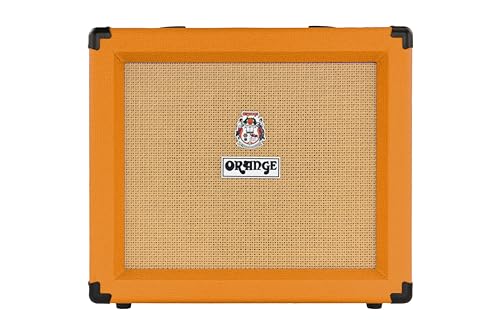
- Footswitchable channels and an analogue signal path
- Cab Sim loaded headphone output
This is a departure from a pedal-only setup. The Orange Crush 35 is a full amplifier that includes a high-quality digital reverb circuit and a “Cab Sim” headphone output. While the Electro-Harmonix Slap-Back Echo Analog Delay is a tool for your pedalboard, the Orange Crush 35 is a solution for your entire sound. If you are a beginner looking for built-in effects and a great practice platform, this amp is a fantastic choice. However, for the seasoned pro who already has a favorite amp and just needs that specific analog slap, the EHX pedal is the far more focused and professional choice.
2. Walrus Audio Slö Multi Texture Reverb

- Allows players to create lush, modulated, sleepy and ambient soundscapes
- Dark – add a lower octave to your reverb trail. Here you'll create deep and wide atmospheric sounds and channel nightmarish soundscapes. X knob sets the level of a -1 octave signal that feeds the...
If the EHX is about vintage “snap,” the Walrus Audio Slö is about modern “atmosphere.” The Slö is a multi-texture reverb designed for ambient swells and lush, evolving soundscapes. It offers three distinct modes (Dark, Rise, Dream) that create massive “washes” of sound. Who should buy this? Players in post-rock or worship-music settings who need to create “clouds” of sound. It is much more complex and twice the size of the Electro-Harmonix Slap-Back Echo Analog Delay. If you want rhythm, go with EHX; if you want atmosphere, go with Walrus Audio.
3. MOOER A7 Reverb Guitar Pedal Versatile Effects

- 7 different reverb effects from classic to psychedelic, Traditional Plate , Hall Large Spacious Reverb, Warp Moulated Reverb,Shake, Crush, Shimmer, Dream Reverb in a micro size.
- Trail On: Choose between INFINITE trail function or the more traditional“ Trail On” function
The MOOER A7 is the digital “Swiss Army Knife” alternative. It features seven different reverb effects and even includes a “Save Setting” function. It’s incredibly versatile and, like the EHX, has a small footprint. However, the A7 is a digital processor. While it offers more “types” of sound, it lacks the specific, organic BBD analog warmth that makes the EHX so special. If you are on a budget and want to experiment with many different sounds, the MOOER is great. But if you want the *best* version of a single, classic sound, the EHX remains the superior choice.
Final Verdict: The Smallest Giant on Your Board
After weeks of testing, our conclusion is clear: the Electro-Harmonix Slap-Back Echo Analog Delay is a masterclass in “doing one thing perfectly.” It captures the soul of the 1970s original but presents it in a modern, pedalboard-friendly format that saves space without compromising on the lush, dark repeats only a BBD circuit can provide. The addition of a 20dB boost makes it a versatile tool that can serve as a preamp, a doubler, or a rhythmic echo. While the fixed delay times might deter those seeking total control, we found that they actually helped us focus more on our playing and less on the gear.
Whether you’re playing rockabilly, blues, surf, or just want to add some “air” to your solos, this pedal delivers professional results at a very reasonable price point. Don’t let its size fool you—this is a high-performance analog machine. If you’re ready to upgrade your tone with that classic vintage snap, grab yours here and start rocking. It’s time to stop scrolling through menus and start sounding like the legends.
Last update on 2026-10-16 / Affiliate links / Images from Amazon Product Advertising API