
Orange Crush 35 2-Channel Reverb Amplifier Review: The Ultimate Practice Companion for Tone Purists
I’ve spent years chasing the “perfect” guitar tone, and like many of you, I’ve often found that the biggest hurdle isn’t my main stage rig—it’s my practice setup. We’ve all been there: you have a beautiful guitar and a pedalboard that cost more than your first car, but when you plug into a small practice amp at home, the sound is thin, fizzy, and completely uninspiring. For a long time, the industry standard for small amps was either lackluster solid-state boxes or expensive, fragile tube amps that were too loud for an apartment. When I first encountered the Orange Crush 35 2-Channel Reverb Amplifier, I was skeptical. Could a solid-state amp really deliver the “Orange sound” without the weight and maintenance of glass bottles? I needed a solution that offered genuine analog warmth, a usable effects loop, and enough punch to keep up with a drummer in a small rehearsal space. Solving this “small amp” dilemma is crucial because if you aren’t inspired by the sound you hear while practicing, you simply won’t play as much. The complication with many modern digital modeling amps is that they offer too many choices and not enough “feel.” I wanted something tactile, simple, and authoritative.
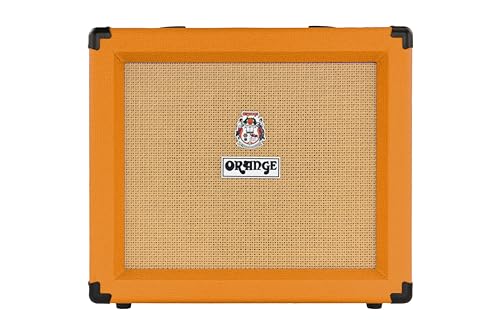
- Footswitchable channels and an analogue signal path
- Cab Sim loaded headphone output

What to Consider Before Buying an Electric Guitar Delay & Reverb Effects Setup
An Electric Guitar Delay & Reverb Effects setup, whether built into an amp like the Orange Crush 35 2-Channel Reverb Amplifier or as standalone pedals, is more than just an item; it’s a key solution for creating a sense of space and professional polish in your sound. Without these effects, a guitar can sound “dry” and disconnected from the room, making it difficult to sit well in a mix or even enjoy playing solo. These tools solve the problem of “flat” audio by simulating the natural reflections of different environments—from small tiled rooms to massive cathedrals—and adding rhythmic depth that can transform a simple chord progression into a lush soundscape.
The ideal customer for this type of product is someone facing the limitations of a “dry” signal who wants to add professional depth to their playing, while it might not be suitable for those who strictly play dry, ultra-high-speed technical death metal where every millisecond of silence between notes is required. Beginners will find the built-in effects of the Orange Crush 35 2-Channel Reverb Amplifier incredibly intuitive, while seasoned pros will appreciate them as a reliable backup or a convenient “grab-and-go” solution for low-volume sessions. If you are a studio-only player, you might consider high-end rack gear, but for the vast majority of us, a high-quality integrated solution is the most practical choice.
Before investing, consider these crucial points in detail:
- Dimensions & Space: The footprint of your gear matters more than you think. You need something that fits comfortably in a bedroom or studio corner but is robust enough to not topple over. A 10-inch speaker cabinet usually provides the best balance between a compact size and a full-bodied frequency response that doesn’t sound “boxy.”
- Capacity/Performance: In the world of amplifiers, wattage isn’t just about volume; it’s about “headroom.” A 35-watt output provides enough power to stay clean at higher volumes, which is essential if you plan on using pedals. Look for an amp that can handle transients without collapsing into digital clipping.
- Materials & Durability: Guitar gear takes a beating. Look for heavy-duty construction, such as reinforced corners and thick Tolex. The choice of cabinet material—whether it’s high-density plywood or synthetic composites—affects the resonance and “thump” of the low-end frequencies.
- Ease of Use & Maintenance: Complex menus can kill creativity. An ideal setup should allow you to “set it and forget it.” For solid-state gear, maintenance is minimal, but you should still look for accessible jacks and a layout that doesn’t require a manual to understand the EQ interaction.
Ultimately, your choice should simplify your workflow. While the Orange Crush 35 2-Channel Reverb Amplifier is an excellent choice, it’s always wise to see how it stacks up against the competition. For a broader look at all the top models, we highly recommend checking out our complete, in-depth guide:
IN-DEPTH GUIDE
Mastering Ambient Textures: Our Expert Review of the Best Reverb and Delay Pedals for Guitarists

- Dual Effects Design: Digital Delay and Plate Reverb 2 effects combined in 1 guitar effects pedal for versatile sound options, compact dimensions for easy integration into pedalboards

- The Flamma Ekoverb features 3 combinations of delay and reverb effects that consist of a Reverse Delay/Swell Reverb setting, Analog Echo Delay/Mod Reverb, and a classic Analog Delay/Shimmer Reverb...

- 🎸🎸【9 AMP Models & 8 IR CAB】LEKATO Multi-functional Guitar Effects Pedal with Distortion Overdrive,Delay,Reverb effects, including 9 Amp preamps and 8 classic IR cabinets body model, Support...
First Impressions and Key Features of the Orange Crush 35 2-Channel Reverb Amplifier
The moment I pulled the Orange Crush 35 2-Channel Reverb Amplifier out of its box, I was struck by its visual authority. It carries that iconic Orange “look”—the basketweave Tolex, the hieroglyphic labeling, and the signature picture-frame edging. It feels significantly more substantial than your average practice amp. At 29 pounds, it has enough heft to feel like a “real” piece of gear without being a backbreaker. I recommend you see its full feature set and user reviews to understand just how much they’ve packed into this chassis.
Plugging it in for the first time, the interface is refreshingly tactile. There are no screens, no “deep editing” menus, and no Bluetooth connectivity to fail. It’s a pure, analog signal path (excluding the digital reverb) that focuses on immediate gratification. Compared to market leaders in the digital modeling space, the Orange Crush 35 2-Channel Reverb Amplifier feels like a classic instrument rather than a computer peripheral. The knobs have a satisfying resistance, and the toggle switches feel military-grade. It’s an amp that invites you to turn knobs and find your own sound rather than scrolling through 100 presets to find someone else’s.
Key Benefits
- Authentic, high-gain 4-stage preamp that delivers genuine “Orange” saturation.
- Fully buffered, transparent effects loop that handles modern digital pedals beautifully.
- Integrated CabSim on the headphone output for realistic silent practice.
- Sturdy 10-inch “Voice of the World” speaker that punches well above its weight.
Limitations
- The 10-inch speaker lacks the massive low-end “thump” of a 2×12 or 4×12 cabinet.
- The digital reverb, while high quality, lacks the spring-tank “drip” some purists crave.
A Deep Dive into the Orange Crush 35 2-Channel Reverb Amplifier’s Performance
The Analog Signal Path: Why It Matters in a Digital World
In an era where everything is being digitized, we found that the 100% analog signal path of the Orange Crush 35 2-Channel Reverb Amplifier is its greatest asset. When you play through a digital modeler, there is often a microscopic “latency” or a “stiffness” to the feel of the notes. With this amp, the connection between your fingers and the speaker is instantaneous. The 4-stage preamp design is clever; it mimics the cascading gain stages of a tube amp. As you turn up the gain on the Dirty channel, the sound doesn’t just get louder and “fuzzier”—it gets more complex. We noticed that the touch sensitivity is remarkable for a solid-state unit. If you pick lightly, the notes remain relatively clean; dig in, and the amp snarls back at you.
This analog purity extends to the Clean channel as well. Many high-gain amps treat the clean channel as an afterthought, resulting in a flat, sterile tone. However, the Clean channel here is lush and sparkly. It has a vintage character that reminds me of early 70s British combos. It’s the perfect “blank canvas” for those who rely on pedals for their core sound. We spent hours running different overdrive pedals into the front end, and the Orange Crush 35 2-Channel Reverb Amplifier handled them with grace, never becoming harsh or “ice-picky” in the high frequencies. To get the most out of this purity, you should definitely check the latest price and availability for this specific model.
The Dirty Channel: From Classic Rock to Modern Metal
One of the most impressive feats of the Orange Crush 35 2-Channel Reverb Amplifier is the sheer range of its gain structure. It isn’t just a “one-trick pony” for Brit-pop. With the gain at 9 o’clock, you get a beautiful, “hairy” clean tone that is perfect for blues. Push it to 12 o’clock, and you’re firmly in AC/DC territory—crunchy, rhythmic, and articulate. Once you pass 3 o’clock, the amp transforms into a high-gain monster. We found that even at maximum saturation, the note definition remains intact. You can play complex chords, and you won’t hear that muddy “frequency mush” that plagues cheaper solid-state amps.
User feedback often highlights how this amp can transition from “bedroom levels” to “rehearsal levels” without losing its character. This is a common problem with tube amps, which need to be pushed hard to sound good. Because this is a high-quality solid-state design, you get that same rich saturation at a volume that won’t get you evicted. Whether you are chasing the thick, “wall of sound” fuzz of stoner rock or the tight, percussive chug of modern metal, the EQ section is responsive enough to get you there. The 3-band EQ is particularly powerful; the “Middle” control allows you to either “scoop” your tone for metal or “hump” it for a mid-forward lead tone that cuts through a mix.
Effects Integration and the Buffered Loop
For many of us, an amp is only as good as its ability to play nice with pedals. The Orange Crush 35 2-Channel Reverb Amplifier features a fully buffered effects loop, which is a feature that really sets it apart from other amps in this price bracket. Most entry-level amps either skip the FX loop entirely or use a cheap, unbuffered circuit that “sucks” the tone out of your signal. We tested this loop with a variety of time-based effects, including complex delays and lush choruses. The results were transparent and professional. By placing your delays and reverbs after the preamp (in the loop), they remain crisp even when you are using the amp’s high-gain Dirty channel.
The built-in digital reverb is also worth a deep look. It’s a “spring-style” emulation that adds a wonderful sense of space. While it won’t replace a high-end dedicated reverb pedal for ambient swells, for general playing, it is more than sufficient. It adds a “halo” around the notes that makes the 10-inch speaker sound much larger than it actually is. One user noted that they added a Carbon Copy delay through the loop and achieved a “pro-level” sound immediately. This versatility makes the Orange Crush 35 2-Channel Reverb Amplifier a long-term investment; as your pedal collection grows, this amp will continue to serve as a reliable foundation.
The Practice Powerhouse: Tuner, CabSim, and Headphones
As a practice tool, the Orange Crush 35 2-Channel Reverb Amplifier is nearly flawless. The integrated chromatic tuner is fast and accurate, appearing on the top panel for easy viewing. But the real “secret weapon” is the Headphone/Line output featuring Orange’s CabSim technology. When you plug in headphones, the amp emulates the sound of a mic’d-up Orange 4×12 cabinet loaded with Voice of the World speakers. We found this to be one of the most realistic-sounding headphone outputs on the market. It avoids that “bee-in-a-can” sound that usually makes headphone practice a chore.
This CabSim output also doubles as a line-out for recording. If you’re a home producer, you can run a cable directly from the amp into your audio interface. We were pleasantly surprised by how well these tracks sat in a demo mix. It provides a “finished” guitar sound without the need for expensive microphones or soundproofing a room. This makes it an invaluable tool for late-night songwriting sessions where you need to get ideas down quickly without waking the neighbors. If you’ve been struggling with digital plugins that sound “fake,” the analog preamp combined with the CabSim is a revelation. You can get the best deal on this amp and start recording professional-grade demos right away.
What Other Users Are Saying
The general sentiment among users for the Orange Crush 35 2-Channel Reverb Amplifier is one of surprised delight. Many guitarists who were previously “tube snobs” have admitted that this amp changed their perspective on solid-state technology. One veteran player mentioned, “I bought one because my old rig was too big… I got old, decided to downsize, and bought a second one. Good sounding little amp.” This reflects the “pro” quality that even seasoned ears appreciate. Another user enthusiastically claimed, “this amp ROCKS baby!! its a screamer… both clean and dirty channels sound really good.”
However, it is important to be aware of some common critiques. A few users have reported issues with quality control during shipping, such as a “broken ground on the power cable” or “buttons mashed into the body” upon arrival. These appear to be shipping-related incidents rather than design flaws, but it’s something to check immediately. Additionally, one user noted a “ground loop hum” when trying to run two of these amps together in a stereo setup, which required an external hum-eliminator. While this is a niche problem, it’s relevant for those looking to build a “mini-stack.” Lastly, one reviewer felt the Dirty channel went from “no gain” to “extreme gain” too quickly, though we found that careful manipulation of the guitar’s volume knob easily solves this “all-or-nothing” sensation.
Comparing the Orange Crush 35 2-Channel Reverb Amplifier to Top Alternatives
While the Orange Crush 35 2-Channel Reverb Amplifier is a complete amplifier solution, many players look for specific reverb effects to supplement their existing setups. Here is how it compares to some of the most popular dedicated reverb units available today.
1. BOSS RV-6 Reverb Pedal
- Compact and Versatile Design: Compact and versatile reverb pedal with rich, expansive sound that enhances your guitar tone
- Simple and Intuitive Controls: Dial in sophisticated, top-level reverb tones quickly with simple controls for immediate sound shaping
The BOSS RV-6 is an industry standard for a reason. While the Orange Crush 35 2-Channel Reverb Amplifier offers a great “utility” reverb, the RV-6 provides eight distinct modes, including Shimmer, Modulate, and Hall. If you are an ambient player who needs deep, ethereal textures that the amp’s built-in reverb can’t reach, the RV-6 is the perfect companion for the amp’s effects loop. It offers a “studio-grade” sound in a tank-like enclosure that will last decades. It’s for the player who wants more control over the “decay” and “tone” of their echoes than a single-knob amp reverb can provide.
2. JHS Pedals 3 Series Reverb Pedal

- Made in Kansas City USA
- An extremely versatile unit that allows you to achieve any reverberation effect, all the way from small room sounds to nearly endless washes of ambiance
If you love the simplicity of the Orange Crush 35 2-Channel Reverb Amplifier, you will love the JHS 3 Series Reverb. It’s a straightforward, high-quality pedal that focuses on one thing: great sound. It features a “Pre-Delay” toggle that can give your playing more clarity before the reverb kicks in—a feature missing from the amp’s built-in effect. This is an excellent choice for someone who wants to expand their sonic palette without getting lost in menus. It’s “boutique” quality at a working-class price point, making it a great first pedal to put in your new amp’s loop.
3. JOYO PARA-VERB R-31 Digital Reverb Pedal

- 9 STUDIO-GRADE STEREO REVERB MODES — FROM CLASSIC TO EXPERIMENTAL: The PARA-VERB delivers a full spectrum of reverb textures with nine meticulously voiced stereo algorithms. ROOM (warm, short...
- HI-CUT, LOW-CUT & PRE-DELAY — PRECISE TONE SCULPTING: Unlike basic reverb pedals, the PARA-VERB features dedicated Hi-Cut and Low-Cut filters for surgical control over your reverb tail's frequency...
For those on a strict budget who want maximum “bang for their buck,” the JOYO PARA-VERB R-31 is a compelling alternative. It offers 9 different reverb effects, including some truly unique “Lo-Fi” and “Forest” modes. While the Orange Crush 35 2-Channel Reverb Amplifier focuses on classic, traditional tones, this JOYO pedal allows for more experimental sounds. It’s not as robust as the BOSS or the JHS, but it provides a massive amount of versatility for a fraction of the cost. It’s ideal for the beginner who wants to explore every type of reverb sound to find what they like.
The Final Verdict: Is the Orange Crush 35 2-Channel Reverb Amplifier Right for You?
After putting the Orange Crush 35 2-Channel Reverb Amplifier through its paces, we can confidently say it is one of the best solid-state amplifiers ever made. It successfully bridges the gap between a “practice amp” and a “performance tool.” Its strengths lie in its authentic analog warmth, its punishingly good high-gain tones, and its thoughtful “quality of life” features like the CabSim and the buffered effects loop. While it may lack the infinite options of a digital modeling amp, it makes up for it with a singular, high-quality voice that is undeniably “Orange.”
We recommend this amp to any guitarist who values tone and feel over digital presets. It is perfect for the student who wants an amp that will last through their first club gig, and equally suitable for the pro who needs a reliable, great-sounding practice rig for the living room. If you are tired of sterile-sounding gear and want an amp that actually “breathes” with your playing, you should purchase the Orange Crush 35 2-Channel Reverb Amplifier here. It is a rare piece of gear that manages to be both affordable and professional—a long-term investment that will grow with your playing and remain a staple of your setup for years to come.
Last update on 2026-10-18 / Affiliate links / Images from Amazon Product Advertising API