
Jim Dunlop Echoplex Delay Pedal Review: Capturing the Iconic Magic of the Vintage EP-3
If you have ever spent a late night scrolling through gear forums or watching rig rundowns of your favorite legendary guitarists, you have likely encountered the mythical status of the Echoplex EP-3. For decades, that bulky, somewhat temperamental tape machine was the secret sauce behind the lush, modulated repeats of the world’s greatest players. However, owning an original unit is a logistical nightmare. They are heavy, prone to mechanical failure, and require constant maintenance of the actual tape loops. We have all been there—searching for that specific “warmth” and “warble” but finding only sterile, digital approximations that lack soul. This is exactly where the Jim Dunlop Echoplex Delay Pedal enters the conversation. It promises to deliver the legendary EP-3 experience in a footprint that actually fits on your pedalboard, solving the problem of how to get vintage organic textures without the vintage headaches.

- Vintage Echoplex EP-3 tape echo warmth and modulation
- Age control Varies delay tone from pristine to dark and dirty

What to Consider Before Investing in Electric Guitar Delay & Reverb Effects
An Electric Guitar Delay & Reverb Effects pedal is more than just an item; it’s a key solution for creating depth, dimension, and atmospheric space in your music. Whether you are looking to add a subtle “slapback” for rockabilly or a massive, cavernous wash for ambient soundscapes, these effects define the character of your tone. Without a quality delay or reverb, your guitar can sound “dry” and disconnected from the mix, often feeling lifeless in a live or recording environment. The right pedal acts as a bridge between your hands and the listener’s ears, providing a sense of physical space and rhythmic complexity that elevates your playing to a professional level.
The ideal customer for this type of product is someone facing the limitations of a “flat” sound, specifically tone-purists who demand that their digital or analog-voiced effects retain the character of their original signal. It is perfect for gigging musicians who need reliable, compact gear that won’t fail mid-set. Conversely, it might not be suitable for those who prefer ultra-modern, glitchy, or multi-tap rhythmic delays that sound intentionally digital and clinical. If you are looking for a “Swiss Army Knife” multi-effect that does everything from chorus to pitch-shifting, a specialized single-voice delay like this might feel too focused for your needs.
Before investing, consider these crucial points in detail:
- Dimensions & Space: Pedalboard real estate is the most valuable currency for a modern guitarist. You need to look for a pedal that offers a high ratio of sound quality to physical footprint. A compact pedal allows you to stack more effects, but ensure the knobs are still accessible for mid-song adjustments.
- Capacity/Performance: In the world of delay, performance is measured by delay time (milliseconds) and the quality of the repeats. Look for a unit that offers a broad range—from 40ms to at least 700ms—to cover everything from double-tracking effects to long, soaring leads.
- Materials & Durability: Since these units are literally designed to be stepped on, high-quality metal housings and heavy-duty footswitches are non-negotiable. Internal components should include high-headroom circuitry to prevent unwanted clipping when you push your signal with gain pedals.
- Ease of Use & Maintenance: A great pedal shouldn’t require a manual the size of a novel. Intuitive controls—ideally three or four knobs—allow for quick “on-the-fly” tweaking. Also, consider the power requirements; a standard 9V center-negative input is the industry standard for a reason.
Ultimately, choosing a delay is about finding the specific “voice” that inspires you to play more. While the Jim Dunlop Echoplex Delay Pedal is an excellent choice for those chasing vintage warmth, it’s always wise to see how it stacks up against the competition. For a broader look at all the top models, we highly recommend checking out our complete, in-depth guide:
Finding the Perfect Ambience: Our Complete Guide to the Best Reverb Pedals for Electric Guitar

- Dual Effects Design: Digital Delay and Plate Reverb 2 effects combined in 1 guitar effects pedal for versatile sound options, compact dimensions for easy integration into pedalboards

- The Flamma Ekoverb features 3 combinations of delay and reverb effects that consist of a Reverse Delay/Swell Reverb setting, Analog Echo Delay/Mod Reverb, and a classic Analog Delay/Shimmer Reverb...

- 🎸🎸【9 AMP Models & 8 IR CAB】LEKATO Multi-functional Guitar Effects Pedal with Distortion Overdrive,Delay,Reverb effects, including 9 Amp preamps and 8 classic IR cabinets body model, Support...
First Impressions: Unboxing the Jim Dunlop Echoplex Delay Pedal
When we first pulled the Jim Dunlop Echoplex Delay Pedal out of its packaging, the immediate impression was one of rugged sophistication. Unlike some modern pedals that feel like lightweight toys, this unit has a reassuring heft to it, weighing in at about 300 grams. The aesthetics are a direct homage to the original EP-3, featuring the iconic font and a sleek, industrial-silver finish. It is surprisingly small—about the size of a standard Phase 90—which is a feat of engineering considering the massive sound it contains. Before you even plug it in, you can see its full feature set and user reviews which hint at the professional-grade circuitry hidden inside the “Phase 90-sized” housing.
The layout is refreshingly simple: three knobs (Sustain, Volume, and Delay) and a single footswitch. However, as we found during our testing, there is much more than meets the eye. The “Volume” knob also functions as a push-button to engage the “Age” mode, a feature we will dive into later. It feels like a premium piece of kit that bridges the gap between boutique craftsmanship and mass-market reliability. Compared to the bulky delay units of the past, the Jim Dunlop Echoplex Delay Pedal feels like a liberation for the modern pedalboard.
Key Benefits
- Authentic EP-3 “Age” control for vintage modulation and grit.
- Incredible 20-volt headroom thanks to Constant Headroom Technology.
- Hi-fi all-analog dry path preserves your original guitar tone.
- Compact footprint that fits easily on any crowded pedalboard.
Limitations
- Higher price point than entry-level digital delays.
- Requires an external switch for tap tempo functionality.
A Deep Dive into the Jim Dunlop Echoplex Delay Pedal’s Performance
The “Age” Control: The Secret to Vintage Authenticity
The absolute standout feature of the Jim Dunlop Echoplex Delay Pedal is the “Age” mode. In our extensive testing, we found that this isn’t just a simple tone filter. By pressing the Volume knob, you enter a secondary mode where the knob allows you to vary the delay tone from “pristine and new” to “dark and dirty.” As you turn the knob up, the pedal simulates the natural degradation of an aging tape loop. We noticed the repeats becoming more saturated, with a beautiful “wow and flutter” modulation that feels incredibly organic. It captures that specific mechanical “hiccup” that made the original EP-3 so musical.
We found that at lower settings, the repeats are crisp and sit perfectly behind your dry signal, making it great for clean, rhythmic playing. However, when you crank the Age control, the pedal transforms into a living, breathing entity. The repeats begin to smear and distort in a way that creates a haunting, atmospheric halo around your notes. This is where the product really shines; it doesn’t just repeat what you play—it adds a layer of character that we haven’t heard in many other “tape-style” pedals. You can check the latest price and availability to see why tone-chasers are willing to invest in this level of sonic detail.
Usability and Control Interface: Complexity Simplified
One of the things we appreciate most about the Jim Dunlop Echoplex Delay Pedal is its intuitive design. Many modern delay pedals are bogged down by menus and “hidden” secondary functions that are impossible to remember on stage. Jim Dunlop has managed to include deep functionality while keeping the interface streamlined. The Sustain knob controls the number of repeats, from a single slap to self-oscillation, while the Delay knob handles the timing from 40ms to 750ms. During our sessions, we were able to dial in a perfect “Gilmour-esque” lead tone in seconds.
The addition of a tap tempo port on the side is a crucial feature for live performers. While the pedal itself is small, connecting an external M199 MXR Tap Tempo switch allows you to lock into the drummer’s pocket instantly. Furthermore, we experimented with the choice between “True Relay Bypass” and “Trails Bypass.” For those who want their echoes to ring out naturally after the pedal is switched off, the trails mode works flawlessly. This level of customization ensures that the pedal adapts to your specific workflow rather than forcing you to adapt to it. It’s a feature that really sets it apart from more basic delay units.
Constant Headroom Technology: Professional Signal Integrity
A common issue with delay pedals is that they can clip or distort unpleasantly when hit with a hot signal, such as from a high-output humbucker or a preceding overdrive pedal. The Jim Dunlop Echoplex Delay Pedal solves this with “Constant Headroom Technology.” We were impressed to find that the pedal internally converts its power to a full 20 volts. This provides a massive amount of “air” and clarity, ensuring that your echoes remain musical even when your signal chain is aggressive. Even when we ran a heavy distortion pedal into the front end, the Echoplex maintained its composure, delivering lush repeats without any digital harshness.
Additionally, the all-analog dry path is a major selling point for purists. Your original guitar signal never goes through an AD/DA conversion; it stays analog from input to output. This preserves the “touch sensitivity” and dynamic range of your amplifier. We found that the pedal feels remarkably “fast” and responsive to pick attack. It doesn’t feel like an “effect” sitting on top of your sound; it feels like an extension of your amp’s natural resonance. For a truly professional setup, you should explore the technical specifications to see how the 20V internal circuitry compares to standard 9V pedals.
Versatility: From Slapback to Psychedelia
While the Jim Dunlop Echoplex Delay Pedal is marketed as a vintage-style unit, its versatility surprised us. By setting the delay time to its minimum and keeping the Sustain low, we achieved some of the most convincing 50s rockabilly slapback tones we’ve ever heard. On the other end of the spectrum, by pushing the Sustain knob into its upper reaches, the pedal enters a controlled self-oscillation. This is perfect for shoegaze or experimental music, where you want to create a wall of sound that can be manipulated in real-time by turning the Delay knob to shift the pitch of the oscillating “runaway” repeats.
The pedal also features a 100% wet mode, which is a godsend for guitarists using parallel effects loops or those looking to create purely ambient textures where the dry signal is completely removed. We tested this in a studio setting, running the pedal as an outboard effect for a synth track, and the results were stunning. The stereo input and output modes (via TRS cables) further expand its utility, making it a viable choice for stereo rig enthusiasts. This versatility is why many consider it a “forever” pedal—a unit that will never leave your board regardless of the genre you are playing. If you’re ready to upgrade your sound, getting this pedal into your signal chain could be a game-changer.
What Other Users Are Saying
The consensus among the guitar community regarding the Jim Dunlop Echoplex Delay Pedal is overwhelmingly positive, centered largely on its “musicality.” One common sentiment we encountered from users is that while it is “a little expensive, you get what you pay for.” This aligns perfectly with our findings; the premium price reflects the high-end components and the specialized R&D required to replicate the EP-3’s unique modulation profile accurately. One user noted that they replaced a much larger multi-delay unit with this pedal because the core tone was simply superior, proving that quality often trumps quantity of features.
On the critical side, a few users mentioned that they wished the tap tempo was built into the main footswitch via a “hold” function. However, most agree that the dedicated tap tempo port is a more reliable solution for serious gigging. We also found feedback from players who praised the pedal’s ability to handle high-gain settings without getting “muddy,” a testament to the internal 20V headroom. Overall, the feedback confirms that this is a professional-grade tool for those who prioritize tone above all else. Before making your final decision, we suggest you read through more user experiences to see how it performs in different musical contexts.
Comparing the Jim Dunlop Echoplex Delay Pedal to Top Alternatives
While the Echoplex is a master of tape-style delay, it is important to consider how it compares to other heavy hitters in the “Electric Guitar Delay & Reverb Effects” category. Depending on whether you need pure delay or a mix of ambient sounds, one of these alternatives might suit your specific rig better.
1. BOSS RV-6 Reverb Pedal
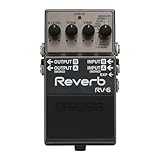
- Compact and Versatile Design: Compact and versatile reverb pedal with rich, expansive sound that enhances your guitar tone
- Simple and Intuitive Controls: Dial in sophisticated, top-level reverb tones quickly with simple controls for immediate sound shaping
The BOSS RV-6 Reverb Pedal is a different beast entirely, focusing primarily on high-quality reverb rather than delay. While the Jim Dunlop Echoplex Delay Pedal excels at rhythmic echoes and vintage modulation, the RV-6 is the go-to choice for guitarists who need a wide variety of “spaces,” including Shimmer, Hall, and Room reverbs. It is built like a tank (as all BOSS pedals are) and offers a “Delay + Reverb” mode, but it lacks the specific tape-saturation and “Age” controls that make the Echoplex so unique. If you want a versatile “always-on” reverb to add depth to your sound, the RV-6 is a fantastic, more affordable alternative, but it won’t give you that iconic EP-3 warble.
2. JHS Pedals 3 Series Reverb Pedal

- Made in Kansas City USA
- An extremely versatile unit that allows you to achieve any reverberation effect, all the way from small room sounds to nearly endless washes of ambiance
For those who prefer a “set-and-forget” approach and are on a tighter budget, the JHS Pedals 3 Series Reverb Pedal is an excellent contender. This pedal is part of JHS’s minimalist line, featuring just three knobs and a single toggle switch for “Pre-Delay.” It offers a very clean, high-quality reverb that can go from a small room to a massive wash. Compared to the Jim Dunlop Echoplex Delay Pedal, it is significantly simpler and more affordable. However, it lacks the specialized “Constant Headroom Technology” and the deep, organic modulation of the Echoplex. It’s an ideal choice for a beginner or a minimalist who wants a great sound without the premium price tag or specialized delay controls.
3. Orange Crush 35 2-Channel Reverb Amplifier
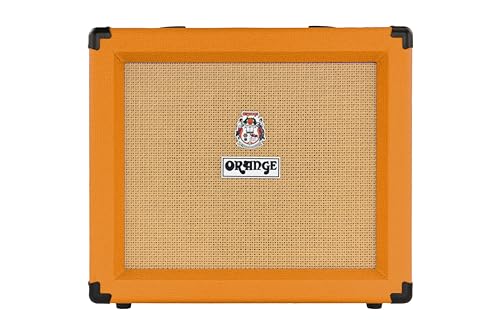
- Footswitchable channels and an analogue signal path
- Cab Sim loaded headphone output
Unlike the pedals mentioned above, the Orange Crush 35 2-Channel Reverb Amplifier is a complete amplification solution that includes a built-in digital reverb. This is an alternative for someone who doesn’t want to deal with pedals at all. The reverb on the Orange Crush is functional and adds a nice sense of space to its legendary high-gain tones. However, a built-in amp reverb can never match the granular control or the specific “tape” character of a dedicated unit like the Jim Dunlop Echoplex Delay Pedal. If you are looking for an all-in-one practice amp, the Orange is world-class, but for the tone-purist seeking the specific magic of an EP-3, the Echoplex pedal remains an essential addition to the signal chain.
Final Verdict: Is the Jim Dunlop Echoplex Delay Pedal Worth It?
After weeks of testing and comparing it against both vintage legends and modern competitors, our conclusion is clear: the Jim Dunlop Echoplex Delay Pedal is one of the most successful recreations of a classic effect ever put into a small box. It successfully captures the elusive “ghost in the machine”—the warmth, the mechanical imperfections, and the musical saturation that made the original EP-3 a staple of rock history. While it carries a premium price, the combination of “Age” control, 20V headroom, and an all-analog dry path justifies every penny for the serious musician.
We recommend this pedal to anyone who prioritizes “vibe” and “texture” in their lead or rhythm playing. Whether you are playing blues, classic rock, or ambient indie, this pedal provides a level of inspiration that digital multi-effects often miss. It is durable, intuitive, and sounds absolutely massive. If you’ve been searching for that final piece of the puzzle to make your guitar tone feel “alive” and professional, look no further. We highly encourage you to pick up the Jim Dunlop Echoplex Delay Pedal today and experience the magic of the EP-3 for yourself.
Last update on 2026-10-17 / Affiliate links / Images from Amazon Product Advertising API