
JHS Pedals Summing Amp Signal Blender Pedal Review: The Secret Weapon for Pristine Parallel Tones
For years, I found myself hitting a sonic ceiling. Like many of you, I spent thousands of dollars on boutique overdrives, high-end delays, and lush reverbs, only to find that when I engaged them together, my tone turned into an indistinct, mushy soup. The problem wasn’t the quality of the pedals; it was the physics of a series signal chain. When you run a heavy fuzz into a lush reverb, the reverb has to process a completely decimated wave. Conversely, if you run the reverb into the fuzz, the fuzz compresses the delicate trails into oblivion. This is the “series struggle”—a linear path where every pedal eats the lunch of the one before it. I realized that if I wanted the clarity of a studio recording on my pedalboard, I needed to stop thinking in lines and start thinking in layers. This realization led me to the JHS Pedals Summing Amp Signal Blender Pedal, a utility tool that promises to unlock parallel processing for the average guitarist.

- Gives you the ability to take two inputs and blend them into one output
- Perfect for putting effects in parallel so that they are not affected by one another

What to Consider Before Investing in Signal Converters and Parallel Effects
Entering the world of signal routing is a major step in any gear journey. A Electric Guitar Delay & Reverb Effects utility like a summing amp is more than just an item; it’s a key solution for players who have reached the limits of traditional “pedal-to-pedal” connections. When you move to parallel processing, you are essentially creating a mini-mixing console on your floor. This allows you to keep your dry signal (or a specific effect) completely independent of another effect, merging them back together at the end of the chain. It solves the problem of “tone suck” and allows for complex textures—like a crisp, clean attack layered over a 100% wet, distorted delay—that are simply impossible with a standard setup. You should see its full feature set and user reviews to understand how it can transform a cluttered board into a professional-grade rig.
The ideal customer for this type of product is the “sonic architect”—the player who loves shoegaze, ambient soundscapes, or technical fusion where note definition is paramount even under heavy gain. It is also a godsend for bassists who want to maintain their low-end punch while using guitar-centric fuzz pedals. However, it might not be suitable for the minimalist who only uses two or three pedals and prefers a “plug-and-play” approach, as parallel routing requires extra cables and often an additional splitter. If you aren’t ready to manage the extra complexity of “Y-cables” or buffered splitters, this might feel like overkill.
Before investing, consider these crucial points in detail:
- Dimensions & Space: In the world of modern pedalboards, real estate is premium. This pedal is designed with a tiny footprint (roughly 6 x 4 x 3 inches), making it easy to tuck underneath a board or squeeze into a tight corner. However, remember that you’ll need space for the input and output jacks on multiple sides.
- Capacity/Performance: A summing amp is only as good as its transparency. You want a device that adds zero coloration to your tone. The JHS Pedals Summing Amp Signal Blender Pedal is an analog, high-fidelity device designed to merge two signals into one without phase cancellation or frequency loss.
- Materials & Durability: Since this is a utility pedal likely to stay “always on,” it needs to be built like a tank. JHS uses high-quality metal enclosures and robust jacks. This is vital because utility pedals often end up buried in the middle of a board where they might be subject to the weight of other cables and constant vibration.
- Ease of Use & Maintenance: While the concept of parallel routing is complex, the pedal itself should be simple. Look for a device that doesn’t require complex software. This unit is purely analog and plug-and-play, meaning there are no firmware updates or digital menus to navigate, which ensures long-term reliability.
Understanding these factors is the first step toward a more professional sound. If you are serious about your signal path, it’s time to move beyond the basics.
While the JHS Pedals Summing Amp Signal Blender Pedal is an excellent choice, it’s always wise to see how it stacks up against the competition. For a broader look at all the top models, we highly recommend checking out our complete, in-depth guide:
Our definitive guide to the top-rated digital delay and reverb pedals for electric guitar

- Dual Effects Design: Digital Delay and Plate Reverb 2 effects combined in 1 guitar effects pedal for versatile sound options, compact dimensions for easy integration into pedalboards

- The Flamma Ekoverb features 3 combinations of delay and reverb effects that consist of a Reverse Delay/Swell Reverb setting, Analog Echo Delay/Mod Reverb, and a classic Analog Delay/Shimmer Reverb...

- 🎸🎸【9 AMP Models & 8 IR CAB】LEKATO Multi-functional Guitar Effects Pedal with Distortion Overdrive,Delay,Reverb effects, including 9 Amp preamps and 8 classic IR cabinets body model, Support...
First Impressions: Unboxing the JHS Pedals Summing Amp Signal Blender Pedal
When I first received the JHS Pedals Summing Amp Signal Blender Pedal, I was struck by its utilitarian elegance. It doesn’t have the flashy graphics of a “Bonsai” or a “Muffuletta.” Instead, it’s a sleek, black box that screams “professional tool.” The unboxing experience was straightforward—no frills, just the pedal, a small manual, and that classic JHS sticker. Holding it, you can feel the weight of quality; it doesn’t feel like a cheap plastic toy. It’s significantly smaller than many other signal mixers on the market, which I immediately appreciated. Many “blender” pedals take up the space of two standard Boss pedals, but this unit is roughly the size of a standard mini-pedal or a small utility box. I highly recommend you check the latest price and availability before it goes out of stock, as these utility units are often in high demand for touring boards.
Key Benefits
- Incredibly transparent analog signal path that preserves your original tone.
- Compact footprint that fits on even the most crowded pedalboards.
- Enables complex parallel routing that isn’t possible with standard series chains.
- Exceptional build quality backed by a limited lifetime warranty (USA).
Limitations
- Requires an external splitter (like a Y-cable or buffered splitter) to create the parallel loops.
- According to some users, it may not be optimized for the frequency range of bass guitars.
A Deep Dive into the Performance of the JHS Pedals Summing Amp Signal Blender Pedal
The Magic of Parallel Signal Architecture
The primary reason I integrated the JHS Pedals Summing Amp Signal Blender Pedal into my rig was to solve the “Overdrive Overload” problem. In a standard setup, if you run a Tube Screamer into a Big Muff, the Tube Screamer’s mid-hump hits the Muff, often creating a compressed, noisy mess where the character of both pedals is lost. By using this summing amp, I was able to split my signal before the drives. I sent one path to my heavy fuzz and the other to my light overdrive. The JHS Pedals Summing Amp Signal Blender Pedal then merged them back together. The result? I had the massive, sustaining wall of sound from the Muff, but with the articulation and “snap” of the light overdrive layered right on top. It sounded like two different guitarists were playing the same part in perfect unison. This level of clarity is a game-changer for anyone who plays complex chords with high gain.
I found that the analog circuitry in this pedal is remarkably quiet. Many cheaper mixers introduce a slight hiss or “phasing” sound when you combine two signals, especially if one of those signals has a lot of gain. We found that the JHS design handles the impedance matching perfectly, ensuring that both inputs are treated equally. This is a crucial benefit because if a summing amp isn’t perfectly transparent, the whole point of parallel processing is defeated. When I engaged my setup, it felt like my amp had suddenly doubled in size. You can a feature that really sets it apart is its ability to handle high-output signals without clipping, making it ideal for players with active pickups or high-headroom preamps.
Mastering Time-Based Effects: No More Washed Out Delays
Another area where the JHS Pedals Summing Amp Signal Blender Pedal truly shines is in the management of delays and reverbs. We’ve all been there: you have a beautiful, rhythmic dotted-eighth delay, but as soon as you turn on your long, ambient reverb, the rhythm of the delay gets “smeared” by the reverb trails. By running these in parallel, the delay and the reverb never “see” each other. The delay stays crisp and rhythmic, while the reverb provides a lush background wash. When the JHS Pedals Summing Amp Signal Blender Pedal sums them at the end, the two effects occupy the same space without interfering with each other’s transients.
During my testing, I used this to combine a digital delay (for precision) with an analog delay (for warmth). In a series chain, the digital delay would just repeat the dark, murky repeats of the analog one. In parallel, I could hear the bright, percussive digital repeats clearly alongside the warm, degrading analog repeats. It created a 3D soundscape that I simply couldn’t achieve otherwise. If you’ve ever felt that your expensive pedals are “fighting” each other, this pedal is the peace treaty you’ve been looking for. It is truly a professional-grade solution for a common amateur problem.
Workflow Integration and Board Real Estate
One of the most impressive aspects of the JHS Pedals Summing Amp Signal Blender Pedal is how it disappears on your board—in a good way. Because it’s a “passive-style” interface (meaning it doesn’t have big knobs that you need to adjust mid-song), you can mount it in a corner or even underneath a Temple Audio or Pedaltrain board. It only draws 5 milliamps of power, which is practically nothing. You won’t need to worry about it hogging a high-current port on your power supply. I simply plugged it into a standard 9V outlet, and it worked flawlessly. It’s a set-it-and-forget-it tool that quietly makes everything else sound better. For those who are meticulous about their board layout, the compact item dimensions of 6 x 4 x 3 inches make it incredibly easy to work with.
I should note that to get the most out of this, you really need a buffered splitter at the start of your chain. While you can use a simple Y-cable, a buffered splitter ensures that your signal doesn’t lose high-end frequencies when it’s divided into two paths. When I paired the JHS Pedals Summing Amp Signal Blender Pedal with a JHS Buffered Splitter, the signal integrity was flawless. It felt like I was plugged directly into my amp, despite my signal traveling through two parallel paths and multiple pedals. This level of transparency is what separates JHS from lower-tier utility brands.
Creative Soundscapes: Fuzz and Compression
One “pro tip” I discovered during my evaluation was the ability to combine a heavy fuzz with a compressor in parallel. Usually, a compressor into a fuzz is redundant because fuzz is already naturally compressed. However, running them in parallel allows you to take a “Velcro-style” gated fuzz and layer it with a highly compressed clean signal. This gives you the crazy, synth-like textures of the fuzz while maintaining the infinite sustain and “pop” of the clean signal. It’s a trick often used in studio mixing that the JHS Pedals Summing Amp Signal Blender Pedal brings to your live rig. We found that this setup was particularly inspiring for lead playing, providing a thick, creamy tone that never felt out of control. It’s these kinds of creative possibilities that make this pedal worth every penny for the experimental guitarist.
What Other Users Are Saying
The general sentiment among users is that the JHS Pedals Summing Amp Signal Blender Pedal is a “problem solver” that does exactly what it says on the tin. Many users praise its simplicity, with one enthusiast noting that it “just does the job you need,” especially when coupled with a buffered splitter to create “new interesting parallel signal chains.” This echoes my experience—it’s an invisible helper that elevates your entire rig.
However, there is a significant piece of feedback that potential buyers should be aware of. One user pointed out that the internal leaflet mentions it is “not recommended for bass guitars,” a detail that isn’t prominently displayed on most retail sites. As a bassist, this user was understandably frustrated. While I found the signal clear for guitar, bassists who rely on deep sub-harmonics might find that the summing circuit filters out some of the ultra-low frequencies. It’s a vital consideration if you plan to use this for a 5-string bass or down-tuned metal rigs. Aside from that specific niche concern, the feedback is overwhelmingly positive, focusing on the pedal’s transparency and build quality.
Comparing the JHS Pedals Summing Amp Signal Blender Pedal to Top Alternatives
1. MOOER A7 Reverb Guitar Pedal Versatile Effects

- 7 different reverb effects from classic to psychedelic, Traditional Plate , Hall Large Spacious Reverb, Warp Moulated Reverb,Shake, Crush, Shimmer, Dream Reverb in a micro size.
- Trail On: Choose between INFINITE trail function or the more traditional“ Trail On” function
While the JHS Pedals Summing Amp Signal Blender Pedal is a utility tool for routing, the MOOER A7 is a dedicated reverb unit. You might wonder why these are compared; often, players look for “all-in-one” solutions to avoid complex routing. The MOOER A7 offers seven different reverb effects and a built-in “infinite” trail function. If your goal is simply to have lush reverbs without the hassle of parallel routing, the MOOER is a budget-friendly, compact alternative. However, it lacks the ability to blend external signals. The MOOER is for the player who wants “pre-packaged” ambient sounds, whereas the JHS is for the player who wants to create their own unique textures by blending their favorite pedals. The MOOER is a great “entry-level” ambient pedal, but it doesn’t offer the professional routing flexibility of the JHS.
2. Orange Crush 35 2-Channel Reverb Amplifier
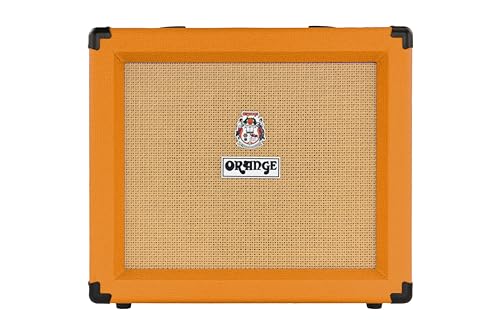
- Footswitchable channels and an analogue signal path
- Cab Sim loaded headphone output
The Orange Crush 35 represents a completely different approach to tone. This is a 35-watt amplifier with a built-in cab simulator and reverb. Some players try to solve their signal mud issues by simply getting a better amp with more headroom. The Orange Crush 35 provides a fantastic “clean” platform that can handle many pedals in series. However, even the best amp can’t fix the physics of two pedals clashing in a series chain. If you are a beginner looking for a great base tone, the Orange is a stellar choice. But if you already have an amp you love and want to take your pedalboard to the professional level, the JHS Pedals Summing Amp Signal Blender Pedal is the tool that will refine your existing sound rather than replacing it.
3. BOSS DD-8 Digital Delay Guitar Pedal

- Advanced BOSS Compact Series: The most advanced BOSS compact series delay ever designed for professional guitar effects
- Eleven Versatile Modes: Features basic digital delay, vintage echoes, shimmer, mod, looper, and more for diverse sound options
The BOSS DD-8 is arguably the king of compact digital delays. It features a “Carryover” switch that allows delay trails to continue after the pedal is bypassed—a feature that mimics some of the benefits of a parallel setup. If you are mostly concerned about your delay trails not getting cut off, the DD-8 is a legendary, “bulletproof” choice. However, the DD-8 cannot help you blend a fuzz and an overdrive, or two different reverb pedals. The BOSS DD-8 is a “specialist,” while the JHS Pedals Summing Amp Signal Blender Pedal is a “generalist” utility that makes all your specialists work better together. For the ultimate rig, I would actually recommend running a DD-8 in one of the parallel loops created by the JHS summing amp.
Final Verdict: Is the JHS Pedals Summing Amp Signal Blender Pedal Worth It?
After weeks of testing and integrating the JHS Pedals Summing Amp Signal Blender Pedal into various rig configurations, my verdict is a resounding yes—with one caveat for bassists. For the electric guitarist, this pedal is a “revelation” tool. It doesn’t make a sound of its own; instead, it allows your other pedals to sound the way they were always intended to. It eliminates the “mush,” preserves your dry signal’s integrity, and opens a literal world of creative parallel routing that was previously reserved for high-end rack systems or studio outboard gear. Its small size, low power draw, and tank-like construction make it a “set-and-forget” masterpiece.
If you are tired of your tone sounding small or congested when you engage multiple effects, this is the most cost-effective upgrade you can make. It’s a professional solution for the serious tone-chaser. Don’t let your high-end pedals suffer in a mediocre signal chain. I highly recommend that you pick up the JHS Summing Amp today and finally hear what your pedalboard is actually capable of producing. Your ears (and your audience) will thank you.
Last update on 2026-10-16 / Affiliate links / Images from Amazon Product Advertising API