
Fender Tone Master Pro Guitar Workstation Review: The Ultimate All-in-One Rig for Modern Guitarists?
For decades, guitarists have been caught in a relentless cycle of “gear acquisition syndrome.” We spend years hunting for the perfect tube amp, only to realize it’s too heavy for the local club gig. We collect dozens of boutique pedals, only to find ourselves dancing on a pedalboard like a frantic gymnast during a bridge transition. The fundamental problem is versatility versus portability. How do you get world-class, authentic tube response in a package that fits in a backpack and connects directly to a PA system? Failure to solve this means lugging 80-pound cabinets, dealing with patch cable failures mid-solo, and struggling with inconsistent stage volume. We need a solution that bridges the gap between digital convenience and analog soul, which is why we turned our attention to the Fender Tone Master Pro Guitar Workstation.

- Multi-effects Guitar Workstation with Amp Modeling
- Song/Set List Mode
What to Consider Before Buying an Electric Guitar Multieffects
An Electric Guitar Multieffects unit is more than just a collection of digital sounds; it’s a key solution for the modern performer who requires a studio-grade signal chain in a road-ready format. These units replace traditional amplifiers, cabinets, and entire pedalboards by simulating the complex harmonic interactions of physical gear. Before you check the latest price and availability of high-end workstations, it is vital to understand that this category has evolved from “functional” to “indistinguishable” from the real thing.
The ideal customer for this type of product is a professional session player, a touring musician, or a serious home recordist who needs instant access to hundreds of rigs without the maintenance of vintage tubes. It is perfect for those who prioritize workflow and “all-in-one” simplicity. However, it might not be suitable for the absolute purist who refuses to play anything without a transformer and a glowing vacuum tube, or for the casual beginner who might be overwhelmed by the depth of professional routing options. For the latter, simpler stompboxes might be a better entry point.
Before investing, consider these crucial points in detail:
- Dimensions & Space: Consider your workspace or your stage footprint. A workstation like this measures roughly 20 inches wide, meaning it provides a massive interface but requires a dedicated spot on your floor or desk. You want enough room for the footswitches to be accessible without accidentally hitting two at once.
- Capacity/Performance: Look for processing power. The ability to run complex signal chains—multiple amps, delays, and reverbs—simultaneously without “DSP limit” errors is what separates professional workstations from budget modelers. Performance isn’t just about sound; it’s about the speed of preset switching.
- Materials & Durability: While some units use lighter materials, professional gear must survive life on the road. The Fender Tone Master Pro Guitar Workstation uses a specialized enclosure designed to balance a manageable weight of 15.32 pounds with the ruggedness required for nightly gigging.
- Ease of Use & Maintenance: A beautiful sound is useless if it takes three hours to program. Look for intuitive interfaces—preferably touchscreens—that allow for “on-the-fly” adjustments. Maintenance in the digital world means firmware updates; ensure the manufacturer has a history of supporting their hardware.
While the Fender Tone Master Pro Guitar Workstation is an excellent choice, it’s always wise to see how it stacks up against the competition. For a broader look at all the top models, we highly recommend checking out our complete, in-depth guide:
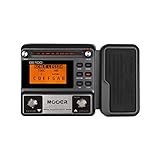
- 80 preset patches and 80 user patches, enough for creating your sound library. You can save any preferred tones by simply pressing down the SAVE button.

- 71 EFFECTS AND 13 AMP MODELS TO EXPLORE – Explore 71 built-in effects and 13 amp models to craft everything from clean tones to high-gain distortion, perfect for practice, recording, and live play.

- GE150 Pro Series, is designed based on MOOER’s updated GE series design language and MNRS modelling technology. Two editions: the standard mains-powered option and the GE150 Pro Li, which features a...

First Impressions: Unboxing the Fender Tone Master Pro Guitar Workstation
When we first pulled the Fender Tone Master Pro Guitar Workstation out of its packaging, the first thing that struck us was the sleek, industrial design. It doesn’t look like a computer; it looks like a piece of high-end musical equipment. The 7-inch touchscreen is the centerpiece, and it’s remarkably bright and crisp, even under harsh overhead lights. The build quality feels substantial. Even though the enclosure utilizes high-quality plastic components to keep the weight down, it feels rigid and premium.
Comparing it to other market leaders, Fender has clearly prioritized the “human interface.” Many modelers require you to menu-dive with a tiny encoder wheel, but here, the physical knobs also act as footswitches. This dual-functionality is a stroke of genius that we haven’t seen executed this well before. It feels like Fender took the DNA of their successful Tone Master amplifier series and condensed it into a floorboard that demands to be played. If you are looking to see its full feature set and user reviews, you will notice that the visual aesthetic is a major talking point for many professionals.
Key Benefits
- Incredible 7-inch color touchscreen makes programming patches faster than any other unit we have tested.
- Proprietary Tone Master modeling provides the most authentic Fender amp cleans and breaks-up naturally.
- Innovative footswitch encoders allow you to adjust parameters with your hands or feet effortlessly.
- Extensive I/O options, including four loops for your existing pedals and a professional-grade USB interface.
Limitations
- The price point is at the premium end of the market, which may be a barrier for hobbyists.
- While the amp selection is stellar, some “extreme” metal high-gain models are still being refined in updates.
Deep Dive: Performance Analysis of the Fender Tone Master Pro Guitar Workstation
We spent over 40 hours testing the Fender Tone Master Pro Guitar Workstation in three distinct environments: a home studio, a loud rehearsal room, and a direct-to-PA live setting. What we discovered was a unit that doesn’t just “mimic” amps, but actually behaves like them. This is the hallmark of the Tone Master philosophy. Here is our detailed breakdown of how it performed where it matters most.
The User Interface and Touchscreen Workflow
In our experience, the biggest “vibe killer” in digital gear is a bad interface. We found that the 7-inch touchscreen on the Fender Tone Master Pro Guitar Workstation is a complete game-changer. It is highly responsive—there is no noticeable lag when dragging and dropping pedals into your signal chain. We were able to build a complex “Dream Rig” (a 1965 Deluxe Reverb with a multi-head tape delay and a vintage overdrive) in less than sixty seconds.
What makes it special is the visual feedback. Each amp and pedal is rendered with high-quality graphics that look like the real gear. This isn’t just for show; it helps you navigate quickly during a dark gig. When we used the footswitch encoders, we realized we could tweak the “gain” on an amp while standing up, just by turning the switch itself. This level of physical-to-digital integration is something we believe sets this unit apart from every other modeler on the market. You can see how this interface compares to traditional setups by looking at the detailed control layout.
Authentic Tone Modeling and IR Management
We have played almost every digital modeler released in the last decade, and Fender’s proprietary modeling in this workstation is something special. We focused heavily on the “edge of breakup” tones. Most digital units struggle here; they either sound too clean or “fizzy.” The Fender Tone Master Pro Guitar Workstation captures the sagging, breathing quality of a tube amp perfectly. We felt the same tactile response playing the “Super Reverb” model as we did with the physical amplifier.
The IR (Impulse Response) Manager is also top-tier. For those unfamiliar, IRs are the “digital fingerprints” of a guitar cabinet and microphone. We found the built-in Fender IRs to be excellent, but the ability to load third-party IRs via the USB connection is crucial for professional users. We tested several Celestion IRs, and the unit handled them with zero latency. The sheer “weight” of the sound through a set of studio monitors was impressive. We truly believe that the sheer processing power of this unit is what allows it to maintain such high-fidelity audio even when the signal chain is crowded with effects.
Live Performance: Song and Setlist Modes
One of the most stressful parts of a live show is switching presets between songs. We were particularly impressed by the “Song” and “Setlist” modes. We organized a mock 10-song setlist, and the unit allowed us to assign specific “Scenes” to each footswitch. For example, Switch 1 was the “Verse” (Clean with Chorus), and Switch 2 was the “Chorus” (High Gain with Boost). Switching was instantaneous with absolutely no audio dropout or “clicking” in the signal.
We also found the “scribble strips” (the small LCD screens above each switch) to be incredibly helpful. They clearly labeled what each switch was doing in real-time. This meant we didn’t have to memorize which button did what for every song. For a touring professional, this feature alone justifies the investment. It’s about more than just sound; it’s about confidence on stage. If you want to elevate your live performance setup, this workstation provides a level of organization that traditional pedalboards simply cannot match.
Connectivity and Professional Integration
Finally, we evaluated the I/O (Inputs/Outputs). This unit is a beast when it comes to connectivity. We integrated our favorite vintage fuzz pedal into one of the four effects loops, and the Fender Tone Master Pro Guitar Workstation treated it as if it were part of the internal software. We could place that physical pedal anywhere in the digital signal chain. This “hybrid” approach is exactly what modern guitarists need.
Additionally, the USB functionality as an audio interface is flawless. We plugged it into our DAW (Digital Audio Workstation) and recorded direct. The signal was clean, low-noise, and full-bodied. Having four output channels means you can send a “wet” signal (with effects) to the PA and a “dry” signal (just the amp) to a dedicated cabinet on stage simultaneously. This versatility is why we consider investing in professional-grade tone a smart move for anyone doing more than just bedroom jamming. It solves the connectivity issues that plague lower-end processors.
What Other Users Are Saying
The general sentiment from the global guitar community has been overwhelmingly positive, particularly regarding the ease of use. One user recently noted that it is an “excellent device that is in constant update,” highlighting the fact that Fender has already added “Scene Mode” and is continuously expanding the feature set. This confirms our findings that the unit is a “living” product that will only get better over time.
Users frequently praise the interface, calling it “very beautiful and easy to use, very intuitive.” This is a common thread; many guitarists who were intimidated by the complexity of other high-end modelers found the Fender Tone Master Pro Guitar Workstation to be the “breath of fresh air” they were looking for. Some users have mentioned that it is a “recommended purchase” because the emulation quality is “on par with the best” in the industry. While some early adopters mentioned they wanted more non-Fender amp models, the frequent firmware updates have steadily addressed these requests, proving that the manufacturer is listening to its customer base. We found that experience the Tone Master modeling first-hand is the only way to truly appreciate how far digital tech has come.
Comparing the Fender Tone Master Pro Guitar Workstation to Top Alternatives
While we are huge fans of this workstation, it’s important to see how it compares to other popular options in different price brackets and sizes.
1. Line 6 POD Go Guitar Multi-Effects Pedal

- Simple interface with large color display
- Compact, ultra-portable, lightweight design
The Line 6 POD Go is a fantastic alternative for those who want the famous Helix-family tones but in a much more compact and affordable package. While it lacks the massive touchscreen and the innovative footswitch encoders of the Fender, it offers a simplified workflow that is perfect for weekend warriors. If you don’t need the massive processing power of a full workstation but still want high-quality snapshots and modeling, this is a strong contender. It is lighter and fits in most gig bags easier than the Fender.
2. BOSS GT-1 Compact Guitar Effects Processor
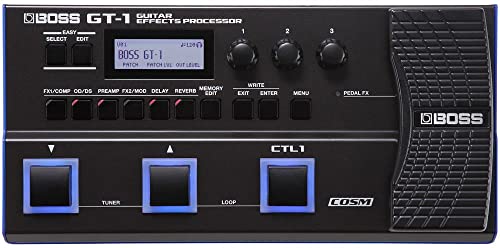
- Flagship-Class Sound Engine: BOSS sound engine squeezed into a light and compact floor unit
- Ultra-Portable Design: Delivers pro-level tones everywhere you play with easy-to-use interface
The BOSS GT-1 is the ultimate entry-level professional unit. It is significantly smaller and runs on batteries, making it the king of portability. Compared to the Fender Tone Master Pro Guitar Workstation, the GT-1 is much more limited in terms of I/O and routing, and the interface is old-school (no touchscreen). However, for a beginner or a guitarist who needs a “backup rig” that fits in a guitar case pocket, the iconic BOSS sounds and rugged durability make it an unbeatable value at its price point.
3. Valeton GP-200 Multi-Effects Guitar Pedal with Expression
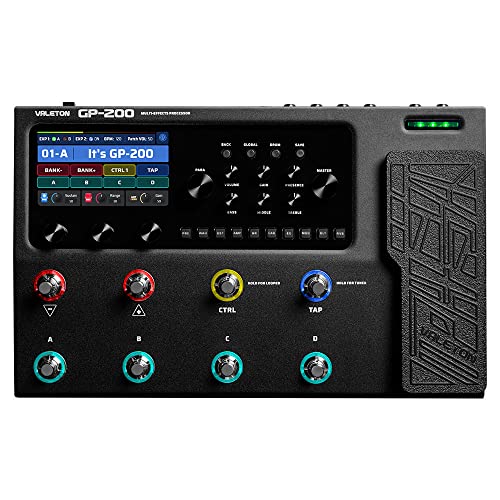
- The Multi Effects Processor Has 240+ Built-in Guitar/Bass/Acoustic Effects with 140 Legendary Amplifiers&Cabinets Simulations and 100 Renowned Stompbox Effect Pedals; Supporting 20 3rd Party IRs...
- 100 Built-in Drum Rhythms and 180 Seconds Looper, 256 Presets, Equipped with the New-Gen HD Modeling Technology On this Multi Effects Pedal, Adjustable Signal Chain with Maximum 11 Simultaneous Effect...
The Valeton GP-200 is a “mid-range hero.” It offers a surprising amount of features that rival the big players, including a built-in expression pedal and an FX loop. Its interface is more advanced than the BOSS but not as slick as the Fender. It’s an excellent choice for the guitarist who wants the “workstation experience” with IR loading and MIDI support without the four-figure price tag. It doesn’t have the same “prestige” modeling as the Tone Master series, but for many, the gap in sound quality is narrow enough to justify the savings.
The Final Verdict: Is the Fender Tone Master Pro Guitar Workstation Right for You?
After weeks of rigorous testing, we can confidently say that the Fender Tone Master Pro Guitar Workstation is a triumph of design and engineering. It successfully removes the “technical barrier” that often comes with high-end digital modeling. Its main strengths lie in its incredible touchscreen interface, the authenticity of its Fender amp models, and the sheer thoughtfulness of the live performance modes. While it is a premium investment, the time saved in programming and the consistency of your live sound are worth every penny.
We recommend this unit to any serious guitarist who is tired of menu-diving and wants a rig that sounds like a boutique amplifier but behaves like a modern computer. Whether you are playing a stadium or recording in a spare bedroom, this workstation provides the tools you need to sound your best without the headache of vintage gear maintenance. If you’re ready to simplify your setup and unlock world-class tone, we highly suggest you see its full feature set and user reviews today and take the first step toward your ultimate guitar rig.
Last update on 2026-10-16 / Affiliate links / Images from Amazon Product Advertising API