
Line 6 HX Stomp XL Review: The Ultimate Compact Command Center for Modern Guitarists
For years, I found myself trapped in a cycle that every guitarist knows all too well: the “heavy rig” dilemma. One weekend, I’d be lugging a 50-pound tube head and a 4×12 cabinet up three flights of stairs for a club gig, and by Monday, I’d be scouring the internet for a way to fit that entire sound into a backpack. We’ve all been there. The problem isn’t just the weight; it’s the compromise. Most compact solutions feel like “toys,” lacking the raw, organic response of a real amplifier. When you can’t feel the “sag” of the power tubes or the grit of a high-gain preamp, your playing suffers. You lose the inspiration to create. Failing to solve this balance between portability and professional-grade tone usually results in a cluttered floor of mediocre pedals or a permanent backache. That is exactly why I decided to put the Line 6 HX Stomp XL through its paces—to see if it truly is the bridge between the analog past and the digital future.


Choosing the Right Electric Guitar Multieffects: A Comprehensive Buyer’s Guide
An Electric Guitar Multieffects unit is more than just an item; it’s a key solution for the modern musician who demands versatility without the chaos of twenty patch cables and a massive power supply. These devices act as the brain of your entire signal chain, replacing amplifiers, cabinets, and a library of effects pedals. By consolidating your sound into a single digital ecosystem, you eliminate signal loss, noise floor issues from old cables, and the sheer physical burden of traditional gear. The main benefit is consistency; whether you are plugging into a studio interface, a front-of-house PA system, or a traditional amp, your core tone remains stable and predictable.
The ideal customer for this type of product is the working professional who needs a “grab-and-go” rig for fly-dates, the studio session player who requires a massive palette of sounds at their fingertips, and the home hobbyist who wants world-class tones at headphone volumes. However, it might not be suitable for the absolute purist who refuses to use anything without glowing vacuum tubes, or for those who find deep-menu diving overwhelming. If you prefer a “one knob per function” workflow, you might find the learning curve of a sophisticated processor like the Line 6 HX Stomp XL a bit steep initially, though the rewards are arguably worth the effort. Before you commit, you can check the latest price and availability to see how it fits your budget.
Before investing, consider these crucial points in detail:
- Dimensions & Space: The physical footprint of a multi-effects unit determines its place on your board. You need to ensure it is large enough to be functional for your feet but small enough to fit in a gig bag. A unit that is too cramped can lead to accidental “fat-footing” two switches at once during a solo.
- Capacity & DSP Performance: Digital Signal Processing (DSP) is the “engine” of the unit. Look for the number of simultaneous blocks or effects the unit can run. High-quality amp models and complex reverbs consume more power, so having a robust engine is vital for creating sophisticated, multi-layered presets.
- Materials & Durability: Since these units live on the floor, they must be built like tanks. All-metal chassis construction and heavy-duty footswitches are non-negotiable for professional use. Plastic housings might save weight, but they rarely survive the rigors of the road.
- Ease of Use & Maintenance: Consider the interface. Is there a dedicated software editor for your computer? Does the screen provide enough visual feedback on a dark stage? Long-term care involves firmware updates, so a unit with a strong manufacturer support system is essential for longevity.
Ultimately, the goal is to find a device that enhances your creativity rather than hindering it with technical hurdles. While the Line 6 HX Stomp XL is an excellent choice, it’s always wise to see how it stacks up against the competition. For a broader look at all the top models, we highly recommend checking out our complete, in-depth guide:
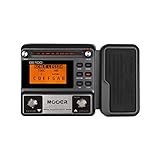
- 80 preset patches and 80 user patches, enough for creating your sound library. You can save any preferred tones by simply pressing down the SAVE button.

- 71 EFFECTS AND 13 AMP MODELS TO EXPLORE – Explore 71 built-in effects and 13 amp models to craft everything from clean tones to high-gain distortion, perfect for practice, recording, and live play.

- GE150 Pro Series, is designed based on MOOER’s updated GE series design language and MNRS modelling technology. Two editions: the standard mains-powered option and the GE150 Pro Li, which features a...
First Impressions and the Expanded Power of the Line 6 HX Stomp XL
When I first pulled the Line 6 HX Stomp XL out of the box, the immediate sensation was one of professional-grade density. It doesn’t feel like a piece of consumer electronics; it feels like a piece of industrial hardware. The black finish is sleek, and the addition of the five extra footswitches compared to the standard Stomp makes a world of difference in visual balance. Setting it up was a breeze—plugging it into my studio monitors via the 1/4-inch outputs and connecting it to my Mac via USB allowed me to dive into the HX Edit software within minutes. To get a better sense of its physical presence, you should see its full feature set and user reviews to understand why this specific form factor is so popular.
Compared to the original HX Stomp, which often required an external MIDI controller to unlock its full potential, the Line 6 HX Stomp XL feels complete. It addresses the main complaint of its predecessor: the lack of hands-free control. You now have dedicated switches for bank up/down and several assignable switches for snapshots or individual effects toggles. It sits comfortably in the middle of the Helix lineup—more portable than the Floor or LT versions, but significantly more capable for live performance than the standard Stomp. During my initial sound check, the “Litigator” amp model felt just as responsive as the flagship units, proving that Line 6 didn’t cut any corners on the internal audio engine.
What We Like
- Authentic Helix-grade tones in a remarkably portable, pedalboard-friendly chassis.
- Eight blocks of dynamic DSP allows for complex signal chains with amps, cabs, and effects.
- Five additional footswitches provide the hands-free control that the original Stomp lacked.
- Fully interchangeable presets with the entire HX/Helix family for seamless workflow.
What We Didn’t Like
- The power requirements are specific; you’ll likely need the included power supply or a high-current adapter.
- The depth of the menus can be intimidating for beginners who aren’t used to the Helix architecture.
A Deep Dive into the Performance of the Line 6 HX Stomp XL
The “Command Center” Workflow: Footswitches and Control
The standout feature of the Line 6 HX Stomp XL is, undoubtedly, the expanded control layout. We found that having eight footswitches instead of three completely changes how you interact with your presets on stage. In the past, with the smaller Stomp, I found myself constantly bending over to change banks or relying on external MIDI controllers which added more cables and points of failure. The XL solves this natively. We spent hours configuring the switches to handle “Snapshots,” which is arguably the most powerful way to use this unit. A Snapshot allows you to change multiple parameters across all eight blocks simultaneously without any audio dropout. For instance, I can switch from a bone-dry rhythm tone to a lead tone with increased delay, more gain, and a volume boost with a single click. This level of control is a feature that really sets it apart from smaller modeling units.
The switches themselves are the capacitive touch-sensitive type found on the flagship Helix. This means you can simply touch your finger to a switch (without clicking it) to bring up the editing menu for that specific block on the screen. It is an incredibly intuitive way to make quick adjustments during a rehearsal. In our testing, the “Hands-Free” mode was a lifesaver. By holding down the Mode switch, you can enter a state where you use the footswitches to adjust parameters like gain or reverb mix. This means you can keep your hands on the guitar and your ears focused on the tone while you tweak. One user review mentioned how this functionality allowed them to focus more on playing and less on “tap-dancing” over their pedals, and we couldn’t agree more. The Line 6 HX Stomp XL is designed for the performing guitarist who needs deep control without the bulk.
Unrivaled Tonal Authenticity: The Helix Engine
At its heart, the Line 6 HX Stomp XL uses the exact same modeling engine as the $1,500+ Helix Floor. This is not a “lite” version of the tones; it is the full, unadulterated SHARC DSP power. We tested the unit with a variety of guitars, from a single-coil Stratocaster to a high-output active humbucker set, and the “feel” of the amp models is what impressed us most. The way a digital model cleans up when you roll back your guitar’s volume knob is the ultimate litmus test for authenticity. Models like the “Princess” (based on a Fender Princeton) and the “Essex A30” (based on a Vox AC30) exhibited that beautiful, chimey breakup that we usually only find in expensive tube amps. For those interested in the technical side, you can explore the detailed specs and signal format to see how it handles high-resolution audio.
The ability to run eight blocks simultaneously is the “sweet spot” for most players. While the larger Helix units can run more, eight blocks are more than enough to create a professional signal path: Wah > Compressor > Overdrive > Amp > Cab > EQ > Delay > Reverb. We also experimented with the Impulse Response (IR) loading capabilities. While the stock cabs in the 3.50+ firmware are phenomenal, loading third-party IRs allowed us to perfectly match our studio sounds for live use. The Line 6 HX Stomp XL handles these IRs with zero latency, providing a consistent “mic’d up” sound every time you plug in. We found that the saturations and overdrives have a physical “weight” to them that many other modelers lack, which confirms why even die-hard analog fans, as noted in user feedback, are making the switch to this unit.
Professional Connectivity and Integration
Integration is where the Line 6 HX Stomp XL truly earns its keep in a professional rig. It’s not just an “all-in-one” box; it’s a team player. We tested the stereo FX loop, which allows you to insert your favorite boutique analog pedals anywhere in the digital signal chain. If you have a specific fuzz or a vintage delay that you can’t live without, you can place it in the loop and move that “block” around within your Line 6 HX Stomp XL presets. Furthermore, the MIDI capabilities are extensive. As one user pointed out, they use the XL to control their external Boss DD-500 and Whammy pedal via MIDI. We replicated this in our studio, using the XL as the “brain” to send program changes to our entire board. It worked flawlessly.
The unit also functions as a high-quality 24-bit/96kHz USB audio interface. This makes it a formidable tool for the home studio. You can record your processed signal while simultaneously capturing a “DI” (direct injection) signal for re-amping later. This workflow is standard in professional studios, and having it built into a pedal of this size is a massive advantage. Whether you are using the 4-cable method to integrate with a real tube amp or going direct to the PA, the Line 6 HX Stomp XL provides the I/O flexibility needed for any scenario. For those looking to upgrade their home recording setup, we suggest you check its current pricing for studio use.
Portability Without Compromise: The “Backpack” Rig
Finally, we have to talk about the physical form factor. The Line 6 HX Stomp XL weighs in at just over 1 pound (454 grams), which is staggering considering the amount of technology inside. We were able to fit the unit, all necessary cables, and a pair of professional in-ear monitors into the front pocket of a standard guitar gig bag. This is the dream for the “urban” musician who travels via subway or for the international touring pro who needs to keep their rig under the weight limit for carry-on luggage. In our tests, the Line 6 HX Stomp XL was rugged enough to handle being tossed into bags and stepped on repeatedly during high-energy performance testing.
The screen, while smaller than the full Helix, is bright and high-contrast, making it easy to read even under direct stage lights or in a dark basement club. The color-coded LED rings around the footswitches are another touch of genius. You can customize the colors to represent different types of effects (e.g., green for delays, red for distortions, blue for modulations), which provides instant visual feedback during a frantic set. We found that this small detail significantly reduces the cognitive load of performing, allowing you to focus on the music. If you’re tired of lugging around heavy gear, you can see how this unit can simplify your setup.
What Other Users Are Saying
The general consensus among the community is that the Line 6 HX Stomp XL is a “problem solver.” One user, who identified as a “big analog guy,” admitted that this was the first digital unit that convinced them to ditch their traditional pedals, noting that it’s no longer a concern of “whether it sounds good.” This sentiment is common; the “feel” of the HX engine has finally crossed the bridge where it satisfies tube-amp purists. Another user highlighted the functionality of the Snapshots and MIDI control, stating it allowed them to concentrate on playing rather than activating multiple pedals at once. This aligns perfectly with our findings regarding the “Command Center” workflow.
However, it is important to address some of the criticisms. One user reported receiving a used unit when they paid for a new one, which serves as a reminder to always purchase from reputable sellers and check your gear upon arrival. Additionally, a Spanish-speaking reviewer mentioned that while the emulations are excellent, it takes significant time to master the unit to get the “perfect” live sound that matches an amplifier. This highlights the learning curve we mentioned earlier. The Line 6 HX Stomp XL is a deep tool, and while it sounds great out of the box, the real magic happens when you spend time learning the architecture. These varied perspectives offer a balanced view, showing that while the unit is powerful, it requires an investment of time to truly master. To see more unfiltered opinions, you can read more real-world user reviews here.
Comparing the Line 6 HX Stomp XL to Its Top 3 Alternatives
1. Valeton GP-100 Guitar Multi-Effects with Expression Pedal

- 140 Built-in Guitar/Bass/Acoustic Effects with 45 Legendary Amp Models and 40 carefully selected IR Cabinet Simulations, 24-bit 44.1kHz Signal Processing
- 100 Built-in Drum Rhythms and 90 Seconds Looper, 198 Presets, Adjustable Signal Chain with Maximum 9 Simultaneous Effect Blocks
The Valeton GP-100 is a fantastic entry-level alternative for those who find the Line 6 HX Stomp XL a bit outside their budget. It offers a much smaller footprint and includes a built-in expression pedal, which the XL lacks. However, the GP-100 cannot compete with the depth of modeling or the routing flexibility of the Helix engine. It’s perfect for beginners or as a secondary “emergency” backup rig that fits in a glove box, but it lacks the professional “Command Center” MIDI features and the vast effect library found in the Line 6 ecosystem.
2. BOSS GT-1 Compact Guitar Effects Processor
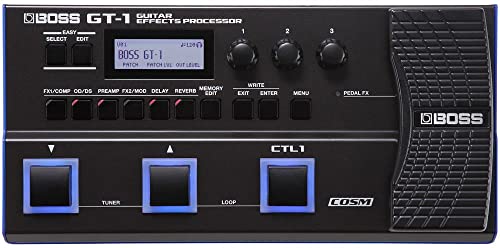
- Flagship-Class Sound Engine: BOSS sound engine squeezed into a light and compact floor unit
- Ultra-Portable Design: Delivers pro-level tones everywhere you play with easy-to-use interface
The BOSS GT-1 is a legendary “standard” for portable multi-effects. It is incredibly durable and runs on AA batteries, making it the king of street busking and ultra-portable practice. While the BOSS tones are iconic and very usable, the interface feels dated compared to the modern, high-resolution HX Edit software. The Line 6 HX Stomp XL offers a much more “realistic” amp modeling experience and a more flexible block-based architecture. Choose the GT-1 if you want simplicity and battery power; choose the XL if you want professional studio-grade sonics.
3. Valeton GP-200 Multi-Effects Guitar Pedal
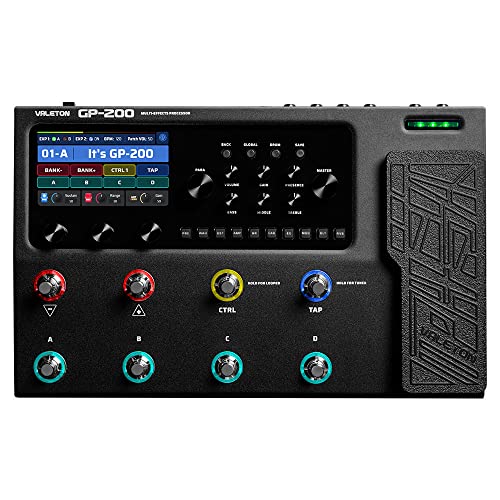
- The Multi Effects Processor Has 240+ Built-in Guitar/Bass/Acoustic Effects with 140 Legendary Amplifiers&Cabinets Simulations and 100 Renowned Stompbox Effect Pedals; Supporting 20 3rd Party IRs...
- 100 Built-in Drum Rhythms and 180 Seconds Looper, 256 Presets, Equipped with the New-Gen HD Modeling Technology On this Multi Effects Pedal, Adjustable Signal Chain with Maximum 11 Simultaneous Effect...
The Valeton GP-200 is perhaps the closest competitor in terms of physical control, offering a wide array of footswitches and a more traditional “pedal” look with plenty of physical knobs. It is an excellent middle-ground for players who hate menu-diving. However, the community support and third-party preset/IR ecosystem for Line 6 is vastly superior. While the GP-200 is a powerhouse in its own right, the Line 6 HX Stomp XL remains the gold standard for firmware updates and long-term value, ensuring your gear stays relevant for years to come.
Final Verdict: Is the Line 6 HX Stomp XL the Right Choice for You?
After extensive testing in both live and studio environments, it is clear that the Line 6 HX Stomp XL is the most versatile compact modeler on the market today. It successfully bridges the gap between the ultra-portable (but limited) standard Stomp and the massive (but cumbersome) Helix Floor. Its strengths lie in its unrivaled tonal quality, professional-grade MIDI integration, and the hands-free freedom provided by its eight-switch layout. While the learning curve is real and the power requirements are specific, the payoff is a rig that sounds world-class and fits in a backpack. Whether you are a weekend warrior looking to save your back or a touring pro looking for the ultimate fly-rig, this unit delivers.
If you are ready to stop compromising on your tone and start simplifying your life, we cannot recommend this unit enough. It is a long-term investment in your sound that will pay dividends every time you plug in, whether you’re on a festival stage or in your bedroom. Don’t wait to upgrade your creative potential—take the next step and get the Line 6 HX Stomp XL today to experience the pinnacle of modern guitar technology.
Last update on 2026-10-16 / Affiliate links / Images from Amazon Product Advertising API