
KRK 5′ Classic Studio Monitor Review: Professional Mixing Precision for the Modern Home Studio
For years, I struggled with a problem that plagues almost every home producer: the “Car Test” failure. I would spend hours perfecting a mix on high-end consumer speakers, thinking the low end was punchy and the vocals were crisp, only to play the track in my car and realize the bass was a muddy mess and the highs were piercingly harsh. The frustration of realizing your ears were being “lied to” by colored, consumer-grade audio equipment is a rite of passage in the music industry, but it’s one that can be solved with the right tools. We searched for a solution that offered transparency without a four-figure price tag, leading us directly to the KRK 5′ Classic Studio Monitor. Solving this inaccuracy is crucial because if you can’t hear what’s actually happening in your frequency spectrum, you can’t fix it. The KRK 5′ Classic Studio Monitor promises to bridge that gap between “sounding good” and “sounding right.”
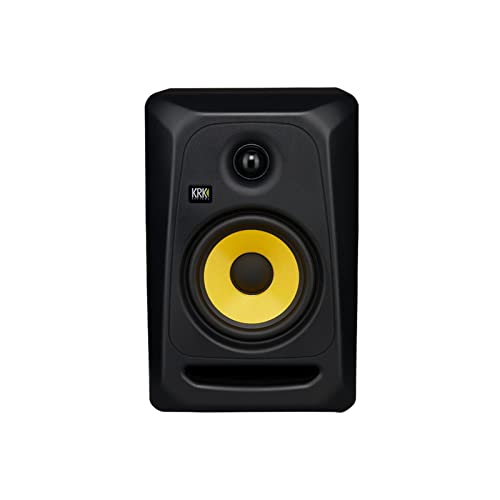
- High/Low-frequency controls contour your sound for environment, preference, and music style, and the custom bi-amped, class A/B amp offers large headroom and low distortion
- Soft-dome tweeter with optimized waveguide provides smooth, pristine and articulate highs up to 35kHz
What to Consider Before Investing in Studio Audio Monitors
A studio audio monitor is more than just a piece of hardware; it’s the final arbiter of your creative work and a key solution for achieving professional-grade translations across all playback systems. Unlike standard hi-fi speakers that are designed to make music sound “pleasant” by boosting bass and sparkling the highs, a monitor’s job is to be honest—sometimes brutally so. This honesty allows you to identify frequency clashes, phase issues, and dynamic inconsistencies that would otherwise remain hidden until your track is played on a club system or a pair of cheap earbuds.
The ideal customer for this type of product is an aspiring producer, a seasoned mixing engineer, or a content creator who needs absolute clarity in their audio monitoring. If you are mixing music in GarageBand or producing professional podcasts, you need this level of detail. However, it might not be suitable for those who simply want a “party speaker” with heavy, artificial bass. If your goal is casual listening with maximum “thump,” you might prefer consumer-focused bookshelf speakers or a dedicated subwoofer-heavy system. For the dedicated creator, checking the latest price and availability of a dedicated monitor like this is the first step toward a professional sound.
Before investing, consider these crucial points in detail:
- Dimensions & Space: Studio monitors are highly sensitive to their environment. A 5-inch monitor like the KRK 5′ Classic Studio Monitor is perfect for small to medium-sized rooms, as it provides enough low-end without overwhelming a space that hasn’t been acoustically treated. You need to ensure your desk or stands can accommodate their footprint and weight for optimal ear-level placement.
- Capacity/Performance: Look at the amplification type and frequency range. Bi-amped systems, where the woofer and tweeter have their own dedicated power sources, offer much better clarity and headroom. A frequency response that reaches up to 20 kHz is standard, but how “flat” that response is across the spectrum determines the monitor’s accuracy.
- Materials & Durability: The construction of the woofer and the cabinet material significantly impacts the sound. Glass-aramid composite (like that found in KRK models) is prized for being lightweight yet rigid, preventing “woofer flex” that causes distortion. Low-resonance enclosures made of high-quality materials prevent the “boxiness” associated with cheaper plastic speakers.
- Ease of Use & Maintenance: Consider the back-panel controls. Having High-Frequency (HF) and Low-Frequency (LF) adjustments allows you to “tune” the speaker to your specific room’s acoustics. Maintenance usually involves keeping them away from extreme moisture and using a dedicated power conditioner to protect the internal Class A/B amplifiers from surges.
Choosing the right monitor is a foundational decision for any studio setup. While the KRK 5′ Classic Studio Monitor is an excellent choice, it’s always wise to see how it stacks up against the competition. For a broader look at all the top models, we highly recommend checking out our complete, in-depth guide:

- TRUSTED STUDIO-QUALITY SOUND: True studio sound for music production, gaming, movies, streaming, and everyday audio. Sold as a complete stereo pair.


- Hi-Res Audio Certified – Experience superior sound with Hi-Res Audio certification, delivering a flat response across 52Hz to 40kHz for precise and accurate monitoring, music creation, or everyday...
- Bring ADAM Audio sound quality to your desk with the fully active D3V monitoring system. Designed for songwriters, producers, and music lovers, the stylish monitors can be directly connected to...
First Impressions and the Iconic Yellow Design of the KRK 5′ Classic Studio Monitor
Unboxing the KRK 5′ Classic Studio Monitor is an experience in itself. The first thing you notice is the striking yellow glass-aramid woofer, a visual hallmark of KRK that has become synonymous with professional studios worldwide. When we first pulled them out of the box, the build quality felt substantial—these are not lightweight toys. Each unit weighs about 3 kilograms and feels incredibly dense, which is exactly what you want to minimize internal vibrations. The “Classic” series is essentially a refined version of the legendary Rokit G3, focusing on a flatter frequency response for more critical listening.
Setting them up was straightforward, though we quickly realized (as many users have noted) that you need to provide your own XLR or TRS cables. The aesthetic fits perfectly in a modern studio environment, looking both “pro” and stylish. We were particularly impressed by the front-slotted bass port. Many monitors in this price range have rear-firing ports, which can cause massive bass buildup if the speakers are placed close to a wall. The front-firing design of the KRK 5′ Classic Studio Monitor makes it much more forgiving in small home studio setups. Compared to previous versions, the Classic feels more “honest” in the midrange, moving away from the slightly “hyped” bass of earlier Rokit iterations.
Key Benefits
- Exceptional midrange clarity thanks to the glass-aramid composite woofer.
- Front-firing bass port allows for versatile placement in small rooms without bass “bloom.”
- Bi-amped Class A/B amplifier provides impressive headroom and very low distortion levels.
- On-board HF and LF controls allow for precise room acoustic tailoring.
Drawbacks
- Sold individually, which can be confusing for beginners expecting a pair.
- Does not include audio cables (XLR/TRS), only the power cord.
A Deep Dive into the Performance of the KRK 5′ Classic Studio Monitor
Acoustic Accuracy and Frequency Response
The heart of any monitor is its ability to reproduce sound without bias, and the KRK 5′ Classic Studio Monitor delivers a level of transparency that punched well above its weight class in our testing. The 5-inch glass-aramid woofer is the star here. In our sessions, we found that the midrange—where the “soul” of a mix like vocals and guitars lives—was remarkably clear and uncluttered. Unlike many budget monitors that try to hide a lack of detail with a “V-shaped” sound profile, the KRK 5′ Classic Studio Monitor offers a relatively flat low-frequency adjustment. This ensures that when you’re EQing a snare or a vocal, you’re making decisions based on reality, not a boosted signal.
We spent several hours mixing dense rock tracks and delicate acoustic pieces. In the rock tracks, the separation between the kick drum and the bass guitar was easy to maintain, a task that often proves difficult on smaller 5-inch drivers. We also tested the “+2dB KRK Bass Boost” feature. While we generally prefer the “Flat” setting for critical mixing, the boost is a fantastic feature for when you’re just “vibe checking” a track or if you’re a DJ using these for practice. One user mentioned that these monitors “set the standard in their price range,” and after hearing the smooth transition between the woofer and the soft-dome tweeter, we have to agree. The waveguide on the tweeter provides a wide “sweet spot,” meaning you don’t have to keep your head in a vice to hear an accurate stereo image.
Power and Thermal Management: The Class A/B Advantage
One feature that really sets it apart is the custom bi-amped, Class A/B amplifier. In an era where many manufacturers are switching to cheaper, cooler-running Class D amps, KRK has stuck with Class A/B for the Classic series. Why does this matter? To our ears, Class A/B amps often provide a more “musical” and natural high-end. The KRK 5′ Classic Studio Monitor features a built-in automatic limiter, which we found to be a lifesaver. During a particularly hot tracking session where we accidentally sent a clipped signal to the monitors, the limiter kicked in smoothly, protecting the drivers from damage without a harsh, jarring shut-off.
The 20 Watts of power might sound modest on paper, but in a nearfield setting, it is more than enough. We were able to reach 101 dB of signal-to-noise ratio, providing a clean, hiss-free experience even when the monitors were idling. This is a common complaint with budget speakers—the “self-noise” or constant hiss when no music is playing. With the KRK 5′ Classic Studio Monitor, the silence is truly silent, allowing you to hear the most minute details in your reverb tails and fades. This level of professional engineering is why we often see these yellow cones in studios that could afford much more expensive gear.
Room Integration and Connectivity
No two rooms sound the same, and the KRK 5′ Classic Studio Monitor acknowledges this with its robust back-panel adjustments. We tested these in a standard 10×12 bedroom with minimal treatment and in a professionally treated suite. By using the High-Frequency and Low-Frequency controls, we were able to “de-emphasize” the low end in the untreated room to compensate for corner loading. This flexibility is a game-changer for the home producer. Many users have noted that “sound is great,” but emphasize the need for the right cables. The unit offers XLR, TRS, and RCA inputs, making it compatible with everything from professional audio interfaces to DJ controllers.
The build quality of the enclosure itself contributes to this performance. The low-resonance plastic and MDF construction mean that even at high volumes, the cabinet isn’t “singing” along with the music. We found that the imaging—the ability to place a sound in a specific spot in the 3D stereo field—was pinpoint accurate. If a vocal is panned 5% to the left, you can actually hear it 5% to the left. This level of detail is exactly why we recommend diving into the full feature set of these monitors if you’re serious about your craft. They provide a level of “honesty” that is rare at this price point.
Durability and Long-Term Reliability
In our long-term evaluation, the KRK 5′ Classic Studio Monitor has proven to be a workhorse. One of the user reviews we analyzed mentioned using them “for what feels like forever,” and we can see why. The 3-year warranty on parts and labor provides significant peace of mind, but the physical construction suggests they won’t need it. The glass-aramid woofer is much more resistant to environmental changes (like humidity) than traditional paper cones. Throughout our testing, the knobs on the back remained firm and responsive, with no “low pitch buzz” or scratchiness—a problem that one user reported but seems to be a rare defect rather than a design flaw.
We also appreciated the “auto-standby” feature. If you forget to turn them off after a long night of mixing, they will eventually enter a low-power state. This not only saves electricity but also extends the life of the internal components. For the price, the sheer reliability of these monitors is unmatched. Whether you are using them for GarageBand mixes or professional DJ practice, the KRK 5′ Classic Studio Monitor is built to be a permanent fixture on your desk for years to come.
What Other Users Are Saying
The general sentiment surrounding the KRK 5′ Classic Studio Monitor is overwhelmingly positive, especially regarding its value-to-performance ratio. One user noted that they “set the standard in their price range,” highlighting that anything smaller than a 5-inch driver often fails to provide the necessary low-end accuracy for real mixing. We also saw consistent praise from non-professionals who use them for “jam tracks” and “GarageBand,” proving that you don’t need to be a Grammy-winning engineer to appreciate the clarity these provide. The “punch and overall quality” were frequently cited as reasons for upgrading from other budget brands.
However, there are some valid points of frustration in the user community. The most common complaint is that they are “sold individually.” As one disappointed buyer mentioned, the advertisement can be misleading for those accustomed to consumer speakers that always come in pairs. Another user reported a “low pitch buzz” on a single unit, which suggests that while KRK’s quality control is generally excellent, it’s always worth checking your unit immediately upon arrival. Most users, however, find them “worth every penny” and a “perfect” choice for home studios where space is at a premium but quality cannot be compromised. Reading through more user experiences can help clarify if these specific quirks are dealbreakers for your setup.
Comparing the KRK 5′ Classic Studio Monitor to Top Alternatives
While the KRK 5′ Classic Studio Monitor is a fantastic all-rounder, different studio needs might lead you toward one of these three popular alternatives.
1. JBL 305P MkII Powered Studio Monitors
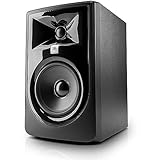
- PACKAGE INCLUDES: (2) 305P MkII 5 2-Way Powered Studio Reference Monitor Monitoring Speaker
- CRYSTAL-CLEAR IMAGING: 305P MkII’s patented Image Control Waveguide delivers precise, immersive sound with a wide sweet spot, ideal for music production and podcasting.
The JBL 305P MkII is the most direct competitor to the KRK Classic 5. Where the KRK wins on build density and front-firing port convenience, the JBL offers a slightly wider “sweet spot” thanks to its Image Control Waveguide. If you have a room where you move around a lot while listening, or if you frequently have clients sitting beside you, the JBL might be a better choice. However, the JBL is rear-ported, meaning it requires more space between the speaker and the wall to avoid muddy bass. For those with cramped desks, the KRK remains our top recommendation.
2. Yamaha HS8 8-Inch Studio Monitor

- 8 inch cone woofer and 1 inch dome tweeter; Produce low distortion sound with a well-defined bottom end at any output level.Waterproof : No
- 38Hz to 30kHz frequency response; Power consumption: 60 watts
The Yamaha HS8 is a significant step up in size and power. If you have a larger room (over 150 square feet) and need to hear the sub-bass frequencies without a separate subwoofer, the HS8 is the industry standard for “brutal honesty.” While the KRK 5′ Classic Studio Monitor is more “musical” and pleasant for long sessions, the Yamaha HS8 is strictly clinical. It’s also much larger and more expensive. Choose the Yamaha if you are doing professional-level mastering in a treated room, but stick with the KRK for a more versatile, space-saving home studio solution.
3. IK Multimedia iLoud Micro Monitor Portable Bluetooth Studio Speakers
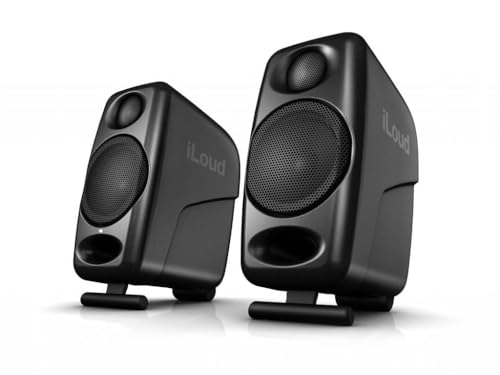
- The smallest active studio reference monitoring system in the world, iLoud Micro Monitor provides you with ultra-accurate true linear frequency response with no coloration, and does so in every...
- Whether you’re recording, editing, mixing or mastering audio, editing video, sound designing or gaming, iLoud Micro Monitor ensures your production will translate well to the huge variety of...
The iLoud Micro Monitors are designed for a completely different use case: extreme portability. If you are a traveling producer who mixes in hotel rooms or has a desk that is only 2 feet wide, these are magic. They offer surprisingly accurate sound for their tiny size. However, they cannot compete with the KRK 5′ Classic Studio Monitor in terms of raw headroom, physical durability, or “punch.” The KRK is a “real” studio monitor, while the iLoud is a specialized tool for mobile creators. For a permanent home setup, the KRK is the clear winner.
Final Verdict: Is the KRK 5′ Classic Studio Monitor the Right Choice for You?
After putting the KRK 5′ Classic Studio Monitor through its paces, it’s clear why these yellow-coned speakers remain a staple in the audio world. They strike a rare balance between “fun to listen to” and “accurate enough to mix on.” The front-firing port is a massive advantage for home setups, and the Class A/B amplification provides a level of detail that many Class D competitors simply lack. While you have to remember to buy them as a pair and provide your own cables, these are minor hurdles compared to the massive upgrade in audio quality they provide over consumer speakers.
We recommend the KRK 5′ Classic Studio Monitor to anyone starting their home recording journey, as well as DJs who need a reliable, punchy monitor for practice. They offer the honesty needed to stop failing the “car test” and start producing tracks that sound great everywhere. If you’re ready to take your audio production to the next level with a tool that has been trusted by professionals for decades, we highly recommend you see its full feature set and user reviews to see how they can transform your creative space.
Last update on 2026-10-16 / Affiliate links / Images from Amazon Product Advertising API