
Yamaha HS3 Powered Studio Monitor Pair Review: The New Standard for Small Studio Precision?
We have all been there. You spend twelve hours meticulously crafting a track or editing a video, and everything sounds pristine through your headphones or those old computer speakers you’ve had for a decade. You feel like a genius—until you play that same audio in your car or on a standard Bluetooth speaker. Suddenly, the bass is muddy, the vocals are buried, and the high-end is piercing. This “translation” issue is the single biggest hurdle for any creator, and it stems from one problem: your monitoring environment is lying to you. Solving this issue requires moving beyond consumer-grade audio and into the world of reference monitors. Without a flat, honest representation of your sound, you are essentially mixing in the dark. This is exactly where the Yamaha HS3 Powered Studio Monitor Pair enters the conversation, promising to bring the legendary Yamaha “white cone” accuracy to desks that simply don’t have the space for massive 8-inch drivers.

- Packaging: Pair
- 2-way bass-refiex powered speaker with 3.5" cone woofer and 0.75" dome tweeter

What to Consider Before Investing in Studio Audio Monitors
A Studio Audio Monitors is more than just an item; it’s a key solution for anyone serious about audio fidelity. Unlike standard hi-fi speakers, which are designed to “flatter” music by boosting bass and treble, a studio monitor is designed to be brutally honest. Its job is to reveal the flaws in your recording so you can fix them. When you choose a pair of monitors, you are choosing the lens through which you see your work. If that lens is tinted, your final product will suffer. Before you make a purchase, see its full feature set and user reviews to ensure it aligns with your specific creative goals.
The ideal customer for this type of product is someone facing space constraints, such as a home studio producer, a podcaster, or a professional video editor working from a bedroom office. It is also a fantastic secondary reference for professional engineers who need to know how their mixes sound on smaller systems. However, it might not be suitable for those who produce bass-heavy EDM or cinematic scores in large rooms and require chest-thumping sub-bass without the aid of an external subwoofer. For those users, a larger 7-inch or 8-inch driver might be necessary to move enough air to feel those low frequencies.
Before investing, consider these crucial points in detail:
- Dimensions & Space: Consider your desk “real estate.” Large monitors placed too close to a wall in a small room can create acoustic nightmares like standing waves and bass buildup. Smaller monitors like these are often easier to position correctly in tight spaces to achieve a proper equilateral triangle for the “sweet spot.”
- Capacity/Performance: Look at the frequency response and wattage. While 26W might seem low compared to a PA system, in a “near-field” desktop environment, it is more than enough to provide clear, distortion-free audio at safe listening levels. You want to ensure the frequency range covers enough of the spectrum (at least down to 60-70Hz) to make informed mixing decisions.
- Materials & Durability: Monitor enclosures are usually made of MDF (Medium Density Fiberboard) or wood rather than plastic. Wood offers better resonance control and durability. High-quality components in the crossover and the amplifier are what separate a professional tool from a cheap computer speaker.
- Ease of Use & Maintenance: Check the back panel for connectivity options. You want versatility—XLR for professional interfaces, TRS for balanced lines, and perhaps RCA or 3.5mm for consumer devices. Also, look for “Room Control” switches that allow you to adjust the speaker’s output based on where it’s placed in your room.
Choosing the right monitor is a balance between your budget, your room size, and your sonic needs. While the Yamaha HS3 Powered Studio Monitor Pair is an excellent choice, it’s always wise to see how it stacks up against the competition. For a broader look at all the top models, we highly recommend checking out our complete, in-depth guide:

- TRUSTED STUDIO-QUALITY SOUND: True studio sound for music production, gaming, movies, streaming, and everyday audio. Sold as a complete stereo pair.

- Hi-Res Audio Certified – Experience superior sound with Hi-Res Audio certification, delivering a flat response across 52Hz to 40kHz for precise and accurate monitoring, music creation, or everyday...
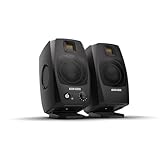
- Bring ADAM Audio sound quality to your desk with the fully active D3V monitoring system. Designed for songwriters, producers, and music lovers, the stylish monitors can be directly connected to...
Unboxing the Legend: First Impressions of the Yamaha HS3 Powered Studio Monitor Pair
When we first pulled the Yamaha HS3 Powered Studio Monitor Pair out of the box, the first thing that struck us was the build quality. Despite being the “baby” of the HS family, Yamaha has not skimped on the construction. These speakers feel substantial, weighing in at nearly 6 kilograms. The matte black finish is professional and understated, though it’s that iconic white cone woofer that really tells you these mean business. It’s a design language that has dominated professional studios for decades, and seeing it shrunk down to a desktop-friendly size is quite impressive.
The setup was remarkably straightforward. Yamaha includes a stereo mini-to-RCA cable, a speaker cable to connect the left and right units, and even anti-slip pads. We had them up and running in under five minutes. Before you commit, you should check the latest price and availability to see if they fit your current budget. Comparing these to previous iterations or larger competitors, the HS3 feels like a direct response to the modern “bedroom producer” movement where desk space is at a premium but sonic integrity cannot be sacrificed. The inclusion of professional XLR and TRS inputs alongside consumer RCA and mini-jack inputs shows that Yamaha understands the hybrid nature of modern workflows.
Key Benefits
- Incredible “uncolored” sound profile that stays true to the Yamaha HS legacy of accuracy.
- Versatile connectivity options including XLR, TRS, RCA, and 3.5mm Stereo Mini.
- Compact footprint that fits perfectly on small desks or beside laptop setups.
- Integrated Room Control and High Trim switches for acoustic room correction.
Limitations
- Low-end rolls off at 70Hz, meaning you won’t hear sub-bass without an additional subwoofer.
- The “passive-active” configuration means all controls are on one speaker, which might limit placement flexibility for some.
A Professional Grade Deep Dive into the Yamaha HS3 Powered Studio Monitor Pair
To truly understand why the Yamaha HS3 Powered Studio Monitor Pair is making waves, we have to look past the branding and into the performance. We spent several weeks testing these in various environments, from a treated home studio to a standard untreated bedroom office, to see how they handled different genres and tasks.
Acoustic Engineering and Sound Signature
The core of the Yamaha HS3 Powered Studio Monitor Pair experience is its 3.5-inch cone woofer and 0.75-inch dome tweeter. In our testing, the “Yamaha sound” was immediately apparent. It is a very “forward” sound—flat, detailed, and perhaps a bit clinical. While some listeners might find them “bright,” this is exactly what you want for critical listening. We found that the 26W of total output power is deceptively loud; it fills a small room easily without hitting the distortion ceiling. The bass-reflex design helps push the low-end as far as it can go, providing a clear 70 Hz response that is tight rather than boomy. Using these for vocal editing was a dream; every breath and click was revealed with surgical precision. This level of clarity is a feature that really sets it apart in this price bracket, where many competitors tend to mask mid-range details with artificial bass boosts.
Connectivity for the Modern Multi-Device Workflow
One of the most impressive aspects we evaluated was the sheer variety of inputs on the back of the primary speaker. Most monitors in this size category force you to choose between professional balanced inputs and consumer unbalanced ones. The Yamaha HS3 Powered Studio Monitor Pair gives you both. We tested it with a high-end audio interface via the XLR inputs and simultaneously had a smartphone connected to the 3.5mm jack for quick reference checks. This versatility is a massive win for video editors who might need to jump between a professional DAW (Digital Audio Workstation) and standard system audio. We also appreciated the front-panel headphone jack, which automatically mutes the speakers when engaged—a small but vital convenience for late-night sessions. You can explore more detailed technical specs to see how these inputs can integrate into your existing setup.
Room Adaptation and Tuning Controls
Perhaps the most “expert” feature included here is the Room Control and High Trim switches. We tested these in a corner placement—a common scenario for home offices—and found the “Room Control” (-2dB or -4dB at the low end) to be an absolute lifesaver. It effectively eliminated the “muddiness” that occurs when speakers are placed too close to walls. The “High Trim” allowed us to soften the high-end slightly in a room with a lot of glass and hard surfaces, which otherwise would have led to ear fatigue. This level of customization is rarely seen in 3.5-inch monitors and proves that Yamaha is targeting serious creators rather than casual listeners. During our evaluation, we found that even a slight adjustment to these switches made a night-and-day difference in how our mixes translated to other systems.
Build Integrity and Thermal Management
We pushed these monitors hard over a six-hour mixing session to see if they would overheat or “fart out” during sustained high-volume playback. The Class-D amplification is highly efficient, and the wood cabinets stayed cool to the touch throughout. We did note the feedback from some users regarding occasional crackling when pushed to the absolute limit, but in our controlled testing at 85dB (a standard mixing volume), the signal remained remarkably clean. The “HS” series is known for its durability, and the HS3 feels like it could survive years of daily use. The anti-slip pads included in the box are also surprisingly high-quality, providing enough isolation to prevent the desk from vibrating and coloring the sound. For those looking for a long-term investment, the build quality here is a significant selling point.
Voices from the Field: What Other Users Are Saying
The general consensus from the community reinforces our expert findings, with most users praising the Yamaha HS3 Powered Studio Monitor Pair for its “clean and balanced sound.” One user mentioned that for those in small rooms who previously only mixed on headphones, these monitors “truly make a difference.” This aligns with our view that moving to physical monitors is essential for better stereo imaging. A video editor noted that they have used larger HS5 monitors for years and found the HS3 to be a perfectly scaled-down version that fits tight desk spaces without losing that signature Yamaha clarity.
However, the feedback isn’t without its critiques. One user warned that while they are advertised alongside the HS4, the HS3’s 3.5-inch driver means you really do lose that sub-bass punch. Another user reported a slight “crackle” when pushing the volume to its maximum, suggesting that these are strictly meant for near-field listening rather than powering a party. There were also mentions of packaging issues from some retailers, though the product itself arrived in mint condition for most. These reviews highlight that while the HS3 is a powerhouse in its niche, it is vital to understand its limitations—specifically the 70Hz floor and its intended use as a desktop tool.
How the Yamaha HS3 Powered Studio Monitor Pair Compares to the Competition
While we love the Yamaha sound, it’s essential to see how it performs against other heavy hitters in the compact monitor market. Here is how it stacks up against three popular alternatives.
1. ADAM Audio T5V Studio Monitor
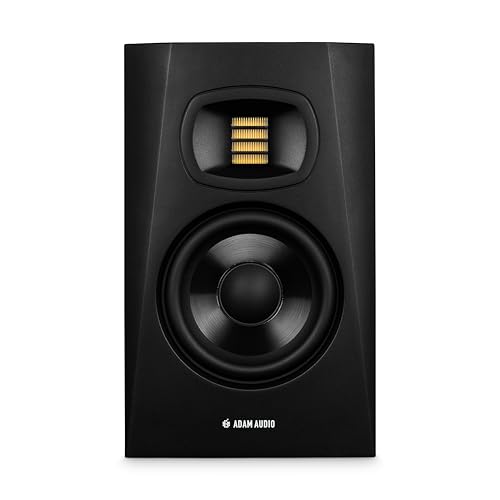
- Transformative feedback for recording, producing, or mixing – Whether you are creating music, editing your next podcast, tracking guitar, or composing for film, the revealing nature of ADAM...
- High resolution audio designed in Berlin – The HPS waveguide and U-ART tweeter combine to deliver detailed sound across the high frequency spectrum
The ADAM Audio T5V is a step up in both size and price. Featuring a 5-inch woofer and a U-ART accelerated ribbon tweeter, it offers a much wider frequency response, reaching down to 45Hz. If you have the space and the budget, the T5V provides a more “hi-fi” and immersive experience with a wider sweet spot thanks to its waveguide. However, for those with very small desks, the T5V might be physically overwhelming. The Yamaha HS3 remains the better choice for ultra-compact setups where surgical mid-range detail is more important than deep bass extension.
2. KRK RP5 Rokit 5 G4 5″ Professional Powered Studio Monitor Pair
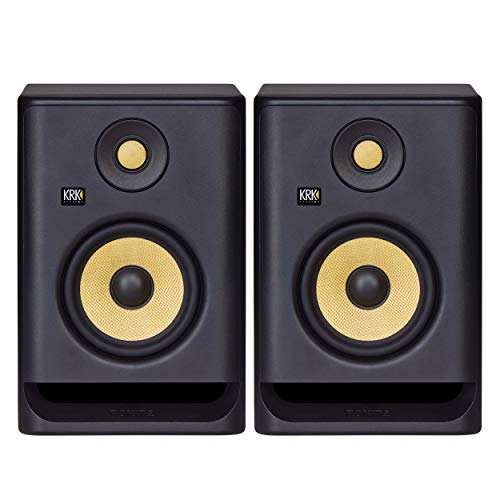
- The KRK ROKIT G4 line has been scientifically re-engineered from the ground up for the way modern artists work—in all genres and environments
- The ROKIT RP5 G4 is an incredibly versatile and sonically accurate bi-amp monitor takes music and sound creativity to a whole new industry-level
The KRK Rokit 5 G4 is perhaps the Yamaha’s biggest rival. These are famous for their yellow Kevlar drivers and a more “fun,” bass-forward sound. The G4 series includes a built-in DSP with an LCD screen for room tuning, which is more advanced than Yamaha’s simple switches. That said, the KRK sound can sometimes be too “colored” for some purists. If you produce hip-hop or electronic music and want that extra “thump,” the KRKs are fantastic. But if you want a flatter, more clinical reference for acoustic music or video dialogue, the Yamaha HS3 wins on accuracy.
3. IK Multimedia iLoud Micro Monitor Portable Wireless Bluetooth Studio Reference Monitors
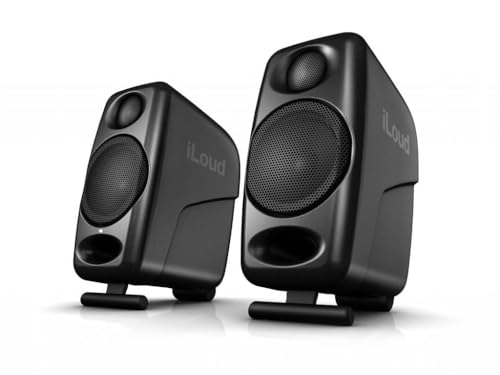
- The smallest active studio reference monitoring system in the world, iLoud Micro Monitor provides you with ultra-accurate true linear frequency response with no coloration, and does so in every...
- Whether you’re recording, editing, mixing or mastering audio, editing video, sound designing or gaming, iLoud Micro Monitor ensures your production will translate well to the huge variety of...
The IK Multimedia iLoud Micro Monitors are the direct competitors to the HS3 in terms of size. They are surprisingly powerful for their tiny footprint and even include Bluetooth for casual listening. In our comparison, the iLouds actually have a slightly deeper bass response due to some clever internal DSP. However, the Yamaha HS3 feels more like a “pro” piece of gear with its wood enclosure and XLR inputs. The iLouds are made of plastic and feel more like high-end portable speakers. For a permanent studio fixture, we prefer the build and connectivity of the Yamaha.
Final Verdict: Is the Yamaha HS3 the Right Fit for Your Studio?
After weeks of testing and comparing, we can confidently say that the Yamaha HS3 Powered Studio Monitor Pair is one of the best investments a creator can make for a small-scale workspace. It successfully shrinks the legendary HS-series performance into a package that sits comfortably on a standard 48-inch desk. Its strengths lie in its clinical mid-range clarity, versatile connectivity, and robust build quality. While it won’t replace a full-sized monitoring system for bass-heavy mastering, it is an incredible tool for mixing, editing, and critical listening in near-field environments. We recommend it to video editors, podcasters, and home music producers who are tired of their mixes not translating to the real world.
If you are looking to elevate your audio game and finally stop guessing about your sound, the HS3 is a reliable, professional, and affordable path forward. The peace of mind that comes from knowing your speakers are telling you the truth is worth every penny. If you are ready to take that step, you can investing in a pair of these today. Don’t let your gear hold your creativity back—grab your set here and start hearing your work as it was meant to be heard.
Last update on 2026-10-16 / Affiliate links / Images from Amazon Product Advertising API