
Yamaha FG820 Solid Top Acoustic Guitar Review: The Gold Standard for Intermediate Excellence?
I remember the first guitar I ever owned. It was a nameless, plywood dreadnought that felt more like a torture device than a musical instrument. The strings sat an inch off the fretboard, the tuning pegs slipped if I so much as breathed on them, and the tone was thin, metallic, and utterly uninspiring. For many of us, this is where the journey starts—and unfortunately, where many journeys end. There is a specific kind of frustration that comes with trying to express yourself through an instrument that fights you at every turn. You want to learn that classic folk riff or master a few open chords, but the physical pain in your fingertips and the discordant sound of a poorly made box of wood eventually lead to that guitar gathering dust in a closet.
The problem is that many “budget” guitars are built with cost-cutting as the only priority, sacrificing the very components that make a guitar playable and resonant. When you decide to move past the “toy” stage and invest in a real instrument, the stakes feel high. You need something that sounds professional enough to motivate you, yet remains affordable enough not to break the bank. This is exactly why we spent weeks with the Yamaha FG820 Solid Top Acoustic Guitar. We wanted to see if this legendary “step-up” model truly solves the dilemma of the aspiring guitarist who is tired of compromise and ready for an instrument that rewards their practice rather than punishing it.

- Solid Sitka Spruce Top
- Mahogany Back & Sides

What to Consider Before Investing in Your Next Acoustic-Electric Guitar
Choosing an acoustic or acoustic-electric guitar is more than just a purchase; it’s a key solution for any musician looking to bridge the gap between “beginner” and “performer.” In this category, you are looking for an instrument that can handle the rigors of daily practice while providing enough tonal complexity to be used in recording or live settings. A high-quality guitar in this range acts as a long-term partner, offering a stable neck, reliable intonation, and a “voice” that actually improves as the wood ages. Without these qualities, you’re essentially buying a disposable item that will eventually hinder your progress as your ears become more refined.
The ideal customer for this type of product is the dedicated student, the hobbyist who wants a reliable “sofa guitar,” or even the gigging professional who needs a sturdy backup that doesn’t sound like a compromise. It is perfect for someone facing the limitations of a laminate-top starter pack. However, it might not be suitable for those who strictly require a small-bodied parlor guitar for travel or those who are looking for high-end boutique features like solid rosewood back and sides, which naturally come at a significantly higher price point. If you are looking for something more specialized for the road, you might explore different body shapes or electronics-heavy models.
Before investing, consider these crucial points in detail:
- Dimensions & Space: The dreadnought body is the most popular guitar shape for a reason—it provides massive volume and bass response. However, you should ensure the 42.5-inch length and the wider body are comfortable for your frame. If you are a smaller player, the physical depth of a dreadnought can be a challenge during long sessions.
- Capacity/Performance: The most critical metric here is the “Solid Top.” Unlike laminate tops, which are layers of wood glued together, a solid spruce top vibrates as a single unit. This results in a much greater dynamic range and a sound that gets richer over time, a process known as “opening up.”
- Materials & Durability: Look for the combination of spruce and mahogany. Spruce provides the “zing” and clarity on the high end, while mahogany (used in the back and sides here) adds a “woody,” warm midrange. This combination is a classic for a reason—it’s incredibly balanced.
- Ease of Use & Maintenance: An adjustable truss rod is non-negotiable. As humidity changes throughout the seasons, the wood in the neck will move. Having the ability to adjust the “action” (the height of the strings) ensures the guitar remains easy to play for years to come.
Taking these factors into account, the Yamaha FG820 Solid Top Acoustic Guitar appears to be designed specifically to hit that “sweet spot” of value and professional-grade materials. Before we dive into our specific testing results, it’s worth noting that while this model is a powerhouse, the market is full of specialized options.
While the Yamaha FG820 Solid Top Acoustic Guitar is an excellent choice, it’s always wise to see how it stacks up against the competition. For a broader look at all the top models, we highly recommend checking out our complete, in-depth guide:

- Incredible sound: Perfect for musicians-in-the-making or advanced players, this guitar features an impressive tone, standout projection and incredible sonics. It's waiting to be heard.

- Solid Sitka Spruce Top
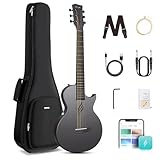
- WHY CARBON FIBER - Nova Go SP1 is made of carbon fiber composite material, which means it's impervious to temperature and humidity change. Taking it on travels, to chill on a beach with the hot bright...
Unboxing and First Impressions: The Yamaha FG820 Solid Top Acoustic Guitar in the Flesh
When we first pulled the Yamaha FG820 Solid Top Acoustic Guitar out of its packaging, the immediate sensation was one of “upgraded quality.” Often, guitars in this price bracket feel a bit lightweight or plasticky, but the FG820 has a reassuring heft (about 6.4 pounds) that speaks to its solid construction. The Natural finish is flawlessly applied—not too thick to damp the vibrations, but enough to give it a classic, professional sheen. What immediately caught our eye was the cream binding on the body and fingerboard. This is a significant aesthetic step up from the lower-tier FG800, giving it a much more “expensive” look that rivals guitars twice its price.
The dreadnought shape is iconic, and Yamaha has perfected the geometry here. Running our hands down the neck, we noticed the satin finish on the back of the maple neck, which prevents that “sticky” feeling during fast chord transitions. The rosewood fingerboard felt hydrated and smooth, with no sharp fret edges—a common complaint with budget instruments. While it doesn’t come with a plethora of accessories, the sheer build quality of the instrument itself suggests that the money went exactly where it should: into the wood and the craftsmanship. It felt ready to play right out of the box, though we always recommend a quick tune-up to let the strings stretch. Before you dive into your first practice session, you might want to see its full feature set and user reviews to ensure it fits your specific stylistic needs.
Key Benefits
- Solid Sitka Spruce top provides incredible resonance and tonal “headroom.”
- Mahogany back and sides offer a warm, punchy midrange that’s perfect for vocals.
- The cream binding on the neck and body adds a touch of high-end class.
- Reliable diecast tuners keep the instrument in tune even through aggressive strumming.
Limitations
- The dreadnought body size might be bulky for very young or smaller-framed players.
- The factory action can sometimes be a bit high for beginners past the 5th fret.
A Deep Dive into the Performance of the Yamaha FG820 Solid Top Acoustic Guitar
The Tonal Magic of Solid Sitka Spruce and Mahogany
In our extensive testing sessions, the most standout feature of the Yamaha FG820 Solid Top Acoustic Guitar was undoubtedly its voice. We’ve played many all-laminate guitars that sound like they have a blanket over them—muffled and lacking in sustain. The FG820, however, sings. The solid Sitka spruce top is the engine of this guitar. When you strike a G-major chord, the response is immediate and crisp. Because it’s solid wood, the vibrations carry through the entire body, creating a shimmer in the high end that you simply don’t get with cheaper materials.
We paired this spruce top with the mahogany back and sides, and the result is a beautifully balanced profile. While rosewood usually offers more “metallic” bass and treble, mahogany provides a “woody” and “honest” sound. We found that this makes the FG820 an exceptional choice for singer-songwriters. It doesn’t compete with the human voice; it sits right under it, providing a warm foundation. One user we spoke with, who has been playing for nearly a decade, noted that even compared to their much more expensive instruments, the FG820 holds its own in terms of clarity. If you’re looking for an instrument that will sound better five years from now than it does today, you can check the latest price and availability for this mahogany-backed beauty.
Playability and the New Scalloped Bracing
One of the “secret” upgrades in the current version of the Yamaha FG820 Solid Top Acoustic Guitar is the move to scalloped bracing. Bracing is the internal wooden structure that supports the top. By “scalloping” or carving away some of that wood, Yamaha has allowed the top to vibrate more freely while maintaining structural integrity. In our hands, this translated to a guitar that felt “alive.” You can actually feel the back of the guitar vibrating against your ribs as you play, which is a hallmark of a well-constructed instrument.
As for the neck, the 43mm nut width is the industry standard for a reason. It’s wide enough for fingerpicking without feeling crowded, yet narrow enough that those with average-sized hands can still wrap their thumb around for those “Hendrix-style” chords. We did find that the action (string height) out of the box was set conservatively. While it’s great for heavy strummers, a beginner might want to have a local shop lower it by a millimeter or two for maximum comfort. However, even with the factory setup, the rosewood fingerboard is a joy to navigate. To see how this bracing and neck profile contribute to its overall feel, you can explore the detailed technical specs here.
Hardware Reliability and Aesthetic Refinement
There is nothing more frustrating than a guitar that won’t stay in tune. We put the Yamaha FG820 Solid Top Acoustic Guitar through its paces, performing heavy bends and aggressive rhythmic strumming, and the diecast tuners held firm. These aren’t the cheap, “open-gear” tuners found on entry-level models; they are sealed units that feel smooth and precise. This level of hardware reliability is crucial for anyone who plans on playing at an open mic or even just practicing for an hour without having to reach for a tuner every ten minutes.
Beyond the mechanics, the aesthetics of the FG820 deserve a mention. The cream binding is a feature that really sets it apart from its “younger brother,” the FG800. It wraps around the body and travels all the way up the neck, giving the guitar a finished, sophisticated silhouette. The rosewood bridge is securely anchored, and the tortoise-pattern pickguard adds a vintage flair. While we noticed one user report about a misaligned pickguard, our test model was perfectly aligned, suggesting that Yamaha’s quality control is generally very high. This is an instrument you would be proud to display on a stand in your living room. You can view the Natural and other finish options to see which one matches your style.
Durability: A Guitar Built for the Long Haul
We often get asked if a “budget” guitar can actually last. The Yamaha FG820 Solid Top Acoustic Guitar is built like a tank. Yamaha’s reputation for durability is legendary in the music industry—often referred to as the “Toyota of guitars.” The dreadnought construction is sturdy, and the use of a maple neck adds a layer of stiffness that helps resist warping. We’ve seen FG-series Yamahas from the 1970s that are still being played daily, and the 820 is built with that same philosophy.
The adjustable truss rod is easy to access, which is a life-saver for those living in climates with fluctuating humidity. Being able to tweak the neck curvature means you can keep the guitar in peak playing condition regardless of the weather. For anyone worried about making an investment that might break or fail, the one-year manufacturer warranty provides an extra layer of peace of mind. It’s a solid, dependable tool for any musician’s arsenal. If you’re ready to commit to a guitar that will grow with you, you should check out the current deals on this model.
What Other Users Are Saying
The general sentiment among users is one of pleasant surprise. Most people who buy the Yamaha FG820 Solid Top Acoustic Guitar do so expecting a “good enough” guitar, but they often find themselves comparing it to instruments that cost hundreds more. One user, who has been playing for 9 years and owns guitars ranging up to $2300, noted that they were “blown away” by the quality of the headstock and neck shape. Another parent mentioned that their son, an accomplished player, was thoroughly impressed by both the feel and the sound, proving it’s not just for beginners.
However, no product is without its hiccups. We saw a few reports regarding shipping damage—specifically, instances where the headstock arrived cracked. This highlights the importance of buying from a reputable source with a solid return policy. Additionally, a “nit-picky” con mentioned by a few owners is that the action can be slightly high past the 5th fret. While this is easily fixable with a basic setup, it’s something to keep in mind if you have particularly sensitive hands. Overall, the consensus is that the FG820 offers “excellent value” and is a “beautiful guitar” that sounds far more expensive than its price tag suggests.
Comparing the Yamaha FG820 Solid Top Acoustic Guitar to the Competition
While we are huge fans of the Yamaha, it’s important to see how it compares to other popular choices in the dreadnought category, specifically those from Fender.
1. Fender CD-60SCE Acoustic-Electric Guitar Bundle
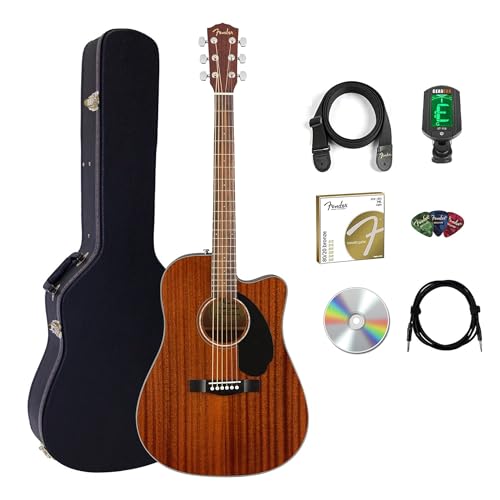
- WARM ALL-MAHOGANY TONE: Solid mahogany top with scalloped "X"-bracing and mahogany back and sides deliver a rich, warm, and balanced acoustic tone with excellent resonance and projection
- BUILT-IN FISHMAN ELECTRONICS: Fender-exclusive Fishman CD-1 pickup/preamp system with onboard tuner provides clear, natural amplified sound for live performances, recording, and practice sessions
The Fender CD-60SCE is the primary rival to the FG820, and this bundle version is a compelling choice for those who want everything in one go. Unlike the purely acoustic Yamaha, this Fender features a cutaway body and built-in Fishman electronics, making it ready to plug into an amplifier immediately. The “All Mahogany” construction gives it a darker, mellower tone compared to the spruce-topped Yamaha. We would recommend this for the player who knows they want to perform live or record directly into an interface, as the electronics add a layer of versatility that the base FG820 lacks. However, if pure unplugged resonance is your goal, the Yamaha’s solid spruce top usually wins on volume.
2. Fender CD-60SCE Acoustic-Electric Guitar Bundle (Black)
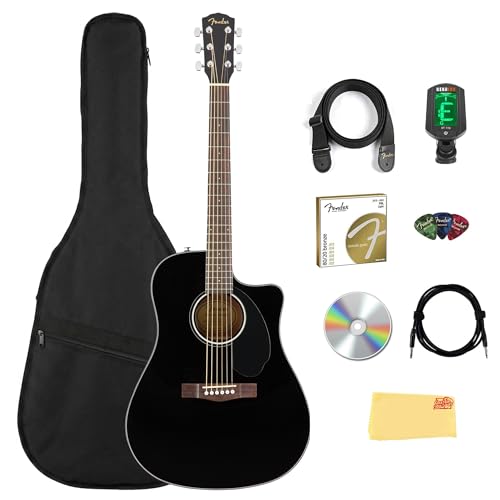
- EASY UPPER-FRET ACCESS: The Fender CD-60SCE features Venetian-cutaway body design provides comfortable access to upper frets, making it easier to reach higher notes
- RICH SOUND QUALITY: A solid spruce top with scalloped "X"-bracing enhances resonance and projection, delivering a full and balanced tone
This is essentially the same high-quality instrument as the previous Fender, but it comes in a sleek black finish and includes a gig bag instead of a hard case. The black finish gives it a modern, “rock and roll” edge that might appeal more to younger players or those who want to stand out from the sea of natural-wood guitars. Performance-wise, it retains the solid top and Fishman preamp. This is a great alternative for someone who wants the complete starter kit (tuner, strap, strings) and prefers the aesthetics of a black guitar. For the traditionalist, the Yamaha FG820 Solid Top Acoustic Guitar still feels a bit more “classic,” but this Fender bundle is undeniably convenient.
3. Fender CD-60SCE 12-String Acoustic Guitar

- One right-handed Fender CD-60SCE-12 12-string Dreadnought Acoustic Guitar
- Dreadnought Body: This guitar's dreadnought body shape resonates with a bold and rich bass tone, great for playing country, folk or bluegrass
For something completely different, we have the 12-string version of the CD-60SCE. If you are looking for that massive, “choir-like” shimmering sound popularized by 60s folk and rock, this is the way to go. It features the same solid top construction but doubles the strings for a incredibly rich, chorus-like effect. It’s much harder to play than the 6-string Yamaha FG820 because of the extra finger pressure required, so we wouldn’t recommend it as a first guitar. However, for an intermediate player looking to expand their tonal palette, this 12-string offers incredible value and includes the same cutaway and electronics as its 6-string siblings.
The Final Verdict: Is the Yamaha FG820 Right for You?
After weeks of playing, listening, and analyzing the Yamaha FG820 Solid Top Acoustic Guitar, our conclusion is clear: this is arguably the best “bang-for-your-buck” acoustic guitar on the market today. It manages to avoid the common pitfalls of budget instruments by focusing on the things that matter—a solid wood top, high-quality tuners, and a comfortable neck. While the action might require a tiny bit of tweaking for perfection, and the body is large, the sheer quality of the mahogany and spruce tone is undeniable.
We recommend this guitar to anyone who is serious about learning and wants an instrument that won’t hold them back. It is a significant upgrade from any laminate-top starter guitar and a reliable companion for the intermediate player. It sounds professional, looks sophisticated with its cream binding, and is built to last a lifetime. If you are ready to stop fighting your instrument and start making music that sounds the way it does in your head, the FG820 is the tool for the job. Do yourself a favor and grab the Yamaha FG820 Solid Top Acoustic Guitar today and experience the difference a real solid top makes.
Last update on 2026-10-16 / Affiliate links / Images from Amazon Product Advertising API