
JHS Pedals Jhs Colour Box V2 Preamp Review: The Ultimate Studio Console in a Stompbox
For years, I found myself chasing a specific sonic ghost: that elusive, rich, “expensive” sound found on classic records from the 60s and 70s. You know the one—it’s that warm, slightly saturated, and harmonically complex tone that comes from plugging a guitar or microphone directly into a high-end Neve recording console. For most of us, owning a vintage British console is a pipe dream involving tens of thousands of dollars and a dedicated maintenance engineer. We often settle for digital plugins that try to emulate this “weight,” but they frequently fall flat in the heat of a live performance or a tactile tracking session. This is where the JHS Pedals Jhs Colour Box V2 Preamp enters the fray. We wanted something that wasn’t just another overdrive pedal, but a legitimate piece of outboard gear in a format we could actually use. The frustration of thin, lifeless DI signals is a common hurdle for home studio owners and gigging musicians alike; solving this is crucial for anyone looking to bridge the gap between “bedroom demo” and “professional production.”

- A full-fledged studio-grade preamplifier, EQ, and distortion generator with multi-instrument and microphone compatibility
- The Gain section controls the overall volume of the unit, the amount of gain between the two internal gain stages, and the gain of each preamp stage in five stages

What to Consider Before Buying a Professional Preamp Pedal
A professional preamp like the JHS Pedals Jhs Colour Box V2 Preamp is more than just an item; it’s a key solution for signal integrity and tonal character. In the world of guitar effects, we often think in terms of “distortion” or “delay,” but a preamp is the foundation upon which all other sounds are built. It determines how your instrument interacts with your amplifier or recording interface. If your base tone is weak, no amount of boutique reverb will save it. By investing in a high-quality preamp, you are essentially upgrading the “brain” of your signal chain, allowing for better headroom, more musical equalization, and the ability to drive your signal into pleasing analog saturation without the harshness often associated with cheap digital clipping.
The ideal customer for this type of product is someone facing the limitations of standard guitar gear—perhaps a bassist who needs a studio-quality DI, an acoustic player looking for a warm, feedback-resistant preamp, or a producer who wants to run vocals through real analog circuitry. It’s perfect for the “tone chaser” who values nuance over sheer volume. However, it might not be suitable for those who are strictly looking for a “plug and play” high-gain metal pedal. If you just want a simple one-knob distortion, the depth of the JHS Pedals Jhs Colour Box V2 Preamp might be overwhelming. For those users, a dedicated distortion pedal would be a better fit. You can see its full feature set and user reviews to determine if its complexity matches your workflow.
Before investing, consider these crucial points in detail:
- Dimensions & Space: At 6 x 4 x 2 inches, this isn’t a “mini” pedal. It takes up a significant footprint on a pedalboard, roughly equivalent to two standard pedals side-by-side. You need to ensure your board has the real estate and that your power supply can handle its 100mA draw. It’s built like a tank, but its size reflects its professional-grade internals.
- Capacity/Performance: This is a high-headroom device. Unlike a standard overdrive that might compress your signal immediately, the JHS Pedals Jhs Colour Box V2 Preamp can stay 100% clean even with high-output instruments. This performance metric is vital for those using it as a clean boost or a studio-grade EQ.
- Materials & Durability: JHS uses premium components and a sturdy metal enclosure. The knobs feel substantial and the toggle switches have a satisfying, “pro-audio” click. Compared to cheaper plastic alternatives, this is a piece of gear designed to survive decades of touring and studio abuse.
- Ease of Use & Maintenance: While it has many knobs, the layout is intuitive once you understand the “Shift” concept. Maintenance is minimal, though the white finish can show dirt over time. Since it passes phantom power to condenser mics, you’ll need to be mindful of your signal chain to avoid accidental pops when switching cables.
Ultimately, choosing a preamp is about deciding how much control you want over your fundamental voice. While the JHS Pedals Jhs Colour Box V2 Preamp is an excellent choice, it’s always wise to see how it stacks up against the competition. For a broader look at all the top models, we highly recommend checking out our complete, in-depth guide:

- Legendary Distortion Heritage: Used by guitarists everywhere since 1978, establishing the standard for distortion pedals

- Legendary BOSS Overdrive Pedal: Genre-defining sound and feel that has shaped guitar tones across multiple decades

- 3-Mode Distortion: Toggle between Lo/Hi Boost or bypass for dynamic tone shaping.
First Impressions and Key Features of the JHS Pedals Jhs Colour Box V2 Preamp
Unboxing the JHS Pedals Jhs Colour Box V2 Preamp is a premium experience. It arrives in a clean, minimalist package that reflects its “studio tool” identity. The first thing you notice is the weight and the iconic aesthetic—it looks like a channel strip pulled directly out of a 1970s Neve console. The “V2” version is a significant upgrade over the original, most notably adding the “Shift” knobs for each EQ band and the ability to pass 48V phantom power. When we first plugged it in, the silence was impressive; for a pedal with this much gain potential, the noise floor is remarkably low. We also appreciated that you can check the latest price and availability online to see how it fits into your current budget compared to buying a rack-mount preamp.
Key Benefits
- True studio-grade Neve-style circuitry in a portable pedal format.
- Incredibly versatile EQ section with parametric “Shift” controls for surgical tone shaping.
- Dual-input capability (XLR and 1/4″) makes it a Swiss Army knife for guitar, bass, and vocals.
- Phantom power support allows for direct connection of high-end condenser microphones.
Limitations
- Large footprint may require rearranging your entire pedalboard.
- The learning curve for the interaction between the Gain and Master stages can be steep for beginners.
A Deep Dive into the Performance of the JHS Pedals Jhs Colour Box V2 Preamp
The Magic of the Gain Section: From Clean Boost to “Revolution” Fuzz
The core of the JHS Pedals Jhs Colour Box V2 Preamp is its three-stage gain architecture. This isn’t your typical “Gain” knob. You have a “Pre-Vol” which controls the amount of signal entering the preamp, and a “Master” volume for the output. However, the real secret sauce is the stepped “Gain” selector (the big red knob). This knob changes the internal gain of the circuit in specific increments, mimicking the gain stages of a vintage console. In our testing, keeping the pedal in “Lo” mode provided one of the most musical clean boosts we’ve ever heard. It adds a “girth” and “weight” to the notes that makes even a cheap solid-state amp sound like it has expensive transformers inside.
When you flip the toggle to “Hi” mode and start cranking that red knob, the JHS Pedals Jhs Colour Box V2 Preamp transforms into a completely different beast. It enters a world of gated, console-style fuzz that is identical to the famous guitar tone on The Beatles’ “Revolution.” It’s a specific, “square-wave” type of distortion that you simply cannot get from a standard Tube Screamer or Big Muff. We found that the way the gain interacts with the EQ allows you to tailor the “ripping” texture of the distortion perfectly. This is a feature that really sets it apart from almost every other drive pedal on the market. It doesn’t just distort your signal; it re-textures it.
The “Shift” EQ: Surgical Precision for Every Source
The EQ section on the V2 is where JHS truly perfected this design. In the original version, the Bass, Mid, and Treble knobs were fixed at specific frequencies. In the JHS Pedals Jhs Colour Box V2 Preamp, each of these knobs is paired with a smaller “Shift” knob. These Shift knobs allow you to choose exactly which frequency the EQ is targeting. For example, if your bass guitar sounds a bit “boxy” in the low-mids, you can use the Mid Shift knob to find that specific frequency and cut it, while leaving the rest of your tone intact. This is essentially a three-band semi-parametric EQ, a tool usually reserved for high-end mixing consoles.
During our evaluation, we used this to track acoustic guitar directly into an interface. Acoustic guitars are notoriously difficult to EQ because they can easily become “boomy” or “brittle.” By using the High-Pass Filter (which ranges from 60Hz to 800Hz) to cut the low-end rumble and using the Shift knobs to gently boost the air at 10kHz, we achieved a studio-quality sound that required zero post-processing. The 6dB per octave slope on the High-Pass filter is particularly musical—it doesn’t sound like a “cliff” where the sound disappears; it sounds like a natural tapering of the frequencies. You can explore the technical specifications to see the exact frequency ranges covered by these knobs.
Studio Integration and the XLR Advantage
One of the most impressive aspects of the JHS Pedals Jhs Colour Box V2 Preamp is its role as a bridge between the stage and the studio. Because it features a high-quality XLR input and output, you can use it as a standalone microphone preamp. We were skeptical at first—could a pedal really replace a dedicated rack-mount mic pre? After testing it with a standard dynamic microphone on a snare drum and a condenser microphone for vocals, the answer is a resounding yes. It brings that same “analog console” character to voices and percussion that it brings to guitars.
The inclusion of a -20dB pad is a lifesaver when using high-output microphones or when you’re recording a particularly loud source. It prevents the input from clipping before the preamp can do its job. Furthermore, the fact that it passes 48V phantom power means you don’t need a separate power supply for your condenser mics. This makes it an incredible tool for podcasters or mobile recorders who want a professional signal chain that fits in a backpack. We found that the JHS Pedals Jhs Colour Box V2 Preamp is perhaps the most versatile “pedal” ever made because it functions just as well on a desk as it does on a floor. It allows you to get the most out of your studio setup without needing a 24-channel board.
Versatility Across Instruments: Bass, Acoustic, and Keys
While often marketed to guitarists, we found the JHS Pedals Jhs Colour Box V2 Preamp to be a “secret weapon” for bass players. Bassists often struggle with DI signals that sound sterile and “clacky.” This pedal solves that by adding harmonic content and a smooth compression that mimics the behavior of a tube amp or a vintage transformer. By dialing in the “Hi” gain mode slightly, you can add a “growl” to the bass that sits perfectly in a rock mix without losing the low-end definition. The “Shift” knobs are again the stars here, allowing you to boost the “thump” at 80Hz while cutting the “mud” at 250Hz.
Keyboards and synthesizers also benefit immensely. Running a modern digital synth through the JHS Pedals Jhs Colour Box V2 Preamp adds a layer of “dust” and “warmth” that makes digital oscillators sound more like vintage analog hardware. The ability to switch between 1/4″ and XLR inputs on the fly makes it the ultimate utility tool for a multi-instrumentalist. In our sessions, we frequently moved it from the guitar chain to the vocal chain to the bass rig, and it excelled in every single application. This level of adaptability justifies its price point, as it essentially replaces three or four different specialized tools. You can see how users have applied it to various instruments in their own setups.
What Other Users Are Saying
The consensus among the community mirrors our own findings: this is a “piece of gear” rather than just a simple effect. One user astutely pointed out that many people fail to understand that JHS makes “gear,” and this isn’t just a fuzz or a distortion; it’s a legitimate preamp with a musical EQ that sounds good on every source once dialed in. This sentiment is vital because it sets the right expectations. If you buy this expecting a standard distortion pedal, you might be confused by its subtlety in certain settings.
Another user mentioned how much they enjoyed using the JHS Pedals Jhs Colour Box V2 Preamp for bass, highlighting the “variety of colors” they could achieve. This reinforces our discovery that the pedal is a shape-shifter. On the negative side, a few users noted that the sheer number of controls can be daunting at first, and without a “preset” function, it can be hard to recall specific settings for different instruments during a fast-paced gig. However, most agree that the tonal payoff is worth the extra effort required to learn the interface. The general feeling is that while it is an investment, it is a “forever” pedal that will never leave your signal chain.
Comparing the JHS Pedals Jhs Colour Box V2 Preamp to Top Alternatives
1. Ibanez TS808 Tube Screamer Overdrive Pedal
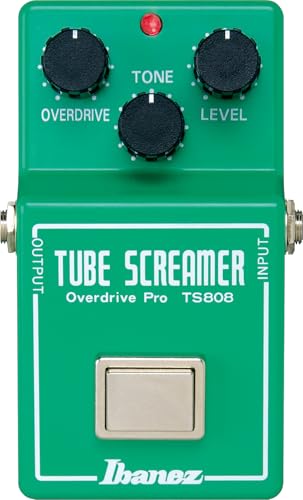
- Overdrive, Tone and Level controls
- Delivers that warm, natural tube overdrive sound previously unattainable by conventional units.
The Ibanez TS808 is a legend in the industry, but it serves a very different purpose than the JHS Pedals Jhs Colour Box V2 Preamp. The Tube Screamer is designed to push a tube amp into mid-rich saturation, often cutting the low-end to help a guitar “cut through” the mix. It is a one-trick pony, albeit a very good one. While the TS808 is much more affordable and easier to use, it lacks the EQ precision, the XLR connectivity, and the clean headroom of the JHS. If you just want a classic blues-rock lead tone, go with the Ibanez. If you want a full-frequency studio tool that can handle vocals and bass as well as guitar, the Colour Box is the clear winner.
2. Electro-Harmonix Big Muff Pi Guitar Pedal

- Singing sustain with attitude
- Crushing distortion
The Big Muff Pi is the gold standard for thick, sustaining fuzz. It offers a massive wall of sound that is iconic in grunge and stoner rock. However, compared to the JHS Pedals Jhs Colour Box V2 Preamp, the Big Muff is a blunt instrument. The JHS can achieve a “console fuzz” that is similarly intense but much more “textured” and “gated.” More importantly, the Big Muff has a notorious “mid-scoop” that can make it disappear in a live mix, whereas the JHS has a fully parametric mid-control to ensure you are always heard. The Big Muff is for those who want to “destroy” their signal; the Colour Box is for those who want to “enhance” it.
3. Electro-Harmonix Soul Food Overdrive Pedal

- Boosted power rails for extended headroom and definition
- Super responsive
The Soul Food is a transparent overdrive based on the Klon circuit. It’s excellent for adding a touch of grit without changing the fundamental character of your guitar. In some ways, it’s the closest “spiritual” relative to the JHS in this list because it values transparency. However, the Soul Food is strictly a guitar pedal. It doesn’t have the High-Pass filters, the XLR inputs, or the specialized gain staging of the JHS Pedals Jhs Colour Box V2 Preamp. The Soul Food is a great “always-on” pedal for a simple board, but it cannot function as a studio preamp or a bass DI. It’s a budget-friendly option for light grit, but it lacks the professional “weight” of the Colour Box.
Final Verdict: Is the JHS Pedals Jhs Colour Box V2 Preamp Worth the Investment?
After weeks of intensive testing across multiple instruments and recording scenarios, our verdict on the JHS Pedals Jhs Colour Box V2 Preamp is clear: it is one of the most significant pieces of tone-shaping hardware released in the last decade. It successfully shrinks the sound of a legendary British recording console into a box that fits in your hand. Its strengths lie in its incredible versatility, its surgical EQ, and its ability to add “analog life” to any signal—be it a vintage Stratocaster, a modern bass, or a studio vocal. While it is more expensive than your average stompbox and requires a bit of time to master, the reward is a professional, record-ready tone that is usually unattainable without thousands of dollars in outboard gear.
If you are a musician or producer who is serious about your sound and tired of “thin” digital tones, this is a must-own. It serves as a preamp, an EQ, a DI box, and a unique distortion generator all in one. We highly recommend it for any studio setup or professional pedalboard. Stop compromising on your fundamental tone and secure yours today to experience the difference that true analog console heritage can make in your music.
Last update on 2026-10-16 / Affiliate links / Images from Amazon Product Advertising API