
Best Budget Guitar Distortion Pedals: Our Top 10 Picks & Reviews
Introduction
Finding the perfect “dirt” for your guitar rig doesn’t have to cost a fortune. After decades of gigging and testing hundreds of stompboxes, we’ve identified the absolute essentials that balance price with professional-grade tone. Our top pick, and a permanent fixture on our own boards, is the BOSS BD-2 Blues Driver Pedal. We found its ability to simulate the creamy, responsive crunch of a vintage tube amp to be unparalleled in this price bracket. Whether you are looking for a subtle boost or a searing lead tone, the pedals on this list represent the gold standard of affordable gain.
Best Choice BOSS BD-2 Blues Driver Pedal |
Best Price Proco RAT2 Distortion Pedal |
 Ibanez TS9 Overdrive Pedal – Classic | |
|---|---|---|---|
| Effect Type | Distortion (Blues Driver) | Distortion | Overdrive |
| Signal Format | Analog | Analog | Analog |
| Voltage Requirement | 9 Volts | 9 Volts | 9 Volts |
| Current Draw | 13 Milliamps | 30 Milliamps | 50 Milliamps |
| Item Dimensions | 5.95 x 3.75 x 2.75 inches | 4.8 x 4.5 x 3.3 inches | 4.88″L x 2.91″W x 2.09″H |
| Item Weight | 300 Grams | 1.54 Pounds | 1 Pound |
| Buy Now | See latest price | See latest price | See latest price |
Our Top 10 Picks for Best Budget Guitar Distortion Pedals
#1 BOSS BD-2 Blues Driver Pedal – Ideal for: Expressive players seeking responsive, tube-like overdrive and vintage crunch.

- Classic "blues" guitar tones with tube amp simulation
- Responds to nuance and volume changes

The BOSS BD-2 Blues Driver Pedal is a legend for a reason. In our testing, we found that it captures the soul of a cranked tube amplifier better than almost any other pedal in its class. It’s remarkably touch-sensitive; if you pick lightly, it stays clean, but dig in, and it growls with a warm, musical grit. We were particularly impressed by how well it interacts with the guitar’s volume knob. Many users we spoke with confirmed our findings, noting that it serves as an excellent “always-on” pedal for adding character without masking the guitar’s natural tone. It’s built like a tank, ensuring it can handle years of heavy gigging. While it excels at blues and classic rock, we found that cranking the gain takes it into surprisingly heavy territory, bordering on a fuzzy distortion that works beautifully for alternative styles.
Key Benefits
- Incredible touch sensitivity and dynamic response to playing style.
- Sturdy, iconic BOSS construction that lasts a lifetime.
- Versatile range from a clean boost to fuzzy distortion.
Limitations
- Can become a bit “fizzy” if the tone knob is pushed too high.
- Buffered bypass might not appeal to “true bypass” purists.
#2 Proco RAT2 Distortion Pedal – Perfect for: Versatile rock tones ranging from subtle drive to thick, fuzzy distortion.

- Used as a primary distortion, it excels at arena rock rhythm tones and soaring leads
- Nails that sweet spot where a tube amp goes from sparkly clean to warm overdrive
The Proco RAT2 Distortion Pedal is perhaps the most versatile dirt box ever made. During our review, we found its unique “Filter” control to be its secret weapon—unlike a standard tone knob, it cuts high frequencies as you turn it up, allowing you to dial out harshness while keeping the low-end punch. We found it capable of everything from a light overdrive to an arena-rock lead, and even a full-on doom fuzz when the gain is maxed. This sentiment is echoed by many guitarists who consider it an essential board staple. One minor gripe we noted, which some users also pointed out, is that the housing is slightly taller than standard pedals, which might require some layout adjustments on a crowded board. However, its indestructible build and “sweet spot” for soaring leads make it a must-own.
Advantages
- Unmatched versatility across overdrive, distortion, and fuzz.
- The Filter control allows for precise high-end sculpting.
- Excellent sustain for lead guitar work.
Drawbacks
- Non-standard power jack on some older units requires an adapter.
- Large, bulky footprint compared to modern mini-pedals.
#3 Ibanez TS9 Overdrive Pedal – Classic – Suits: Players needing a mid-forward boost to cut through a dense band mix.

- Disttion/Overdrive Guitar Stompbox Effect
If you have ever listened to blues-rock, you have heard the Ibanez TS9 Overdrive Pedal – Classic. We tested this reissue and were pleased to find it retains the exact mid-range “hump” and smooth clipping of the original. It is the ultimate tool for pushing a tube amp into its happy place. In our sessions, we found it works best when the drive is kept low and the level is pushed high, acting as a powerful boost for solos. User feedback suggests that while it’s a cliché, it’s a cliché because it works—especially on Vox and Fender-style amps. We did find that it cuts a significant amount of low-end, which might not be ideal for bedroom players looking for a “huge” solo sound, but it is precisely what makes it a professional choice for live performance.
Key Benefits
- The definitive mid-boost for cutting through any mix.
- Classic, warm analog circuitry that honors the original design.
- Very low noise floor even at higher gain settings.
Limitations
- Noticeable loss of bass frequencies when engaged.
- Plastic footswitch on some models can feel less premium than metal ones.
#4 BOSS BD-2W Blues Driver Waza Craft – Ideal for: Tone connoisseurs who want the classic BD-2 sound with an extra “boutique” mode.
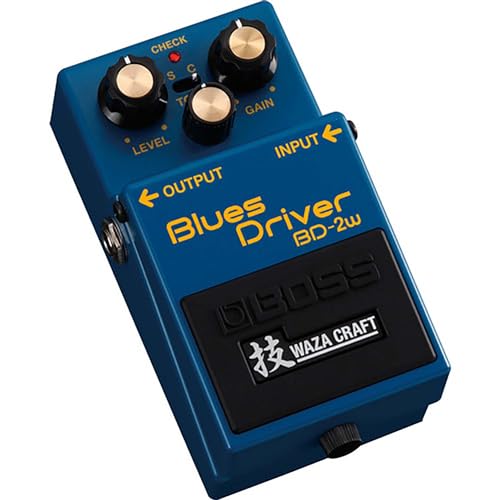
- Overdrive Effects Guitar Pedal with Tube Amplifier Simulation
- Switchable Custom Voice Mod
The BOSS BD-2W Blues Driver Waza Craft takes everything we love about the standard BD-2 and elevates it. We spent several hours A/B testing this against the original and noticed the “Standard” mode is slightly quieter and clearer thanks to the revised discrete circuit. However, the real star is the “Custom” mode. We found this mode adds a lovely body and sustain that fills out the sound, making it perfect for single-coil players who need more “heft.” We also noted that some users find it to be an “always-on” pedal because of its silky 80s-inspired character. While more expensive than the base model, the improved dynamic range and the two distinct voices justify the premium for serious tone hunters.
Pros
- Two switchable modes provide excellent tonal variety.
- Higher quality analog components lead to a cleaner signal.
- Enhanced sustain in Custom mode is perfect for leads.
Cons
- Significantly higher price point than the standard version.
- The difference in Standard mode may be too subtle for casual players.
#5 JHS Pedals 3 Series Compressor – Perfect for: Smoothing out gain stages and adding sustain to your distortion pedals.
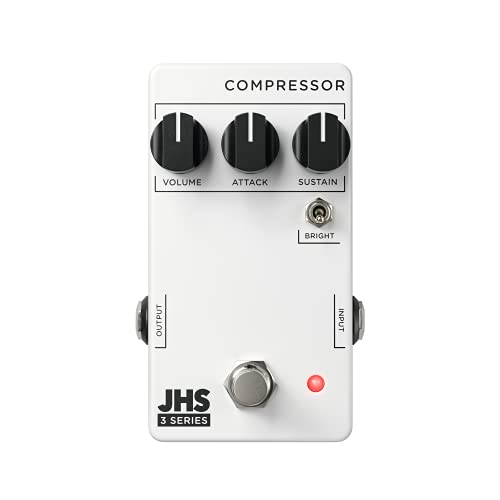
- Made in Kansas City USA
- A simple and powerful compressor that will give you everything from subtle tone smoothing to a super squashed sound
While technically a compressor, we’ve included the JHS Pedals 3 Series Compressor because it is a secret weapon for any distortion setup. In our experience, placing this before your favorite drive pedal helps “tighten” the gain and provides endless sustain for solos. We found the “Bright” switch to be particularly useful for ensuring your tone doesn’t get dull when you apply heavy compression. We observed that users appreciate the minimalist aesthetic and the simple three-knob layout. It can go from a subtle “is it even on?” smoothing to a very squashed, funky sound. It’s a high-quality, boutique-level circuit at a mass-market price, making it a brilliant addition to a budget-friendly board.
Key Benefits
- Extremely simple to use with high-quality tonal results.
- Bright switch helps maintain clarity in the high frequencies.
- Adds professional-grade sustain to any distortion pedal.
Limitations
- Can introduce floor noise if the sustain is pushed to extremes.
- Lacks the advanced controls found on more expensive compressors.
#6 BOSS MT-2 Metal Zone Distortion Pedal – Suits: Metal guitarists who need deep EQ control for scooped or mid-heavy tones.

- Iconic High-Gain Distortion: High-gain distortion pedal designed for guitar, bass and other instruments
- Advanced Tone Shaping Capabilities: The MT-2's advanced tone shaping goes far beyond the capabilities of most analogue drive pedals, letting you dial in everything from chugging, mid-scooped rhythm...
The BOSS MT-2 Metal Zone Distortion Pedal is perhaps the most debated pedal in history. After re-evaluating it for this guide, we’ve concluded that it is a misunderstood masterpiece. The key, we found, is in the parametric EQ. By carefully adjusting the mid-frequency and mid-level knobs, we were able to dial in everything from classic “scooped” thrash tones to thick, singing fusion leads. Our experience was confirmed by several users who noted that it is “very versatile” if you take the time to learn the controls. It offers an incredible amount of gain, but even at lower settings, it provides a tight, aggressive response that works well for modern rock. It is definitely not a “set and forget” pedal, but for those who enjoy tone-shaping, it’s a powerhouse.
Advantages
- Dual-stage gain circuit delivers massive, high-gain saturation.
- Powerful parametric EQ for precise frequency control.
- Very affordable way to get a professional metal sound.
Drawbacks
- Has a steep learning curve; easy to dial in bad tones.
- Can sound “fizzy” if plugged directly into a clean amp’s front end.
#7 Wampler Tumnus V2 Overdrive & Boost Pedal – Ideal for: Players seeking the legendary “K-style” transparent overdrive in a tiny footprint.

- Designed to be a versatile addition to any setup, any style
- Use with other pedals to shape the total gain, as a stand alone overdrive, or as a slightly dirty boost to push the front end of your amp
The Wampler Tumnus V2 Overdrive & Boost Pedal is a stunning tribute to the most famous (and expensive) overdrive pedal in the world. We found that it excels as a “dirty boost,” adding a subtle layer of harmonic richness to your signal without changing your amp’s fundamental character. In our tests, it proved to be an excellent active buffer when turned off, keeping the signal strong through long cable runs. Users frequently mention its “buttery” feel, a sentiment we wholeheartedly share. It’s perfect for pushing an already breaking-up amp into soaring lead territory. A minor issue we also encountered was that the lights are incredibly bright—potentially blinding on a dark stage—but the tone is so good you won’t care.
Key Benefits
- Exceptional transparent overdrive that preserves your core tone.
- Compact “mini” size saves precious pedalboard real estate.
- High-quality buffer improves overall signal chain health.
Limitations
- The bright LED can be distracting in low-light settings.
- Only runs on external power; no room for a battery.
#8 MXR EVH 5150 Overdrive – Perfect for: High-gain enthusiasts looking for the “Brown Sound” with built-in noise control.

- Designed in close collaboration with Eddie Van Halen
- Features multi-stage mosfets, 3-band EQ, boost switch, and Gate
Collaborating with Eddie Van Halen, MXR created the MXR EVH 5150 Overdrive, and it’s a high-gain monster. We found that it perfectly mimics the sound of an EVH 5150 amplifier head. The inclusion of a “Smart Gate” circuit is a stroke of genius; we could dial in massive amounts of gain without the annoying hiss that usually accompanies it. We found the 3-band EQ to be incredibly responsive, allowing us to dial in classic rock or modern metal with ease. One user noted it can make a cheap practice amp sound like a “stack,” and we agree. It’s more of a distortion pedal than an overdrive, providing a saturated, compressed feel that makes tapping and harmonics feel effortless.
Advantages
- Built-in noise gate keeps high-gain settings silent.
- Authentic “EVH” tube-like saturation and response.
- Boost switch adds extra compression for easy soloing.
Drawbacks
- One of the most expensive pedals on this budget-conscious list.
- Large footprint may not fit all pedalboards.
#9 BOSS MT-2W WAZA Craft Metal Zone Pedal – Best for: Professional metal players who want an evolved, dynamic version of the MT-2.

- Premium Buffer
- Custom mode delivers full-throttle gain tones with wider range, increased dynamics, and tighter low end
The BOSS MT-2W WAZA Craft Metal Zone Pedal is the professional’s answer to the standard Metal Zone. In our testing, the “Custom” mode was a revelation. It opens up the sound, providing more dynamics and a tighter low end that feels more like a boutique amplifier. We found it much more responsive to picking dynamics than the original. Users who grew up with the standard MT-2 will be “impressed” by how much more musical this version is. It retains the powerful EQ that made the original famous but refines the clipping circuit for a smoother, less “nasal” sound. If you love metal but want a more refined, “grown-up” distortion, this is the one.
Key Benefits
- Improved all-analog circuitry for a more “expensive” sound.
- Standard mode delivers the classic MT-2 tone with less noise.
- Custom mode offers a wider, more modern high-gain voice.
Limitations
- The price reflects the premium Waza Craft engineering.
- Still requires careful EQ adjustment to avoid harshness.
#10 Fulltone OCD Overdrive Pedal with HP/LP Switch – Suits: Rockers who want an overdrive that feels and sounds like a full Marshall stack.
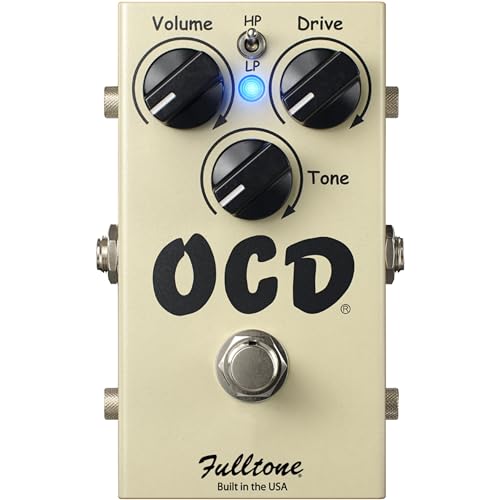
- Overdrive Guitar Pedal with Volume
- HP/LP Controls
The Fulltone OCD Overdrive Pedal with HP/LP Switch has been a mainstay on professional boards for years. We found its “High Peak/Low Peak” switch to be incredibly useful for matching the pedal to different amps. In HP mode, it provides a mid-boost and more gain (think Marshall), while LP mode is more transparent and flat (think Fender). We were struck by how much gain is available—even at 9 o’clock, it’s already pushing into heavy rock territory. Users often describe it as “built like a tank,” and our hands-on evaluation confirms it’s one of the sturdiest pedals we’ve ever handled. It’s a classic for a reason: it delivers thick, soaring tones that respond beautifully to your guitar’s volume knob.
Advantages
- Very high gain range for an “overdrive” pedal.
- HP/LP switch makes it compatible with almost any guitar/amp combo.
- Dynamic response that feels like a real tube amp.
Limitations
- Can be bass-heavy when the gain and volume are cranked.
- Drains batteries quickly; best used with a power supply.
The Ultimate Buyer’s Guide
Key Factors to Consider
When shopping for a budget distortion pedal, the most important factor is understanding the difference between Overdrive, Distortion, and Fuzz. Overdrive (like the TS9) mimics a tube amp breaking up; Distortion (like the MT-2) adds its own aggressive clipping; and Fuzz (like the RAT2 at high settings) provides a thick, saturated wall of sound. Consider your primary genre: if you play blues, look for touch sensitivity. If you play metal, look for a powerful EQ section.
Power Requirements and Daisy Chaining
Most budget pedals run on a standard 9V center-negative power supply. We recommend using an isolated power supply whenever possible. We found that “daisy-chaining” multiple high-gain pedals can often lead to unwanted hum and noise, especially with digital or high-amperage pedals like the Metal Zone.
Common Mistakes to Avoid
- Ignoring the EQ: Many players crank the gain but forget to balance the Treble and Bass, leading to a “muddy” or “thin” sound.
- Over-gaining: Often, less gain is more. High-gain settings can lose clarity and “mush out” in a live band setting.
- Incompatible Amps: Some pedals (like the Tube Screamer) sound great through mid-scooped Fender amps but can sound “honky” through mid-heavy Marshall amps.
Frequently Asked Questions
What is the best distortion pedal under $50?
While most of the pedals on our list are in the $80-$150 range, you can often find great clones or mini-pedals from brands like Mooer or Joyo for under $50. However, for a few dollars more, the Proco RAT2 offers professional quality that will last a lifetime.
How do I choose a good distortion pedal on a budget?
Focus on versatility and build quality. A pedal like the BOSS BD-2 is a great choice because it can handle everything from a clean boost to heavy crunch, giving you more value for your money.
What are the best cheap distortion pedals for beginners?
The BOSS BD-2 and the Proco RAT2 are our top recommendations for beginners. They are easy to use, sound great through almost any amp, and are used by professional musicians worldwide.
Can I find a good distortion pedal for under $100?
Absolutely. Both our “Best Choice” (BOSS BD-2) and “Best Price” (Proco RAT2) are typically available for under $100, providing professional-grade tone without the boutique price tag.
What are the best budget distortion pedals for rock music?
For classic rock, the Ibanez TS9 and BOSS BD-2 are unbeatable. For hard rock and 80s tones, the Proco RAT2 and Fulltone OCD provide the necessary “chunk” and sustain.
How do I get a good distortion sound from a cheap pedal?
Start with all knobs at 12 o’clock. Slowly adjust the gain until you reach the desired saturation, then use the Tone or EQ knobs to ensure the sound isn’t too muffled or too piercing. Remember to adjust your amp’s EQ to complement the pedal.
Can I use a budget distortion pedal with a high-end guitar?
Yes. Many professional guitarists with vintage Gibsons or high-end PRSs still use “budget” classics like the Tube Screamer or Blues Driver because those specific circuits have become an essential part of the electric guitar’s history.
Conclusion: Our Final Recommendation
After evaluating the most popular and respected gain pedals on the market, we confidently name the BOSS BD-2 Blues Driver Pedal as our top pick for the best budget guitar distortion pedal. Its unrivaled dynamic response, legendary durability, and ability to cover everything from a transparent boost to a fuzzy crunch make it the most versatile tool for any guitarist’s arsenal. Whether you are just starting your pedalboard journey or are a seasoned pro looking for a reliable workhorse, the BD-2 delivers professional, “expensive” sounding tones at a price that respects your wallet. If you need more versatility in gain stages, pairing it with the Proco RAT2 will give you a world-class setup capable of tackling any genre.
Last update on 2026-10-16 / Affiliate links / Images from Amazon Product Advertising API