
Ibanez EWP14EOPN Piccolo Guitar Review: The Ultimate Compact Companion for Modern Musicians
For many of us, the love for music doesn’t stop just because we’re on the move. Whether it’s a cross-country flight, a weekend camping trip, or simply sitting in a cramped dorm room, the desire to play is always present. However, the logistical nightmare of lugging a full-sized dreadnought can quickly dampen that spirit. We’ve all been there—trying to navigate airport security with a massive hard shell case or realizing your guitar won’t fit in the trunk of a packed car. For younger students with smaller frames or players with smaller hands, a standard guitar can feel like a bulky obstacle rather than an instrument of expression. This is exactly where the Ibanez EWP14EOPN Piccolo Guitar enters the frame. It promises the portability of a ukulele with the familiar six-string layout and steel-string bite of a traditional acoustic, solving the problem of size without sacrificing the soul of the instrument. To see if this compact powerhouse fits your lifestyle, you can check the latest price and availability here.

- Piccolo Cutaway Style EW Body
- Ovangkol Top
What to Consider Before Buying a Steel-String Acoustic Guitar
Choosing a steel-string acoustic guitar is more than just an item purchase; it’s a key solution for finding your unique voice and ensuring you have a reliable tool for practice or performance. Unlike nylon strings, which offer a mellow, classical tone, steel strings provide that crisp, ringing projection that defines folk, rock, and country music. However, when you step into the world of “fractional” or specialty instruments like the Ibanez EWP14EOPN Piccolo Guitar, your considerations must shift. You aren’t just looking for volume; you are looking for a balance between compact dimensions and playable tension.
The ideal customer for this type of product is a traveling musician who refuses to stop practicing while on the road, or perhaps a petite player who finds full-scale necks exhausting. It is also a fantastic “desk guitar” for songwriters who want something within arm’s reach. Conversely, it might not be suitable for those looking for deep, thumping bass response or those who find small fret spacing frustrating. If you are a beginner looking for your very first primary instrument to learn standard E-tuning on, you might find the A-to-A tuning of a piccolo guitar slightly confusing at first, though it is a hurdle easily cleared with a bit of theory knowledge.
Before investing, consider these crucial points in detail:
- Dimensions & Space: Scale length is the most critical metric. A 1/3 size guitar like this one offers a significantly shorter neck, making it incredibly easy to stow in overhead bins or small closets. However, remember that smaller dimensions mean tighter fret spacing, which requires a more precise touch.
- Capacity/Performance: Piccolo guitars are typically tuned higher (standard A-tuning). This means your chord shapes remain the same, but the pitch is higher. Consider how this fits into your repertoire or if you are comfortable transposing songs on the fly.
- Materials & Durability: Look for tonewoods that offer character. Ovangkol, used in this model, is a fantastic alternative to Rosewood, offering a balanced frequency response. However, smaller instruments can be more sensitive to humidity changes, so build quality is paramount.
- Ease of Use & Maintenance: Because the strings are under higher tension to maintain pitch on a shorter scale, the instrument must have a stable bridge and reliable tuners. Maintenance, such as oiling the fretboard, becomes even more important on these specialty builds to prevent wood fatigue.
While the Ibanez EWP14EOPN Piccolo Guitar is an excellent choice for those needing portability, it’s always wise to see how it stacks up against the competition in the wider market. For a broader look at all the top models, we highly recommend checking out our complete, in-depth guide:

- One right-handed Fender Alternative Series Dreadnought Acoustic Guitar – a perfect beginner guitar for all ages


- 【Well Made Craftsmanship】: Boasts a spruce top complemented by a mahogany back and sides, reinforced with X bracing for durability and sound quality; The fretboard features 20 brass frets with...

- With a combination of reliable Fender quality, player-friendly features and attractive aesthetics, the all-new California Debut is a value-packed option for today’s acoustic player
First Impressions: The Aesthetics and Design of the Ibanez EWP14EOPN Piccolo Guitar
When we first pulled the Ibanez EWP14EOPN Piccolo Guitar out of its packaging, the immediate reaction was one of surprise at its build quality. For an instrument at this price point, the Ovangkol top, back, and sides are stunningly figured. The open pore natural finish doesn’t just look sophisticated; it feels organic in your hands. There is no thick, plastic-like gloss to dampen the vibration of the wood. Instead, you can feel the grain of the Ovangkol, which contributes to a very “alive” sensation when you strike a chord.
The EW-style cutaway body is another thoughtful touch. Often, small guitars are shaped like simple teardrops, but Ibanez opted for a more aggressive, modern cutaway that allows surprisingly easy access to the higher frets. The Abalone rosette adds a splash of premium flair that makes it look far more expensive than it actually is. Weighing in at just 2.2 pounds, it feels almost weightless, yet the construction feels solid enough to handle the rigors of travel. It’s a pint-sized instrument that refuses to look like a toy. If you’re looking for a travel companion that looks as good as it sounds, you should see its full feature set and user reviews to understand why it’s a favorite among enthusiasts.
Key Benefits
- Incredibly portable 1/3 size—ideal for air travel and small spaces.
- Beautiful Ovangkol construction offers a rich, Rosewood-like tonal profile.
- Steel strings provide a bright, energetic sound that cuts through.
- The A-to-A tuning creates a unique, mandolin-like shimmer that’s great for layering.
Drawbacks
- The higher string tension and small frets can take time for large-handed players to master.
- Some users have noted the fretboard requires consistent humidity control to prevent cracking.
Deep Dive: Exploring the Performance of the Ibanez EWP14EOPN Piccolo Guitar
The Magic of the Piccolo Tuning: A-D-G-C-E-A
One of the most defining characteristics we found during our testing of the Ibanez EWP14EOPN Piccolo Guitar is its specific tuning. While a standard guitar is tuned E-A-D-G-B-E, this instrument is factory-tuned to A-D-G-C-E-A. To put this in perspective for the average player, it is exactly like playing a standard guitar with a capo on the 5th fret. This is a brilliant engineering choice by Ibanez. Because the scale length is so short (roughly 17 inches), standard E-tuning would result in strings that are far too “floppy,” leading to poor intonation and a muddy sound. By bumping the pitch up to A, Ibanez has optimized the string tension.
The result is a bright, punchy tone that occupies a unique sonic space. We found that it sounds like a cross between a traditional acoustic and a mandolin. This makes it an incredible tool for recording. If you already have a full-bodied acoustic track, layering the Ibanez EWP14EOPN Piccolo Guitar on top adds a shimmering high-end texture that “pops” in a mix. For solo playing, it offers a “sweet” voice that is perfect for fingerstyle. One user we spoke with noted that they were initially worried about the transition, but quickly found that their muscle memory for chords translated perfectly—everything just sounded “prettier.” To get a better sense of how this tuning changes your playing style, check out more technical details here.
Playability and Ergonomics: Small Body, Big Impact
The playability of the Ibanez EWP14EOPN Piccolo Guitar is where its “1/3 size” designation really shines. We evaluated this from the perspective of both an adult with average hands and a younger student. For the student, the transition is seamless. The reach required for complex chords is significantly reduced, making those “impossible” stretches on a full-size neck suddenly reachable. For the adult player, it does require a bit of an adjustment period. The frets are closer together, which means you need to be more precise with your finger placement. However, once you get the hang of it, it becomes an incredibly fast neck to play.
The Rosewood fretboard and bridge are standard fare for Ibanez, and they perform admirably here. The neck profile is comfortable, and the satin finish on the back of the neck ensures that your hand doesn’t get “stuck” during fast transitions. We particularly enjoyed the cutaway body. Often on travel guitars, the higher frets are purely decorative because they are so hard to reach. On this Ibanez, we were able to comfortably play lead lines up to the 15th fret without straining our wrists. This level of ergonomic thought is why many consider it a top-tier travel instrument. You can read more about its playability in the user feedback section.
Tonal Character and Tonewood Synergy
When discussing the tone of a small-bodied instrument, the word “boxy” often comes up. However, the Ibanez EWP14EOPN Piccolo Guitar manages to avoid the worst of this stigma thanks to the choice of Ovangkol. Ovangkol is an African tonewood that shares many characteristics with Rosewood—rich mids and sparkling highs—but it often has a slightly fuller midrange. In our sessions, we found that the open pore finish allows the wood to breathe and vibrate more freely than a heavy gloss would. While you aren’t going to get the booming low-end of a dreadnought, the projection is surprisingly loud for its size.
The steel strings are the secret sauce here. Many instruments this size use nylon strings (like a guitar-ukulele hybrid), but the steel strings on the EWP14EOPN provide a percussive “snap” that nylon just can’t replicate. Whether you are strumming rhythm or picking out melodies, the notes are distinct and clear. We found that the instrument responds very well to different picking dynamics; play it softly and it’s harp-like, but dig in and it growls with a surprising amount of grit. This versatility is a major win for such a compact guitar. For those curious about the specifics of the Ovangkol grain, look at the high-resolution images of the finish here.
Build Integrity and Long-Term Maintenance
In our deep dive, we had to address the elephant in the room: durability. Some users have reported issues with the fingerboard developing small cracks over time. During our evaluation, we looked closely at the fretboard construction. Like any instrument made of real wood, the Ibanez EWP14EOPN Piccolo Guitar is susceptible to environmental changes. Because it’s a “travel” guitar, it’s often exposed to varying levels of humidity—from dry airplane cabins to humid outdoor settings. We found that the build quality is generally excellent, featuring chrome die-cast tuners that hold their pitch remarkably well, even under the high tension of A-tuning.
To ensure this guitar lasts for years, we recommend a proactive maintenance routine. Using a bit of lemon oil on the fretboard during string changes and keeping it in a gig bag with a small humidifier is essential. This isn’t a “flaw” of the Ibanez specifically, but rather a reality of owning a high-quality wooden instrument. One intrepid user actually modified their EWP14EOPN with a piezo pickup system, proving that the bones of the instrument are solid enough to handle custom work. It’s a testament to the fact that this is a “real” instrument, not just a novelty item. To see how others have customized their guitars, browse through the user modification stories here.
What Other Users Are Saying
The general consensus among the community is overwhelmingly positive, with most users praising the Ibanez EWP14EOPN Piccolo Guitar for its incredible value-to-performance ratio. Many players who started in 2016 or later have noted that it has become their favorite “couch guitar,” perfect for practicing while watching TV or lounging. One female player mentioned, “I have smaller fingers, and this guitar finally feels like it was made for me.” This sentiment is common; the reduced scale length is a godsend for those who struggle with the physical demands of a standard neck.
However, the feedback isn’t without its warnings. As we mentioned in our deep dive, some users have encountered fretboard cracking. One user noted that despite keeping their instruments in a humidity-controlled environment, cracks developed after a few months. This highlights the importance of the “Open Pore” finish—while it sounds great, it offers less protection against the elements than a thick poly finish. On the flip side, many users are impressed that the guitar comes “ready to play” out of the box with only a quick tuning required. The general feeling is that for under $200, the level of craftsmanship and the beauty of the Ovangkol make it an unbeatable bargain for a specialty steel-string.
Comparing the Ibanez EWP14EOPN Piccolo Guitar to Its Top Alternatives
While we are huge fans of the Ibanez, it’s important to understand where it sits in the market compared to other popular choices. Depending on whether you want a full-sized beginner guitar or a slightly larger travel guitar, one of these might be a better fit for you. You can compare its price with these alternatives here.
1. Epiphone Songmaker DR-100 Dreadnought Acoustic Guitar
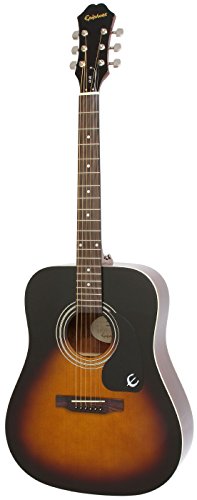
- Additional Details: SlimTaper C-profile neck, Epiphone Sloped Dovewing headstock, and Premium Die Cast tuners
- Mahogany body
The Epiphone Songmaker DR-100 is a completely different beast than the Ibanez EWP14EOPN Piccolo Guitar. This is a full-sized dreadnought, meaning it offers a massive, booming sound and standard E-tuning. If you are a beginner who has no intention of traveling and wants to learn on a “standard” instrument, the Epiphone is a fantastic entry point. However, it is three times the size of the Ibanez. You gain volume and bass, but you lose every bit of portability. The Epiphone is for the bedroom or the stage; the Ibanez is for the airplane and the campfire.
2. WINZZ HAND RUBBED Series 40″ Cutaway Acoustic Guitar Beginner Bundle

- FIRST CHOICE - Quality, Attractive, and Affordable, Winzz Auditorium acoustic guitar is great value for money that represent the best entry level guitar. Perfect size for adults, beginners and student...
- BALANCED SOUND - Handcrafted body and "X" bracing structure offers both bright and warm tone that has excellent acoustic properties and great extension and response
The WINZZ Hand Rubbed Series is a 40-inch guitar, putting it in the “full-size” category. The big draw here is the “Beginner Bundle” aspect, which includes a bag, stand, tuner, and lessons. For someone starting from scratch who wants everything in one box, it’s very convenient. Compared to the Ibanez, the WINZZ feels more like a traditional starter kit. The Ibanez EWP14EOPN, however, uses much higher-quality tonewoods (Ovangkol vs. standard laminate) and offers a much more unique “piccolo” voice. If you want a serious instrument that happens to be small, go with the Ibanez; if you just want a cheap kit to start learning, the WINZZ is a viable budget option.
3. Moukey 3/4 Size Acoustic Guitar Kit

- Ideal for Small Beginner: Moukey 36” acoustic guitar is equipped with soft nylon strings that are easier to hold down, and it will not cause pain in fingers and reduce damage on the guitar bridge...
- Quality Craftsmanship: Quality basswood body, Okoume neck, smooth fingerboard and non-scratching frets enable acustica guitarra to be played comfortably for a long time. 2 strap pegs allow you to...
The Moukey 3/4 Size Guitar is perhaps the closest competitor in terms of intent, but it’s still significantly larger than the 1/3 size Ibanez. The Moukey is designed for kids or smaller adults who still want standard tuning. It uses nylon strings (which are easier on the fingers) but doesn’t have the “bite” or projection of the Ibanez’s steel strings. We found that the Ibanez feels like a professional instrument shrunk down, while the Moukey feels more like a student-level tool. For a serious musician who wants a high-quality travel companion, the Ibanez remains the superior choice due to its tonewoods and specialized piccolo tuning.
The Final Verdict: Is the Ibanez EWP14EOPN Piccolo Guitar Worth It?
After spending significant time with the Ibanez EWP14EOPN Piccolo Guitar, our verdict is a resounding yes—provided you understand what it is designed for. It is not a replacement for your main dreadnought, nor is it a toy. It is a specialized, beautifully crafted instrument that fills the gap between a ukulele and a full-sized guitar. Its strengths lie in its extreme portability, its unique and shimmering tonal profile, and the sheer beauty of its Ovangkol construction. While you do need to be mindful of humidity and the tighter fret spacing, the musical rewards are well worth the minor learning curve.
We recommend this guitar to any traveling musician, songwriter looking for a new “voice,” or student with smaller hands who finds standard guitars intimidating. It’s an instrument that invites you to play more often because it’s always right there, ready to be picked up. If you’re ready to add this unique voice to your collection and finally solve your travel woes, click here to secure your Ibanez EWP14EOPN Piccolo Guitar today.
Last update on 2026-10-16 / Affiliate links / Images from Amazon Product Advertising API