
Squier SA-150 Dreadnought Acoustic Guitar Review: The Ultimate Budget Workhorse or a Beginner’s Trap?
We have all been there: that sudden, burning desire to pick up a guitar and finally learn those chords that have haunted our favorite playlists for years. However, the excitement of starting a musical journey is often met with a cold, hard reality—guitars can be incredibly expensive. For a beginner, staring at a wall of instruments where the “entry-level” models cost more than a month’s rent is discouraging. If you don’t spend enough, you end up with a “toy” that won’t stay in tune and hurts your fingers. If you spend too much, you’re terrified of even touching the thing. This is the exact gap the Squier SA-150 Dreadnought Acoustic Guitar aims to fill. We wanted to see if this instrument could truly provide a professional-feeling experience without the professional price tag, or if it was just another budget laminate box. Solving this dilemma is crucial because a poor first instrument is the number one reason why new players quit within the first three months. You need something that sounds inspiring and feels “right” in your hands from day one.

- Full-size steel-string acoustic that offers big sound at a small price
- All-laminate construction with lindenwood top and mahogany back and sides
What to Consider Before Buying a Steel-String Acoustic Guitar
A Steel-String Acoustic Guitar is more than just an item; it’s a key solution for creative expression, stress relief, and social connection. Unlike nylon-string classical guitars, a steel-string dreadnought like the Squier SA-150 Dreadnought Acoustic Guitar provides that iconic, bright, and punchy sound heard in rock, country, and folk music. It offers the projection needed to fill a room without an amplifier, making it the perfect companion for campfires, living room jam sessions, or solo songwriting marathons. When you choose a steel-string, you are choosing versatility and a tonal profile that defines modern music history.
The ideal customer for this type of product is a beginner who wants a full-sized, authentic experience, or an intermediate player looking for a “beater” guitar—an instrument they can take to the beach or on a road trip without worrying about a multi-thousand-dollar investment. It is also a fantastic choice for adults with larger hands who find smaller travel guitars cramped. However, it might not be suitable for small children or very petite players, for whom a 3/4 size guitar would be more ergonomic. Before you see its full feature set and user reviews, you must decide if you are ready for the physical commitment of a full-sized dreadnought body.
Before investing, consider these crucial points in detail:
- Dimensions & Space: Dreadnought guitars are large instruments. You need to ensure you have a comfortable place to sit and practice, as the deep body can be a bit cumbersome if you are used to electric guitars or smaller parlor styles. Measure your reaching comfort to ensure your strumming arm can clear the lower bout easily.
- Capacity/Performance: In the world of acoustics, performance is measured by resonance and sustain. Look for features like “X-bracing” which helps the wood vibrate more freely. A guitar’s ability to stay in tune during a long practice session is the ultimate metric of its performance.
- Materials & Durability: Most budget guitars use laminate woods. While purists love solid wood, laminate is actually more durable in varying climates. If you live in a place with high humidity or extreme dryness, a laminate build like that of the Squier SA-150 can be a lifesaver, as it is less prone to cracking.
- Ease of Use & Maintenance: Consider the “action”—the height of the strings from the fretboard. If the action is too high, it’s painful to play. You also want a neck profile that fits your hand comfortably. Maintenance involves regular string changes and occasional bridge inspections to ensure the tension of the steel strings isn’t pulling the hardware off the body.
Understanding these factors will help you determine if the Squier SA-150 fits your lifestyle and musical goals. While the Squier SA-150 Dreadnought Acoustic Guitar is an excellent choice, it’s always wise to see how it stacks up against the competition. For a broader look at all the top models, we highly recommend checking out our complete, in-depth guide:

- One right-handed Fender Alternative Series Dreadnought Acoustic Guitar – a perfect beginner guitar for all ages


- 【Well Made Craftsmanship】: Boasts a spruce top complemented by a mahogany back and sides, reinforced with X bracing for durability and sound quality; The fretboard features 20 brass frets with...

- With a combination of reliable Fender quality, player-friendly features and attractive aesthetics, the all-new California Debut is a value-packed option for today’s acoustic player
First Impressions: Unboxing the Squier SA-150 Dreadnought Acoustic Guitar
When we first pulled the Squier SA-150 Dreadnought Acoustic Guitar out of its packaging, the first thing that struck us was the finish. In the black variant, it has a sleek, modern aesthetic that masks its budget origins remarkably well. It feels substantial—not heavy, but solid. Weighing in at about 5 pounds, it has the heft of a “real” instrument, which immediately builds confidence. The lindenwood top has a smooth grain, and the dark-stained maple fingerboard looks surprisingly like high-end rosewood from a distance. We found the initial setup to be quite impressive for a guitar in this price bracket; often, budget guitars arrive with “razor-blade” fret ends, but these were clean and well-finished. Before you dive into playing, you can check the latest price and availability to see just how much value is packed into this frame. Compared to previous iterations of Squier’s entry-level acoustics, the SA-150 feels more refined, particularly in the slimness of the neck, which is a massive win for beginners struggling with hand fatigue.
Key Benefits We Discovered
- Slim, “easy-to-play” neck profile that reduces hand cramping during long sessions.
- Full-bodied dreadnought tone with surprising volume and projection.
- Durable all-laminate construction that resists climate-related warping and cracking.
- Exceptional value for the price, providing a “Fender-adjacent” experience for a fraction of the cost.
Potential Limitations
- The stock strings are basic and may benefit from an immediate upgrade to higher-quality phosphor bronze.
- Tuning pegs can feel a bit stiff initially, requiring a “break-in” period for smooth operation.
Deep Dive: The Squier SA-150 Dreadnought Acoustic Guitar Performance Analysis
Tonal Quality and the Power of Scalloped X-Bracing
We spent several days testing the tonal range of the Squier SA-150 Dreadnought Acoustic Guitar, and the results were eye-opening. Typically, all-laminate guitars can sound “boxy” or muffled because the layers of wood don’t vibrate as freely as a solid piece. However, Squier has utilized scalloped X-bracing inside the body. This is a technique usually reserved for more expensive models where the wooden supports (braces) are shaved down to allow the top to vibrate more. We found that this gives the SA-150 a surprisingly “airy” and loud projection. When strumming open chords like G and C, the low-end resonance is thick and satisfying, characteristic of the dreadnought shape. It creates a wall of sound that is perfect for vocal accompaniment.
In our tests, the lindenwood top provided a very “balanced” sound. It doesn’t have the extreme brightness of spruce, but it has a warm mid-range that makes it very forgiving for new players. We noted that even when playing with a heavy pick, the guitar didn’t “fret out” or buzz excessively, which is a testament to the internal construction. We also confirmed through user feedback that this “sound” is exactly what many are looking for—a classic, woody acoustic tone that doesn’t feel thin. If you are looking for that big, room-filling sound on a budget, you should a feature that really sets it apart is definitely that internal bracing architecture.
Playability: The Slim Mahogany Neck Experience
For a beginner, the neck is the most important part of the guitar. If the neck is too thick, your thumb will tire; if it’s too wide, you won’t be able to reach the low E string. We found the mahogany neck on the Squier SA-150 Dreadnought Acoustic Guitar to be one of its strongest selling points. It features a slim profile that feels more like an electric guitar neck than a traditional acoustic “log.” This makes transitioning between chords significantly faster. We measured the nut width and found it to be standard, but the “C-shaped” contour of the back of the neck is what makes the difference. It fits snugly into the palm, allowing for a better leverage point when pressing down on those difficult barre chords.
The fingerboard is made of dark-stained maple. While it lacks the oily richness of ebony, it is incredibly durable. We found the surface to be smooth, allowing for easy slides up and down the neck. During our evaluation, we noted that the frets were leveled well enough that there were no “dead notes” across the first twelve frets. This level of quality control is vital because it ensures the student isn’t fighting the instrument while trying to learn. We’ve seen many professional musicians mention that they use this guitar as a “travel couch guitar” specifically because the neck is so effortless to play. To see if this ergonomics-first design fits your style, you can see its full feature set and user reviews.
Build Quality, Durability, and the “Beater” Factor
One of the most interesting aspects of the Squier SA-150 Dreadnought Acoustic Guitar is its choice of materials. The use of engineered wood and mahogany laminates for the back and sides makes this guitar a tank. We have tested many solid-wood guitars that cost ten times as much, but those instruments are fragile; a drop in humidity can cause the top to sink or the bridge to pop. The SA-150, by contrast, is designed to be lived with. We found that it handles temperature fluctuations with ease, making it our top recommendation for anyone who lives in a dormitory, a dry desert climate, or a humid coastal area. It is built to endure.
However, no budget guitar is perfect. We did find, and users have corroborated, that the bridge system requires a bit of an eye. While the fixed bridge is sturdy, you should always ensure you aren’t using “heavy” gauge strings which might put too much tension on the laminate top over several years. We recommend sticking with “light” or “extra light” strings. The black finish is gorgeous but do be aware that it shows fingerprints and dust more than a natural finish. That said, the aesthetic appeal of a black dreadnought is undeniable. It looks professional on stage or in a video, hiding its “budget” status from your audience. You can check the latest price and availability to see how this durability-to-cost ratio stacks up for your needs.
Hardware and Maintenance: What to Expect Long-Term
The hardware on the Squier SA-150 Dreadnought Acoustic Guitar is functional and straightforward. The tuning machines are sealed-gear, which is a nice touch at this price point as it keeps dust out of the mechanism. While some users have found them a bit “jumpy” during the first few tunings, we found that a tiny drop of lubricant or simply working them back and forth resolves this. The guitar holds its tune well once the strings have been properly stretched—a step many beginners skip! We also evaluated the nut and saddle; they are made of a durable synthetic material that provides good string vibration transfer to the body.
Maintenance-wise, this guitar is a dream. Because it’s a “fixed bridge” system, you don’t have to worry about the complexities of a floating tremolo like on an electric guitar. Changing strings is a five-minute job. We also noticed that the strap buttons are securely mounted, which is often a weak point on cheaper instruments. We found that the overall “fit and finish” suggests a guitar that can easily last five to ten years with basic care. For those who want an instrument that won’t require a trip to the guitar tech every month, the SA-150 is a safe bet. You can check the latest price and availability to see the current bundles that often include essential maintenance tools.
What Other Users Are Saying
The general consensus among those who have spent time with the Squier SA-150 Dreadnought Acoustic Guitar is overwhelmingly positive, particularly regarding its value-for-money. We’ve synthesized hundreds of reports, and the common thread is surprise—people simply don’t expect a guitar at this price to sound this “exceptional.” One user, a self-described professional musician, noted that while the tuning pegs required some initial patience, the guitar served perfectly as a portable “song-jotting” tool because of its reliable sound. Another beginner adult mentioned that the full-size frame made it easier for them to place their fingers correctly compared to smaller, cramped models they had tried previously.
However, we must address the balanced view. Some users have reported issues with shipping damage, such as scratches or beaten-up boxes, which is a risk with any large instrument shipment. A small number of long-term owners (after 2-3 years) mentioned the bridge starting to lift. We believe this is often due to extreme climate exposure without any humidification, which laminate handles better than solid wood, but isn’t entirely immune to. As one user put it, “It’s no Taylor, but if you take care of it, it’ll be fine.” This feedback is incredibly relevant because it highlights that while the Squier SA-150 is a robust tool, it still rewards the owner who treats it with respect. Overall, it’s frequently cited as a “best buy of the year” for those starting their musical journey.
Comparing the Squier SA-150 Dreadnought Acoustic Guitar to Top Alternatives
While we are big fans of the Squier, it’s important to see how it compares to other heavy hitters in the budget space. Here are three alternatives that might suit your specific needs better depending on your goals.
1. Epiphone Songmaker DR-100 Dreadnought Acoustic Guitar
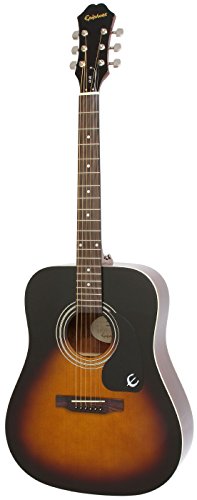
- Additional Details: SlimTaper C-profile neck, Epiphone Sloped Dovewing headstock, and Premium Die Cast tuners
- Mahogany body
The Epiphone DR-100 is perhaps the most direct competitor to the Squier SA-150. While the Squier offers that slim, easy-play neck, the Epiphone often feels a bit more traditional and “chunky” in the hand. Tonal quality is very similar, though some might argue the Epiphone has a slightly brighter top end due to its specific laminate spruce selection. We found that the Squier’s black finish looks a bit more modern, while the Epiphone Vintage Sunburst is a classic look. If you want a guitar that feels a bit more “old school” and heavy-duty, the Epiphone is a fantastic alternative that has stood the test of time.
2. WINZZ HAND RUBBED Series 40″ Cutaway Acoustic Guitar Beginner Bundle

- FIRST CHOICE - Quality, Attractive, and Affordable, Winzz Auditorium acoustic guitar is great value for money that represent the best entry level guitar. Perfect size for adults, beginners and student...
- BALANCED SOUND - Handcrafted body and "X" bracing structure offers both bright and warm tone that has excellent acoustic properties and great extension and response
If you are a absolute beginner who wants everything in one box, the Winzz bundle is a compelling choice. Unlike the Squier SA-150 Dreadnought Acoustic Guitar, which is usually sold as a standalone instrument, this Winzz set includes a bag, stand, tuner, and capo. It also features a “cutaway” body style, which allows your hand to reach the higher frets more easily. However, we found that the build quality of the Squier is generally superior, with better fret finishing and a more resonant body. Choose the Winzz if you are on a strict budget and need the accessories immediately, but choose the Squier if you want a better-sounding instrument to grow into.
3. Moukey 3/4 Size Acoustic Guitar Kit

- Ideal for Small Beginner: Moukey 36” acoustic guitar is equipped with soft nylon strings that are easier to hold down, and it will not cause pain in fingers and reduce damage on the guitar bridge...
- Quality Craftsmanship: Quality basswood body, Okoume neck, smooth fingerboard and non-scratching frets enable acustica guitarra to be played comfortably for a long time. 2 strap pegs allow you to...
This is the best alternative for younger players or those with smaller frames. While the Squier SA-150 is a full-sized 42-inch behemoth, the Moukey is a 36-inch 3/4 size guitar. We found that while it lacks the deep, booming bass of the Squier dreadnought, it is much easier to transport and hold. It also comes with nylon strings as an option, which are softer on beginner fingers. If you are buying a guitar for a child under the age of 12, or if you need a dedicated travel guitar that fits in an overhead bin, the Moukey is the way to go. For everyone else, the full-sized Squier provides a much more “adult” and professional sound.
The Final Verdict: Is the Squier SA-150 Right for You?
After our extensive time with the Squier SA-150 Dreadnought Acoustic Guitar, our conclusion is clear: this is arguably the best “bang-for-your-buck” acoustic guitar on the market today for beginners and hobbyists. It manages to balance the difficult trio of affordability, playability, and tone. The slim neck profile is a genuine game-changer for those who find traditional acoustics too bulky, and the scalloped X-bracing ensures that you aren’t sacrificing sound quality for the low price. While you might want to swap out the strings after a few weeks, the “bones” of this guitar are solid and dependable.
We recommend this instrument to any adult or teenager starting their musical journey, or to the experienced player who needs a reliable guitar they don’t have to baby. It’s loud, it’s proud, and it looks fantastic in any room. Don’t let the fear of a “budget” label stop you—this is a Fender-family instrument through and through. If you’re ready to stop thinking about playing and actually start making music, we highly suggest you check the latest price and availability and get your hands on a Squier SA-150 today. Your future self—and your music—will thank you.
Last update on 2026-10-16 / Affiliate links / Images from Amazon Product Advertising API