
Ibanez TOD10N Tim Henson Signature Acoustic-Electric Guitar Review: Reimagining the Crossover Nylon for the Modern Virtuoso
For years, I found myself stuck in a tonal purgatory. As someone who cut my teeth on high-performance electric guitars, the lush, evocative snap of nylon strings always called to me, yet the instruments themselves felt like obstacles. Traditional classical guitars are often bulky, with necks that feel like baseball bats and action so high it makes technical playing a chore. I wanted that “Polyphia” sparkle—that percussive, lo-fi, yet crystalline resonance—without sacrificing the shred-friendly ergonomics I’ve spent a decade mastering. When I first saw the Ibanez TOD10N Tim Henson Signature Acoustic-Electric Guitar, I knew I wasn’t the only one facing this dilemma. Finding a guitar that bridges the gap between the ancient world of classical music and the hyper-technical landscape of modern prog-rock is a rare feat, and failing to find the right tool usually means compromising on your creative voice. This review explores whether this striking instrument is the definitive answer for players looking to break the rules of acoustic performance.

- Nylon-string Acoustic-electric Guitar
- Rosewood Fingerboard - Black
What to Consider Before Buying a High-Performance Nylon-String Guitar
A nylon-string acoustic-electric guitar is more than just an item; it’s a key solution for guitarists who want to expand their sonic palette into the realm of fingerstyle, bossa nova, or modern “trap-metal” acoustic riffs without the finger fatigue of steel strings. These instruments provide a softer touch and a warmer, more rounded frequency response that sits beautifully in a mix. However, the Ibanez TOD10N Tim Henson Signature Acoustic-Electric Guitar isn’t your grandfather’s classical guitar. It belongs to the “crossover” category, designed specifically to solve the playability issues inherent in traditional designs.
The ideal customer for this type of product is an electric guitar player who needs the texture of nylon but wants a familiar neck profile and body shape. It is perfect for stage performers who need to plug into a PA system without the feedback nightmare of a hollow-body acoustic. On the other hand, it might not be suitable for those who are purists of the classical genre; if you are looking for the massive, natural projection of a concert-level Hauser-style guitar to play unamplified in a cathedral, this thin-body design will likely feel too quiet. For those players, a traditional full-bodied Yamaha or Cordoba might be the better path.
Before investing, consider these crucial points in detail:
- Dimensions & Space: The “thin-line” body is a major factor. Unlike a standard acoustic that might be 4-5 inches deep, a crossover like the Ibanez TOD10N Tim Henson Signature Acoustic-Electric Guitar is significantly slimmer. This makes it much more comfortable to hold for long sessions, especially if you’re used to the feel of a solid-body electric, though it does reduce the natural “unplugged” volume.
- Capacity/Performance: Look closely at the electronics. Since thin-body guitars rely on amplification for their best sound, a high-quality preamp and piezo system are non-negotiable. You want a system that captures the “thump” of the thumb and the “snap” of the fingernails without sounding overly plastic or “quacky.” You can see its full feature set and user reviews to understand how it handles high-gain or percussive environments.
- Materials & Durability: While traditional guitars use rosewood or mahogany, modern signatures often experiment. The use of a solid spruce top is vital for resonance, while sapele or walnut components offer a balance of durability and bright, snappy tone. Solid tops are superior to laminates as they “open up” and sound better over years of playing.
- Ease of Use & Maintenance: Nylon strings exert less tension on the neck than steel, but the guitar still needs a reliable truss rod. Because this model is designed for technical players, a neck that stays straight and allows for low action is the difference between a guitar you play every day and one that gathers dust in the corner.
Understanding these variables helps ensure you don’t end up with an instrument that fights your playing style. While the Ibanez TOD10N Tim Henson Signature Acoustic-Electric Guitar is an excellent choice, it’s always wise to see how it stacks up against the competition. For a broader look at all the top models, we highly recommend checking out our complete, in-depth guide:
Our Comprehensive Analysis of the Best Budget-Friendly Acoustic Guitars for Every Style

- One right-handed Fender Alternative Series Dreadnought Acoustic Guitar – a perfect beginner guitar for all ages


- 【Well Made Craftsmanship】: Boasts a spruce top complemented by a mahogany back and sides, reinforced with X bracing for durability and sound quality; The fretboard features 20 brass frets with...

- With a combination of reliable Fender quality, player-friendly features and attractive aesthetics, the all-new California Debut is a value-packed option for today’s acoustic player
First Impressions: A Futuristic Icon in Black Flat
Unboxing the Ibanez TOD10N Tim Henson Signature Acoustic-Electric Guitar is a visual experience. The first thing that hits you is the “Black Flat” finish—it’s sleek, non-reflective, and feels incredibly modern. When I held it for the first time, I was struck by how light and “fast” it felt. It doesn’t feel like a traditional acoustic; it feels like a precision tool. The “Tree of Death” fingerboard inlay is even more striking in person, sprawling across the walnut fretboard with an intricate detail that justifies its “signature” status. We noticed that the build quality is exceptionally tight for a mass-produced instrument, with no rough fret edges or finish flaws to be found.
Compared to previous Ibanez crossover models like the FRH series, the TOD10N feels more refined. It’s clear that Tim Henson’s input led to a guitar that prioritizes the “electric player’s comfort.” The two deep cutaways are not just for show; they offer the kind of upper-fret access you’d expect from an Ibanez RG. Before you even plug it in, you should check the latest price and availability as this model has a habit of disappearing from stock quickly due to its high demand.
Key Benefits
- Exceptional upper-fret access thanks to the deep double-cutaway design.
- Ultra-thin body makes it incredibly comfortable for electric guitarists.
- The “Tree of Death” inlay provides a unique, high-end boutique aesthetic.
- Onboard Fishman electronics deliver a crisp, professional plugged-in tone.
Limitations
- Limited acoustic volume when unplugged compared to full-sized classicals.
- The flat finish can show fingerprints and oils from the hands over time.
Deep Dive: A Performance Analysis of the Ibanez TOD10N
The Ergonomics of the “Thin-Line” Body
In our testing, the standout feature of the Ibanez TOD10N Tim Henson Signature Acoustic-Electric Guitar is undoubtedly its physical profile. Traditional acoustic guitars often feel like a box you have to reach around. This guitar, however, features a body depth that is roughly half that of a standard dreadnought. This design choice serves two purposes. First, it brings the guitar closer to your body, allowing your picking arm to sit at a more natural, relaxed angle. For players who utilize complex fingerstyle techniques or rapid-fire hybrid picking, this reduced distance is a game-changer.
Secondly, the thin body drastically reduces the potential for feedback. When we took this guitar into a high-volume rehearsal environment and plugged it into a standard amplifier, we were impressed by how stable it remained. On a traditional hollow-body nylon guitar, the large air cavity often creates a “howl” when amplified. Here, the solid spruce top and sapele back/sides are braced with a classical-style fan pattern that manages the internal resonance perfectly. We found that you can push the volume significantly higher than you would with a standard acoustic, making it a formidable tool for live performances in a band setting.
Neck Profile and Playability for the Shredder
One of the most intimidating aspects of nylon guitars for many players is the 52mm nut width common on classical instruments. The Ibanez TOD10N Tim Henson Signature Acoustic-Electric Guitar slashes that down to a manageable 46mm. This might seem like a small number on paper, but in your hand, it’s the difference between struggling to reach a chord and flying through scales. The neck is a “C” shape made of Nyatoh, which feels incredibly smooth and fast. I found that I could apply the same techniques I use on my electric guitars—sweeps, legato, and complex tapping—with almost no adjustment period.
The walnut fingerboard is another highlight. It offers a slightly “snappier” response than rosewood, which helps the nylon strings maintain their definition. This is especially important for the percussive “thump” that has become a staple of modern acoustic playing. When we combined this with the low action out of the box, we found that the guitar encourages a level of technicality that is simply impossible on 90% of other nylon-string instruments. If playability is your main concern, you should consider this a feature that really sets it apart from anything else in its price bracket.
Sonic Versatility and the Fishman Sonicore System
The heart of any modern acoustic-electric is the electronics, and Ibanez didn’t cut corners here. The TOD10N utilizes a Fishman Sonicore pickup paired with the Ibanez AEQ-TP2 preamp. This combination is specifically tuned to capture the nuance of nylon. Many piezo systems can sound “brittle” or overly metallic, but this setup retains the warmth of the spruce top. During our evaluation, we found the onboard 2-band EQ to be incredibly effective. By boosting the treble slightly, we were able to get that modern, high-fidelity sound found on Tim Henson’s solo work, while rolling it back yielded a more traditional, mellow bossa nova tone.
The inclusion of an onboard tuner is a convenience that cannot be overstated. Because nylon strings are more susceptible to temperature and humidity changes than steel strings, having a bright, easy-to-read tuner right on the top bout of the guitar is a lifesaver on stage. We also appreciated the 1/4″ output being integrated into the endpin, which is a sturdy, professional touch. Whether you are running directly into an audio interface for recording or into a dedicated acoustic amp, the signal is clean, quiet, and surprisingly full-bodied for such a slim instrument.
The Aesthetic Impact: The “Tree of Death” and Black Flat Finish
Let’s be honest: part of the appeal of the Ibanez TOD10N Tim Henson Signature Acoustic-Electric Guitar is how it looks. In a sea of natural-finished wooden guitars, the matte black aesthetic is a bold statement. The “Tree of Death” inlay—a darker, more aggressive take on Ibanez’s classic “Tree of Life”—is visually stunning. It weaves its way up the fretboard in a pearloid material that catches the light without being gaudy. It’s an artistic touch that makes the guitar feel like a collector’s piece rather than just another factory-line product.
We found that the satin “Black Flat” finish also has a tactile benefit. It doesn’t feel sticky like some high-gloss finishes can during long, sweaty performances. While it does require a bit more cleaning to keep it looking pristine (it loves to collect fingerprints), the trade-off in “cool factor” is more than worth it. This is a guitar that looks just as good hanging on a wall as it does in a music video. To see high-resolution images of the design details, you can view the product gallery here.
What Other Users Are Saying
The general sentiment among users is one of high praise, often bordering on relief that such a guitar finally exists. One user noted that they were impressed by the shipping speed and condition, stating, “FocusProAudio shipped this to me the next day… the guitar was shipped in great condition, I love the design and the art on it. It is fun to play, sounds great plugged in.” This sentiment is common; the “fun factor” of this guitar is frequently mentioned because it removes the traditional barriers to nylon-string playing.
Another user succinctly described it as “Hermosa, funcional, suena precioso” (Beautiful, functional, sounds precious/beautiful). We found that international users are particularly fond of the instrument’s versatility. While some reviews mention that the guitar is often sold out, the consensus is that it is well worth the wait. A few critical voices mention that the unamplified volume is low, but as we’ve noted, this is an intentional design choice for a stage-ready crossover rather than a defect. For most, the trade-off for a feedback-free live sound and incredible playability is a win. You can read more user testimonials here to see how it fits different playing styles.
Comparing the Ibanez TOD10N to Its Top 3 Alternatives
While the Ibanez TOD10N is a specialized beast, you might be considering other acoustic options depending on your budget and goals. Here is how it compares to three other popular models currently available.
1. Epiphone Songmaker DR-100 Dreadnought Acoustic Guitar
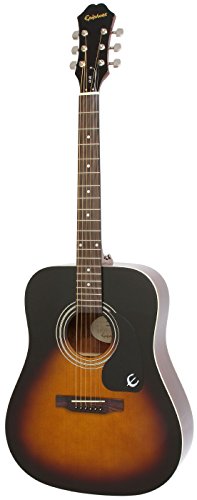
- Additional Details: SlimTaper C-profile neck, Epiphone Sloped Dovewing headstock, and Premium Die Cast tuners
- Mahogany body
The Epiphone Songmaker DR-100 is a completely different animal. As a traditional steel-string dreadnought, it offers much more natural volume and projection when unplugged. However, it lacks any electronics and has a much thicker neck. If you are a beginner looking for a “workhorse” guitar for campfire strumming, this is a fantastic budget choice. But if you are looking for the delicate touch of nylon or the ability to plug into an amp for technical lead lines, the Ibanez TOD10N is in a different league entirely. The Epiphone is for the traditionalist; the Ibanez is for the innovator.
2. WINZZ HAND RUBBED Series 40-Inch Cutaway Acoustic Guitar Beginner Bundle

- FIRST CHOICE - Quality, Attractive, and Affordable, Winzz Auditorium acoustic guitar is great value for money that represent the best entry level guitar. Perfect size for adults, beginners and student...
- BALANCED SOUND - Handcrafted body and "X" bracing structure offers both bright and warm tone that has excellent acoustic properties and great extension and response
The WINZZ Hand Rubbed Series is an entry-level bundle aimed squarely at students. It features a cutaway for better fret access and comes with a host of accessories. While it’s a great value for someone just starting out, it doesn’t offer the professional-grade electronics or the specialized “thin-body” ergonomics of the Ibanez TOD10N Tim Henson Signature Acoustic-Electric Guitar. The materials on the WINZZ are standard laminates, whereas the Ibanez uses a solid spruce top. Choose the WINZZ if you are on a strict budget and need a complete starter kit; choose the Ibanez if you are a serious player needing a high-performance tool.
3. Moukey 3/4 Size Acoustic Guitar Kit

- Ideal for Small Beginner: Moukey 36” acoustic guitar is equipped with soft nylon strings that are easier to hold down, and it will not cause pain in fingers and reduce damage on the guitar bridge...
- Quality Craftsmanship: Quality basswood body, Okoume neck, smooth fingerboard and non-scratching frets enable acustica guitarra to be played comfortably for a long time. 2 strap pegs allow you to...
The Moukey 3/4 Size Kit is designed for travel or for younger players with smaller hands. It’s steel-stringed and very portable. While it shares some “comfort” goals with the Ibanez (by being smaller), the Moukey is a budget-friendly travel companion rather than a professional performance instrument. It lacks the sophisticated pickup system and the specific tonal qualities of nylon strings. If you need a guitar to throw in the back of a car for a road trip, the Moukey is great. If you need to record a professional track with complex fingerstyle melodies, the Ibanez TOD10N is the far superior investment.
The Final Verdict: A New Standard for the Modern Guitarist
After extensive evaluation, it’s clear that the Ibanez TOD10N Tim Henson Signature Acoustic-Electric Guitar is one of the most significant “crossover” instruments released in the last decade. It successfully solves the problem of playability that has long kept electric guitarists away from the nylon-string world. With its thin-line body, “fast” neck profile, and feedback-resistant design, it is a dream for stage performers and studio musicians alike. While it doesn’t have the unplugged roar of a traditional classical guitar, it wasn’t designed for that—it was designed to be a amplified powerhouse for a new generation of technical virtuosos.
We highly recommend this guitar for any player who wants to explore the textures of nylon without fighting their instrument. It is stylish, exceptionally well-made, and offers a unique voice that is hard to find elsewhere. Because this model is in high demand, we suggest you check the latest price and secure yours today to avoid the long backorder wait times. Whether you’re a fan of Polyphia or just a guitarist looking to expand your horizons, the TOD10N is a stellar addition to any collection.
Last update on 2026-10-17 / Affiliate links / Images from Amazon Product Advertising API