
Roland RD-88 Stage Piano Review: The Ultimate Portable Powerhouse for Modern Performers
For years, gigging keyboardists have faced a grueling trade-off: do you carry a heavy, back-breaking professional stage piano to get the best feel and sound, or do you settle for a lightweight “toy” that leaves your fingers feeling uninspired? We have all been there, lugging a 60-pound flight case up a narrow staircase at 1 AM, questioning our life choices. The struggle to find an 88-note instrument that offers a professional hammer-action feel without requiring a team of roadies is the primary reason many of us spend hours scouring forums and spec sheets. If you don’t solve this portability-versus-performance puzzle, you either end up with chronic back pain or a lackluster performance because your gear can’t keep up with your expression. This is exactly where the Roland RD-88 Stage Piano enters the conversation, promising to bridge the gap between high-end professional features and grab-and-go convenience.

- Professional RD Stage Piano: Features expanded sounds, including the SuperNATURAL Acoustic Piano 3 Expansion for enhanced performance capabilities
- Acclaimed SuperNATURAL Technology: Delivers authentic pianos and electric pianos with exceptional sound quality and realism
What to Consider Before Buying a Stage Digital Piano
A Stage Digital Piano is more than just an item; it’s a key solution for musicians who need a reliable, high-quality instrument that can transition seamlessly from the bedroom studio to the church sanctuary or the jazz club. Unlike home digital pianos, which are designed to look like furniture, a stage piano focuses on durability, sound variety, and connectivity. It solves the problem of needing a wide palette of sounds—from grand pianos to vintage synths—at your fingertips without needing to navigate complex menus in the dark. The main benefit is the marriage of a weighted “real piano” feel with the versatility of a digital workstation.
The ideal customer for this type of product is the working musician, the weekend warrior, or the serious student who needs a professional-grade keybed but lacks the space for a permanent console. It’s perfect for those who use software like Apple MainStage and need a controller that doubles as a standalone instrument. However, it might not be suitable for those who want a simplified “plug and play” experience with massive built-in console speakers, or for those who strictly want a furniture-style piece for their living room. If you are looking for something purely for a child’s first lessons, a more basic portable keyboard might suffice.
Before investing, consider these crucial points in detail:
- Dimensions & Space: Stage pianos vary significantly in depth and height. Even if they are 88 keys wide, a “slim” model like the Roland RD-88 Stage Piano is much easier to fit into a small car or a tight stage corner. Always check the depth of the unit to ensure it fits your existing keyboard stand without wobbling.
- Capacity/Performance: Look at the sound engines and polyphony. A professional stage piano should offer at least 128-note polyphony to ensure notes don’t cut off during complex sustain pedal passages. The variety of sounds (pianos, EPs, organs, synths) determines how many different gigs you can take with a single board.
- Materials & Durability: While plastic chassis help with weight reduction, the quality of the plastic and the internal bracing matters. High-quality weighted keys often use a combination of specialized resins and metal reinforcements to mimic the “throw” of an acoustic piano hammer.
- Ease of Use & Maintenance: On stage, you don’t have time to menu-dive. Look for dedicated knobs for EQ, effects, and volume. Maintenance is usually minimal for digital pianos, but having a “clean” interface prevents dust buildup in sliders and buttons over years of use.
Understanding these factors will help you determine if a professional-grade tool like the Roland RD-88 fits your specific workflow. Before we dive into the specifics, you might want to see its full feature set and user reviews to get a baseline for its capabilities.
While the Roland RD-88 Stage Piano is an excellent choice, it’s always wise to see how it stacks up against the competition. For a broader look at all the top models, we highly recommend checking out our complete, in-depth guide:
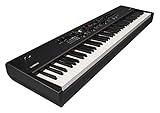
- 88 Natural Wood keys with Synthetic Ebony and Ivory Key Tops and Graded Hammer (GH3) Action

- Digital stage piano with piano, organ, and synthesizer sound engines
- Professional RD Stage Piano: Features expanded sounds, including the SuperNATURAL Acoustic Piano 3 Expansion for enhanced performance capabilities
First Impressions: Unboxing the Roland RD-88 Stage Piano
When we first pulled the Roland RD-88 Stage Piano out of its box, the first thing that struck us was the weight—or rather, the lack of it. At just under 30 pounds, it feels significantly lighter than its sturdy appearance suggests. The build is sleek and modern, with a black finish that looks professional under stage lights. Unlike many “portable” pianos that feel like hollow plastic, the RD-88 has a dense, purposeful feel. Setting it up was a breeze; we simply plugged in the included DP-10 damper pedal, connected the power, and were playing within minutes. The layout is intuitive, with clearly labeled buttons and a crisp digital display that isn’t overly cluttered. Compared to previous iterations in the RD series, this model feels much more streamlined, clearly designed for the player who needs to get a great sound quickly without getting lost in technical manuals. It’s a sophisticated step up for anyone moving from a basic digital piano, and you can check the latest price and availability to see how it fits your budget.
Key Benefits
- Exceptional portability at only 29 lbs, making it one of the lightest 88-key stage pianos available.
- High-quality PHA-4 Standard keyboard with Ivory Feel provides a realistic, expressive touch.
- Massive sound library with over 3,000 tones powered by ZEN-Core and SuperNATURAL engines.
- Built-in stereo speakers are surprisingly capable for home practice or small rehearsals.
Limitations
- The “deep bucket” design under the keys may require adjusting your stand height for knee clearance.
- Some users find the default acoustic piano sounds a bit “bright” for solo classical work.
Deep Dive: Performance and Playability of the Roland RD-88 Stage Piano
The PHA-4 Action: A True Pianist’s Touch
We spent several hours testing the PHA-4 Standard keyboard, and we can confidently say it is one of the best actions in this weight class. The “Ivory Feel” coating on the keys provides a subtle texture that prevents your fingers from slipping during fast passages—a feature we found incredibly helpful during a humid outdoor rehearsal. The escapement mechanism mimics the slight “click” or resistance felt when playing a grand piano softly, which adds a layer of authenticity that is often missing in portable boards.
We found that the dynamic range is where this keybed truly shines. As one user noted, it excels in its ability to translate the softest pianissimo to the most thunderous fortissimo without feeling like the keys are “bottoming out” harshly. However, there is a design quirk to be aware of: the unit has a “deep bucket” underneath the keys. In our testing, we realized this means the keys sit slightly higher relative to the bottom of the chassis than on other models. If you usually play with your stand at a specific height, you might find your knees hitting the bottom of the piano. We had to raise our stand by about an inch to get comfortable, but once we did, the playing experience was top-notch. For those who prioritize feel, this is a feature that really sets it apart from lighter, non-weighted alternatives.
SuperNATURAL and ZEN-Core: A Sonic Universe
The sound engine setup in the Roland RD-88 Stage Piano is essentially a “best of” collection from Roland’s flagship line. You get the SuperNATURAL engine for acoustic and electric pianos, which provides organic, non-looping decays and smooth velocity transitions. The acoustic pianos are crisp and cut through a mix beautifully, though as some users have mentioned, they can lean toward the “bright” side. We found that a quick tweak of the onboard EQ knobs easily mellowed the tone for more intimate jazz settings.
Beyond the pianos, the ZEN-Core engine opens up a library of over 3,000 sounds. We were blown away by the quality of the vintage synths and strings. These aren’t just “filler” sounds; they are professional-grade tones pulled from the high-end FANTOM series. Whether you need a thick 80s pad, a biting lead synth, or a realistic orchestral swell, it’s all here. The ability to layer up to three zones means you can have a rich piano/string/pad combo that sounds massive through a PA system. This level of sonic depth is a huge reason to invest in this professional instrument over a standard home digital piano.
Stage-Ready Workflow and Connectivity
When you’re on stage, you need to be able to change sounds instantly. The “Favorites” system on the Roland RD-88 Stage Piano is a lifesaver. We were able to pre-program our setlist into these slots, allowing for one-touch transitions between a grand piano for the ballad and a funky Clavinet for the upbeat number. The dedicated control knobs for filter, resonance, and effects allow for real-time sound shaping, which is essential for synth-heavy performances.
One of the most impressive “pro” features is the integrated USB Audio/MIDI interface with a dedicated Apple MainStage mode. For modern players who run soft synths or backing tracks from a laptop, the RD-88 acts as the perfect command center. You can control your MainStage patches directly from the RD-88’s interface, and the audio from your computer can be routed back through the piano’s outputs. This eliminates the need for an external audio interface, simplifying your rig significantly. We also appreciated the built-in rhythms, which are great for practicing timing or filling out a solo performance. You can explore the full connectivity specs here to see how it would integrate with your current setup.
The Convenience of Onboard Speakers
It is rare to find a professional stage piano with built-in speakers, as manufacturers usually assume you’ll be using headphones or a PA. However, we found the onboard stereo system in the Roland RD-88 Stage Piano to be incredibly useful. While they won’t replace a dedicated keyboard amp for a loud gig, they are perfect for home practice, songwriting, or a quiet acoustic rehearsal. They provide a “room-filling” sound that makes the instrument feel more alive, as you can feel the vibrations through the keys.
Some users have noted a “strange echo” or spatial effect when playing through the speakers or headphones. After our deep dive, we found that this is a deliberate design choice by Roland to help the piano sit better in a band mix—a “three-dimensional” soundstage that prevents the piano from being buried by guitars and drums. While it might take a moment to get used to if you are coming from a dry-sounding home piano, we found it actually enhanced the playing experience in a live context. This versatility makes it an excellent choice for someone who wants one keyboard to do everything. To see if this matches your needs, you can check out more user impressions and pricing.
What Other Users Are Saying
The general consensus among owners of the Roland RD-88 Stage Piano is overwhelmingly positive, particularly regarding its balance of features and weight. Amateur keyboardists moving up from entry-level models like the Yamaha P-125 often express delight at the “sophisticated” connectivity and the massive jump in sound quality. One user highlighted that “it lives up to everything the YouTube reviews state,” specifically praising the weighted keys. Another professional performer noted that while the keybed doesn’t quite match the heavy feel of a Korg SV2, the Roland’s superior dynamic range and “Favorites” setup make it a much better tool for live work.
On the critical side, some users mentioned the “bright” nature of the piano sounds and the “deep bucket” chassis design that affects knee room. There was also mention of the “echo” effect in the sound design, which some users found confusing until they realized its purpose in a band mix. Overall, the feedback suggests that this is a “musician’s instrument”—designed with the practicalities of gigging and versatile sound production in mind. It is widely considered a “perfect lightweight option” that doesn’t feel like a compromise.
Comparing the Roland RD-88 Stage Piano to its Top Alternatives
1. YAMAHA PSR-E363 Touch Sensitive Keyboard

- The PSR-E363 is an ideal portable keyboard for beginners and hobbyists
- Touch sensitive keys, on-board lessons, computer and mobile device connectivity and much more
The YAMAHA PSR-E363 is a completely different beast compared to the Roland RD-88 Stage Piano. While the Roland is a professional stage tool with fully weighted hammer-action keys, the Yamaha is an entry-level portable keyboard with 61 touch-sensitive (but unweighted) keys. We would recommend the Yamaha PSR-E363 only for absolute beginners or children who are just starting their musical journey and aren’t sure if they want to commit to the piano. It lacks the realistic feel, the advanced sound engines, and the stage-ready connectivity of the Roland. If you are a serious student or a performer, the Roland is the clear winner, but for a budget-friendly “first keyboard,” the Yamaha is a solid, reputable choice.
2. Yamaha P-Series Digital Piano Soft Case

- Yamaha Soft Case designed for P125 Digital Piano
- Size: W 54" (1380 mm) x H 9" (220 mm) x D 13" (340 mm)
While this is an accessory rather than a piano, it’s worth mentioning because portability is a key theme for RD-88 buyers. This soft case is designed for Yamaha’s P-series, but it highlights a crucial point: if you buy a Roland RD-88 Stage Piano, you must ensure you get a high-quality gig bag to protect your investment. The Roland is light, but its 88-key length still makes it susceptible to bumps during transport. While this specific Yamaha case might not be the perfect fit for the Roland’s specific dimensions, it serves as a reminder that the “portability” of a stage piano is only as good as the bag you carry it in. Always look for a case with reinforced handles and sufficient padding.
3. Casio Privia PX-S1100 Piano

- ENTRY INTO PRIVIA EXCELLENCE – Slim, stylish design with illuminated touch controls and gold accents—perfect for new players ready for a premium experience.
- REFINED PIANO TONE – Features a German grand piano with enhanced string/damper resonance, plus 17 other rich, expressive tones.
The Casio Privia PX-S1100 is perhaps the closest competitor to the Roland RD-88 Stage Piano in terms of philosophy. It is incredibly slim and ultra-portable. The Casio is a fantastic choice for someone who wants the absolute thinnest 88-key piano on the market and primarily needs great acoustic piano tones. However, where the Roland pulls ahead is in the “Stage” part of the name. The RD-88 offers thousands more sounds (ZEN-Core), better zones/layering controls, and much deeper integration with computer software like MainStage. If you just want a sleek piano for your apartment, the Casio is lovely. If you are a gigging musician who needs synths, organs, and professional routing, the Roland RD-88 is the more capable “workhorse” instrument.
Final Verdict: Is the Roland RD-88 Stage Piano Right for You?
After our extensive evaluation, we believe the Roland RD-88 Stage Piano is a triumph of engineering for the working musician. It manages to pack a professional-grade PHA-4 action and two of Roland’s most powerful sound engines into a chassis that won’t require a trip to the chiropractor after every show. While it has a few quirks, like the chassis depth and a bright default piano tone, these are easily managed with a minor stand adjustment and a turn of the EQ knob. Its ability to function as a high-end standalone piano, a versatile synth workstation, and a seamless MainStage controller makes it one of the most flexible instruments in its price bracket. Whether you are an amateur looking to upgrade to a “forever” keyboard or a pro needing a lightweight secondary rig, this instrument delivers on its promises. We highly recommend it for anyone who refuses to sacrifice touch and tone for the sake of portability. If you’re ready to elevate your performance, click here to get the Roland RD-88 Stage Piano and start your next musical chapter today.
Last update on 2026-10-25 / Affiliate links / Images from Amazon Product Advertising API