
Kawai ES60 Digital Piano Review: A Portable Powerhouse for Stage and Home
Finding a digital piano that balances physical weight with authentic key resistance is one of the most frustrating challenges facing modern musicians. If you are a gigging keyboardist loading gear into a hatchback at 2:00 AM, or an intermediate student striving for proper finger technique without turning your living room into an acoustic soundboard showroom, you know the struggle all too well. For years, players were forced to choose between lightweight synth-action keyboards that felt like cheap plastic toys or heavy, 50-pound weighted slabs that required two people to transport. When we set out to evaluate the Kawai ES60 Digital Piano, we wanted to see if Kawai had finally solved this industry-wide dilemma by packing high-grade acoustic modeling and realistic mechanical key action into a portable enclosure.
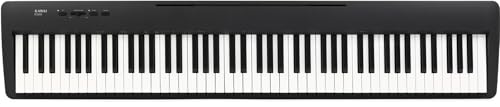
- 88-key Digital Piano with Responsive Hammer Lite Keyboard
- Onboard Speaker System - Black
What to Consider Before Buying Stage Digital Pianos
A stage digital piano is more than just a home instrument; it is a critical hub for musical expression, practice consistency, and performance reliability. Choosing the wrong instrument can hinder your physical development as a pianist or leave you stranded on stage with muddy audio projection. Investing in a high-caliber digital piano ensures that the mechanical resistance under your fingertips translates directly into expressive dynamics, whether you are playing delicate pianissimo passages or thunderous fortissimo chords.
The ideal customer for this type of product is an intermediate pianist, serious beginner, gigging keyboardist, or rehearsal accompanist who demands a realistic weighted key feel and rich piano tones without excessive bulk. Conversely, it might not be suitable for those who require hundreds of electronic synth presets, ultra-deep menu editing, or synth-style unweighted keys for lightning-fast organ glissandos. Musicians needing an extensive sound workstation rather than a pure piano-focused instrument might look at dedicated synthesizer workstations or arranger keyboards instead.
Before investing, consider these crucial points in detail:
- Dimensions & Space: Consider both the physical footprint of the cabinet and its overall depth. A slim design measuring under 14 inches deep allows the instrument to fit comfortably into tight studio spaces or small gigging setups without sacrificing the standard 88-key layout. Always verify that your stand can accommodate the instrument’s width without balance issues.
- Capacity/Performance: Look closely at maximum polyphony and sound generation technology. Higher polyphony ratings, such as 192 notes, allow complex classical pieces and heavily sustained chords to decay naturally without awkward note cutting off during pedal-heavy passages.
- Materials & Durability: Examine the keybed surface and chassis construction. Matte-textured keytops reduce finger slipping during extended practice sessions, while a rigid chassis absorbs repetitive key strikes without internal rattles or housing flex.
- Ease of Use & Maintenance: Evaluate the intuitive nature of the control panel and physical connectivity. Dedicated volume sliders, easily accessible headphone jacks for late-night practice, and standard USB/MIDI integration ensure low-stress operation both in the studio and on stage.
By evaluating these technical aspects carefully against your performance habits, you can select an instrument that serves your artistic growth for years to come.
While the Kawai ES60 Digital Piano is an excellent choice, it’s always wise to see how it stacks up against the competition. For a broader look at all the top models, we highly recommend checking out our complete, in-depth guide:
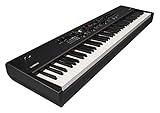
- 88 Natural Wood keys with Synthetic Ebony and Ivory Key Tops and Graded Hammer (GH3) Action

- Digital stage piano with piano, organ, and synthesizer sound engines

- Professional RD Stage Piano: Features expanded sounds, including the SuperNATURAL Acoustic Piano 3 Expansion for enhanced performance capabilities
Unboxing & First Impressions: Elegance Meets Portability
Unboxing the Kawai ES60 Digital Piano reveals a sleek, minimalist aesthetic that speaks directly to Kawai’s acoustic heritage. Straight out of the protective foam packaging, the instrument impresses with its clean lines, matte black finish, and understated top-panel controls. Lifting the unit out of the box confirms its headline specification: at just 24.25 pounds, this 88-key weighted piano feels remarkably manageable, making single-person transport entirely stress-free.
Setup takes only a few minutes. You simply connect the included DC power supply, plug in the sustain pedal, and place the unit onto any standard keyboard stand. Turning the instrument on for the first time, the absence of an overwhelming cluster of buttons is immediately noticeable. Instead, Kawai favors a streamlined, elegant interface where primary function changes are accessed via intuitive button-and-key combinations. When we struck our first middle C, the key action immediately felt reassuringly substantial, boasting a delicate matte surface texture that feels far superior to standard glossy keybeds in this price category.
Key Benefits
- Responsive Hammer Lite (RHL) key action offers authentic graded mechanical resistance.
- Incredible 192-note polyphony prevents note cutoff during complex sustain pedaling.
- Stunning Shigeru Kawai SK-EX grand piano sound samples with Harmonic Imaging.
- Ultra-lightweight design (24.25 lbs) built specifically for easy gig transport.
Drawbacks & Limitations
- Deep function customization requires checking the manual for button-key combinations.
- Included basic pedal is adequate, but serious players will want to upgrade to a heavier pedal unit.
Hands-On Performance Analysis: Deep Dive into the Kawai ES60 Digital Piano
1. Mechanical Touch and Key Action: The Responsive Hammer Lite (RHL) Advantage
The primary benchmark of any serious digital piano is how effectively its key action replicates the physical mechanics of an acoustic grand piano. During our hands-on testing of the Kawai ES60 Digital Piano, the Responsive Hammer Lite (RHL) action exceeded our expectations for a lightweight instrument. Kawai achieved this balance by engineering a mechanical hammer system that uses actual physical movement rather than artificial springs to create key resistance. This results in a naturally graded touch—meaning the lower keys feel slightly heavier under your fingers, gradually lightening as you move up into the treble registers, exactly as you would experience on an acoustic instrument.
In practice, playing rapid scalar runs and delicate trills felt surprisingly precise. The keys recoil quickly without bouncy mechanical chatter, allowing for smooth repetition during quick classical or jazz passages. We also noted that the matte key top finish plays an important role here; it provides a subtle tactile grip that absorbs moisture, preventing your fingers from slipping off the keys during long practice sessions. Players coming from vintage uprights—such as classic Baldwin Acrosonics or smaller studio uprights—will feel instantly comfortable with this keybed feel. It strikes a refined middle ground between the overly stiff, heavy action found on some stage pianos and the springy, unnatural pushback of budget keyboards, making it ideal for building finger stamina without causing wrist fatigue.
2. Dynamic Sound Generation: Harmonic Imaging & Shigeru Kawai SK-EX Samples
Tone quality is where Kawai consistently sets itself apart, and the Kawai ES60 Digital Piano carries that tradition forward with pride. At the heart of this keyboard is Kawai’s Harmonic Imaging technology, which utilizes meticulously recorded stereo samples of their world-renowned Shigeru Kawai SK-EX concert grand piano. Rather than simply stretching a single audio recording across multiple keys or dynamic levels, Kawai sampled every single key individually across a broad spectrum of velocity layers. When you strike a key softly, you hear a warm, intimate acoustic tone; when played forcefully, the sound blooms into a bright, resonant timbre rich in harmonic overtones.
Beyond the primary grand piano sound, the instrument includes 17 built-in tones, encompassing vintage electric pianos, lush orchestral strings, church organs, and punchy upright bass. In our studio testing, layering the SK-EX acoustic grand with the internal string pad produced a full, spacious audio landscape that fills the room without muddying the mid-range frequencies. Furthermore, the acoustic decay length is remarkably natural. Notes sustained with the foot pedal ring out cleanly with realistic cabinet resonance rather than fading away prematurely like synthetic sound samples often do on lesser models.
3. Polyphony Headroom and Audio Speaker Projection
A standout technical specification that truly elevated our evaluation is the instrument’s massive 192-note polyphony capacity. For those unfamiliar with polyphony metrics, polyphony determines how many individual notes or audio voices the piano’s internal processor can play simultaneously. While standard entry-level keyboards cap out at 64 or 128 notes—causing older sustained notes to drop out when performing fast arpeggios or dense dual-layered patches—the Kawai ES60 Digital Piano effortlessly retains sustained resonance across the entire 88-key register. You can hold down the sustain pedal, perform sweeping glissandos, and lay down thick chord structures without experiencing a single lost note.
This polyphony processing power is routed through an integrated stereo speaker system engineered specifically to maximize low-end resonance within a compact cabinet. The onboard speakers deliver impressive clarity and volume, providing punchy bass notes and crisp, shimmering highs that fill a home living room or small rehearsal studio without requiring an external amplifier. When practicing privately, plugging high-impedance studio headphones into the 3.5mm jack engages spatial headphone rendering that creates an immersive, multi-dimensional sound field, relieving ear strain during late-night practice sessions.
4. Portability, Interface Simplicity, and Gig-Ready Connectivity
For performing musicians, gig portability is often the deciding factor when purchasing a secondary keyboard. Weighing in at just 24.25 pounds (11 kg) with dimensions measuring 55.12 inches wide by 13.78 inches deep, the Kawai ES60 Digital Piano can easily be carried in a soft gig bag using one hand. Its compact depth allows it to sit easily on narrow double-X stands, column stands, or desktop surfaces without taking over your working area.
From an interface standpoint, Kawai opted for a clean top panel that eliminates visual clutter. While modifying advanced internal settings—such as fine-tuning touch sensitivity curves, transpose settings, or metronome tempo—requires pressing a control button while striking specific piano keys, the manual includes a clear reference guide that is easy to memorize after a few sessions. Connectivity is robust and gig-ready: you get standard 5-pin DIN MIDI ports alongside modern USB connectivity, making it effortless to use this piano as a high-precision 88-key weighted MIDI controller within your Digital Audio Workstation (DAW) for studio recording and software instrument playback.
What Other Users Are Saying
Across the global community of pianists and gear enthusiasts, user feedback for the Kawai ES60 Digital Piano is overwhelmingly positive, with particular praise focused on its incredible price-to-performance ratio. Many players highlight that the instrument “sounds and feels like it should cost three times its actual price point.” Intermediate students and seasoned musicians alike consistently praise the weighted key action, comparing its tactile resistance to authentic acoustic uprights and praising the matte key top texture for enhancing grip during long playing sessions.
The 192-note polyphony and Shigeru Kawai sound samples are frequently called out as game-changers, with users noting how enriched and full soundboard resonance feels compared to competitor offerings in the same price tier. Naturally, there are a few minor criticisms to keep in mind. A small number of users noted that learning the button-plus-key combinations for deep feature edits requires keeping the user manual handy initially. Additionally, isolated reports mentioned shipping damage or minor key mechanical flaws out of the box—highlighting the importance of inspecting your instrument upon delivery. However, the vast majority of owners confirm that when delivered intact, this piano offers unmatched build quality and acoustic realism in its class. Interested buyers can read verified customer experiences and ratings to confirm how well this instrument holds up in home and stage settings.
Comparing the Kawai ES60 Digital Piano to Top Alternatives
1. YAMAHA PSR-E363 Touch Sensitive Keyboard

- The PSR-E363 is an ideal portable keyboard for beginners and hobbyists
- Touch sensitive keys, on-board lessons, computer and mobile device connectivity and much more
The YAMAHA PSR-E363 is an entry-level 61-key portable arranger keyboard designed primarily for complete beginners and young learners. Unlike the full-sized 88-key fully weighted action found on the Kawai ES60, the PSR-E363 features synth-action, touch-sensitive keys without mechanical hammers. While it offers a wider array of backing styles, lesson functions, and built-in fun sound effects, it cannot replicate the dynamic control or mechanical feedback necessary for classical training or serious piano performance. Musicians looking to build true acoustic finger technique will find the full-weighted action of the Kawai ES60 far superior, whereas the Yamaha serves better as a budget-friendly starter instrument for general music exploration.
2. Yamaha P-Series Digital Piano Soft Case

- Yamaha Soft Case designed for P125 Digital Piano
- Size: W 54" (1380 mm) x H 9" (220 mm) x D 13" (340 mm)
While not a digital piano itself, the Yamaha P-Series Soft Case represents an essential accessory consideration for keyboard players planning to take their 88-key instruments on the road. Designed with padded nylon protection, durable carrying handles, and accessory pockets for pedals and power supplies, a quality soft case complements lightweight stage pianos exceptionally well. If you decide to gig regularly with a compact 88-key piano like the Kawai ES60, pairing it with a durable, weather-resistant padded gig bag ensures your investment remains safe from scratches, dust, and transit bumps during travel between home, rehearsals, and venues.
3. Casio Privia PX-S1100 Digital Piano

- ENTRY INTO PRIVIA EXCELLENCE – Slim, stylish design with illuminated touch controls and gold accents—perfect for new players ready for a premium experience.
- REFINED PIANO TONE – Features a German grand piano with enhanced string/damper resonance, plus 17 other rich, expressive tones.
The Casio Privia PX-S1100 is one of the closest direct competitors to the Kawai ES60 in the ultra-portable 88-key market. Known for its extremely slim cabinet profile and sleek glossy finish, the PX-S1100 features Casio’s Smart Scaled Hammer Action and Bluetooth audio connectivity. However, where the Kawai ES60 takes a clear lead is in key pivot depth and acoustic keybed feel; many traditional pianists find the Kawai’s Responsive Hammer Lite action offers a more balanced, natural mechanical feedback across the entire length of the key. Additionally, Kawai’s SK-EX grand piano sound profile delivers a warmer, dynamic soundboard decay compared to the brighter tone of the Casio.
Final Verdict: Is the Kawai ES60 Digital Piano Worth It?
In conclusion, the Kawai ES60 Digital Piano establishes a high benchmark for modern portable digital pianos. By combining the authentic feel of the Responsive Hammer Lite action with the acoustic grand piano samples of the flagship Shigeru Kawai SK-EX, Kawai has engineered an instrument that satisfies both the tactile demands of serious pianists and the practical mobility requirements of gigging musicians. Its standout 192-note polyphony, pristine built-in speakers, lightweight 24-pound chassis, and rock-solid MIDI connectivity make it a versatile workhorse for home practice, studio tracking, and live stage work alike.
Whether you are upgrading from a basic synth-action starter keyboard or seeking a reliable, lightweight gigging instrument that won’t compromise your playing technique, this instrument delivers performance well above its price bracket. If you are ready to elevate your practice sessions and stage performances with an authentic concert grand feel, click below to check current availability and bring home your piano today.
Last update on 2026-10-25 / Affiliate links / Images from Amazon Product Advertising API