
Darkglass Electronics Vintage Microtubes Bass Overdrive Review: Rediscovering the Soul of Analog Bass Tone
Every bassist has been there: you’re standing on stage or in the studio, and your sound just feels… thin. You want that aggressive edge, that “grit” that cuts through a dense mix of heavy guitars and loud drums, but every time you kick on a standard distortion pedal, your low-end disappears. Suddenly, you sound like a thin electric guitar rather than the foundation of the band. This loss of “heft” is the primary frustration for bass players seeking overdrive. We need saturation, but we cannot sacrifice the fundamental frequencies that keep the floor shaking. I spent years cycling through pedals that promised “tube-like” warmth only to find they sounded fizzy and digital. This search for a harmonically rich, yet bottom-heavy saturation is exactly what led me to conduct this Darkglass Electronics Vintage Microtubes Bass Overdrive Review. Solving this tonal dilemma isn’t just about sounding “cool”; it’s about maintaining your role in the rhythm section while expressing your unique musical voice. Without the right tool, you’re either a muddy mess or a buzzy distraction.
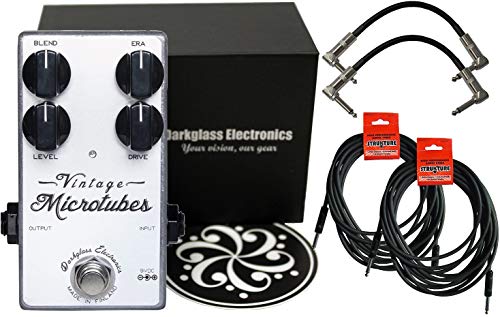
- 4 Knobs for ultimate flexibility while keeping the format light and small
- Blend: Allows to mix exactly how much clean signal you want to mix with the Overdriven.
What to Consider Before Buying a Bass Distortion & Overdrive Effects Pedal
A Bass Distortion & Overdrive Effects unit is far more than a simple accessory; it’s a foundational tool for sculpting a professional-grade signal chain. Unlike guitar pedals, which can afford to chop off low frequencies to stand out, a bass overdrive must be surgically precise. It needs to add harmonic content (the “overtones”) without destroying the “weight” of the note. The best units provide a bridge between the clean, clinical sound of a DI (Direct Input) and the roaring, pushed power tubes of a vintage Ampeg or Marshall stack. When you invest in a high-quality overdrive, you are essentially buying a portable version of a legendary amplifier’s character.
The ideal customer for this type of product is a bassist who values tonal nuance—someone who needs to transition from a warm, Motown-style thud to a modern, aggressive rock growl at the stomp of a switch. It is perfect for session players and touring musicians who need versatility in a compact footprint. However, it might not be suitable for those who strictly play “clean” jazz or classical music where any hint of harmonic distortion is considered a flaw. For those players, a high-quality compressor or preamp might be a better alternative.
Before investing, consider these crucial points in detail:
- Dimensions & Space: Pedalboard real estate is precious. You want a unit that provides a massive sound without taking up the space of three standard pedals. Look for compact designs that use top-mounted or side-mounted jacks efficiently. The Darkglass Electronics Vintage Microtubes Bass Overdrive is specifically designed to be lightweight and pedalboard-friendly, measuring only 3 x 8 x 10 inches in its bundle packaging, which is impressive for the amount of circuitry inside.
- Capacity & Performance: This refers to the gain range and the “headroom” of the pedal. Does it go from a light touch of warmth to a full-blown fuzz, or is it a one-trick pony? You need a pedal that responds to your playing dynamics—if you pluck harder, it should growl more. This dynamic sensitivity is what separates professional gear from entry-level toys.
- Materials & Durability: Bass players are notoriously hard on gear. A pedal needs a chassis made of high-grade aluminum or steel to withstand years of being stomped on in dark, beer-soaked clubs. Furthermore, the quality of the knobs and switches matters; they should feel firm and provide enough resistance that they won’t be accidentally moved during a performance.
- Ease of Use & Maintenance: While complex “menu-diving” digital processors have their place, many of us prefer the “grab and turn” simplicity of analog knobs. Maintenance usually involves keeping the jacks clean and ensuring a steady power supply. An analog signal path, like the one found in this Darkglass unit, often provides a more “organic” feel and is generally easier to troubleshoot on the fly.
Understanding these factors will help you narrow down your choices in a crowded market. While the Darkglass Electronics Vintage Microtubes Bass Overdrive is an excellent choice, it’s always wise to see how it stacks up against the competition. For a broader look at all the top models, we highly recommend checking out our complete, in-depth guide:

- BLEND CONTROL — RETAIN LOW-END PUNCH WHILE ADDING GRIT: The DOUBLE THRUSTER features a dedicated Blend knob that mixes your clean bass signal with the overdriven signal. Dial it back to retain full...


- Based on a classic distortion circuit famous for its nasty sound
First Impressions: Unboxing the Darkglass Electronics Vintage Microtubes Bass Overdrive
When I first got my hands on the Darkglass Electronics Vintage Microtubes Bass Overdrive, the first thing that struck me was the build quality. It feels incredibly premium. The silver brushed-aluminum housing gives it a modern, boutique aesthetic that looks fantastic on any pedalboard. This specific bundle also includes four free cables, which is a massive bonus for anyone looking to wire up their board immediately without making an extra trip to the music store. Weighing in at about 2.8 pounds for the whole package, it feels substantial but not cumbersome.
Upon plugging it in, I noticed the knobs—Blend, Level, Drive, and Era—have a very smooth, high-end travel. There’s no “cheap” clickiness here. Compared to market leaders like Boss or MXR, the Darkglass feels like a more specialized, “designer” piece of equipment. It doesn’t try to be twenty different things; it tries to be the best vintage-voiced overdrive on the planet. I was particularly eager to see how the “Era” control functioned, as this is the secret sauce that supposedly differentiates it from its more aggressive sibling, the B3K. You can see its full feature set and user reviews to understand why this specific model has gained such a cult following among professional bassists.
Key Benefits
- The Blend control is a lifesaver, allowing you to mix your 100% clean signal with the overdrive to maintain low-end punch.
- The Era knob provides a massive tonal range, moving from 70s mid-forward warmth to 90s metallic growl.
- Fully analog signal path ensures a natural, compressed tube-like response without digital artifacts.
- Compact and lightweight format makes it easy to integrate into existing pedalboard setups.
Drawbacks
- It lacks a built-in XLR DI output, which some might miss (available on the “Ultra” version).
- The “Vintage” voicing might be too warm for players looking for ultra-modern, “clanky” djent tones.
A Deep Dive into the Performance of the Darkglass Electronics Vintage Microtubes Bass Overdrive
The Magic of the Blend Control: Preserving the Foundation
In our testing, the standout feature of the Darkglass Electronics Vintage Microtubes Bass Overdrive was undoubtedly the Blend knob. Many overdrive pedals act like a “blanket” over your tone—once you turn them on, your original sound is gone. We found that by setting the Blend to around 50%, we could achieve a massive, distorted texture while the “thump” of the clean bass stayed perfectly intact. This is critical for live performances where the bass needs to support the kick drum. As one user noted, “I get to add as much or little of my dry tone with the overdrive which allows me to keep a sharp attack and deep clear tone.” This expert evaluation confirms that the Blend control isn’t just an extra knob; it’s the heart of the pedal’s usability. It allows the player to dial in “grit without sacrifice,” a phrase that perfectly encapsulates the Darkglass philosophy. Whether you are playing a four-string Fender Precision or a low-tuned five-string, the Blend ensures your fundamental note is never lost in the wash of distortion.
The Era Control: A Time Machine for Your Tone
The “Era” control is where the Darkglass Electronics Vintage Microtubes Bass Overdrive truly shows its versatility. This isn’t just a standard tone knob that cuts treble; it actually interacts with the Drive setting to change the character of the saturation. When we turned the Era knob counter-clockwise, we were greeted with a warm, mid-heavy saturation reminiscent of the late 70s. Think of those classic rock records where the bass has a “furry” edge but remains round and sweet. As we dialed the Era knob clockwise, the mids became more scooped and the high-end attack became more aggressive, landing us squarely in the 90s alternative and metal territory. This flexibility is what makes the Darkglass Electronics Vintage Microtubes Bass Overdrive such a powerful tool for session musicians who need to fit into different genres quickly. You aren’t just buying one pedal; you’re buying a historical archive of bass tones.
Drive and Headroom: From Subtle Warmth to Aggressive Growl
One of the common complaints about bass overdrives is that they can feel “thin” at high gain settings. We put the Darkglass Electronics Vintage Microtubes Bass Overdrive through its paces using both active and passive pickups, and the results were consistently impressive. The Drive control has a surprisingly high amount of headroom. At lower settings, it acts like a “preamp,” adding just a touch of harmonic excitement that makes the bass feel more “alive” in the mix. When pushed past 3 o’clock, it transforms into a snarling beast that rivals some of the best tube amps we’ve heard. Because the signal is purely analog, the clipping feels natural and musical rather than harsh or “square-wave” like. We found that even at maximum drive, the pedal maintained a level of clarity that is rare in the overdrive world. You can check the latest price and availability of this unit to see how it fits into your gear budget, but from a performance standpoint, it punches well above its weight class.
Build Quality and The “Free Cables” Value Proposition
Finally, we have to talk about the physical reality of using this pedal. It’s small—much smaller than you’d expect given the huge sound it produces. This makes it an ideal candidate for “fly-rigs” where you need to fit your entire sound into a backpack. The inclusion of 4 free cables in this bundle is a feature that really sets it apart from other listings. For a gigging musician, cables are like guitar picks; you can never have enough, and they always seem to disappear when you need them most. The fact that Darkglass includes high-quality patch cables means you can integrate the Darkglass Electronics Vintage Microtubes Bass Overdrive into your signal chain the moment it arrives. The silver finish also proved to be quite durable during our “stress test,” resisting the typical scratches and scuffs that come with frequent gigging. It’s a professional tool built for professional environments.
What Other Users Are Saying
The general consensus among the bass community is overwhelmingly positive, with many players highlighting the same features we found most impressive. One user mentioned that they spent months researching online before settling on the Darkglass Electronics Vintage Microtubes Bass Overdrive, specifically because they wanted grit without losing their core tone. They noted, “The drive and era knobs work together to offer a wide array of overdrive characteristics from old school warm fuzzy sounds to modern overdrive with a bite.” This sentiment is echoed by many who find the “Era” knob to be the most innovative part of the design. Another common piece of feedback is simply “Awesome tone,” which, while brief, speaks to the immediate satisfaction players feel when they first engage the pedal. While some users mention the price is higher than budget alternatives, they almost always follow up by saying the build quality and tonal purity justify the investment. It’s clear that this pedal isn’t just a trend; it’s becoming a modern classic in the bass world.
Comparing the Darkglass Electronics Vintage Microtubes Bass Overdrive to Top Alternatives
1. SMD Distortion Detector DD-1

- Distortion detector/analyzer (dd1)
- Distortion detector's circuitry is 100% analog
The SMD Distortion Detector DD-1 is a very different beast compared to the Darkglass. While the Darkglass is an effect pedal designed to create musical distortion, the DD-1 is a specialized tool used for setting gain levels and detecting clipping in car audio systems. We include it here because some users mistakenly search for “distortion detectors” when they are actually looking for overdrive pedals. If you are a bassist looking for tone, the DD-1 is not for you. However, if you are a professional installer or a hobbyist looking to perfectly match your amp’s gain to your head unit without damaging your speakers, the DD-1 is the industry standard. It’s a precision instrument for technical calibration, whereas the Darkglass is a creative instrument for tonal expression.
2. Behringer Bod400 Bass Overdrive Pedal

- Get tube-like distortion, smooth sustain and super-fat tone
- Unique Balance control to blend between overdriven and dry bass sound for maximum punch
The Behringer Bod400 is the go-to choice for bassists on a strict budget. It attempts to provide a similar “blend” functionality to the Darkglass but at a fraction of the cost. In our comparison, the Bod400 is a decent entry-level pedal that can give you a basic “tube-sound” overdrive. However, the differences in build quality and tonal depth are night and day. The Behringer is housed in plastic and lacks the sophisticated “Era” circuitry that makes the Darkglass so versatile. We recommend the Behringer for beginners who are just starting to experiment with effects, but for anyone playing live or recording, the Darkglass Electronics Vintage Microtubes Bass Overdrive is a significantly better long-term investment that will hold its value and deliver superior sound.
3. Electro-Harmonix Bass Big Muff Pi Fuzz Pedal

- Tailor your drive/distortion sound with sustain, tone and volume knobs
- A dry switch that mixes your dry bass with the Bass Big Muff Pi's distortion
If the Darkglass is a “scalpel,” the Electro-Harmonix Bass Big Muff Pi is a “sledgehammer.” The Big Muff is a fuzz pedal, meaning it offers a much more saturated, compressed, and “hairy” sound than the Vintage Microtubes. It’s iconic for its massive low-end and sustain, making it a favorite for stoner rock and doom metal. However, it lacks the subtle “vintage” warmth and the specific “Era” control of the Darkglass. The Big Muff is about making a statement with a wall of sound, while the Darkglass is about enhancing your existing tone with harmonic complexity. If you want pure, unadulterated fuzz, go with the EHX. If you want professional, versatile overdrive that sounds like a world-class tube amp, the Darkglass is the clear winner.
Final Verdict: Is the Darkglass Electronics Vintage Microtubes Bass Overdrive Worth It?
After extensive testing and comparison, our final verdict is a resounding yes. The Darkglass Electronics Vintage Microtubes Bass Overdrive is one of the few pedals that actually lives up to the hype. It successfully bridges the gap between vintage soul and modern reliability. Its greatest strength lies in its transparency; it enhances your bass’s natural character rather than masking it. The combination of the Blend and Era controls provides a level of tonal tailoring that is simply unmatched in this price bracket. While it may be more expensive than some entry-level options, the professional-grade analog circuitry and the added value of the 4 free cables make it a smart purchase for any serious musician.
Whether you’re looking to add a subtle “growl” to your jazz fusion licks or a “gritty” edge to your rock lines, this pedal delivers with class and consistency. It’s built to last, sounds incredible, and fits easily onto any board. Stop settling for thin, buzzy distortion and give your bass the harmonic richness it deserves. We highly recommend that you invest in the Darkglass Electronics Vintage Microtubes Bass Overdrive today and experience the difference that true analog engineering can make to your performance.
Last update on 2026-10-23 / Affiliate links / Images from Amazon Product Advertising API