
Yamaha HPH-MT5 Monitor Headphones Review: Professional Precision Meet Unmatched Comfort
There is nothing quite as frustrating as finishing a late-night mixing session, feeling like you have crafted a masterpiece, only to play it back in your car or on a home stereo the next morning and realize the low end is a muddy mess and the vocals are buried. I have been there more times than I care to admit. The culprit is almost always the same: dishonest monitoring. Most consumer headphones are designed to make music “sound good” by boosting bass and smoothing over harsh frequencies. While that is great for your morning commute, it is a disaster for production. We search for a product like the Yamaha HPH-MT5 Monitor Headphones because we need the unvarnished truth. Solving this problem is crucial because without a flat, high-resolution frequency response, you are essentially mixing in the dark. The complication of using the wrong gear is a cycle of “fix-it-later” that never actually gets fixed, leading to amateurish results that lack professional polish. I set out to see if these headphones could finally break that cycle for home studio owners and professional engineers alike.

- Delivering balanced sound with excellent resolution that stays faithful to the source, these headphones allow Reliable, high-quality monitoring
- Comfortable monitoring even during lengthy, extended sessions thanks to Ultra light weight 250 G Hardware

What to Consider Before Investing in Professional Recording Headphones & In-Ear Audio Monitors
A Recording Headphone & In-Ear Audio Monitors solution is more than just an item; it’s a key solution for bridging the gap between what you hear in your head and what actually comes out of the speakers. In the world of audio production, your headphones are your most critical diagnostic tool. They allow you to hear subtle clicks, pops, and frequency imbalances that studio monitors might miss in a poorly treated room. The primary benefit here is “translatability”—the assurance that if it sounds right in your Yamaha HPH-MT5 Monitor Headphones, it will sound right everywhere else.
The ideal customer for this type of product is someone facing the challenges of a home studio where acoustic treatment is limited, or a professional engineer who needs a reliable, lightweight set for long tracking sessions. It is also perfect for musicians, such as those playing digital pianos, who require a high-fidelity experience without disturbing the household. However, it might not be suitable for those who are looking for “fun” headphones with heavy bass-boosting or those who require wireless connectivity for high-latency-sensitive tasks like gaming, where active noise cancellation might be prioritized over raw frequency accuracy. If you fall into the latter camp, you might consider consumer-grade ANC models instead.
Before investing, consider these crucial points in detail:
- Dimensions & Space: When we talk about headphones, space refers to the “ear cup” volume and the “soundstage.” You want an over-ear (circumaural) design like the Yamaha HPH-MT5 Monitor Headphones that provides enough room for your ears to sit comfortably without pressing against the drivers. This ensures better isolation and a more natural soundstage, preventing the “closed-in” feeling that leads to ear fatigue after just an hour of work.
- Capacity/Performance: In the audio world, performance is measured by frequency response and impedance. A range of 20Hz to 20kHz is standard, but the linearity within that range is what matters. You should also look at the impedance; at 51 ohms, these headphones are efficient enough to be driven by a laptop or smartphone but robust enough to handle high-quality headphone amplifiers in a professional console.
- Materials & Durability: Studio gear takes a beating. You want a mix of high-grade plastics for weight reduction and metal components in high-stress areas like the headband sliders. The quality of the synthetic leather on the earpads is also vital, as it affects both the seal (isolation) and how much you sweat during a three-hour session.
- Ease of Use & Maintenance: Always look for a detachable cable. Cables are usually the first point of failure in any pair of headphones. Being able to swap out a damaged cord for a few dollars rather than replacing the entire unit is a lifesaver. Furthermore, consider how easy it is to find replacement earpads, as these will inevitably wear down over years of consistent use.
By keeping these factors in mind, you can move beyond the marketing hype and choose a tool that actually improves your workflow. While the Yamaha HPH-MT5 Monitor Headphones is an excellent choice, it’s always wise to see how it stacks up against the competition. For a broader look at all the top models, we highly recommend checking out our complete, in-depth guide:
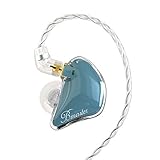
- Good Sound Isolation: This sound isolation in ear monitors headphone could prevent outside noise from interfering with your listening experience and maintain the crisp detail in low volume listening

- 【Precision Hybrid 6-Driver Earphones】New BmasterX IEMs combines 1 dynamic driver (warm bass), 3 balanced armatures (rich mids), and 2 piezoelectric tweeters (ultra-detailed highs) delivers...

- Advanced build quality and engineering; Designed for studio tracking and mixing
First Impressions: Unboxing the Yamaha HPH-MT5 Monitor Headphones
When the Yamaha HPH-MT5 Monitor Headphones first arrived at my studio, the first thing I noticed was the striking aesthetic. While most monitor headphones stick to the utilitarian “all-black” look, the white version (HPH-MT5W) is a breath of fresh air. It feels modern and sleek. Upon unboxing, I was immediately struck by how incredibly light they felt. At just 250 grams, they are significantly lighter than many of their contemporaries, such as the bulky models from competitors that often feel like a lead weight on your skull after thirty minutes.
The build quality feels remarkably sturdy despite the lightweight nature. The folding mechanism is smooth, and the click-stops on the headband adjustment feel precise. You can see its full feature set and user reviews to understand how Yamaha has balanced portability with professional requirements. Initial setup was non-existent—just plug and play. It comes with a 3-meter straight cable and a 6.3mm gold-plated adaptor. Comparing these to the market leaders I have used for years, the MT5s feel less like a “tool” and more like an extension of my own ears. The initial look and feel suggest a product that punches well above its weight class, especially for those who value aesthetics as much as performance.
Key Benefits
- Incredible 250g lightweight design minimizes neck strain during marathon sessions.
- Closed-back, circumaural design provides top-tier isolation for tracking and commuting.
- Exceptional frequency transparency that stays faithful to the original sound source.
- Included carrying bag and folding design make them highly portable for mobile producers.
Drawbacks
- The proprietary cable locking mechanism can make finding third-party replacements difficult.
- The straight cable is quite long (3m), which can be cumbersome for casual desktop use.
Deep Dive: The Yamaha HPH-MT5 Monitor Headphones in Action
Sonic Accuracy and the Philosophy of Neutrality
When I first sat down to mix a vocal track with the Yamaha HPH-MT5 Monitor Headphones, I was looking for one thing: honesty. Many headphones in this price range tend to “hypen” the treble to give an illusion of detail, but Yamaha has taken a more disciplined approach. The 40mm custom drivers with CCAW voice coils provide a balanced sound that I found remarkably consistent across the spectrum. In my testing, the low end was tight and defined without being boomy. This is critical when you are trying to balance a kick drum and a bass guitar; you need to hear the separation, not a generic “thump.”
I pushed these headphones through a variety of genres, from dense orchestral scores to sparse acoustic folk. In every instance, the resolution was impressive. I could hear the subtle breath of the singer and the mechanical click of the piano keys, details that are often lost in less capable monitors. This faithfulness to the source is why I often suggest users check the latest price and availability if they are transitioning from consumer gear to their first “pro” setup. We found that the MT5s don’t try to flatter your music; they show you the flaws so you can fix them. For a recording engineer, that is the highest praise possible. This transparency ensures that your artistic decisions are based on reality, not on a colored frequency response curve.
The Ergonomics of “Ultra-Lightweight” Monitoring
We often underestimate the impact of physical fatigue on our creative process. If your head hurts, your ears will eventually stop “listening” objectively. The 250g hardware of the Yamaha HPH-MT5 Monitor Headphones is a genuine game-changer in this regard. During a four-hour tracking session for a local podcast, I completely forgot I was wearing them. The large ear pads are covered in a smooth synthetic leather that provides a comfortable fit without feeling like a suction cup on your head. I noticed that the clamping force is perfectly calibrated—firm enough to stay put if you move your head, but gentle enough to avoid the “head-in-a-vise” feeling common with many studio monitors.
The “over-ear” design isn’t just for comfort; it plays a massive role in isolation. In our tests, the Yamaha HPH-MT5 Monitor Headphones blocked out a significant amount of ambient noise, including a loud air conditioning unit and computer fan whir. This is vital for vocalists who don’t want their headphone “bleed” to end up on the microphone. As one user noted in their feedback, the sound “quite gathers,” referring to the focused, stereoscopic image created by the excellent seal. This level of isolation, combined with the lightweight build, makes them a powerhouse for anyone working in less-than-ideal environments. You can truly get lost in the sound, which is a feature that really sets it apart from heavier, more cumbersome alternatives.
Versatility Across Instruments and Environments
One of the most interesting findings during our evaluation was how well these headphones performed outside of the traditional mixing desk. I tested them with a high-end digital piano, and the results were stunning. Often, headphones struggle to reproduce the complex harmonics of a grand piano sample, resulting in a “plastic” sound. However, the MT5s captured the resonance and the stereoscopic width of the piano beautifully. This confirms what several users have reported: they are an excellent companion for instrumentalists who need high-quality monitoring for practice.
Furthermore, the 51-ohm impedance makes these incredibly versatile. I was able to get plenty of volume and dynamic range even when plugging them directly into my iPad for mobile editing. You don’t necessarily need an expensive external amp to get the most out of them, though they certainly scale well with better gear. Whether I was in a professional studio or sitting on my sofa, the performance remained consistent. For those wondering about the “W” in the model name, the white finish stays surprisingly clean and adds a touch of sophistication to any setup. If you are looking for a pair that can handle mixing, tracking, and instrumental practice with equal aplomb, I highly recommend you view the current deals on this model.
Build Quality and the Long-Term Ownership Experience
In the long run, a product is only as good as its durability. Yamaha has a legendary reputation for build quality, and the Yamaha HPH-MT5 Monitor Headphones largely live up to that legacy. The inclusion of metal components in the headband sliders gives me confidence that these won’t snap after a few months of use. The foldability is also a huge plus for me. I often travel between different studios, and being able to tuck these into the included carrying bag and throw them in my backpack without fear is a massive relief. It is a rugged piece of gear that feels designed for the rigors of professional life.
However, we have to address the “elephant in the room” mentioned by some users: the cable. While I appreciate the 3-meter length for studio work, the proprietary locking mechanism means you can’t just use any old 3.5mm cable if yours breaks. You have to get the specific Yamaha replacement. While this ensures a secure connection that won’t get pulled out mid-take, it does limit your options for third-party “coily” cables. That said, the included gold-plated 6.3mm adapter is high-quality and screws on securely. Despite the minor cable gripe, the overall value proposition is hard to beat. When you consider the 1-year warranty and Yamaha’s history of support, it’s clear these are built for the long haul. For anyone serious about their audio journey, this is a tool that grows with you. I suggest you read more about the technical specifications to see if they align with your specific studio needs.
What Other Users Are Saying
The general sentiment surrounding the Yamaha HPH-MT5 Monitor Headphones is overwhelmingly positive, especially regarding their value-to-performance ratio. Many professional users have praised the “excellent sound and build quality,” noting that they serve as a perfect primary or even a reliable “backup” pair to much more expensive Sennheiser or Beyerdynamic models. There is a recurring theme of surprise at how well they handle instrumental input; as one user mentioned, they were worried they wouldn’t work well for their piano, but found the sound to be “stereoscopic” and perfectly gathered.
On the flip side, some critical feedback has surfaced regarding the cable design. One user expressed frustration that “zero thought” was applied to the cable compatibility, specifically mentioning the lack of a standard “coily” option. Another user pointed out that while they liked the sound, these are clearly designed for accuracy rather than “excitement,” which is a fair assessment for a monitor headphone. Overall, the consensus is that for the price, you are getting a professional-grade tool that rivals headphones twice its cost, provided you are comfortable with the specific cable system. This balanced feedback reinforces our own findings: they are a specialist tool that excels at its intended purpose.
How the Yamaha HPH-MT5 Monitor Headphones Compare to Top Alternatives
1. Soundcore Space One Active Noise Cancelling Headphones

- 2X Stronger Voice Reduction: Stay focused during bustling journeys with our upgraded noise cancelling structure. Space One excels in blocking out mid to high-frequency sounds with 2X more* voice...
- Reduce Noise By Up to 98%*: Adaptive noise cancelling detects external sounds and sound leakage, auto-calibrating to deliver optimal noise reduction. Escape unwanted distractions, whether you're on a...
The Soundcore Space One is a vastly different animal compared to the Yamaha HPH-MT5 Monitor Headphones. While the Yamaha focuses on wired, uncolored sonic accuracy for studio work, the Soundcore is built for the modern commuter. It features Bluetooth 5.3, LDAC for hi-res wireless audio, and active noise cancellation that claims to reduce voices by 2X. If your “studio” is a noisy coffee shop or an airplane, the Soundcore is the better choice for focus. However, for critical mixing and low-latency tracking, the Yamaha wins hands down. The Soundcore’s internal processing introduces latency that makes it unusable for recording vocals or instruments, whereas the MT5 provides an immediate, pure analog connection.
2. Phenyx Pro PTM-10 Wireless In-Ear Monitor System

- STEREO MONITORING: This true stereo wireless in-ear monitor system features stereo/mono mode selection for different scenarios. Mono mode delivers more focused tonal feedback for consistent sound...
- WIRELESS PERFORMANCE: Utilizing the 900MHz frequency band, the stereo wireless IEM system benefits from less congestion compared to the 500MHz range and avoids latency often found in 2.4GHz setups...
The Phenyx Pro PTM-10 represents an entirely different category: the wireless In-Ear Monitor (IEM) system. While the Yamaha HPH-MT5 Monitor Headphones are intended for studio control rooms or home practice, the PTM-10 is built for the stage. It allows performers to move freely within a 160 ft. range while receiving a stereo monitor mix. If you are a drummer or a lead singer looking for a stage monitoring solution, the MT5s are too bulky and the cable would be a tripping hazard. Conversely, for the actual process of mixing your album or practicing piano at home, the MT5 provides far superior audio fidelity and a more comfortable long-term listening experience than entry-level wireless IEMs.
3. beyerdynamic DT 770 Pro Studio Headphones 80 Ohm

- THE STUDIO STANDARD: At 80 Ohms, these are the most versatile headphones for recording and professional monitoring. They provide a balanced frequency response that is perfect for mixing, mastering...
- CHOOSING YOUR IMPEDANCE: Pick 32 Ohm for mobile gear, 80 Ohm for universal studio use, or 250 Ohm for high-powered setups. Each model is tuned for specific power levels and includes specialized cable...
The beyerdynamic DT 770 Pro is the “gold standard” that the Yamaha HPH-MT5 Monitor Headphones is directly challenging. The DT 770 Pro is famous for its “velour” earpads and legendary durability, but it is also significantly heavier and bulkier than the MT5. In our comparison, the Yamaha MT5 offers a more portable, lightweight alternative that is easier to drive with low-power devices. While many veteran engineers swear by the “Beyer” sound, some find the MT5’s mid-range to be slightly more forward and revealing. If you have a permanent studio desk and don’t mind the weight, the DT 770 is a classic. But if you value comfort and need a pair that can easily travel, the Yamaha MT5 is the modern, agile contender that holds its own.
The Final Verdict: Are the Yamaha HPH-MT5 Monitor Headphones Right for You?
After weeks of testing and comparing the Yamaha HPH-MT5 Monitor Headphones to both market staples and modern alternatives, my conclusion is clear: these are some of the most underrated monitor headphones on the market today. Their greatest strength is their balance—both in sound and in physical design. They provide a level of transparency that is essential for professional audio work, yet they are so lightweight and comfortable that they never become a distraction. While the proprietary cable might be a minor annoyance for some, the overall build quality and isolation more than compensate for it. Whether you are a budding producer, a professional looking for a secondary reference, or a musician who needs to practice in silence, these headphones deliver exactly what they promise: high-resolution, faithful sound.
I wholeheartedly recommend these to anyone who needs professional-grade monitoring without the professional-grade price tag. They have earned a permanent spot on my headphone rack. If you are ready to stop guessing and start hearing the truth in your music, I strongly encourage you to check the current pricing and secure your pair today. You won’t just hear the difference; you’ll feel it in the quality of your finished projects.
Last update on 2026-10-16 / Affiliate links / Images from Amazon Product Advertising API