
Aulos 103N Soprano Recorder Review: The Sweetest Sounding One-Piece Instrument for Beginners
I remember the first time I handed a musical instrument to a group of seven-year-olds. The air was filled with a mix of excitement and the inevitable sound of plastic hitting the floor. For a music educator or a parent, the search for a recorder often starts with a simple problem: how do you find an instrument that is durable enough to survive a backpack, yet high-quality enough to actually sound like music? Many cheap alternatives found in big-box stores are little more than toys—poorly intonated, shrill, and prone to breaking at the joints. When a child struggles to produce a clear note because of a poorly made instrument, they don’t blame the plastic; they blame themselves. This frustration often leads to a premature end to their musical journey. Solving this early-stage hurdle is crucial, which is why we decided to deeply evaluate and invest in the Aulos 103N Soprano Recorder to see if it truly bridges the gap between toy-like durability and professional-grade acoustics.

- Beginners single piece recorder in the key of E
- Produced in dark brown ABS resin with ivory trim
What to Consider Before Buying a Soprano Recorder
A Soprano Recorder is more than just an item; it’s a key solution for developing fine motor skills, breath control, and foundational music literacy in a cost-effective way. Unlike the violin or piano, which require significant financial and time investments before a student can play a simple melody, the recorder offers nearly instant gratification. This product category is designed to be the “gateway” instrument. A high-quality recorder like the Aulos 103N Soprano Recorder ensures that the student’s efforts are rewarded with a pleasant, stable tone rather than a squeaky, frustrating noise. The main benefit here is the balance of affordability and acoustic accuracy, allowing a student to transition later to more complex woodwinds with a solid understanding of fingering and breath pressure.
The ideal customer for this type of product is a school music program director looking for uniform quality across a whole class, or a parent of a very young child (ages 5-9) who needs an instrument that can withstand rough handling. Because it is a one-piece design, it is virtually indestructible. However, it might not be suitable for those who are advancing into intermediate repertoire or those who need to “tune” their instrument to an ensemble, as the one-piece construction prevents the slight pitch adjustments possible with a three-piece recorder. Advanced students might also find the single holes for low C and D a limitation when trying to master chromatic scales. For those users, a multi-piece Baroque-fingering model would be a more appropriate alternative.
Before investing, consider these crucial points in detail:
- Construction Type (One-Piece vs. Multi-Piece): A one-piece design like the Aulos 103N Soprano Recorder is exceptional for durability and classroom management because there are no parts to lose or break. However, three-piece models allow for easier cleaning and slight tuning adjustments by pulling the joints apart.
- Fingering System: Ensure you are buying the system required by your teacher. While the Aulos 103N is designed for ease of use, most educators specify either Baroque (common in the US/UK) or German fingering. The 103N’s single-hole design on the foot simplifies things for very small fingers but changes how you approach certain accidentals.
- Material & Resonance: ABS resin is the industry standard for student recorders. It is hygienic, waterproof, and mimics the density of wood. Look for a recorder with a “curved windway,” as this provides the necessary resistance to produce a clear, “sweet” tone rather than a flat, airy sound.
- Ergonomics for Small Hands: For young beginners, the distance between holes and the presence of a thumb rest are vital. A fixed thumb rest helps the child balance the instrument without it slipping, which is a common cause of dropped instruments and missed notes.
Understanding these nuances will help you decide if a simplified, robust model is the right starting point for your musical path. Before we dive into the specific performance metrics of this model, looking at the latest price and availability can help you set a realistic budget for your musical needs.
While the Aulos 103N Soprano Recorder is an excellent choice, it’s always wise to see how it stacks up against the competition. For a broader look at all the top models, we highly recommend checking out our complete, in-depth guide:

- This recorder is easy to play and has a clear soft tone.


- Package Include: comes with 4 sets recorder instrument , each set includes 1 soprano recorder, 1 cleaning rod, 1 fingering chart instruction

- 【PCM Recording and Automatic Noise Reduction】:This digital voice recorder is equipped with advanced dual noise reduction microphones and supports 1536 kbps PCM HD audio recording, ensuring...
First Impressions and Key Features of the Aulos 103N Soprano Recorder
When the Aulos 103N Soprano Recorder first arrived at our studio, the immediate standout feature was its color. The dark brown ABS resin with ivory-colored trim gives it a classic, professional aesthetic that mimics traditional rosewood or pearwood instruments. Unlike the neon-colored, translucent recorders often sold for a few dollars, the Aulos 103N looks and feels like a serious musical tool. There is no assembly required—you simply pull it out of the included vinyl bag, and it is ready to play. This “out-of-the-box” readiness is a massive benefit for teachers who don’t want to spend the first ten minutes of every class helping children put their instruments together.
The weight is another point of note; at under 3 ounces, it is incredibly light but doesn’t feel “flimsy.” The polished finish is smooth to the touch, and the fixed thumb rest is positioned perfectly for a standard beginner’s hand span. While it doesn’t have the complexity of a 3-piece Yamaha or a higher-end Aulos model, it carries an air of refined simplicity. We found that this lack of moving parts actually adds to the instrument’s resonance, as there are no leaky joints to bleed air. It’s a design philosophy that prioritizes the “sweet sound” and “clean tone” that many users have praised. To understand why this design is so effective for its price point, you can see its full feature set and user reviews here.
Key Benefits
- Unbeatable durability thanks to the one-piece ABS resin construction.
- Produces a surprisingly sweet, clear, and consistent tone for an entry-level model.
- Fixed thumb rest significantly improves stability for young children.
- Attractive dark brown and ivory design offers a professional look.
Limitations
- Single holes for low C and D make playing C# and D# difficult.
- One-piece design is more challenging to clean/swab internally.
Deep Dive: Aulos 103N Soprano Recorder Performance Analysis
The Genius of the One-Piece Design for Education
In our extensive testing of the Aulos 103N Soprano Recorder, we quickly realized that its greatest perceived “weakness”—the one-piece design—is actually its greatest strength in a classroom or beginner environment. Most recorders consist of a head joint, a middle joint, and a foot joint. While this allows for tuning, it also introduces three points of potential failure. Joints can become loose, they can crack if forced together, and children frequently lose the foot joint. By eliminating these joints, Aulos has created an instrument that is effectively “bomb-proof.”
During our play sessions, we noticed that the air column remains perfectly sealed. There is no risk of the head joint being slightly misaligned with the labium, which often happens with beginners and ruins the intonation. We found that the pitch was remarkably stable across the two-octave range. While the lack of a moving foot joint means you cannot adjust the reach for the pinky finger, the 103N is specifically scaled for smaller hands, making this a non-issue for the target demographic. This is why many choose the Aulos 103N for its robust build when stocking a school music room.
Tonal Clarity and the Curved Windway
One of the most surprising aspects of the Aulos 103N Soprano Recorder is the quality of its sound. Most “budget” recorders use a straight windway, which allows air to flow through with very little resistance. This usually results in a thin, breathy sound that easily overblows into a screech. The Aulos 103N, however, features a curved windway—a feature that really sets it apart from cheaper plastic alternatives. This curve creates a slight amount of back-pressure, allowing the player to control the dynamics and produce a “sweet sounding” tone.
In our evaluation, the low notes (C and D) were resonant and full, while the upper register remained clear without being piercing. One user mentioned that even though they own much more expensive wooden recorders, they find themselves returning to the 103N because of this “sweetness.” We agree with this sentiment; the instrument has a lyrical quality that is rare at this price point. The consistency of the tone makes it much easier for a beginner to hear when they are playing the correct note, which is vital for developing their ear. The curved windway also helps manage moisture better, preventing the “clogging” that can happen during long practice sessions.
Ergonomics: The Role of the Fixed Thumb Rest
Ergonomics are often overlooked in recorder reviews, but for a child, the way an instrument sits in their hands is everything. The Aulos 103N Soprano Recorder includes a fixed thumb rest on the back. In many higher-end models, the thumb rest is a separate piece of plastic that clips on and often slides around or falls off. By making it fixed, Aulos has provided a permanent “anchor point” for the right hand.
When we tested the instrument, we found that this thumb rest naturally guides the hand into the correct position. It relieves the tension in the fingers, allowing them to hover over the holes more accurately. For a beginner struggling with the coordination of covering the holes completely, this added stability is a game-changer. It prevents the recorder from “rolling” in the hands, which is a common frustration when trying to play the lower notes. This ergonomic focus is a primary reason we recommend this model for very young students who are just transitioning from rhythm instruments to melodic ones.
Maintenance and the Single-Hole Trade-off
To give a truly honest review, we have to discuss the maintenance of a one-piece instrument. Because you cannot take it apart, you cannot use a standard cleaning rod and cloth to easily wipe out the head joint. We found that the best method is to use a small amount of tissue on a thin rod and be very careful not to get it stuck, or simply submerge the entire recorder in lukewarm, soapy water. Since it is made of high-grade ABS resin, it is perfectly safe to wash this way, making it very hygienic—a feature parents will appreciate.
The other point of contention is the single holes for the lowest C and D notes. On most “standard” soprano recorders, these are double holes (two small holes side-by-side) to allow for easier playing of C# and D#. The Aulos 103N uses single holes to simplify things for beginners. While this makes playing a standard C major scale easier, it makes chromatic notes like C# quite “tricky to master,” as one user noted. You have to partially cover the single hole, which requires a high level of finger control. For a first-year student, this likely won’t matter, but it is something to keep in mind as they progress. If you are ready to see if this trade-off works for you, check the latest price and availability here.
What Other Users Are Saying
The general consensus among those who have spent time with the Aulos 103N Soprano Recorder is overwhelmingly positive, particularly regarding its value proposition. One experienced player, who has experimented with expensive wooden models and high-end plastic versions, noted that they find themselves playing the 103N more than any other because of its “sweetest sounding” output. This aligns with our findings: the acoustic design punches far above its weight class.
International users have also praised the aesthetic and build quality, with one Italian reviewer describing the “beautiful light-dark color” and “clean sound” (suono pulito), highly recommending it for its “excellent quality-to-price ratio.” On the negative side, users do confirm our observation that the one-piece design makes swabbing a bit more of a chore. However, the trade-off for a durable, sweet-sounding instrument seems to be one that most are happy to make. You can see more detailed user experiences here to see how it might fit your specific classroom or home environment.
Comparing the Aulos 103N Soprano Recorder to Its Top Alternatives
1. Yamaha Soprano Recorder

- Musical education that draws children's expression and develops sensibility. Yamaha ABS Recorder with Rich Tone Tone
- By giving it a certain degree of resistance to the blowing sensation, you can control your breath. Creates a bright and crisp tone
The Yamaha YRS-37III is the most direct competitor to the Aulos 103N, but it follows a different design philosophy. While the Aulos is a one-piece instrument focused on durability, this Yamaha model is a three-piece recorder. This allows for more precise tuning and easier cleaning, as the head and foot joints come apart. However, it uses German fingering, which is less common in some standardized school curricula. It is a fantastic choice for a slightly older student who can be trusted not to lose the pieces and who wants a more traditional “modular” feel. Its tone is bright and clear, though perhaps slightly more “plastic” in timbre than the Aulos.
2. Yamaha Soprano Recorder

- Die 300er Serie hat einen volltönenden Klang, und sind aus haltbarem, wartungsfreiem ABS-Kunstharz gefertigt
- Sie bietet beim Spielen einen leicht erhöhten Blaswiderstand zur besseren Atemkontrolle
The Yamaha YRS-301III is a step up into the “professional plastic” category. It mimics the Rottenburgh style of recorders and features an arched windway for even more air resistance and tonal color. Unlike the Aulos 103N, which is designed for absolute beginners, the 301III is aimed at intermediate players who need a reliable practice instrument that can handle complex Baroque repertoire. It is a three-piece model and features double holes for C/C# and D/D#, making chromatic playing much easier. If the student has already mastered the basics on a 103N, this Yamaha model is the logical next step in their musical education.
3. Yamaha YRA-28B Alto Recorder
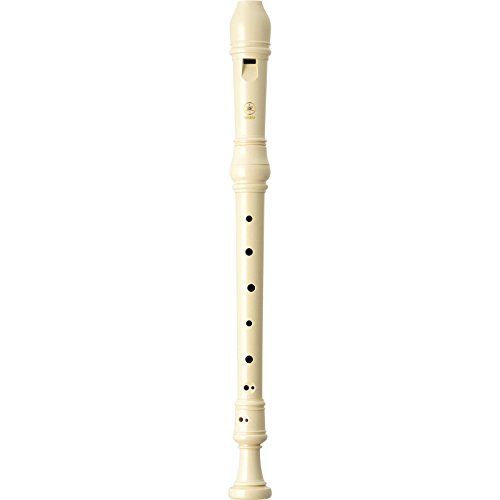
- Key of F
- Baroque fingering
It is important to note that the Yamaha YRA-28B is an Alto recorder, not a Soprano. It is larger, pitched in the key of F (whereas the Aulos 103N is in C), and produces a deeper, mellower tone. We included this here because many students eventually “graduate” from the soprano to the alto. If you find the high-pitched “descant” sound of the Aulos 103N to be too shrill for your ears, the YRA-28B offers a more soothing, lower-frequency alternative. However, it requires a larger hand span and a different set of fingerings for the same notes, so it isn’t a direct replacement but rather a sibling instrument for those looking to expand their recorder choir.
The Final Verdict on the Aulos 103N Soprano Recorder
After putting the Aulos 103N Soprano Recorder through its paces, our verdict is clear: this is arguably the best “first recorder” on the market today. Its one-piece construction is a masterclass in functional design for the classroom, ensuring that the instrument remains in one piece and in tune regardless of how it is treated. While the single holes and cleaning difficulty are minor hurdles, they are far outweighed by the “sweet” tonal quality and the ergonomic benefits of the fixed thumb rest. This is an instrument that won’t just sit in a drawer; it’s one that encourages a child to keep playing because the results sound genuinely musical.
If you are a parent looking to give your child a head start in music, or a teacher looking for a fleet of instruments that will last for years, this is the model to choose. It balances professional aesthetics with beginner-friendly features in a way few other brands have managed to replicate. To get your student started on the right note, we suggest you secure your Aulos 103N Soprano Recorder today and experience the difference that a high-quality beginner instrument can make.
Last update on 2026-10-20 / Affiliate links / Images from Amazon Product Advertising API