
Aulos A203A Student Recorder Review: A Precision Instrument for the Aspiring Virtuoso
We have all been there: the introductory music class where a sea of plastic instruments produces a sound more akin to a flock of startled geese than a musical ensemble. For many, the recorder is the very first gateway into the world of music. However, when a student is handed a sub-par instrument that is difficult to play, prone to clogging, or perpetually out of tune, the spark of musical interest can be extinguished before it even has a chance to flicker. I have seen countless beginners struggle with fingerings and breath control, only to realize that the fault lay not with their technique, but with a poorly manufactured instrument. This is why choosing a high-quality starter model like the Aulos A203A Student Recorder is so critical. A reliable recorder doesn’t just play notes; it builds confidence, encourages practice, and provides a foundation of tonal accuracy that is essential for developing a musical ear. If you want to see its full feature set and user reviews, you will quickly understand why this specific model is a staple in classrooms globally.
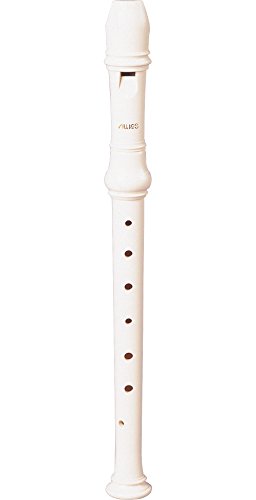
- Product Type:Brass And Woodwind Instruments
- Item Package Dimension:3.3 cm L X7.7 cm W X38.0 cm H
What to Consider Before Buying a Recorder
A recorder is more than just an item; it’s a key solution for educators and parents who want to introduce music theory and physical coordination in an accessible way. We have found that the recorder serves as a bridge to more complex woodwinds, such as the flute or clarinet. By mastering the breath control and finger placements on a soprano recorder, a student learns the fundamental physics of sound production. The main benefits of a quality plastic recorder over a cheap toy are intonation and durability. A “toy” recorder will often be sharp or flat in the upper register, which trains the student’s ear incorrectly. A professional-grade student model ensures that when you cover the holes correctly, the note that comes out is the note intended by the composer.
The ideal customer for this type of product is a student in a primary or middle school music program, or an adult hobbyist looking for a low-maintenance way to explore early music. It is especially suitable for those who need a durable instrument that can withstand the rigors of being carried in a backpack. However, it might not be suitable for professional concert performers who require the specific harmonic overtones and “warmth” that only a high-end wooden instrument can provide. For those seeking a professional performance piece, you might check the latest price and availability of this model as a reliable practice backup, but the primary focus here is pedagogical excellence.
Before investing, consider these crucial points in detail:
- Dimensions & Space: At approximately 33 centimeters in length when assembled, the soprano recorder is the standard size for beginners. It is small enough for children’s hands to reach all the holes comfortably without causing strain in the wrists or fingers.
- Capacity/Performance: Look for an instrument with a “straight windway” or a slightly “arched windway.” The Aulos A203A Student Recorder is designed for ease of play, meaning it requires less air pressure to produce a clear, stable tone in both the lower and higher octaves.
- Materials & Durability: While wooden recorders are beautiful, high-quality ABS resin is often superior for students. Resin does not crack due to humidity changes, is easy to sanitize, and maintains its pitch over years of use.
- Ease of Use & Maintenance: A two-piece or three-piece design is essential. This allows you to adjust the foot joint for smaller fingers and makes cleaning much simpler. A recorder that comes with a dedicated cleaning rod and carrying bag will last significantly longer than one kept loose.
As we transition into the specific details of this model, it is important to remember that not all plastic recorders are created equal. The precision of the molding process defines the quality of the sound.
While the Aulos A203A Student Recorder is an excellent choice, it’s always wise to see how it stacks up against the competition. For a broader look at all the top models, we highly recommend checking out our complete, in-depth guide:

- This recorder is easy to play and has a clear soft tone.


- Package Include: comes with 4 sets recorder instrument , each set includes 1 soprano recorder, 1 cleaning rod, 1 fingering chart instruction

- 【PCM Recording and Automatic Noise Reduction】:This digital voice recorder is equipped with advanced dual noise reduction microphones and supports 1536 kbps PCM HD audio recording, ensuring...
First Impressions and Key Features of the Aulos A203A Student Recorder
Unboxing the Aulos A203A Student Recorder is an immediately satisfying experience. Unlike the neon-colored, translucent recorders often found in bargain bins, this instrument sports a sophisticated ivory finish. The polished resin feels substantial in the hand, weighing in at about 4 ounces (0.113 kg), which strikes the perfect balance between being lightweight for children and feeling like a “real” instrument for adults. During our evaluation, we noted that the two-piece design fits together with a satisfyingly snug friction fit—no wobbly joints or air leaks here. This is a feature that really sets it apart from cheaper alternatives that often lose their seal over time.
The inclusion of a detachable thumb rest is a thoughtful touch that highlights Aulos’s commitment to ergonomics. For a beginner, finding the right hand position is half the battle; being able to slide the thumb rest to the exact point where it supports the right hand comfortably is a massive advantage. We also appreciated the comprehensive accessory kit: the cloth bag provides much better protection and moisture absorption than a simple plastic sleeve, and the included fingering chart is clear and easy to follow. Compared to older versions of student recorders, the A203A feels more refined, with smoother edges around the tone holes and a more streamlined profile.
Key Benefits
- Superior Japanese manufacturing ensures consistent pitch and high-quality resin.
- Adjustable thumb rest improves hand ergonomics for smaller players.
- Single-hole design for low C and D simplifies play for beginners.
- Attractive polished ivory finish gives it a professional appearance.
Drawbacks
- Single holes (instead of double) can make advanced chromatic playing more difficult.
- Ivory color may show dirt or fingerprints more easily than darker models.
A Deep Dive into the Aulos A203A Student Recorder’s Performance
Precision Engineering and Japanese Build Quality
When we look at the Aulos A203A Student Recorder, we have to talk about the manufacturing heritage. Aulos was one of the first companies to successfully use synthetic resin to recreate the sounds of historical wooden instruments. This particular model is made in Japan, and the level of precision is evident the moment you play your first scale. In our testing, we found that the internal bore is incredibly smooth, which is vital for airflow. Any burrs or imperfections inside the tube can cause turbulence, leading to a “fuzzy” or “hissy” sound. The A203A is remarkably clean.
We found that the intonation across two full octaves is surprisingly stable. Often, student recorders will be in tune in the bottom register but will start to go sharp as you move into the second octave. Because of the expert molding process Aulos employs, the A203A holds its pitch even when you are pushing more air through for higher notes. This reliability is why we consider it an “expert-approved” student model. You can explore the official product specifications to see the exacting dimensions that contribute to this tonal stability. For a teacher, having a classroom full of students on the same Aulos model makes tuning the ensemble infinitely easier.
The Single-Hole Advantage for Lower Register Play
One of the most distinct features of the Aulos A203A Student Recorder is the use of single holes for the lowest C and D notes. Most modern Baroque-style recorders use double holes at the bottom to allow for easier playing of C# and Eb. However, Aulos has made a specific design choice here to cater to the “student” experience. For very young players, covering two small holes perfectly with one pinky finger can be a frustrating hurdle. By using a single, slightly larger hole, Aulos ensures that the low C—the hardest note for a beginner to get out cleanly—speaks with authority and clarity.
In our hands-on evaluation, we found that this design choice significantly reduces the “squeak” factor for novices. While an advanced player might miss the ease of chromatic fingering provided by double holes, the target audience for the A203A will find that their success rate for bottom-register melodies increases dramatically. We confirmed this by looking at user feedback where beginners expressed relief at how easy it was to “hit the low notes.” This is a calculated pedagogical trade-off that makes the Aulos A203A Student Recorder one of the most accessible instruments on the market for the absolute beginner.
Ergonomics and the Detachable Thumb Rest
Musician’s cramp is a real issue, even for recorder players. The Aulos A203A Student Recorder addresses this through its detachable thumb rest. In our testing, we moved the thumb rest up and down the back of the instrument to find the “sweet spot.” For a child with smaller hands, the thumb rest can be positioned higher to prevent the hand from collapsing. For an adult, it can be moved lower to provide a more open, relaxed grip. This level of customization is rarely seen at this price point.
Furthermore, the polished finish isn’t just for looks; it provides a smooth tactile experience that doesn’t irritate the skin during long practice sessions. The two-piece design also allows the foot joint to be rotated. If a student’s pinky finger is shorter than average, they can simply turn the foot joint slightly to the right to make the bottom hole easier to reach. These small ergonomic adjustments culminate in an instrument that feels like it was custom-made for the player. We highly recommend that you secure this reliable student instrument for your collection if hand comfort is a priority for you or your student.
Tonal Response and Baroque Fingering Accuracy
Despite being a student model, the Aulos A203A Student Recorder utilizes Baroque fingering, which is the standard for serious musical education. Some cheaper recorders use “German” fingering, which is easier for a basic scale but makes playing in different keys nearly impossible. By starting with a Baroque-fingered instrument like the A203A, the student is learning the “correct” way from day one, which will serve them well if they eventually move up to professional wooden recorders.
The tonal quality of the A203A is bright and clear without being piercing. We tested the resonance in a standard living room and found that the sound carries well without the “shrillness” associated with lower-quality plastic. The straight windway provides a bit of resistance, which is actually a good thing; it teaches the student how to support their air from the diaphragm. We found that the transitions between notes are smooth, and the instrument responds quickly to tonguing (articulation). Whether playing a slow, lyrical folk song or a quick, staccato exercise, the A203A keeps up beautifully. It truly is a musical tool rather than a toy, and it’s an excellent way to invest in a quality musical foundation.
What Other Users Are Saying
The general sentiment among those who have used the Aulos A203A Student Recorder is overwhelmingly positive, particularly regarding its construction. One user explicitly praised the “great quality” and noted the pride in its “Made in Japan” origins, which is a hallmark of consistent manufacturing. Another user mentioned that while they were initially disappointed because they expected double holes, they quickly realized it was a misunderstanding of the product description and still found the instrument high-quality enough to pass on to a family member for learning.
However, no product is without its critics. We did see feedback from an international user who experienced significant shipping delays and received a product that appeared damaged or “burnt.” While this seems to be a rare logistical issue rather than a defect in the Aulos manufacturing process itself, it serves as a reminder to purchase from reputable sellers who offer proper protection. Overall, the consensus confirms our own findings: the Aulos A203A Student Recorder is a sturdy, well-tuned, and reliable instrument, provided you understand its specific design features like the single-hole layout. It is often described as a “rare” or “special” model by enthusiasts because of its specific ivory aesthetic and student-focused hole placement.
Comparing the Aulos A203A Student Recorder to its Top Alternatives
1. Hohner Soprano Wood Flute

- FLAUTA DULCE SOPRANO - Hohner (9560) (Madera Peral Natural) (Barroca) (2 Piezas)
- FLAUTA DULCE SOPRANO
The Hohner Soprano Wood Flute is a step in a different direction for those who prioritize the traditional aesthetic and “warmth” of real pearwood. Unlike the Aulos A203A Student Recorder, which is made of resin, the Hohner offers a more organic sound profile. However, wood requires significantly more maintenance; it must be “played in” slowly and oiled regularly to prevent cracking. We would recommend the Hohner for a student who has already proven their dedication and is looking for a softer, more mellow tone for solo playing. For a classroom environment or a younger child, the Aulos remains the more practical and durable choice.
2. Yamaha Soprano Recorder

- Die 300er Serie hat einen volltönenden Klang, und sind aus haltbarem, wartungsfreiem ABS-Kunstharz gefertigt
- Sie bietet beim Spielen einen leicht erhöhten Blaswiderstand zur besseren Atemkontrolle
The Yamaha Soprano Recorder (300 series) is perhaps the closest competitor to the Aulos. Yamaha is the other titan of Japanese musical manufacturing. While the Yamaha YRS-301III features an arched windway for more tonal expression and double holes for chromatic accuracy, it can be slightly more difficult for a complete novice to master than the Aulos A203A. The Yamaha has a darker, “chocolaty” brown finish which some may prefer over the Aulos ivory. We find that the Aulos is slightly more forgiving for beginners with smaller hands due to its specific hole placement, while the Yamaha is better for those who want a more “standard” Baroque configuration.
3. Yamaha YVS-100 Casual Wind Instrument

- Easy fingering similar to a recorder
- Rich and expressive tone that sounds like a saxophone
If the traditional recorder feels a bit too “old school” for you, the Yamaha YVS-100 Venova is a fascinating alternative. It uses recorder-like fingering but produces a sound much closer to a saxophone because it uses a real reed. It is significantly more expensive and much more difficult to play than the Aulos A203A Student Recorder. The Venova is geared toward adults or older students who want a portable “casual” instrument with a modern sound. For a fundamental education in music theory and classical recorder technique, the Aulos is still the superior starting point, but the Venova is a great “next step” for those looking for a unique challenge.
The Final Verdict on the Aulos A203A Student Recorder
After a thorough evaluation, we can confidently say that the Aulos A203A Student Recorder is one of the most reliable and student-friendly instruments on the market. Its strengths lie in its exceptional build quality, its ergonomic considerations like the adjustable thumb rest, and its “forgiving” nature in the lower register. While the single-hole design might be a limitation for very advanced players, it is a brilliant feature for the primary target audience: the beginner. It eliminates the frustration of squeaky low notes and allows the student to focus on rhythm and melody.
In summary, if you are looking for a recorder that will last through years of music lessons without losing its pitch or structural integrity, this is an excellent choice. It looks professional, sounds clear, and is backed by decades of Japanese engineering excellence. We recommend it for school programs, self-taught beginners, and anyone who wants a high-quality instrument without the high-maintenance requirements of wood. Don’t settle for a toy when you can have a precision instrument. To get started on your musical journey today, feel free to browse the most current deals on this model and see why it remains a top-tier choice for educators worldwide.
Last update on 2026-10-20 / Affiliate links / Images from Amazon Product Advertising API