
ADAM Audio H200 Closed-Back Headphones Review: Precision Monitoring Meets All-Day Comfort
If you have ever spent six hours straight in a dark studio, squinting at a waveform while your ears feel like they are being clamped in a vice, you know the struggle. Finding a pair of headphones that offers surgical precision without causing massive “ear fatigue” is the holy grail for producers and engineers. We have all been there: you think your mix is perfect on your headphones, only to realize it sounds muddy and cluttered when you play it back on your studio monitors. This disconnect usually happens because most closed-back headphones color the sound too much or fail to provide a true spatial representation. Solving this is crucial; if you can’t trust what you are hearing, you are essentially mixing in the dark. This is exactly where the ADAM Audio H200 Closed-Back Headphones step in, promising a seamless transition from monitors to headphones.
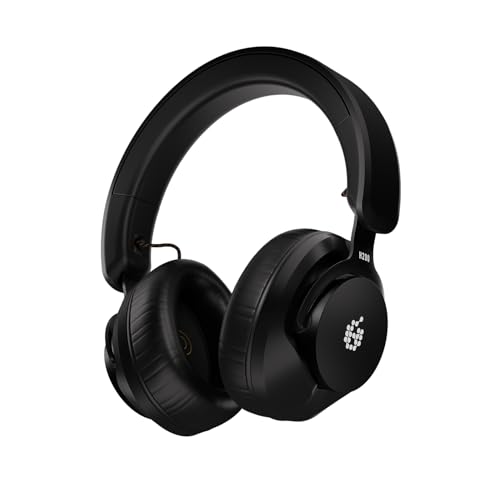
- Take ADAM Audio sound quality wherever you go with the Berlin-designed H200 headphones
- The 40mm PEEK Performance Drivers offer a smooth and balanced 2 Hz - 23.5 kHz frequency response, 112.5 dB SPL, and low distortion. They are combined with a light-weight neodymium magnet system for...

What to Consider Before Investing in Professional Recording Headphones & In-Ear Audio Monitors
A Recording Headphone & In-Ear Audio Monitors is more than just an item; it’s a key solution for critical listening, tracking, and post-production. In a professional environment, these tools act as your primary lens into the audio spectrum. They allow you to hear imperfections, hiss, and phase issues that might be masked by the room acoustics of your studio. The main benefits are isolation—keeping the click track out of the microphone and the outside world out of your head—and accuracy. Without a reliable pair of monitors, your creative decisions are based on guesswork rather than data.
The ideal customer for this type of product is someone facing high-pressure mixing deadlines or long recording sessions where accuracy is non-negotiable, while it might not be suitable for those who prefer “hyped” consumer sound signatures with boosted bass for casual listening. If you are looking for headphones to wear on the subway just to enjoy some tunes, these might be overkill. However, if you are a content creator, a mixing engineer, or a session musician, the ADAM Audio H200 Closed-Back Headphones are designed specifically for your workflow. Before you commit, you can check the latest price and availability to see how they fit your budget.
Before investing, consider these crucial points in detail:
- Dimensions & Space: In the world of over-ear headphones, size dictates comfort. You need to look for ear cups that are large enough to encompass the ear without pressing on the cartilage. We found that the internal diameter is a critical metric; if it’s too small, heat builds up quickly and physical fatigue sets in within an hour.
- Capacity & Performance: Look for a wide frequency response and high sensitivity. Professional monitoring requires a flat response (or as close to it as possible) from the sub-bass frequencies up to the “air” frequencies above 20kHz. The ability to handle high transients without distortion is what separates professional gear from consumer toys.
- Materials & Durability: Studio gear takes a beating. Look for aluminum yokes rather than cheap plastic, and ensure the earpads are replaceable. Faux leather is excellent for isolation, but the quality of the memory foam underneath determines whether the headphones will maintain their seal over years of use.
- Ease of Use & Maintenance: A detachable cable is a must-have. Cables are almost always the first point of failure in studio headphones. Being able to swap a cable in seconds saves a session. Additionally, look for “easy-to-drive” impedance (like 32 ohms) so you can use them with laptops and audio interfaces alike without needing a dedicated external amp.
Ultimately, choosing the right monitoring solution is about building trust between your ears and your equipment. While the ADAM Audio H200 Closed-Back Headphones is an excellent choice, it’s always wise to see how it stacks up against the competition. For a broader look at all the top models, we highly recommend checking out our complete, in-depth guide:
- Good Sound Isolation: This sound isolation in ear monitors headphone could prevent outside noise from interfering with your listening experience and maintain the crisp detail in low volume listening

- 【Precision Hybrid 6-Driver Earphones】New BmasterX IEMs combines 1 dynamic driver (warm bass), 3 balanced armatures (rich mids), and 2 piezoelectric tweeters (ultra-detailed highs) delivers...

- Good Sound Isolation: This sound isolation in ear monitors headphone could prevent outside noise from interfering with your listening experience and maintain the crisp detail in low volume listening
First Impressions: Unboxing the ADAM Audio H200 Closed-Back Headphones
Unboxing the ADAM Audio H200 Closed-Back Headphones feels like handling a piece of high-end industrial machinery. The “Modern Industrial Design” mentioned in the specs isn’t just marketing fluff; the solid aluminum yoke and the matte black finish give it a rugged, stealthy aesthetic that looks great on a studio desk. When we first picked them up, the weight (about 1.56 pounds) felt substantial but well-distributed. Unlike some previous generations of monitoring headphones that felt “plasticky,” these feel built to last a decade. You can see its full feature set and user reviews to get a better sense of its premium build quality.
Key Benefits
- Exceptional 40mm PEEK Performance Drivers providing a smooth, balanced frequency response.
- Incredible isolation, making them perfect for recording near sensitive microphones.
- Low 32-ohm impedance allows for high-quality monitoring on any device.
- Innovative ADAM Audio Headphone Utility plug-in for customized spatialization.
Limitations
- The internal diameter of the ear pads may be a bit snug for users with very large ears.
- The 1.56 lb weight might feel heavy for those used to lightweight consumer models.
Deep Dive: A Professional Evaluation of the ADAM Audio H200 Closed-Back Headphones
Sonic Performance and the PEEK Driver Advantage
The heart of the ADAM Audio H200 Closed-Back Headphones lies in the 40mm PEEK (Polyether Ether Ketone) Performance Drivers. In our testing, the sonic clarity was immediately evident. Unlike standard dynamic drivers that can sometimes sound “mushy” in the low-mids, the H200 provides a clinical, yet musical, separation. We tested these across genres ranging from dense orchestral arrangements to minimalist techno, and the results were consistent: the transients are sharp, and the soundstage is surprisingly wide for a closed-back design. One user noted that these headphones play “everything from classical to metal confidently and relaxed,” and we have to agree. The 2 Hz to 23.5 kHz frequency range ensures that you aren’t just hearing the sub-bass; you are feeling the air around it. This is a feature that really sets it apart from competitors that often roll off the low end too early.
The neodymium magnet system contributes to what we describe as “transparent” sound. In the studio, transparency is king. When we used the ADAM Audio H200 Closed-Back Headphones for vocal tracking, we were able to detect subtle mouth noises and sibilance that were previously invisible. This level of detail allows for much cleaner editing phases. The balance is quite impressive; it doesn’t try to “wow” you with fake bass. Instead, it gives you the truth, which is exactly what a professional needs. The 112.5 dB sensitivity means you have plenty of headroom, allowing you to hear into the quietest tails of a reverb without cranking your interface to the point of introducing noise.
The Utility Plug-in: A Game Changer for Spatialization
One of the most innovative aspects of the ADAM Audio H200 Closed-Back Headphones is the included ADAM Audio Headphone Utility plug-in. We spent several hours tweaking the optimization and spatialization settings, and it genuinely bridges the gap between traditional headphone listening and studio monitor monitoring. Standard headphones often suffer from the “inside your head” effect, where the stereo image feels flat. This software helps reconstruct a natural cross-feed and spatial environment, making mixing decisions feel more natural. It’s a brilliant inclusion that shows ADAM Audio understands the modern hybrid workflow. If you want to dive deeper into how this tech works, you should check the latest software compatibility and features.
In practice, the plug-in allows you to “flatten” the response even further or simulate different listening environments. For engineers who have to mix on the go—in hotel rooms or tour buses—this software integration is a lifesaver. We found that by using the utility, we could work longer without the “mental fatigue” that comes from trying to mentally compensate for headphone coloration. It makes the ADAM Audio H200 Closed-Back Headphones not just a piece of hardware, but a complete monitoring ecosystem.
Ergonomics, Isolation, and the “Long-Session” Reality
Comfort is a performance metric for studio gear. If your head hurts, your ears stop listening properly. The ADAM Audio H200 Closed-Back Headphones feature faux leather memory foam earpads that provide a solid, tight seal. This seal is crucial for two reasons: it prevents sound leakage into your microphone and it maximizes bass response. However, we must echo a sentiment found in some user feedback: the internal diameter of the ear pads is relatively small. If you have larger-than-average ears, you might find the fit a bit “intimate.” That said, for most users, the memory foam contours well to the head, and the solid aluminum yoke provides just the right amount of clamping force to keep them secure without feeling like a vice. You can read more about the ergonomic design and dimensions to see if they fit your specific needs.
Maintenance and longevity are also well-addressed here. The detachable 3m audio cable is thick and resists tangling, which is a blessing in a cluttered studio environment. The inclusion of both 3.5mm and 1/4” connections means you won’t be hunting for adapters in the middle of a session. The overall “modern industrial” build quality suggests these can survive being dropped or tossed into a gig bag (which is also included) repeatedly. We appreciate that ADAM Audio chose durable materials over flashy aesthetics, prioritizing the needs of a working professional who needs gear that works every single time they plug it in.
What Other Users Are Saying
The general consensus among those who have integrated the ADAM Audio H200 Closed-Back Headphones into their workflow is overwhelmingly positive, with many praising the brand’s consistency. One user described the quality as “spectacular” and the sound as “incredible,” noting that “Adam does not disappoint.” This aligns perfectly with our experience of the PEEK drivers’ performance. Another user highlighted their versatility, calling them a “beast of an all-rounder” that can handle anything from classical to metal with ease, allowing for “hours of listening without fatigue.”
However, authenticity requires looking at the critiques. The most consistent “warning” from the user community involves the physical fit. As one detailed review pointed out: “But beware: small inner diameter of the ear pads!” This is an important consideration for those who prioritize a very roomy over-ear fit. Despite this, the majority of feedback suggests that the soundstage—which is surprisingly wide for a closed-back model—and the “human price” (good value) make these a top-tier choice for professionals and enthusiasts alike.
Comparing the ADAM Audio H200 Closed-Back Headphones to the Competition
1. Sennheiser IE 100 PRO Dynamic In-Ear Monitors

- Note : If the size of the earbud tips does not match the size of your ear canals or the headset is not worn properly in your ears, you may not obtain the correct sound qualities or call performance...
- Innovative, dynamic 10-mm broadband transducer for powerful, precise monitoring
The Sennheiser IE 100 PRO offers a completely different form factor as an in-ear monitor. While the ADAM Audio H200 Closed-Back Headphones are better for long-form studio mixing where you want that “big” over-ear feel, the Sennheisers are the superior choice for musicians who need to move around on stage. The IE 100 PRO is incredibly lightweight and provides a different style of isolation by sitting inside the ear canal. If you find over-ear headphones too heavy or hot, these are a fantastic professional alternative, though they lack the wide soundstage and software integration of the ADAM Audio model.
2. beyerdynamic DT 770 Pro X Studio Headphones

- 48-ohm drive: plugs straight into any source - laptop, interface, phone, or console - no headphone amp needed.
- Track and mix with confidence: closed-back isolation keeps headphone bleed out of your mic while you record.
The beyerdynamic DT 770 Pro X is perhaps the most direct rival to the H200. The Beyerdynamics are legendary for their comfort and “velvety” earpads, which some may prefer over the H200’s faux leather. However, the ADAM Audio H200 Closed-Back Headphones feel more modern in their sound signature and build. While the DT 770 Pro X is a “safe” industry standard, the H200 offers a more analytical, flat response that we found slightly more reliable for critical mixing decisions. The ADAM Audio software utility also gives it a significant technological edge over the purely analog Beyerdynamic offering.
3. Rode NTH-100 Professional Over-Ear Headphones

- Professional over-ear headphones ideal for content creation, music production, mixing and audio editing, podcasting, location recording
- Custom-matched drivers deliver an incredibly accurate frequency response and state-of-the-art acoustic design optimised for exceptional detail and clarity
The Rode NTH-100 is a strong competitor in the content creation space. It features highly ergonomic “CoolTech” gel earcups which are arguably more comfortable for very long periods than the H200’s memory foam. However, in terms of pure audio fidelity and frequency range, the ADAM Audio H200 Closed-Back Headphones (reaching down to 2Hz) offer a deeper insight into the sub-harmonics of a mix. The NTH-100 is an excellent budget-friendly professional tool, but for high-end studio monitoring where every detail matters, the ADAM Audio drivers provide a noticeably more transparent experience.
Final Verdict: Are the ADAM Audio H200 Closed-Back Headphones Your Next Studio Essential?
After putting the ADAM Audio H200 Closed-Back Headphones through their paces, we can confidently say they are among the most impressive entries into the professional monitoring market in recent years. They strike a rare balance between surgical precision and long-term listenability. While the weight and the ear cup diameter might be small hurdles for a select group of users, the sonic performance—driven by those exceptional PEEK drivers—is undeniable. Whether you are tracking vocals, mixing a complex project, or simply want to hear your favorite music with total honesty, these headphones deliver.
If you are ready to stop guessing and start hearing the truth in your audio, the H200 is a formidable tool that will likely become a staple in studios worldwide. The integration of the optimization plug-in alone makes them worth the investment for any modern producer. Don’t let a bad monitoring setup hold your creative work back; check the current price and upgrade your studio setup today.
Last update on 2026-10-16 / Affiliate links / Images from Amazon Product Advertising API