
Nuvo Soprano Recorder Instrument Review: The Revolutionary Solution for Small Hands and Frustrated Students
If you have ever spent a morning in an elementary school music room, you are intimately familiar with the “recorder squeak.” It is that piercing, high-pitched wail that occurs the moment a student fails to cover a tone hole completely. For decades, the soprano recorder has been the gateway to musical literacy, yet it remains one of the most frustrating instruments for children. The problem is simple: manual dexterity. Small fingers often lack the span or the tactile precision to create a perfect seal over open holes. When that seal fails, the air leaks, the physics of the instrument break down, and the result is a cacophony that discourages even the most enthusiastic budding musician. I have watched countless students lose confidence simply because their hands weren’t quite big enough or coordinated enough yet. Solving this barrier is crucial because the recorder should be a bridge to more complex instruments like the flute or saxophone, not a wall that stops a musical journey before it begins. This is why we were so eager to put the Nuvo Soprano Recorder Instrument through its paces—to see if a bit of modern engineering could finally silence the squeaks.
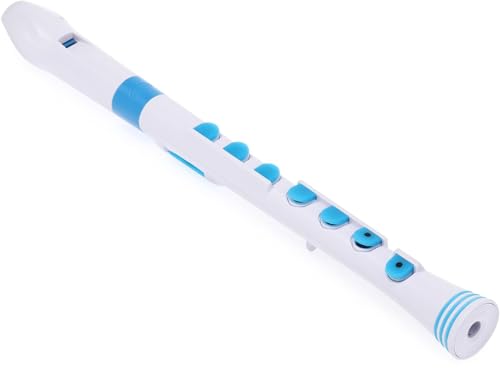
- PATENTED SILICONE KEY SYSTEM: Unique silicone key flaps over enlarged tone holes make it dramatically easier for small fingers to achieve a complete seal — significantly less squeaking, warmer tone...
- ABS RESIN CONSTRUCTION: Lightweight, durable, 100% waterproof, and safe to clean in hot soapy water; built to withstand busy classrooms, group lesson settings, and the daily demands of young, active...
What to Consider Before Buying a New Soprano Recorder: A Comprehensive Buyer’s Guide
A recorder is more than just an item; it’s a key solution for developing breath control, finger independence, and basic music theory. When shopping for a recorder, you aren’t just buying a piece of plastic; you are investing in a tool that will either facilitate a child’s love for music or potentially stifle it through mechanical frustration. The market is flooded with “toy” recorders that look the part but lack proper intonation or durable construction. Finding the balance between an instrument that sounds professional and one that is accessible to a novice is the primary challenge for parents and educators alike.
The ideal customer for this type of product is a student facing dexterity challenges, a young child (ages 4-9) with smaller hands, or a teacher looking to standardize their classroom’s sound. It is also an excellent choice for adult beginners who may have arthritis or other conditions that make sealing traditional holes difficult. However, it might not be suitable for those who are purists looking for a traditional wooden Baroque experience or high-level conservatory students who require the specific resistance of a narrow-bore professional instrument. For those users, a high-end wooden model or a standard Yamaha plastic recorder might be the more traditional choice.
Before investing, consider these crucial points in detail:
- Dimensions & Space: The physical footprint of a soprano recorder is standard, but the reach between the holes is what matters most. For younger players, you should look for an instrument that offers ergonomic support, such as a thumb rest, to help manage the 13-inch length of the body without straining the wrist or palm.
- Capacity & Performance: Performance is measured by the instrument’s “forgiveness.” A high-quality recorder should respond well to varying breath pressures. You want an instrument that covers at least two octaves (C5 to D7) and remains “in tune” with itself even when the player is overblowing slightly, a common trait in beginners.
- Materials & Durability: While traditionalists love wood, ABS resin is the gold standard for beginners. It is virtually indestructible, resistant to moisture (essential for an instrument played with breath), and easy to sanitize. You should prioritize BPA-free materials that can withstand being dropped on a classroom floor or tossed into a backpack.
- Ease of Use & Maintenance: Long-term care is vital for hygiene. A recorder should be easy to disassemble and wash. Look for models that are “waterproof” rather than just “water-resistant,” allowing for deep cleaning in warm soapy water to prevent the buildup of bacteria or mold in the labium or airway.
Once you understand these requirements, you can begin to see why the Nuvo Soprano Recorder Instrument has gained so much traction in the educational world. It addresses these specific pain points with a design philosophy that differs from the 500-year-old standard. Before we dive into the specifics of this model, you can see its full feature set and user reviews to get a sense of its popularity.
While the Nuvo Soprano Recorder Instrument is an excellent choice, it’s always wise to see how it stacks up against the competition. For a broader look at all the top models, we highly recommend checking out our complete, in-depth guide:

- This recorder is easy to play and has a clear soft tone.


- Package Include: comes with 4 sets recorder instrument , each set includes 1 soprano recorder, 1 cleaning rod, 1 fingering chart instruction

- 【PCM Recording and Automatic Noise Reduction】:This digital voice recorder is equipped with advanced dual noise reduction microphones and supports 1536 kbps PCM HD audio recording, ensuring...
First Impressions: Unboxing the Future of the Classroom
When the Nuvo Soprano Recorder Instrument first arrived at our studio, the first thing we noticed was that it didn’t look like the beige or wood-grain recorders we grew up with. The White and Blue aesthetic is modern, bright, and immediately appealing to children. It feels substantial but lightweight, weighing in at just over 5 ounces. The most striking feature, however, is the silicone key system. Instead of the simple open holes found on every other recorder on the market, this instrument features patented silicone flaps. It feels more like a miniature clarinet or a simplified saxophone than a traditional flute.
The unboxing experience is surprisingly premium for an instrument at this price point. It comes with a durable hard carry case—a significant upgrade over the flimsy cloth or plastic bags usually provided. We also found a fingering chart, an adjustable thumb rest, and “reward rings” for the bell. It’s clear that Nuvo has thought about the entire “student journey,” from the first day of class to the final recital. If you’re curious about the build quality, you should check the latest price and availability to see why this has become a go-to for modern music programs.
Key Benefits We Discovered
- Patented Silicone Keys: Effectively eliminates the “leaky hole” problem by providing a mechanical seal.
- 100% Waterproof: The ABS resin construction means it can be washed in hot soapy water without damage.
- Ergonomic Thumb Rest: Helps small hands maintain the correct position without fatigue.
- Motivational Reward System: The removable bell rings serve as a wonderful milestone tool for students.
Limitations to Consider
- Non-Traditional Feel: Students transitioning to professional recorders later may need time to adjust to open holes.
- Sound Profile: It produces a warmer, “rounder” tone that may lack the “chirp” some traditionalists prefer.
A Deep Dive into the Nuvo Soprano Recorder Instrument’s Performance
The Game-Changing Silicone Key System
The centerpiece of the Nuvo Soprano Recorder Instrument is undoubtedly the silicone key system, and we spent a significant amount of time testing how much of a difference this actually makes. In a traditional recorder, the player must use the pads of their fingers to create a vacuum seal over a hole. If even a tiny sliver of the hole remains open, the note will squeak or fail to speak. We found that the Nuvo system completely bypasses this dexterity barrier. The silicone flaps act as a bridge; as long as the student presses the key generally in the right area, the flap creates a perfect seal over the enlarged tone hole.
During our testing, we intentionally used “lazy” finger placement—slightly off-center or with very light pressure—and the instrument still produced a clear, resonant note. This is a massive psychological win for a beginner. As one user we spoke with noted, their child’s confidence soared because they could finally “feel” the music instead of obsessing over their finger being in the exact millimeter-perfect spot. This feature is a feature that really sets it apart from every other budget recorder we have reviewed. It transforms the learning curve from a steep mountain into a manageable hill.
Acoustics and the “Anti-Squeak” Breath Control
Beyond the keys, the internal geometry of the Nuvo Soprano Recorder Instrument seems designed for forgiveness. Beginners often struggle with breath control, either blowing too hard (overblowing) or too softly. On a standard recorder, overblowing usually results in a harsh, painful harmonic. On the Nuvo, we observed that overblowing results in a much more refined sound. It tends to produce a gentle harmonic or a slightly airy tone rather than a meme-worthy screech. We found this to be a blessing for classroom environments.
The timbre of the instrument is also worth noting. It isn’t as “bright” or “reedy” as some of the high-end Yamaha models. Instead, it has a warm, almost woody quality despite being made of ABS resin. This rounder sound profile makes it much more pleasant when twenty students are playing in unison. We confirmed this with user feedback, where many noted that the “timbre is wonderful” and that it sounds much more like a “real” instrument than a toy. The consistency across the two-octave range (C5 to D7) was impressive, with the lower notes—specifically Low C and D—being remarkably easy to hit thanks to the key system. You can hear more about its acoustic properties in the user video reviews available on the product page.
Durability and the “Hygiene Factor”
Let’s talk about the reality of kid-owned instruments: they get dropped, they get stepped on, and they get dirty. We were thoroughly impressed by the 100% waterproof construction of the Nuvo Soprano Recorder Instrument. Many recorders have small cork gaskets or delicate wood parts that would warp or rot if submerged. The Nuvo is entirely ABS resin and silicone. We tested its cleaning process by submerging it in hot, soapy water, and it came out looking brand new without any impact on the mechanical action of the keys.
The durability extends to the finish as well. After weeks of handling, the polished white surface didn’t show the typical scratches or dullness we see in cheaper plastics. This makes it an ideal “fleet” instrument for school districts. If a student loses a part or breaks a ring, the components are modular. We found the adjustable thumb rest to be particularly sturdy; it stays in place once set, providing the necessary leverage for the right hand to support the weight of the instrument. This attention to mechanical detail makes the Nuvo Soprano Recorder Instrument feel like a serious tool for education. For those worried about long-term use, the one-year warranty against defects provides additional peace of mind.
Pedagogical Value and the Reward System
One of the most clever additions to the Nuvo Soprano Recorder Instrument is the set of removable rings at the bell. In many “Recorder Karate” programs, students earn colored belts (usually ribbons) for mastering certain songs. Nuvo has integrated this directly into the hardware. These rings can be swapped out as the student hits milestones. It sounds like a small detail, but in our evaluation, these types of gamified elements significantly increase student engagement. It gives the child a sense of ownership and pride in their progress.
Furthermore, the instrument is compatible with both Baroque and German fingering. This means no matter what curriculum a teacher is using, this instrument will fit right in. We found that the included fingering chart is clear and easy to follow, even for a parent with no musical background. This holistic approach to learning—combining ergonomics, sound quality, and motivation—is why we believe this is the best soprano recorder for the modern classroom. It’s an investment in a child’s success, and you can check the current pricing for classroom sets or individual units to see how it fits your budget.
What Other Users Are Saying
The general sentiment among users is overwhelmingly positive, particularly among parents of children with “tiny fingers.” One user shared a story about their daughter struggling with the lower notes (E to C) on a standard recorder. They noted that switching to the Nuvo Soprano Recorder Instrument allowed her to play with “confidence” because she no longer had to focus so intensely on her finger position. This mirrors our own findings: the instrument removes the mechanical frustration, allowing the music to take center stage.
Experienced musicians have also weighed in. One clarinetist mentioned that they expected a toy but found a legitimate instrument they actually enjoy playing. They specifically praised the hard case and the overall quality. On the negative side, a few users noted that for advanced students, the “keys” might feel a bit different than the open holes they will encounter later in their musical careers. However, most agree that for the elementary school level, this is a minor trade-off for the massive gain in playability. Overall, the consensus is that this is a “blessing” for anyone who has ever suffered through the “September meme” sounds of a struggling beginner.
Comparing the Nuvo Soprano Recorder Instrument to Top Alternatives
1. Yamaha Soprano Recorder

- Musical education that draws children's expression and develops sensibility. Yamaha ABS Recorder with Rich Tone Tone
- By giving it a certain degree of resistance to the blowing sensation, you can control your breath. Creates a bright and crisp tone
The Yamaha YRS-37III is the industry standard for a traditional ABS plastic recorder. It features a classic 3-piece construction and Baroque fingering. While it is incredibly durable and has excellent intonation, it lacks the key system of the Nuvo. This is a better choice for older students (ages 10+) who have developed the manual dexterity to cover open holes. It produces a brighter, more traditional “recorder sound” and is often preferred by purists. However, for a 6-year-old struggling with air leaks, the Yamaha will be much more difficult to play than the Nuvo.
2. Yamaha Soprano Recorder

- Die 300er Serie hat einen volltönenden Klang, und sind aus haltbarem, wartungsfreiem ABS-Kunstharz gefertigt
- Sie bietet beim Spielen einen leicht erhöhten Blaswiderstand zur besseren Atemkontrolle
The Yamaha YRS-301III is a step up, designed to mimic the look and feel of high-end Rottenburgh wooden recorders. It features an arched windway, which provides a bit more resistance and a richer, more complex tone. Like the 37III, it uses open holes. We recommend this for serious middle-school students or adult hobbyists who want the best possible sound from a plastic instrument. It requires much more precise breath control and finger placement than the Nuvo. It is a “serious” instrument, whereas the Nuvo is a “smart” instrument designed to solve specific beginner problems.
3. Hohner Soprano Wood Flute

- FLAUTA DULCE SOPRANO - Hohner (9560) (Madera Peral Natural) (Barroca) (2 Piezas)
- FLAUTA DULCE SOPRANO
The Hohner 9560 is a beautiful pearwood instrument that offers the traditional wooden recorder experience. Wood provides a natural warmth and vibration that plastic simply cannot replicate. However, wood is temperamental; it can crack if it gets too wet or if the temperature changes too quickly. It also cannot be sanitized as easily as the Nuvo. We would recommend the Hohner for a student who has already proven they love the recorder and are responsible enough to maintain a wooden instrument. For a first-timer, the Nuvo’s durability and ease of use make it a much safer bet.
The Final Verdict: Is the Nuvo Soprano Recorder Instrument Worth It?
After an exhaustive evaluation, our verdict is clear: the Nuvo Soprano Recorder Instrument is a revolutionary advancement for music education. While traditionalists might hesitate at the addition of keys, the practical benefits for beginners are undeniable. It solves the number one problem in early woodwind education—the inability to seal tone holes—and does so with an instrument that is durable, hygienic, and aesthetically pleasing. It turns the “dreaded recorder” into a source of joy and accomplishment.
We highly recommend this instrument for any child starting their musical journey, especially those who have struggled with traditional models in the past. It’s also a fantastic tool for teachers who want to reduce classroom noise and increase student success rates. If you want to give your child the best possible start in music, we suggest you grab the Nuvo Soprano Recorder Instrument today and hear the difference for yourself. Whether for a school program or home practice, it is a purchase you won’t regret.
Last update on 2026-10-21 / Affiliate links / Images from Amazon Product Advertising API