
hiBCTR 5.0 Bluetooth Decoder Board Review: The Ultimate Budget DIY Audio Upgrade?
We have all been there: you hold onto a piece of classic audio equipment—whether it is a beloved vintage cassette deck, an old boombox, or a custom-built workshop speaker—and realize that its lack of wireless connectivity makes it nearly obsolete in a smartphone-dominated world. Throwing away perfectly good analog amplifiers or custom-crafted enclosures feels wasteful, yet struggling with awkward 3.5mm dongles and messy cables ruins the seamless experience modern audio streaming promises. Resolving this issue without spending hundreds on a brand-new audio system requires a reliable, compact, and affordable embedded receiver board. Without a solid Bluetooth receiver, your custom audio projects are bound to suffer from high background noise, frequent drops, or frustrating power requirements. That is precisely why we decided to put the hiBCTR 5.0 Bluetooth Decoder Board through its paces on our test bench to see if this budget multipack delivers modern connectivity to classic hardware.
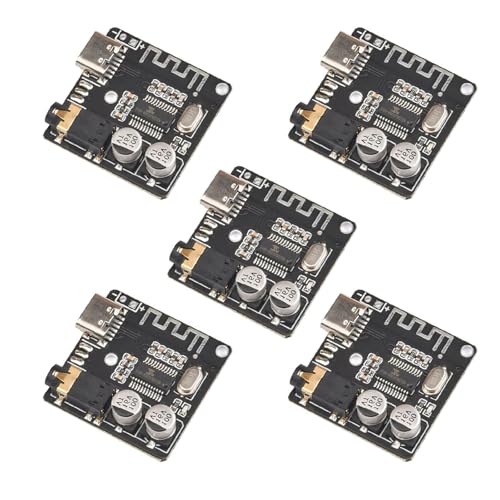
- 1. Enhanced Bluetooth 5.0 Connectivity for Seamless Audio Streaming
- 2. High-Quality MP3 Decoder Board for Uncompromised Sound Experience
What to Consider Before Buying DIY Sound Modules
A Sound Modules is more than just an item; it’s a key solution for breathing second life into legacy audio gear, creating standalone wireless speakers, or incorporating sound into custom electronics and prop builds. Choosing the right module determines whether your final creation sounds crisp and clear or suffers from maddening ground loops and low-volume output. When selecting embedded audio components, you must look beyond basic Bluetooth spec sheets and evaluate how easily the board integrates into real-world circuits.
The ideal customer for this type of product is someone facing a custom electronics build, an audio retrofitting project, or multi-device studio upgrades where raw component versatility and low cost are top priorities. Conversely, it might not be suitable for those who require audiophile-grade high-definition codecs (like LDAC or aptX HD), built-in high-power amplification for driving passive speakers directly, or completely silent power-on sequences without audio prompts. Those users might need to consider dedicated pre-amps or high-end integrated amplifier boards instead.
Before investing, consider these crucial points in detail:
- Dimensions & Space: Board footprint is critical when retrofitting tight enclosures, stuffed toys, or vintage chassis. A compact design allows you to tuck the module into obscure pockets, but ensure key connection pads and power ports remain accessible for soldering or cable routing.
- Capacity/Performance: Evaluate signal processing metrics such as Signal-to-Noise Ratio (SNR), Total Harmonic Distortion (THD), and Bluetooth protocol support. Pay attention to line-level audio output voltage, as lower output power may demand additional pre-amplification stages to match standard line inputs.
- Materials & Durability: Look for clean printed circuit board (PCB) layouts with well-defined solder pads, sturdy surface-mount components, and reinforced ports. High-quality trace layout reduces interference and prevents thermal or electrical damage during direct soldering.
- Ease of Use & Maintenance: Determine whether the board offers simple plug-and-play connections (like USB-C power and 3.5mm headphone jacks) alongside exposed pin pads. A user-friendly board simplifies troubleshooting and reduces installation time for beginners and experts alike.
Selecting the right board comes down to matching your technical needs with the physical constraints of your project. If you need a simple, low-voltage receiver for quick retrofits, evaluating these specifications upfront will save you hours of troubleshooting on the bench.
While the hiBCTR 5.0 Bluetooth Decoder Board is an excellent choice, it’s always wise to see how it stacks up against the competition. For a broader look at all the top models, we highly recommend checking out our complete, in-depth guide:

- 8M MEMORY CAPACITY: Features 8 megabytes of storage space allowing you to record up to 10 minutes of personalized audio messages, music, or voice greetings for your DIY projects

- 16-Minute Recording Module :This 16-minute recording sound module is nice for personalizing greeting cards, music boxes, or other creative presents. Embed it in a greeting card to bring your wishes...
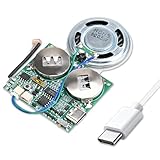
- 【DIY Greeting Card】DIY light sensor sound module is equipped with a 0.5W speaker and a 3.7V battery. The sound module is an ideal choice for mother's day and father's day DIY recordable greeting...
Unboxing & First Impressions of the hiBCTR 5.0 Bluetooth Decoder Board
When our package arrived, we were immediately struck by how tiny these modules actually are in hand. Measuring roughly 30x30mm, the hiBCTR 5.0 Bluetooth Decoder Board multipack packs five identical, neatly manufactured black PCB chips into a compact envelope. Each board features a modern USB-C power port alongside a 3.5mm stereo output jack, accompanied by clearly labeled solder pads for direct power (DC 3.7V–5V) and audio output channel leads. You can check the latest price and availability to see why this 5-pack option is so popular among hobbyists.
The overall build quality feels remarkably solid for ultra-budget micro-electronics. The solder pads are pre-tinned and cleanly laid out, making wire attachment straightforward even for hobbyists with basic soldering equipment. Plugging the board into a standard USB power source immediately illuminates a subtle blue status LED, signaling that the board has booted up and is ready to pair. Compared to older Micro-USB receiver boards on the market, the inclusion of modern USB-C power input is a very welcome hardware update.
Key Benefits
- Modern USB-C power connector alongside accessible solder pads for flexible powering options.
- Incredible multi-pack value allowing simultaneous upgrades across multiple DIY projects.
- Reliable Bluetooth 5.0 connection with fast pairing and solid 30-foot range.
- Extremely compact 30x30mm footprint fits into virtually any chassis or tight space.
Limitations
- Audio line-level output power is relatively low, requiring external amplification for decent volume.
- Spoken audio notification on startup and pairing cannot be muted or reconfigured.
Deep-Dive Bench Testing: hiBCTR 5.0 Bluetooth Decoder Board Performance
1. Connection Stability and Bluetooth 5.0 Protocol Implementation
During our hands-on testing of the hiBCTR 5.0 Bluetooth Decoder Board, connection reliability was one of the first areas we put under scrutiny. Powered by a standard 5V supply, the module advertises support for A2DP, AVCTP, AVDTP, and HFP protocols, making it compatible with smartphones, tablets, and computers. Upon powering on, the board enters pairing mode instantly. We paired it across several devices—including Android, iOS, and desktop operating systems—and every device discovered the module within seconds without requiring passcode entries.
In terms of physical range, we tested the signal through multiple room configurations. Indoors, with drywall barriers, the connection remained rock-solid up to roughly 30 feet before experiencing minor audio stuttering. Line-of-sight range extended slightly beyond 35 feet, which is impressive for an unshielded printed circuit board antenna. Latency during video playback was minimal; lips remained well-synced when streaming movies or video tutorials, proving that the Bluetooth 5.0 chipset operates efficiently. Whether retrofitting a fixed desk setup or a mobile boombox, the radio frequency stability of the hiBCTR 5.0 Bluetooth Decoder Board proved consistent and reliable throughout our bench trials.
2. Audio Output Dynamics, SNR, and Sound Reproduction Quality
Audio fidelity is where expectations must be balanced with the board’s price point. The technical specifications list a Signal-to-Noise Ratio (SNR) of 90dB, a Total Harmonic Distortion plus Noise (THD+N) of -70dB, and a Crosstalk rating of -86dB. When we hooked up our test headphones directly to the onboard 3.5mm jack, the audio reproduction was clean and surprisingly artifact-free for basic streaming. The lossy-to-lossless MP3 decoding engine handles standard music streaming, podcasts, and casual listening without noticeable digital distortion or high-frequency ringing.
However, users should note that the output level is purely line-level and relatively soft. When feeding the audio signal into a secondary amplifier board or vintage receiver, we found that we needed to turn up the gain slightly higher than when using standard smartphone headphone jacks or high-end standalone DACs. The frequency response is generally flat, though it lacks specialized high-definition Bluetooth codecs like aptX. For casual DIY speakers, studio utility monitoring, or custom background sound setups, the overall sound output is clean, balanced, and free from severe ground-loop hum when supplied with clean power.
3. Wiring Versatility: USB-C vs. Battery Solder Pads
One of the strongest features of the hiBCTR 5.0 Bluetooth Decoder Board is its dual-powering flexibility. You can immediately see its full feature set and hardware layout to appreciate how thoughtful the power design is. You can run the board directly off a standard 5V USB-C cable, or you can bypass the port entirely by soldering wires directly to the bottom power pads (VBAT and GND), which accept DC 3.7V to 5V power inputs. This makes the board ideal for lithium-ion or 18650 battery-powered portable builds.
During our soldering tests, the copper pads took solder easily without lifting off the substrate. We set up two configuration tests: one using a USB-C wall adapter and another powered by a standard 3.7V rechargeable 18650 cell. Both methods booted the board reliably. Similarly, on the audio output side, you are not forced to rely on the 3.5mm headphone jack; adjacent solder pads (L, R, GND) allow you to route stereo lines directly to an internal amplifier board, creating a clean, wire-free installation inside your custom enclosure.
4. Real-World Practicality and The Audible Alert Experience
Integrating the hiBCTR 5.0 Bluetooth Decoder Board into physical projects highlighted several practical realities. Its microscopic 30x30mm footprint means you can hide it inside retro cassette decks, old clock radios, or tiny plush toy sound boxes without struggling for clearance. The status LED provides quick visual feedback: blinking rapidly when searching for a host device and turning solid blue once connected. If you prefer to incorporate this receiver into hidden internal projects, you can easily read up on its installation steps when you examine user application guides online.
One specific behavior that every builder should be aware of is the built-in connection prompt. Upon powering up and pairing, the board plays an audible voice notification through the audio stream. If you install this board in a car stereo setup that turns on with your ignition, you will hear this notification every single time you start your vehicle. While this visual and audio prompt system ensures you know your device is connected, it cannot be disabled or turned down. For general DIY audio projects, home amplifiers, and portable speakers, this is a minor tradeoff for an otherwise effortless plug-and-play receiver board.
What Real DIY Enthusiasts and Makers Are Saying
Synthesizing feedback across the maker community confirms that our bench test findings align closely with real-world user experiences. Most builders praise the module’s small size and ease of integration. One user noted how effortless it was to modify an old cassette radio to accept modern wireless audio, while another studio owner mentioned using all five boards across various equipment pieces to upgrade several devices at once without breaking the bank.
Conversely, critical feedback primarily focuses on two recurring points: audio output gain and the connection voice prompts. Multiple users pointed out that the output power is lower than standard media players, requiring downstream amplifiers to work a bit harder to achieve high volume levels. A few reviewers also voiced frustration over the loud connection chime during vehicle startups. Nevertheless, the consensus remains overwhelmingly positive regarding value, with most makers agreeing that for the low cost per chip, the board delivers solid reliability and clean sound for portable and custom builds.
How the hiBCTR 5.0 Bluetooth Decoder Board Compares to Alternatives
While the hiBCTR 5.0 Bluetooth Decoder Board excels at providing raw Bluetooth streaming receiver capabilities for custom electronic builds, different projects call for specialized hardware. Below is how it compares to other popular sound modules in the DIY space.
1. EZSound 10 inch Extension Play Button
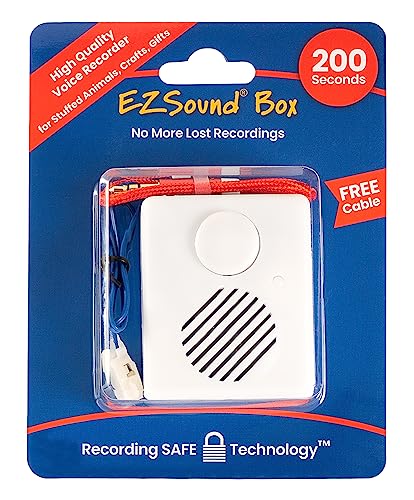
- ✅ [RECORDING SAFE TECHNOLOGY] Whether you are using our sound recorder as teddy bear voice recorder or as sound module for toys or for any other recording purpose, we know that your recordings are...
- Recordable Sound Box is ideal for adding sound effect to plush toys, stuffed animals, interactive school projects, photo frames, personalized gifts, kid activities, paints, hobbies, craft projects...
The EZSound 10 inch Extension Play Button is tailored specifically for physical interaction projects, such as stuffed animals, craft displays, and interactive hobby models. Unlike the hiBCTR board, which streams continuous live audio wirelessly over Bluetooth, the EZSound module is a self-contained local recording box that stores up to 200 seconds of custom audio recorded via an aux port. It features an extended push button for manual playback. If your project requires physical push-button audio triggers rather than continuous phone streaming, the EZSound unit is the better fit, whereas the hiBCTR is designed for wireless media streaming.
2. Talking Products Personalised Gift Module

- Ideal for creating your own talking gifts, cards and crafts. Perfect for adding sound effects to train sets, models, photo frames and Cosplay Accessories
- Download your own MP3 files via the USB socket. Add speech, music or sound effects
The Talking Products Personalised Gift Module offers integrated onboard flash memory (4MB) and an included AAA battery box with a built-in playback button. It is designed out of the box for quick insertion into custom gifts, cosplay accessories, and greeting cards. While the hiBCTR board requires you to solder or connect external speakers and amplifiers, the Talking Products module includes a pre-wired miniature speaker for direct playback. Choose the Talking Products module for simple standalone recorded voice gifts, and choose the hiBCTR board when you need continuous Bluetooth streaming connected to dedicated sound systems.
3. XLW Voice Recorder for Stuffed Animals

- 16-Minute Recording Module :This 16-minute recording sound module is nice for personalizing greeting cards, music boxes, or other creative presents. Embed it in a greeting card to bring your wishes...
- Download and Record and Delete Music :Long press the button for 3 seconds to start recording, and release the button to stop automatically. The maximum recording time is 16 minutes. Can download...
The XLW Voice Recorder is an all-in-one housing module designed primarily for plush toys, memory bears, and custom gifts. It allows users to record customized voice messages directly through an internal microphone without needing external soldering or wiring. It operates on self-contained coin/button batteries. In comparison, the hiBCTR 5.0 Bluetooth Decoder Board is a bare-circuit component intended for electronics hobbyists who want to stream high-quality music wirelessly from mobile devices into an existing amplifier or headphone setup.
Final Verdict: Is the hiBCTR 5.0 Bluetooth Decoder Board Worth It?
After thorough testing and analysis, the hiBCTR 5.0 Bluetooth Decoder Board proves itself as an exceptional value proposition for DIY audio enthusiasts, electronics tinkerers, and repair hobbyists. Its ultra-compact 30x30mm profile, flexible power input options (USB-C and direct 3.7V-5V solder pads), and stable Bluetooth 5.0 connection make it a versatile tool for modernizing legacy audio hardware or creating custom wireless speaker systems. While its line-level output signal is slightly low and the connection notification prompt cannot be turned off, these minor compromises are far outweighed by the raw functionality and affordable multi-pack value offered here.
If you have a workbench full of audio projects waiting for a modern wireless upgrade, this 5-pack provides everything you need to get connected quickly. We highly recommend adding these boards to your DIY kit. To take advantage of this fantastic value and upgrade your custom audio builds today, get your hiBCTR 5.0 Bluetooth Decoder Board 5-pack here.
Last update on 2026-10-19 / Affiliate links / Images from Amazon Product Advertising API