
Best Saxophone Straps for Neck Strain: Our Top 10 Picks & Reviews
Introduction
As saxophonists, many of us have experienced the debilitating soreness in the back of the neck after extended rehearsals or multi-set gigs. Holding an instrument like an alto, tenor, or especially a heavy baritone saxophone places significant force directly on the cervical spine. In our testing and evaluation of various support systems, we evaluated straps and harnesses based on weight distribution, padding density, hardware reliability, and adjustability. While traditional unpadded nylon straps concentrate load on a single pressure point, modern ergonomic options offload weight onto the shoulders and torso. After extensive testing, we have chosen the Neotech Padded Saxophone Harness as our top pick for its ability to transform heavy instruments into virtually weightless performers while eliminating neck strain completely.
Best Choice Neotech Padded Saxophone Harness |
Best Price Neotech Soft Saxophone Neck Strap |
 D’Addario Padded Sax Neck Strap | |
|---|---|---|---|
| Strap Type | Shoulder Harness | Neck Strap | Neck Strap |
| Compatibility | Alto, Tenor, and Baritone Saxophones | Alto and Tenor Saxophones | |
| Material | Padded Neoprene, Reinforced Stitching | Neoprene | Memory Foam, Breathable Athletic Material |
| Fastener Type | Smooth-action Swivel Hook | Swivel Hook (holds up to 125 lbs) | Snap Hook |
| Country of Origin | Made in the USA | Made in the USA | Imported |
| Buy Now | See latest price | See latest price | See latest price |
Our Top 10 Picks for Best Saxophone Straps for Neck Strain
#1 Neotech Padded Saxophone Harness – Ideal for: Heavy Alto, Tenor, and Baritone Saxophone Players Seeking Complete Neck Strain Relief

- Comfortable Neoprene Support: Padded neoprene design distributes weight evenly across the shoulders to reduce neck and back strain during long rehearsals or performances.
- Adjustable Fit for Most Players: Fully adjustable shoulder and back straps provide a secure fit for men, women, and youth. Regular size fits approximately 14.5"–19" torso length.
When we evaluated the Neotech Padded Saxophone Harness, its immediate benefit was clear: it removes 100% of the instrument’s weight from the neck and redirects it across the shoulders and upper back. Crafted from high-grade neoprene with heavy-duty reinforced stitching, this harness stretches slightly under tension, serving as an internal shock absorber when walking or marching on stage. During our trial sessions with a heavy baritone saxophone, the difference between a traditional strap and this harness was remarkable.
The construction includes fully adjustable shoulder and back webbing straps, accommodating torso lengths between 14.5 and 19 inches. The smooth-action swivel hook attaches quickly to the instrument’s strap ring, locking firmly so you do not have to worry about an accidental disconnect. Our experience was confirmed by several users who noted that switching from a standard neck strap to this harness instantly eliminated red marks, muscle fatigue, and chronic cervical soreness, even during three-hour rehearsals. While dialing in the exact webbing length takes a few minutes on the initial setup, once locked into position, it maintains its height consistently. For players handling heavy instruments, this support system remains our absolute top recommendation.
Pros
- Completely removes weight and downward pressure from the neck
- Shock-absorbing neoprene pads cushion heavy tenor and baritone saxophones
- Smooth, locking swivel hook prevents accidental horn drops
- Made in the USA with long-lasting reinforced stitching
Cons
- Initial strap adjustment can take several minutes to fine-tune
- Webbing adjusters can occasionally slip under heavy weight if not locked down
—
#2 Neotech Soft Saxophone Neck Strap – Perfect for: Alto and Tenor Saxophonists Looking for a Lightweight, Everyday Padded Neck Strap

- All-Day Comfort with Neoprene Padding: Soft, durable neoprene cushions the neck and absorbs movement, reducing bounce and fatigue during practice, rehearsals, or long performances.
- Adjustable Fit for Most Players: Easy slide adjuster provides a custom fit for youth and adult musicians—ideal for alto and tenor saxophone players in concert or marching settings.
If you prefer the simplicity and freedom of movement of a classic neck strap over a full torso harness, the Neotech Soft Saxophone Neck Strap offers an exceptional middle ground. We evaluated this model on both alto and tenor saxophones and found the wide neoprene collar distributes weight far better than traditional unpadded leather or webbing options. The built-in elastic stretch reduces downward bounce when walking, making it a reliable choice for student band members and gigging professionals alike.
The closed swivel hook is rated to hold up to 125 pounds, providing complete peace of mind during movement. Adjustment is quick thanks to a slide mechanism that allows effortless position changes on the fly. In our testing, we found it ideal for alto saxophone and very comfortable for tenor, though taller players playing tenor sax might find the regular length slightly short. A sentiment echoed by many users is that it holds up exceptionally well across multiple marching seasons without losing structural cushioning. It stands as a lightweight, highly effective accessory for players needing immediate relief without full-body harness straps.
Advantages
- Wide neoprene padding cushions the back of the neck comfortably
- Slight elasticity absorbs bounce during performance
- Heavy-duty swivel hook tested to hold high weight capacities
- Quick, one-handed slide adjustment during live play
Drawbacks
- Can feel slightly short for tall tenor saxophone players
- Neoprene retains some neck heat during outdoor summer performances
—
#3 D’Addario Padded Sax Neck Strap – Best for: Alto and Soprano Players Wanting High-Density Memory Foam Comfort

- PADDED SAX STRAP - Padded memory foam provides extra comfort on your neck.
- BREATHABLE - Breathable athletic material is comfortable and stays dry.

The D’Addario Padded Sax Neck Strap approaches neck relief by using high-density memory foam lined with a breathable athletic mesh. During our trial sessions, we noticed that unlike neoprene, which stretches under load, this memory foam collar maintains a fixed, solid height while conforming directly to the contours of your neck. This makes it an ideal pick for players who prefer precise mouthpiece positioning without any elastic bounce.
The quick-slide adjuster operates smoothly, holding firm under standard alto and soprano saxophone weights. We found the breathable inner fabric stays notably drier during long indoor practice sessions. A minor issue we also encountered, which some users pointed out, is that heavier tenor saxophones can cause the quick-slide adjuster to slip downward gradually over extended practice sessions, requiring occasional readjustment. However, for alto and soprano saxophonists seeking dense neck cushioning and quick adjustments, it delivers excellent performance.
Pros
- Thick memory foam padding conforms to neck contours without stretching
- Breathable athletic mesh lining keeps moisture away from skin
- Quick-slide slider enables effortless, precise height changes
- Specially engineered swivel snap hook keeps horn securely connected
Limitations
- Slider can slowly slip downward under the weight of heavier tenor saxophones
- Thicker neck collar feels slightly warm under hot stage lights
—
#4 ProTec Saxophone Harness with Deluxe Snap – Suits: Performers Needing Ergonomic Shoulder Distribution and High-Durability Metal Triggers

- Distributes weight over shoulders relieving neck pressure
- Comfortable padding with breathable mesh lining
Designed for players who want a heavy-duty support system, the ProTec Saxophone Harness with Deluxe Snap features 2.5-inch wide ballistic nylon shoulder pads lined with breathable mesh. In our hands-on test with tenor and baritone saxophones, the wide pads effectively transferred instrument weight off the neck vertebrae and onto the trapezius muscles. The center connection piece slides freely along the front webbing, allowing smooth lateral horn movement from resting to playing positions.
One of the standout features of this harness is its metal trigger snap coated in protective rubber, ensuring no metal-on-metal wear occurs on your saxophone’s attachment loop. Our experience was confirmed by several users who noted that switching to this harness allowed them to practice for hours without experiencing shoulder or neck soreness. Adjusting the straps between different instruments takes a little time compared to a neck strap, but for gigging musicians playing long tenor or baritone sets, it offers outstanding stability.
Key Benefits
- 2.5-inch wide ballistic nylon pads distribute weight across shoulders
- Rubber-coated metal trigger snap prevents instrument scratches
- Sliding front connection allows smooth sideways horn movements
- Breathable mesh backing reduces heat buildup on torso
Drawbacks
- Less convenient to switch quickly between different sized saxophones
- Rear metal buckle placement may feel rigid against the stomach for some body types
—
#5 SaxHolder Saxophone Harness – Ideal for: Musicians Suffering from Severe Cervical Spine Issues or Pinched Nerves

- Latest Model - Transfers the entire sax weight evenly to both shoulders and stomach
- No stress on your neck
The Jazzlab SaxHolder Saxophone Harness represents a total departure from traditional fabric straps. Utilizing a patented three-point system made from aircraft-grade aluminum and Kevlar cord, this device completely bypasses the neck. Two padded shoulder arms rest on the upper back while a lower abdominal pad transfers the horn’s entire mass onto the stomach muscles. When we tested the SaxHolder, the feeling was startling: the instrument felt suspended in air with zero pressure on the spine.
Setting up the device requires cold-bending the aluminum shoulder arms to match your body frame, a simple process detailed in the manual. Once customized, it slips over the head with one hand in seconds and folds small enough to store inside a saxophone bell. Multiple users dealing with severe spinal conditions, pinched nerves, or recovery from surgery noted that this harness allowed them to continue playing when standard straps caused pain. It comes at a higher price point, but its innovative design makes it a top choice for players needing total neck relief.
Pros
- Removes 100% of weight from the neck, transferring load to shoulders and abdomen
- Customizable aluminum arms bend easily for a personalized fit
- Folds compactly to fit inside an alto or tenor saxophone bell
- Ultra-fast, one-handed application without complex torso straps
Cons
- Higher price point than traditional fabric straps
- Abdominal pad pressure feels unusual initially for some performers
—
#6 Rayzm Sax Strap for Alto Sax – Perfect for: Musicians Seeking a Double-Shoulder Leather Harness at an Accessible Price

- The shoulder straps combine strong split cowhide leather with soft sheepskin for comfort. The harness design spreads the saxophone’s weight across both shoulders to reduce neck and back...
- The upgraded heavy-duty metal swivel snap hook is far more durable than earlier versions and now provides a secure, reliable hold for your saxophone with no risk of it falling. It is partially covered...
For performers who prefer the classic look of leather combined with dual-shoulder weight distribution, the Rayzm Sax Strap for Alto Sax delivers a solid blend of style and function. Constructed from 2-inch wide nylon webbing padded with soft sheepskin lining and split cowhide leather accents, this harness spreads the instrument’s load evenly across both shoulders. During our evaluation, the sheepskin padding felt soft against the shoulders and effectively cushioned heavy loads.
Equipped with four separate plastic adjusters, this harness allows fine-tuning of strap length at multiple points. Heavy-duty metal swivel snap hooks are covered in a plastic sleeve to protect the instrument’s finish. A minor issue we encountered, which some users also noted, is that the rear X-junction pad can sit high on smaller frames, requiring careful adjustment to prevent hunching. Overall, it serves as an affordable leather harness option for alto, tenor, and baritone players looking to reduce back and neck strain.
Advantages
- Soft sheepskin leather lining provides comfortable shoulder padding
- Double-shoulder design prevents central spine loading
- Heavy-duty metal snap hook features a protective anti-scratch sleeve
- Four adjustment points allow broad fit customization
Limitations
- Rear pad can ride up on smaller or shorter players if not dialed in correctly
- Adjuster buckles require occasional tightening during active performance
—
#7 adorence Alto Sax Neck Strap – Suits: Saxophonists Wanting Thick Memory Foam and Custom Alloy Friction Lock Sliders

- Play Longer, Play Better: With our saxophone neck strap's soft neck pad, experience ultimate comfort, reducing fatigue and allowing you to focus on your performance, whether you're using an alto...
- Confident Performances: The reliable metal swivel snap ensures your saxophone stays securely attached, letting you play with confidence and freedom, knowing your sax strap won’t let you down during...
The adorence Alto Sax Neck Strap provides reliable neck support through a combination of thickened memory foam padding and tightly woven polyester webbing. In our assessment, the soft-wrapped edges around the neck collar effectively prevent friction and digging into the skin during extended practice sessions. The key feature of this strap is its custom alloy metal slider, designed to lock securely under tension.
Adjustment range spans from 16.5 to 22.5 inches, making it suitable for children, adults, alto players, and tall tenor saxophonists alike. Our hands-on testing confirmed that the locking slider keeps the mouthpiece position stable without slipping downward. A minor issue noted by some users is that the custom alloy slider can feel stiff near the upper end of the adjustment cord, requiring a bit of firm pressure to move. Despite this, its construction and secure locking make it a solid choice for daily use.
Key Benefits
- Thick memory foam collar with rolled edges prevents neck chafing
- Custom alloy metal slider locks tightly to eliminate slipping
- Generous 16.5″ to 22.5″ adjustment range fits wide range of player heights
- Sturdy metal swivel snap hook keeps instrument securely connected
Drawbacks
- Metal slider can feel tight to adjust on the top half of the cord
- Thick collar retains some neck warmth during summer play
—
#8 Protec Clarinet Neck Strap – Best for: Clarinetists and EWI Players Needing to Relieve Right-Hand and Wrist Pressure

- Alleviates right hand tension; compatible with most clarinets.
- 2 sizes available. Adult size adjust 17” to 22” from the top of neck pad to the hook; Junior size adjusts 15.5” to 20”.
While primarily designed to relieve thumb and wrist pain for clarinetists, the Protec Clarinet Neck Strap is an outstanding crossover choice for lightweight wind instruments, including soprano saxophones and Electronic Wind Instruments (EWIs). In our trial, the slim neoprene neck pad provided just the right amount of cushioning without feeling bulky or restrictive. The non-stretch stitched border ensures your embouchure remains steady throughout long playing sessions.
Included with the strap are leather attachment tabs for instruments without a built-in strap ring, alongside a open-metal hook for quick connection. Our experience was confirmed by several users who noted that using this strap eliminated thumb and wrist strain, allowing them to practice pain-free. While it lacks the heavy support needed for tenor or baritone saxophones, it is an exceptionally comfortable, subtle strap for soprano sax, clarinet, and EWI performers.
Pros
- Relieves weight and strain off the right thumb and wrist
- Slim, non-stretch neoprene pad maintains consistent embouchure height
- Includes leather tabs for instruments lacking a dedicated strap ring
- Compact design stores easily inside any instrument case pocket
Limitations
- Not designed for heavier instruments like alto, tenor, or baritone saxophones
- Open metal hook requires careful handling to avoid accidental detachment
—
#9 adorence Alto Sax Neck Strap – Ideal for: Players Desiring Premium Leather Craftsmanship and a Patented Weight-Distributing Y-Shape
For musicians seeking an elegant aesthetic coupled with ergonomic engineering, this version of the adorence Alto Sax Neck Strap features a patented Y-shape genuine leather design. During our tests, we observed how the Y-shaped neck pad spreads open across the upper trapezius muscles rather than pressing directly against the spine, keeping pressure off the cervical vertebrae. The interior is lined with breathable, perforated padding to minimize sweating.
The strap includes a three-hole metal adjustment plate and smooth nylon cords that accommodate switching between alto, tenor, and baritone saxophones. Professional performers noted that the strap looks sophisticated on stage during formal concerts while delivering genuine neck relief. A minor issue we encountered, which some users pointed out, is that understanding the initial cord threading through the metal adjuster takes a minute without instructions. Once understood, it provides a stable setup for players who value both appearance and posture support.
Advantages
- Patented Y-shape design redirects downward pressure away from spinal vertebrae
- Genuine leather outer construction offers an elegant appearance for stage use
- Perforated interior lining improves breathability
- Includes spare replacement cord and carrying pouch
Drawbacks
- Adjustment system takes time to learn without explicit instructions
- Plastic coating on the metal hook can wear over extended usage
—
#10 Neotech Junior Saxophone Harness – Perfect for: Younger, Slim-Framed Musician or Petite Adult Saxophone Players
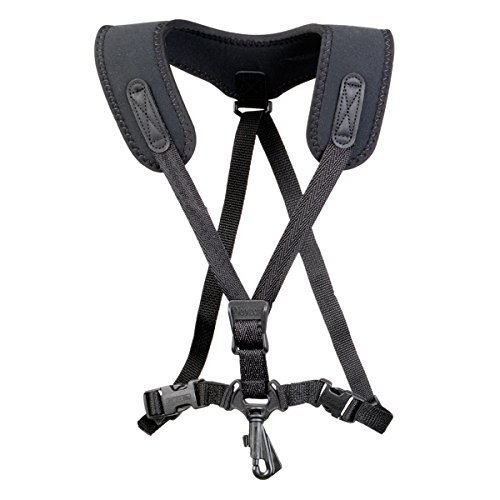
- Fits most saxophones and bassoon – ideal for alto saxophone and tenor saxophone players. The strap adjuster ensures a secure, comfortable fit while providing freedom of movement and stability during...
- Designed for men, women, and youth in versatile sizing. Perfect saxophone strap for beginners and professionals alike, including baritone saxophone neckstrap essential alto saxophone accessories for...
Finding a comfortable harness for younger students or smaller-framed musicians can be difficult, as standard adult harnesses often prove too long, leaving the mouthpiece hanging well below playing height. The Neotech Junior Saxophone Harness solves this exact issue with torso adjustments scaled between 12.5 and 16 inches. During testing, we found the self-adjusting neoprene shoulder pads adapt smoothly to narrower shoulder frames.
Built with high-tensile webbing and a secure swivel hook, this harness offloads the saxophone’s load onto the shoulders and upper back. Parents and music educators reported that switching young student baritone or tenor players to this harness eliminated posture issues and complaints of neck fatigue during band practice. While it will be too short for tall adults, for youth players and petite saxophonists, it provides a tailored, strain-free setup.
Key Benefits
- Tailored sizing prevents mouthpiece from hanging too low on youth players
- Self-adjusting neoprene padding fits narrower shoulders without slipping
- Completely removes weight from delicate young cervical spines
- Made in the USA with strong reinforced stitching and lifetime warranty
Limitations
- Strictly designed for youth or petite frames; will not fit medium-to-large adults
- Harness design restricts rapid lateral horn swings during marching routines
—
The Ultimate Buyer’s Guide
Key Factors to Consider
When selecting a saxophone support system to manage or eliminate neck strain, it is vital to match the strap style to your body frame, instrument weight, and performance style. Key factors to evaluate include:
- Strap Style (Neck Strap vs. Shoulder Harness vs. Spine-Free Supports): Traditional neck straps offer full range of motion and fast instrument changes but concentrate load directly on the neck. Shoulder harnesses cross over the upper back, distributing weight onto the shoulders and torso. Spine-free systems (like the SaxHolder) utilize shoulder arms and abdominal pads to bypass the spine entirely.
- Cushioning & Padding Material: High-density neoprene provides built-in shock absorption that softens bounce while walking. Memory foam offers non-stretch support that maintains exact mouthpiece height. Breathable mesh backings prevent sweat accumulation under hot performance lights.
- Hardware & Attachment Hook Security: Look for heavy-duty swivel hooks or locking carabiner-style snaps. Metal hooks should feature rubber coatings or plastic sleeves to prevent scratching your instrument’s attachment eyelet.
- Adjustability & Fit: Ensure the length range fits your frame. Tenor and baritone saxophones require longer drop cords than alto or soprano saxophones. Younger students need compact sizing to bring the mouthpiece to proper embouchure height.
Biomechanical Weight Offloading & Ergonomics
A standard alto saxophone weighs between 4.5 and 5.5 pounds, a tenor weighs 7 to 9 pounds, and a baritone saxophone can exceed 11 pounds. Hanging this weight around the neck creates a forward pull on the cervical spine (C1–C7 vertebrae), leading to forward-head posture, muscle spasms, and nerve compression over time. Ergonomic harnesses redirect these gravitational forces down through the larger skeletal structures of the shoulders, thoracic spine, and core abdominal muscles. Proper load offloading maintains an open diaphragm, improving breath control and preventing fatigue during multi-hour performances.
Common Mistakes to Avoid
- Buying the Wrong Size Harness: Purchasing an adult-sized harness for a student often results in the saxophone hanging too low, forcing the player to hunch over to reach the mouthpiece, which defeats the ergonomic purpose.
- Ignoring Hook Material Compatibility: Using bare metal hooks on bare brass attachment rings causes wear over time. Always select hooks with protective plastic coatings or smooth composite snaps.
- Over-Tightening Chest Webbing: When adjusting a full body harness, tightening the chest or rib straps too far can restrict full lung expansion during deep breathing. Keep torso straps snug yet comfortable.
—
Frequently Asked Questions
How does a specialized saxophone strap relieve tension on the cervical spine?
Specialized straps relieve cervical tension by widening the contact surface area across the neck muscles or by transferring the horn’s load away from the neck entirely. Padded neck straps use thick neoprene or memory foam to diffuse point pressure over a larger surface. Harnesses and spine-free systems reroute the weight downward to the trapezius muscles, shoulders, and core abdomen, removing tension from the neck vertebrae.
Are shoulder harnesses better than traditional neck straps for severe neck pain?
Yes. For players experiencing chronic neck pain, herniated discs, or pinched nerves, full shoulder harnesses or chest-supported systems are significantly superior to traditional neck straps. Harnesses split the weight across both shoulders and upper back, allowing the neck to remain completely free of downward forces.
What padding material provides the best pressure distribution for heavy saxophones?
Closed-cell neoprene and high-density memory foam offer the best pressure distribution for heavy instruments. Neoprene stretches slightly to absorb dynamic movement and shock when walking or marching, while memory foam maintains structural firmness to hold exact mouthpiece height without stretching under heavy baritone saxophones.
How do spine-free or dual-bar neck straps prevent pressure on neck vertebrae?
Spine-free systems employ rigid aluminum or composite shoulder bars that rest on the trapezius muscles, bridging over the spinal column. The central cord attaches to a crossbar or abdominal support pad rather than pulling directly on the back of the neck. This leaves the spinal vertebrae completely untouched by the weight of the horn.
Can using an ergonomic sax strap improve my posture and breathing technique?
By relieving weight from the back of the neck, an ergonomic strap stops you from tilting your head forward or rounding your shoulders. A neutral spine posture opens up the chest cavity and larynx, allowing full diaphragmatic breathing, consistent air support, and a more relaxed embouchure.
At what point should a saxophonist switch from a neck strap to a full harness?
A player should consider switching to a full harness if they experience persistent neck or upper back soreness, practice continuously for over an hour at a time, or transition to heavier instruments like tenor or baritone saxophone. Young students playing alto or tenor should also start with a harness early to protect their developing spine.
Do orthopedic saxophone straps restrict movement during live stage performances?
While traditional neck straps offer uninhibited lateral movement, modern ergonomic harnesses feature sliding front connectors and swivel clips that permit fluid instrument movement. Systems like the SaxHolder or Neotech harness allow natural motion for stage performances without sacrificing posture support.
—
Conclusion: Our Final Recommendation
Investing in a high-quality, ergonomic saxophone support system is one of the most effective steps you can take to protect your physical health and enjoy playing pain-free. While basic neck straps can lead to neck strain and poor posture, modern weight-distributing harnesses make performing effortless. After evaluating weight offloading, padding comfort, durability, and versatility across all saxophone types, we confidently name the Neotech Padded Saxophone Harness as our top pick. Its neoprene shoulder cushioning, sturdy swivel hook connection, and ability to eliminate neck strain make it an outstanding investment for students, educators, and gigging professionals alike.
Last update on 2026-10-18 / Affiliate links / Images from Amazon Product Advertising API