
beyerdynamic DT 900 PRO X Open Back Studio Headphones Review: The New Standard for Critical Listening?
I remember sitting in my home studio at 3 AM, struggling with a vocal mix that just wouldn’t sit right. On my old consumer headphones, everything sounded lush and exciting, but the moment I played the track in my car, the mid-range was a muddy mess and the transients were completely lost. This is the “translation trap” that many creators fall into. Without a truly neutral, transparent window into your audio, you are essentially mixing in the dark. You search for a solution because you’re tired of the guesswork; you need to know exactly what is happening in the frequency spectrum to make confident decisions. Failing to solve this leads to endless revisions and a finished product that never quite reaches professional standards. To bridge that gap, we’ve spent weeks putting the beyerdynamic DT 900 PRO X Open Back Studio Headphones through its paces to see if it truly provides the “unforgiving translation” required for high-level production. Before we dive deep, you might want to see its full feature set and user reviews to understand its professional pedigree.
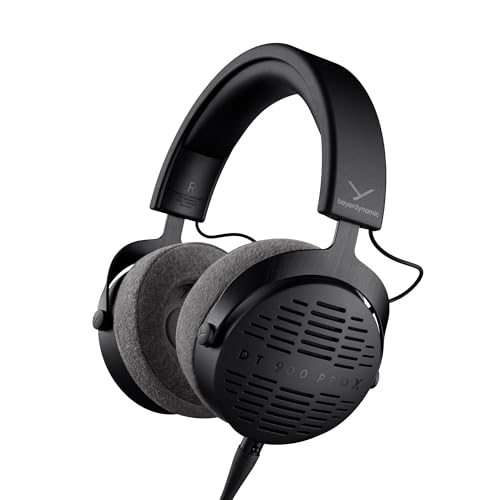
- 48-ohm drive: full volume from any source - laptop, interface, or phone - no headphone amp needed.
- Built for the final mix: open-back reference sound for mixing, mastering, and critical listening.
What to Consider Before Investing in Professional Recording Headphones & In-Ear Audio Monitors
A Recording Headphone & In-Ear Audio Monitors setup is more than just an item; it’s a key solution for anyone serious about the integrity of their sound. In a world where audio is consumed on everything from massive club systems to tiny smartphone speakers, the studio headphone acts as the “truth-teller.” It eliminates the acoustic flaws of an untreated room and provides a microscopic view of your audio files. Whether you are tracking a podcast, mixing a complex orchestral arrangement, or competitive gaming where spatial awareness is life-or-death, these tools ensure that what you hear is what is actually there.
The ideal customer for this type of product is someone facing critical audio decisions—producers, mixing engineers, and serious content creators who need to hear fine details like breath sounds, room reflections, or subtle compression artifacts. It is also an excellent choice for audiophiles who prefer a “natural” rather than “hyped” listening experience. However, it might not be suitable for those who work primarily in loud, public environments, as the open-back nature of these cans allows sound to leak out and ambient noise to leak in. For those individuals, a closed-back model would be the appropriate alternative.
Before investing, consider these crucial points in detail:
- Dimensions & Space: In the world of studio gear, dimensions refer to the physical footprint of the earcups and the soundstage they create. You want a circumaural design that completely encloses the ear without pressing against it, providing enough “acoustic space” for the drivers to breathe and create a realistic stereo image.
- Capacity/Performance: Look closely at the impedance (measured in ohms) and the frequency response. A lower impedance means the headphones can be driven easily by laptops and interfaces without a dedicated high-end amplifier, while a wide frequency response (like 5 Hz to 40,000 Hz) ensures you aren’t missing the sub-bass rumble or the “air” in the high frequencies.
- Materials & Durability: Studio gear takes a beating. Look for spring steel headbands, high-quality plastics, and replaceable parts. Velour pads are generally preferred for long-term comfort and breathability over protein leather, which can get sweaty and crack over time.
- Ease of Use & Maintenance: The ability to swap out cables and ear pads is non-negotiable for professional use. A detachable cable prevents the entire unit from becoming e-waste if a wire shorts out, and serviceable components ensure the product can last a decade or more in a busy studio environment.
While the beyerdynamic DT 900 PRO X Open Back Studio Headphones is an excellent choice, it’s always wise to see how it stacks up against the competition. For a broader look at all the top models, we highly recommend checking out our complete, in-depth guide:
- Good Sound Isolation: This sound isolation in ear monitors headphone could prevent outside noise from interfering with your listening experience and maintain the crisp detail in low volume listening

- 【Precision Hybrid 6-Driver Earphones】New BmasterX IEMs combines 1 dynamic driver (warm bass), 3 balanced armatures (rich mids), and 2 piezoelectric tweeters (ultra-detailed highs) delivers...

- Good Sound Isolation: This sound isolation in ear monitors headphone could prevent outside noise from interfering with your listening experience and maintain the crisp detail in low volume listening
First Impressions: Unboxing the Craftsmanship of the beyerdynamic DT 900 PRO X Open Back Studio Headphones
When we first pulled the beyerdynamic DT 900 PRO X Open Back Studio Headphones out of the box, the “Made in Germany” heritage was immediately apparent. There is a certain utilitarian elegance to the Space Grey finish and the robust spring steel headband. Unlike some competitors that feel like hollow plastic, these have a reassuring heft—exactly one pound—without feeling cumbersome. The unboxing experience is straightforward and professional, including two different lengths of detachable mini-XLR to 3.5mm cables and a soft drawstring bag.
Initial testing revealed a significant departure from the older DT 990 Pro models. The “Beyerdynamic peak”—that legendary, sometimes piercing treble—has been noticeably smoothed out. The new STELLAR.45 drivers deliver an immediate sense of speed and clarity. We found the initial fit to be quite snug, offering a secure “clamp” that suggests these won’t slide off during an active session, though it takes a few hours for the headband to break in. You can check the latest price and availability to see where these sit in the current market, but for first impressions, they feel like a premium tool meant for serious work.
Key Benefits
- Exceptional detail retrieval via the new STELLAR.45 drivers.
- Versatile 48-ohm impedance works with laptops, phones, and interfaces.
- Incredibly comfortable replaceable velour ear pads.
- Sustainable design with almost all parts being user-replaceable.
Limitations
- Open-back design is not suitable for tracking near sensitive microphones.
- Headband padding has reported longevity issues regarding the adhesive.
Deep Dive: Putting the beyerdynamic DT 900 PRO X Open Back Studio Headphones to the Test
The STELLAR.45 Driver: A New Era of Sonic Accuracy
The heart of the beyerdynamic DT 900 PRO X Open Back Studio Headphones is the newly developed STELLAR.45 driver. During our testing, we were struck by the sheer “speed” of the audio. In technical terms, the transient response is remarkable. When listening to complex percussion or fast-paced acoustic guitar plucking, there is no “smearing.” Each note begins and ends with precision. We found that this clarity makes it incredibly easy to spot clipping or distortion that might be buried in a mix. As one user noted, they were “blown away at how much detail” they could hear in games, identifying wet footsteps vs. dirt with crisp distinction. This confirms our findings: the driver isn’t just about music; it’s about spatial information. The neutral tuning ensures that you aren’t being lied to by a boosted bass or a scooped mid-range, allowing for “confident mix decisions” that translate across different systems.
48 Ohms of Pure Versatility: No Amp Required
One of the biggest hurdles with professional studio cans has traditionally been the high impedance. Many legendary models require a beefy dedicated headphone amplifier to sound their best. However, the beyerdynamic DT 900 PRO X Open Back Studio Headphones features a 48-ohm impedance. We tested these directly into a MacBook Pro, an iPhone (via dongle), and a standard Scarlett interface. In every scenario, the volume was more than adequate, and the sound quality remained consistent. This is a game-changer for the modern producer who might be editing on a train, in a coffee shop, or at a remote location. You no longer need to carry a portable DAC/Amp stack to get professional-grade monitoring. This versatility is a feature that really sets it apart from its predecessors, making it a truly mobile studio solution.
The Iconic Velour Comfort Meets Modern Ergonomics
Comfort is often an afterthought in technical reviews, but if you’re wearing headphones for an eight-hour mastering session, it’s the most important spec. The beyerdynamic DT 900 PRO X Open Back Studio Headphones uses the classic grey velour pads that have made the brand a studio staple for decades. We found the pads to be plush and breathable, preventing the “hot ear” syndrome common with leatherette. The circumaural shape is large enough to accommodate most ear sizes without touching the inner driver cover. However, we did notice the headband tension is slightly higher than the older DT series. While this helps with sound isolation (as much as an open-back can isolate), some users with larger heads might find it “stiff” initially. Over time, the spring steel relaxes, creating a personalized fit that we found perfectly acceptable for long-term wear. To ensure you get the best fit possible for long sessions, we recommend a short “stretch” over a few books if the initial clamp feels too tight.
Sustainability and the “Serviceable” Philosophy
In an era of disposable electronics, the build philosophy here is refreshing. We examined the construction and found that almost every component—from the ear pads and headband padding to the driver itself—can be replaced by the user. This is a crucial benefit for professionals. We confirmed via user feedback that while the sound quality remains 5/5, some have experienced the headband padding “coming unglued” after roughly 18-24 months of heavy use. While this is a disappointing quality control quirk for a premium product, the fact that you can simply buy a replacement headband and snap it on—rather than trashing the whole unit—speaks to the sustainability of the design. This “unforgiving translation” of your mix is backed by a build that is designed to be repaired, not replaced, which is why many engineers consider this a lifetime investment. You can check for replacement parts and warranty details here to see how the brand supports its users long-term.
What Other Users Are Saying
The general sentiment surrounding the beyerdynamic DT 900 PRO X Open Back Studio Headphones is overwhelmingly positive, especially regarding the shift to a detachable cable and the more balanced sound profile. Users who have owned the older DT 880 or DT 990 models frequently mention that these feel like a significant “upgrade” rather than just a lateral move. Many professionals highlight that these headphones give an “unforgiving translation” of a mix, making it easy to polish tracks to a “sonic level” that was previously unreachable.
One professional user remarked, “I’ve owned Sennheiser HD600s and Beyer DT880s… these are the best of the bunch for modern production.” Another pointed out the specific utility for gaming: “The detail is insane. Nothing gets muddled together even when a lot is going on.”
On the negative side, the most common complaint involves the headband’s physical durability. One user reported that the “leather covering the foam has become unglued” after about 15 months, while another mentioned that the “headband housing has been falling apart.” This feedback is vital for potential buyers; while the audio performance is world-class, the physical longevity of the headband padding specifically requires gentle handling or the expectation of a low-cost replacement down the line. Despite this, most users agree that the audio quality and comfort far outweigh these mechanical frustrations.
Comparing the beyerdynamic DT 900 PRO X Open Back Studio Headphones to Top Alternatives
1. beyerdynamic DT 990 Pro Studio Headphones
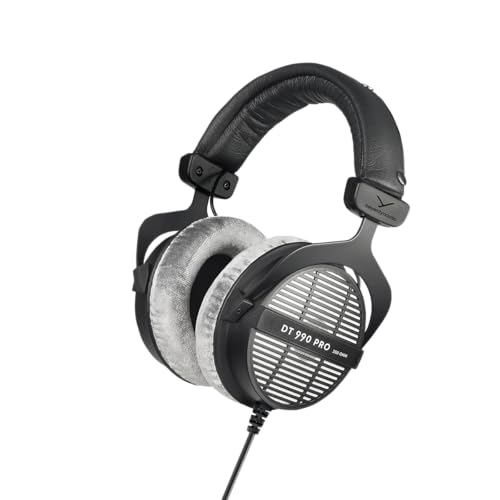
- 250-ohm studio impedance: designed for audio interfaces and headphone amps - it needs one for full volume; not ideal straight from a phone.
- The mixing reference: the open-back sound studios have trusted for decades, for honest mixes that translate everywhere.
The DT 990 Pro is the “old guard” of the studio world. While it shares the open-back design and legendary comfort of its successor, it has a few key differences. Most notably, the 990 Pro has a fixed, coiled cable which many modern users find frustrating. Sonically, the 990 Pro is famous for its “V-shaped” sound—meaning boosted bass and very sharp treble. For those who enjoy that “sparkle” and don’t mind a higher 250-ohm impedance that requires an amplifier, the 990 Pro is a much more budget-friendly option. However, for critical mixing where you need a flatter, more detachable-cable-friendly experience, the beyerdynamic DT 900 PRO X Open Back Studio Headphones is the clear winner.
2. Rode NTH-100 Professional Over-Ear Headphones

- Professional over-ear headphones ideal for content creation, music production, mixing and audio editing, podcasting, location recording
- Custom-matched drivers deliver an incredibly accurate frequency response and state-of-the-art acoustic design optimised for exceptional detail and clarity

The Rode NTH-100 is a closed-back contender that focuses heavily on ergonomics and content creation. Unlike the open-back Beyerdynamics, the Rode offers much better isolation, making it superior for recording vocals or podcasting in the same room as a microphone. It features unique “CoolTech” gel pads that actively pull heat away from the ears. While the soundstage is naturally narrower due to the closed-back design, it offers a very honest and detailed mid-range. Someone who primarily records their own voice or works in noisy environments would likely prefer the Rode over the open-back nature of the DT 900 PRO X.
3. BASN Bmaster Triple Driver In-Ear Monitor Headphone
- Good Sound Isolation: This sound isolation in ear monitors headphone could prevent outside noise from interfering with your listening experience and maintain the crisp detail in low volume listening
- HiFi Stereo Sound: This in-ear earbuds headphone monitor is full of low frequencies and rich in details; Sound characteristics are balanced, coherent up and down, good bass effect, clear midrange and...
For those who find over-ear headphones too bulky or heavy, the BASN Bmaster offers a completely different experience. As an In-Ear Monitor (IEM) with triple drivers, it provides incredible isolation and a very direct sound right into the ear canal. This is ideal for musicians performing live on stage or those who want a portable “studio in their pocket.” While it can’t replicate the wide, natural soundstage of the open-back beyerdynamic DT 900 PRO X Open Back Studio Headphones, it wins on portability and isolation. We recommend these for stage performers or drummers who need high-fidelity sound without the weight of a traditional headband.
The Final Verdict: Are the beyerdynamic DT 900 PRO X Open Back Studio Headphones Right for You?
After extensive testing, the beyerdynamic DT 900 PRO X Open Back Studio Headphones have proven to be a formidable evolution in the world of professional audio. They successfully address the two biggest gripes of the previous generation: they finally include a detachable cable, and they have refined the treble to be detailed without being fatiguing. The 48-ohm impedance makes them incredibly versatile for the modern, mobile creator, and the STELLAR.45 drivers offer a level of transparency that is hard to beat at this price point. While there are some minor concerns regarding the long-term adhesive on the headband padding, the overall repairability and “Made in Germany” build quality make these a sound investment.
If you are a mixing engineer, a serious gamer looking for spatial precision, or an audiophile who values a natural soundstage, these are among the best tools you can buy today. They offer a “truth” in audio that helps you create better work and enjoy your music with newfound depth. We believe these are a highly recommended investment for any audio professional looking to elevate their craft. Stop guessing your levels and start hearing the reality of your mix today.
Last update on 2026-10-16 / Affiliate links / Images from Amazon Product Advertising API