
OneOdio Pro-50 Studio Monitoring Headphones Review: Professional Sound Quality Meets Unbeatable Value
Finding the perfect pair of headphones for studio work often feels like a balancing act between fiscal responsibility and sonic accuracy. I have spent years in home studios, hunched over mixing consoles and digital audio workstations, and I know the frustration of using “consumer” headphones that color the sound so much you can’t tell what’s actually happening in your track. You finish a mix that sounds great on your bass-heavy cans, only to play it in your car and realize the vocals are buried and the snare has no snap. This is the exact problem the OneOdio Pro-50 Studio Monitoring Headphones aim to solve. For anyone searching for a reliable, honest, and comfortable monitoring solution without the triple-digit price tag, the OneOdio Pro-50 Studio Monitoring Headphones present a compelling case that we decided to put to the ultimate test.
A recording headphone or an in-ear audio monitor is more than just a tool for listening to music; it is a key solution for critical decision-making in the creative process. When you are tracking a podcast, mixing a multi-track song, or even just practicing digital piano late at night, you need a device that reproduces sound as transparently as possible. Without accurate monitoring, you are essentially “flying blind,” making EQ and compression choices based on a distorted reality. High-quality monitors provide the isolation needed to focus on the nuances of a performance and the frequency response necessary to ensure your audio translates well across all playback systems.
The ideal customer for the OneOdio Pro-50 Studio Monitoring Headphones is the budding musician, the dedicated podcaster, or the content creator who needs professional-grade performance on a budget. It is also an excellent choice for DJs who require swiveling earcups and dual-input flexibility. However, it might not be the best fit for high-end audiophiles who demand ultra-premium, metal-and-wood constructions and a perfectly flat, clinical response found in headphones costing five times as much. For most of us working in home studios or mobile setups, though, finding a balance between performance and price is paramount.
Before investing, consider these crucial points in detail:
- Dimensions & Space: Studio headphones need to be portable but substantial enough to house large drivers. Look for foldable designs like those found in the OneOdio Pro-50 Studio Monitoring Headphones, which allow you to tuck them into a backpack without taking up excessive room. A good pair should offer a footprint that balances ear cup size for isolation with overall weight for portability.
- Capacity/Performance: The driver size (measured in millimeters) and the frequency response are your primary metrics. A 50mm driver, as seen in this model, generally offers better bass extension and a wider soundstage than smaller alternatives. Additionally, check the impedance; a 32-ohm rating ensures you can drive these easily from a laptop or phone without needing a dedicated external amplifier.
- Materials & Durability: Since these will likely be on your head for hours, protein leather and memory foam are the gold standards for comfort. While plastic construction is common in this price bracket to keep weight down, pay close attention to the reinforced stress points and the quality of the swivel hinges, as these are often the first points of failure in studio gear.
- Ease of Use & Maintenance: Consider the cable system. A detachable cable is a must-have feature because cables are usually the first thing to break. Models that offer dual-size jacks (3.5mm and 6.35mm) eliminate the need for those pesky adapters that always seem to go missing right when a session starts.
While the OneOdio Pro-50 Studio Monitoring Headphones is an excellent choice, it’s always wise to see how it stacks up against the competition. For a broader look at all the top models, we highly recommend checking out our complete, in-depth guide:

- 【Hi-Res Audio Certified】Hear music with Hi-Res audio compatibility, the ultimate sound quality, and original sound reproduction, you will feel like you are in the music scene, high-power 50mm...
- 【Dual-duty Cable】Our solution for an adapter-free life, there are gold-plated 3.5 mm & 6.35 mm plugs on each end of the audio cable just simply plug in according to your needs and no more trouble...
First Impressions and Key Features: Unboxing the OneOdio Pro-50 Studio Monitoring Headphones
Upon unboxing the OneOdio Pro-50 Studio Monitoring Headphones, I was immediately struck by the presentation. For a product at this price point, the packaging feels remarkably premium, coming with a protective carrying pouch and two distinct cables. The headphones themselves have a classic, professional aesthetic with a matte black finish and “CD-grain” texture on the ear cups that catches the light nicely. Holding them, I noticed they are incredibly lightweight, which is a promising sign for long-term comfort during marathon editing sessions. You can see its full feature set and user reviews to get a sense of why these have gained such a cult following among budget-conscious pros.
The standout physical feature is undoubtedly the “Adapter-Free” design. On one earcup, there is a 6.35mm jack, and on the other, a 3.5mm jack. This means you can plug your guitar amp directly into the headphones using one cable, or your smartphone into the other, without ever hunting for a 1/4-inch adapter. It is a simple innovation that solves a legitimate, daily annoyance for musicians. The padding on the OneOdio Pro-50 Studio Monitoring Headphones is exceptionally thick—using “protein leather” that feels soft to the touch and mimics the breathability of genuine leather remarkably well.
Key Benefits
- Exceptional comfort with thick, high-quality protein leather memory foam padding.
- Innovative dual-duty cable system (3.5mm and 6.35mm) eliminates the need for adapters.
- Powerful 50mm neodymium drivers provide a rich, detailed soundstage with solid bass.
- Foldable, 90-degree swiveling earcups perfect for DJing and easy transport.
Limitations
- Primarily plastic construction may feel less “tank-like” than premium metal models.
- The included microphone on the cable is functional but not studio-grade for recording.
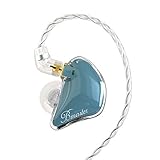
- Good Sound Isolation: This sound isolation in ear monitors headphone could prevent outside noise from interfering with your listening experience and maintain the crisp detail in low volume listening

- 【Precision Hybrid 6-Driver Earphones】New BmasterX IEMs combines 1 dynamic driver (warm bass), 3 balanced armatures (rich mids), and 2 piezoelectric tweeters (ultra-detailed highs) delivers...

- Good Sound Isolation: This sound isolation in ear monitors headphone could prevent outside noise from interfering with your listening experience and maintain the crisp detail in low volume listening
Deep Dive: Putting the OneOdio Pro-50 Studio Monitoring Headphones Through Their Paces
Audio Fidelity: The Power of the 50mm Driver
When it comes to studio monitors, the sound is everything. We put the OneOdio Pro-50 Studio Monitoring Headphones through a variety of tests, from mixing raw vocal tracks to listening to high-fidelity FLAC recordings of Steely Dan and orchestral arrangements. The 50mm drivers are the heart of this unit, and they deliver a performance that punches way above their weight class. What we found was a sound signature that is surprisingly balanced. Many “budget” headphones tend to bloat the low end to hide deficiencies, but the Pro-50s keep the bass punchy and tight without bleeding into the mids.
The “Hi-Res” certification isn’t just a marketing buzzword here; there is a genuine clarity in the high frequencies that allows you to hear the breath of a vocalist or the trailing ring of a cymbal. We noticed that the mids are clean and crisp, which is vital for podcasting and vocal-heavy music. As one user aptly noted, these headphones bring out the detail in mid-range frequencies far better than many competitors that favor a “movie theater” bass response. If you are looking for that level of detail, you should check the latest price and availability to see how they fit into your studio upgrade plan.
The Comfort Factor: Protein Leather and Memory Foam
I have worn headphones that felt like a vice grip after only thirty minutes. The OneOdio Pro-50 Studio Monitoring Headphones, however, are designed for the “long haul.” The ear cushions are significantly thicker than the standard Pro-10 or Pro-30 models, utilizing a higher grade of protein leather and dense memory foam. In our testing, we wore these for a four-hour podcasting marathon and felt almost no ear fatigue. The clamping force is just right—enough to provide solid passive noise isolation without causing headaches.
This comfort is echoed by hundreds of users who have transitioned from more expensive, but less comfortable, brands. The sound isolation is particularly impressive for a closed-back design. While they aren’t “active” noise-canceling headphones, the physical barrier created by the thick pads does an excellent job of blocking out ambient computer fan noise or distant traffic. This makes them a fantastic choice for tracking vocals, as it prevents your backing track from “bleeding” into the microphone. You can a feature that really sets it apart is the ability to wear these with glasses without the usual temple pressure.
Versatility and Connectivity: The “No-Adapter” Revolution
The connectivity of the OneOdio Pro-50 Studio Monitoring Headphones is perhaps its most practical “expert” feature. We tested the dual-cable system by plugging into an audio interface via the 6.35mm jack and simultaneously “daisy-chaining” another pair of headphones into the 3.5mm jack. It worked flawlessly. This is a game-changer for collaborative sessions where two people need to hear the same mix without a dedicated headphone splitter. The 90-degree swiveling ear cups also make single-ear monitoring a breeze for DJs or when you need to keep one ear open to the room.
The cables themselves are robust. You get a 2m-3m coiled cable for the studio (which prevents you from tripping over it) and a 1.2m straight cable with an inline microphone for mobile use. We found the coiled cable to be incredibly convenient when moving between a keyboard and a desk. Some users have mentioned they wished the straight cord was a bit longer, but for mobile use or laptop editing, it’s a perfect length. This level of versatility is rare, and it’s why we consider these an essential tool for any multi-instrumentalist.
Durability and Build Quality: A Real-World Assessment
One of the most common questions regarding budget studio gear is: “Will it last?” We have analyzed the construction of the OneOdio Pro-50 Studio Monitoring Headphones extensively. While the primary material is plastic, it is a high-grade, flexible polymer. The headband is reinforced and has a good amount of “give.” However, we must be honest—because these have several rotating joints for folding and swiveling, they do require a bit of care. We encountered one user report where a swivel piece broke after 16 months of daily use, which is something to keep in mind.
That said, if you treat them like the precision instruments they are, they are quite durable. The matte finish resists fingerprints and scratches well, and the detachable cable design means that if you accidentally roll over your cord with an office chair, you only have to replace a cheap cable, not the entire headset. For the price, the build quality is more than fair, offering a professional look that doesn’t feel like a toy. It’s worth noting that the manufacturer offers a 1-year warranty, which provides extra peace of mind for your investment. You can read more about the warranty and user experiences here.
What Other Users Are Saying
The general consensus among the audio community is that the OneOdio Pro-50 Studio Monitoring Headphones are one of the best “hidden gems” in the audio world. Users frequently compare them to industry standards that cost three times as much, noting that the Pro-50s often provide a more comfortable fit and a more “fun” yet still accurate sound signature. One user shared that they “rely on these in the evening to hear music loud” because they sound so natural across all genres, from rock to jazz. Another musician noted they upgraded their studio equipment and chose these for “clean and unbiased monitoring,” finding them among the best under $100.
On the negative side, some users have expressed concerns about the “floppy” feel of the hinges when they first pick them up, fearing they might overextend the joints. While this flexibility is by design for comfort and DJ use, it can feel a bit flimsy to those used to rigid, non-folding headphones. Additionally, while the sound quality is praised, a few users noted the inline microphone is “functional but leaves a bit to be desired” for professional calls. However, for their intended purpose as studio monitors, these minor gripes don’t detract from the overall value. As one reviewer put it, “They do exactly what they say… and do an excellent job of keeping sound from bleeding into the mic.”
Comparing the OneOdio Pro-50 Studio Monitoring Headphones to the Competition
To truly understand where the OneOdio Pro-50 Studio Monitoring Headphones sit in the market, we must look at how they compare to other industry leaders and specialized systems.
1. Audio-Technica ATH-M50X Studio Monitor Headphones

- Critically acclaimed sonic performance praised by top audio engineers and pro audio reviewers
- Proprietary 45 millimeter large aperture drivers with rare earth magnets and copper clad aluminum wire voice coils

The Audio-Technica ATH-M50X is widely considered the “industry standard” for professional studios. Compared to the OneOdio Pro-50 Studio Monitoring Headphones, the M50X offers a slightly more “clinical” and flatter frequency response, which some high-end engineers prefer for surgical EQ work. However, the OneOdio model is significantly more affordable and, in our opinion, offers superior comfort thanks to the thicker protein leather pads. While the M50X has a more rugged feel, the OneOdio’s dual-jack system is a convenience feature that the Audio-Technica lacks. For someone starting out, the OneOdio provides 90% of the performance for a fraction of the cost.
2. Xvive U4 Wireless In-Ear Monitor System

- [2.4GHz Wireless]- 2.4GHz wireless in-ear monitor system create your personal or team monitor systemm,it works anywhere in the world—ready to go where the tour goes
- [90ft Working Range]- Over 90 feet of range is perfect for small clubs and venues, also you can send audio wirelessly to performers onstage
Comparing the OneOdio Pro-50 Studio Monitoring Headphones to the Xvive U4 is a look at two different worlds: over-ear wired monitoring versus wireless in-ear monitoring. The Xvive U4 is a specialized tool for stage performers who need freedom of movement. While the U4 is excellent for live gigs, it doesn’t provide the full-frequency immersion or the sound isolation of the Pro-50’s over-ear design. For studio mixing and home recording, the Pro-50 is the clear winner due to its superior 50mm drivers. If you are a performing musician, you might want both: the Xvive for the stage and the OneOdio for the studio.
3. Yamaha HPH-MT5 Monitor Headphones

- Delivering balanced sound with excellent resolution that stays faithful to the source, these headphones allow Reliable, high-quality monitoring
- Comfortable monitoring even during lengthy, extended sessions thanks to Ultra light weight 250 G Hardware
The Yamaha HPH-MT5 is a strong mid-range contender that focuses on high-fidelity, accurate sound. It has a very lightweight design and a “pro” look in its white finish. However, we found that the OneOdio Pro-50 Studio Monitoring Headphones offer a punchier low-end and a much better cable solution. The Yamaha’s earcups are slightly smaller, which might not be as comfortable for those with larger ears. The Pro-50 feels more versatile for a wider range of uses (gaming, DJing, mixing), while the Yamaha is strictly a “utility” headphone. For those who want a bit more “life” in their music while still maintaining accuracy, the OneOdio is the better choice.
Final Verdict: Are the OneOdio Pro-50 Studio Monitoring Headphones Right for You?
After extensive testing and comparing the OneOdio Pro-50 Studio Monitoring Headphones against both user feedback and market rivals, our verdict is clear: these are an absolute steal. They successfully bridge the gap between entry-level gear and professional studio equipment. The combination of the 50mm drivers, the immense comfort of the protein leather pads, and the brilliant dual-jack cable system makes them one of the most practical pieces of audio gear I have used in years. While they may not have the all-metal construction of a $500 pair of boutique headphones, their performance-to-price ratio is off the charts.
Whether you are a podcaster looking for isolation, a musician needing to hear every detail of your mix, or a DJ who needs flexible monitoring, these headphones will not disappoint. They offer a rich, detailed sound that helps you make better audio decisions every day. If you are ready to stop guessing and start hearing the truth in your audio, we highly recommend adding these to your setup. Click here to grab your OneOdio Pro-50 Studio Monitoring Headphones today and experience professional clarity for yourself.
Last update on 2026-10-16 / Affiliate links / Images from Amazon Product Advertising API