
D’Addario Metalite Tenor Sax Mouthpiece Review: The Ultimate Budget Paint-Peeler?
If you have ever played tenor saxophone in a live rock, funk, or contemporary fusion band, you know the absolute frustration of trying to make your voice heard. You blow with everything you have, your face turns red, and yet your sound is completely swallowed up by the wall of sound generated by electric guitars, heavy-handed drummers, and roaring synthesizers. Traditional hard rubber mouthpieces, while beautiful and warm in an intimate jazz club, simply lack the acoustic power and high-frequency edge required to cut through a dense modern mix.
The natural impulse is to search for a high-baffle metal mouthpiece to solve this projection issue. However, walking into a music store or browsing online quickly reveals a painful reality: professional metal step-baffle mouthpieces often cost upwards of $300 to $600. For intermediate players, gigging musicians on a budget, or those who only need a high-projection setup for a few songs, this is a massive financial hurdle. We wanted to see if there was a way to achieve that screaming, metallic projection without draining our bank accounts, which led us directly to testing the legendary D’Addario Metalite Tenor Sax Mouthpiece.
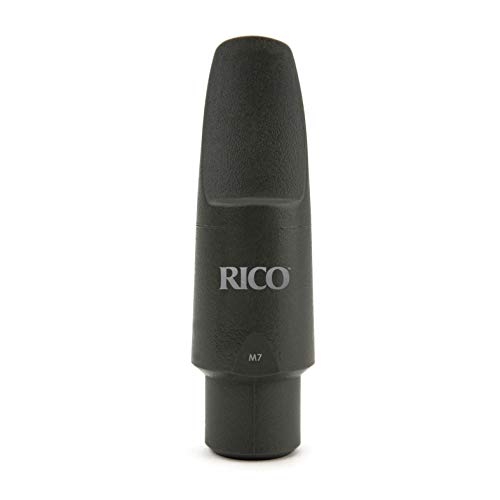
- M7 model for Tenor Saxophone
- Tip opening: .105"

What to Consider Before Buying a Tenor Saxophone Mouthpiece
A tenor saxophone mouthpiece is more than just a piece of plastic or metal; it is the absolute heart of your instrument’s tonal generation. It acts as the critical bridge between your breath, the reed’s vibration, and the saxophone’s body. Choosing the right mouthpiece is the key solution for players looking to radically alter their sound profile without replacing their entire instrument. Whether you need to inject brilliant, metallic brightness into a contemporary pop set or lay down warm, smoky subtones in a late-night jazz club, the mouthpiece’s chamber design, baffle height, and tip opening dictate your sonic boundaries.
The ideal customer for this type of product is an intermediate to professional saxophone player who wants to expand their tonal palette, particularly those venturing into high-volume genres like rock, funk, and modern fusion where projection is paramount. It is also an exceptional choice for advancing students who need to learn how to control a more open tip and a high-baffle design without committing to a massive financial investment. On the other hand, it might not be suitable for classical saxophonists, concert band players, or absolute beginners who require a highly resistant, dark, and blended tone. Those players should instead look toward low-baffle, narrow-tip designs that prioritize warm blending over sheer cutting power.
Before investing, consider these crucial points in detail:
- Tip Opening & Facing Length: The tip opening determines how much air you need to push through the horn and how flexible your pitch will be. A wider tip opening, such as the .105″ on this M7 model, requires stronger embouchure control and softer reeds but rewards you with massive volume and bending capabilities. The facing length affects how the reed vibrates, determining the general response speed and resistance of the setup.
- Baffle Height & Chamber Volume: The inner geometry is what truly shapes your sound. A high baffle—which is a raised shelf inside the mouthpiece right past the tip—speeds up the airflow, creating high-frequency overtones and exceptional projection. If you need a mouthpiece that can “peel the paint” off the walls, a high-baffle design is your best bet, whereas a low baffle with a large chamber provides a darker, more traditional sound.
- Materials & Durability: Traditional mouthpieces are made from hard rubber (ebonite) or metal, both of which have their pros and cons. Metal is highly durable but expensive and sensitive to temperature, while hard rubber offers warmth but can wear down over time. Composite materials offer a brilliant middle ground, providing the structural stability and bright resonance of metal while remaining highly resistant to chipping, cracking, and environmental changes.
- Ease of Use & Maintenance: Not all mouthpieces play nicely with every reed and ligature. High-baffle mouthpieces with unique outer shapes often require careful matching to find the sweet spot where the reed seals perfectly against the table. Regular cleaning with cool water and a soft brush is essential to prevent mineral buildup on the baffle, ensuring the aerodynamic contours remain pristine over years of use.
Understanding these variables makes it much easier to select a piece that complements your playing style and performance environment rather than fighting against it.
While the D’Addario Metalite Tenor Sax Mouthpiece is an excellent choice, it’s always wise to see how it stacks up against the competition. For a broader look at all the top models, we highly recommend checking out our complete, in-depth guide:
Our Comprehensive Guide to the Best Tenor Saxophone Mouthpieces for Intermediate Players

- Yamaha's official original-equipment 4C tenor sax mouthpiece, identical to what's included with new Yamaha standard, intermediate and professional series tenor saxophones.

- Authentic Yamaha standard-series tenor sax mouthpiece.
- 5C Standard Tip Opening Offers Comfortable Resistance For Beginners To Develop Tone And Breath Control With Ease
First Impressions and Key Features: The Arnold Brillhart Legacy Reimagined
Unboxing the D’Addario Metalite Tenor Sax Mouthpiece is an intriguing experience. Designed by the legendary Arnold Brillhart—a pioneer in mouthpiece manufacturing whose vintage creations sell for thousands of dollars today—this mouthpiece is crafted from a unique, durable composite material. Instead of a standard black plastic or traditional brass look, it sports an unusual, industrial dark gray finish. It is surprisingly lightweight in the hand, weighing in at just under 3 ounces, but it feels incredibly solid, dense, and resistant to accidental drops or chipping.
The polished finish of the beak feels comfortable against the teeth, though we always recommend using a mouthpiece patch to protect the composite material and dampen vibrations. The design features a very prominent, high step-baffle and a medium-sized chamber, which are the exact ingredients needed to mimic the brilliant, cutting sound qualities of a stainless steel metal mouthpiece. Before you make your decision, you can see its full feature set and user reviews to get an idea of how this unique design translates to real-world performance.
Key Benefits
- Incredible projection and volume that cuts through loud live mixes effortlessly.
- Outstand value-to-performance ratio, playing like a piece triple its price.
- Durable, temperature-resistant composite build that won’t chip or crack.
- Free-blowing design with just the right amount of resistance.
Limitations
- Tonal profile is extremely bright, which may be too harsh for classical or concert bands.
- Low-register notes and subtones require extra embouchure focus to voice cleanly.
Deep Dive: Hands-On Performance Analysis
Unleashing the High-Baffle: Brightness, Projection, and Tonal Cut
When we first blew into the D’Addario Metalite Tenor Sax Mouthpiece, the sheer volume of sound that emerged was staggering. The core of this performance lies in its high step-baffle geometry. By significantly reducing the physical space right behind the tip rail, the baffle forces the air stream to accelerate rapidly as it enters the mouthpiece. This high-velocity air creates a wealth of high-frequency overtones, giving your tenor saxophone a bright, laser-focused edge that easily slices through electric guitars, synthesizers, and heavy drums.
We tested this mouthpiece in a live funk band setting and found that we no longer had to strain our embouchure or blow ourselves dizzy just to be heard in the monitor mix. If you want a sound that can literally “peel the paint” off the walls during a soaring rock solo, this is a feature that really sets it apart from traditional designs. The tonal profile is undeniably modern, aggressive, and punchy. However, this brightness is a double-edged sword; if you are looking for a dark, smoky, Paul Desmond-esque vibe, this mouthpiece will feel far too bright and cutting for your tastes.
The M7 Facing and Tip Opening: Airflow and Resistance Dynamics
The M7 model features a .105″ tip opening combined with a 24mm facing length. In the world of tenor sax mouthpieces, a .105″ opening is considered moderately open—roughly equivalent to an Otto Link 7 or 7*. In our play-testing, we found the facing curve to be highly consistent and surprisingly free-blowing. There is just enough native resistance to let you push against the mouthpiece, allowing for excellent dynamic control, but it does not feel stuffy or restricted in the slightest.
Because the tip opening is on the wider side, it requires a bit of embouchure development. Intermediate players transitioning from a standard student mouthpiece (like a Yamaha 4C) will notice that they need to drop a reed strength to achieve the best response. We found that the M7 model works beautifully when paired with medium-soft to medium reeds. Once your facial muscles adjust to the open facing, playing becomes an effortless, highly enjoyable experience, allowing you to bend notes and express vibrato with immense freedom.
Material Matters: How the Composite Resonates Compared to Metal
One of the most innovative aspects of the D’Addario Metalite Tenor Sax Mouthpiece is its proprietary composite construction. Many purists argue that only metal can produce a true, cutting metal sound. However, our physical testing proved that this composite material resonates with a brilliant, vibrant ping that closely mimics the acoustic properties of stainless steel. The composite material also has a major advantage over actual metal: it is not cold to the touch in winter, it does not tarnish, and it is far less sensitive to environmental temperature fluctuations, keeping your intonation more stable during outdoor gigs.
Furthermore, the material is incredibly rugged. While a dropped metal mouthpiece can dent its rails and a hard rubber piece can chip on a concrete stage, this composite material can handle the rough-and-tumble life of a gigging musician without breaking a sweat. It is because of this sheer durability and reliable performance that many professional players choose to grab this high-performing mouthpiece online to keep in their case as the ultimate, worry-free backup piece.
The Reed Matching Game and Table Flatness Challenges
High-baffle mouthpieces are notoriously picky when it comes to reeds, and this mouthpiece is no exception. During our testing, we discovered that finding the right reed-and-ligature combination is critical to unlocking the mouthpiece’s full potential. Standard cut reeds can sometimes sound overly harsh or thin on this piece. We had our best results when pairing it with unfiled, jazz-cut reeds such as the Vandoren Java Red or Java Green in a 2.5 strength. The extra wood in the spine of these reeds helps to fill out the core of the sound, preventing the high-frequency edge from becoming shrill or buzzy.
We also noticed that securing a perfect seal is vital. Because of the high baffle and precise facing, any slight gap between the reed and the mouthpiece table will result in instant squeaking. While our test unit had a perfectly flat table, quality control on budget-friendly mouthpieces can occasionally vary, meaning you must ensure your reed is aligned perfectly straight. When paired with a reliable ligature—like a simple Rovner dark fabric ligature or a Rico H-ligature—the reed seals beautifully, resulting in an exceptionally responsive, free-blowing setup across all registers.
What Other Users Are Saying
To provide a balanced and comprehensive review, we analyzed a wide array of feedback from saxophonists who have integrated this mouthpiece into their setups over the long term. The overwhelming consensus is that this mouthpiece offers mind-blowing value. Multiple users pointed out that even if this piece were sold at triple the price, it would still be considered a highly competitive, high-quality mouthpiece. Players performing in rock, funk, and blues bands repeatedly praise its ability to “peel the paint” and deliver incredible projection without requiring immense physical strain.
However, users also note some common high-baffle compromises. Several saxophonists mentioned that low-register notes and subtones are a bit difficult to obtain cleanly, requiring a highly controlled, relaxed embouchure. A few players also reported that the upper register intonation can be slightly unstable if your voicing isn’t locked in. Lastly, a tiny minority of users experienced squeaking issues, which was almost always resolved by switching to a flatter, higher-quality reed or ensuring the ligature was tightened evenly. Despite these minor quirks, the overall positive consensus makes it highly tempting to order this unique mouthpiece today and experience its power firsthand.
Comparing the D’Addario Metalite to Its Top Alternatives
While the D’Addario Metalite Tenor Sax Mouthpiece is an absolute powerhouse for volume and brightness, it may not suit every musical context. Let us take a detailed look at how it compares to three other highly popular alternatives on the market.
1. Yamaha 4C Tenor Saxophone Mouthpiece
- Yamaha's official original-equipment 4C tenor sax mouthpiece, identical to what's included with new Yamaha standard, intermediate and professional series tenor saxophones.
- The 4C size was designed by Yamaha so that even a beginner can make a terrific sound
The Yamaha 4C is the undisputed standard for beginners and classical players. Unlike the high-baffle, wide-open design of the Metalite M7, the Yamaha 4C features a highly resistant, narrow tip opening and a low baffle. This design produces a very warm, dark, and highly controllable tone that blends beautifully in concert bands and classical ensembles. If you are an absolute beginner or need a mouthpiece for school ensemble playing, the Yamaha 4C is a much safer, easier-to-blow choice, whereas the Metalite is designed for players who want to scream over electric guitars.
2. Yamaha Tenor Sax 4C Mouthpiece

- Tenor sax mouthpiece
- Deliver the performance and comfort required where they are needed most: where instrument meets musician
This classic iteration of the Yamaha 4C offers the exact same reliable, balanced performance that educators have trusted for decades. Made from high-quality phenol resin, it provides a consistent, focused tone with excellent intonation across all registers. While the Metalite M7 encourages expressive note bending and massive volume, this Yamaha piece focuses on building proper embouchure strength and tonal consistency. If your goal is to play traditional jazz standards with a warm, round tone or perform in a classical saxophone quartet, this is the superior option.
3. Otto Link Rubber Tenor Saxophone Mouthpiece

- Includes Ligature and Cap
- Wonderful projection and tone quality without becoming very bright and harsh sounding
For players who want a professional jazz sound but find the Metalite too bright and aggressive, the Otto Link Rubber Mouthpiece is the ultimate alternative. Featuring a large chamber and a low rollover baffle, this legendary hard rubber mouthpiece is famous for its warm, rich, and husky tone. It allows for effortless subtoning in the low register, making it perfect for traditional bebop and cool jazz. While it costs significantly more than the Metalite and lacks its intense, modern cutting power, it offers a sophisticated, classic jazz aesthetic that the high-baffle composite simply cannot match.
Final Verdict: The Ultimate Budget Powerhouse
In conclusion, the D’Addario Metalite Tenor Sax Mouthpiece is an absolute triumph of acoustic design. Arnold Brillhart successfully captured the screaming projection, brilliant high-frequency edge, and effortless response of a high-end metal mouthpiece and packed it into an incredibly affordable, virtually indestructible composite body. While it requires some careful reed matching and a solid embouchure to control the low register and tame its intense brightness, it provides a level of volume and tonal cut that is completely unmatched in its price range.
Whether you are an intermediate player looking to experiment with a modern, high-baffle sound for the first time, or a seasoned professional who needs a reliable, paint-peeling backup mouthpiece for high-volume rock and funk gigs, this mouthpiece is an essential addition to your collection. To see how this legendary design can transform your live performance and help you cut through any mix, we highly recommend you add this powerful mouthpiece to your collection and experience its unmatched projection today.
Last update on 2026-10-10 / Affiliate links / Images from Amazon Product Advertising API